Addition skills Reading Worksheets
3 filtered results
-
From - To
Enhance your child's learning experience with our engaging Addition Skills Reading Worksheets. Designed for young learners, these worksheets integrate fundamental reading skills with essential addition concepts, making math enjoyable and accessible. Children will practice recognizing numbers and adding them through entertaining stories and interactive exercises. Our printable resources cater to various learning styles, ensuring that every child can boost their numeracy skills while improving their reading comprehension. Perfect for classroom activities or at-home learning, these worksheets offer a fun and effective way to foster a positive attitude towards math and reading. Start your child on a path to success today!
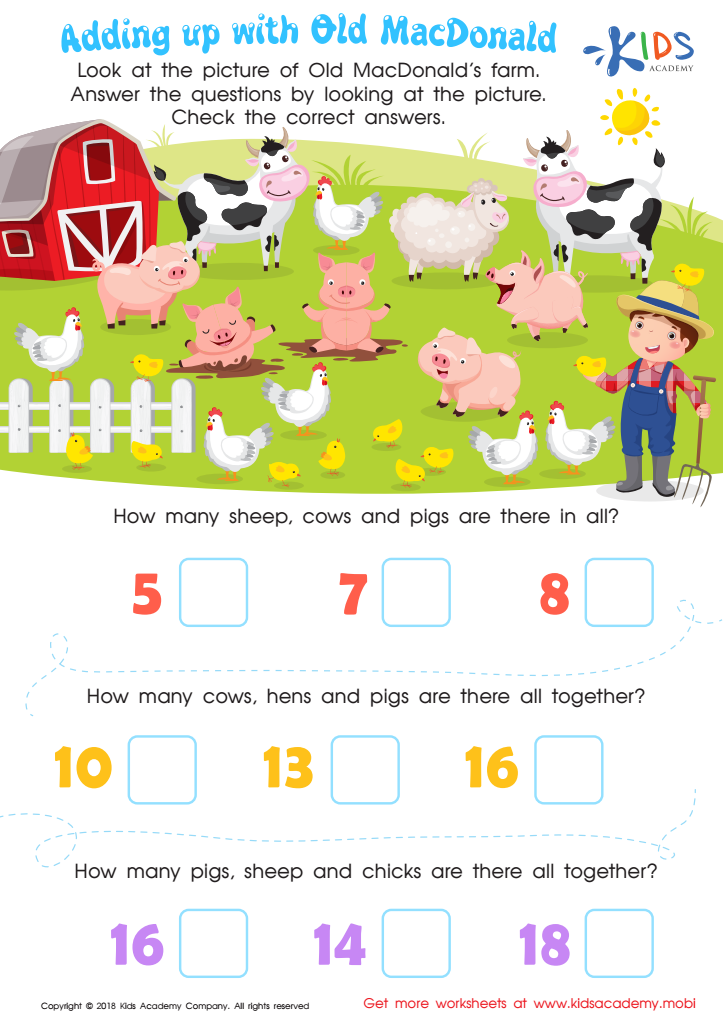
Adding Up with Old MacDonald Worksheet
 Assign to My Students
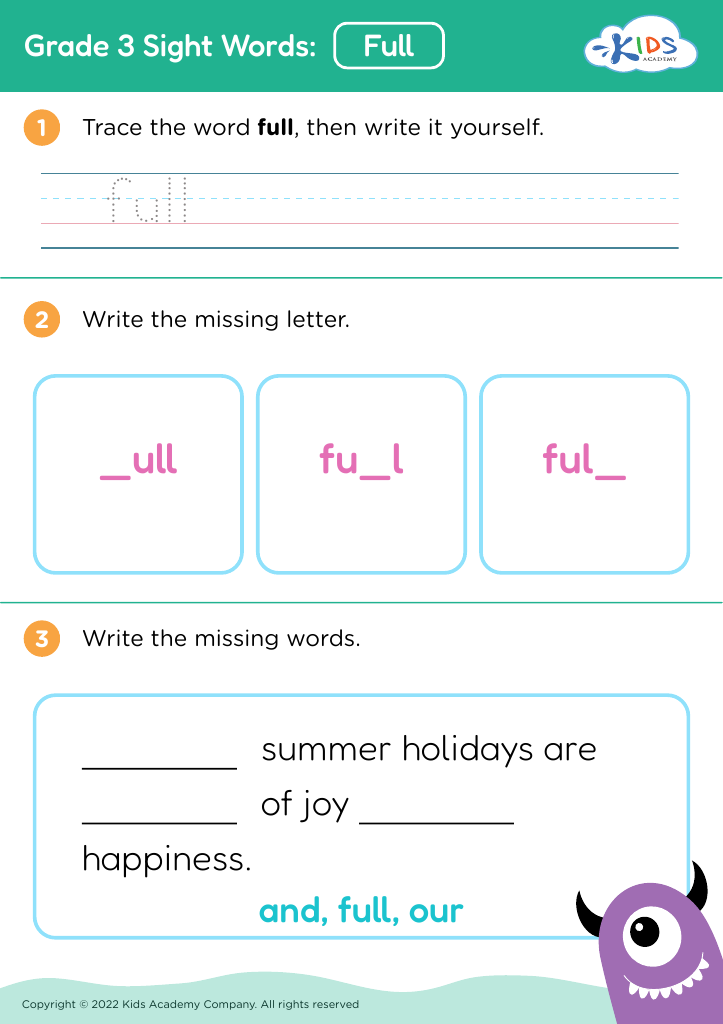
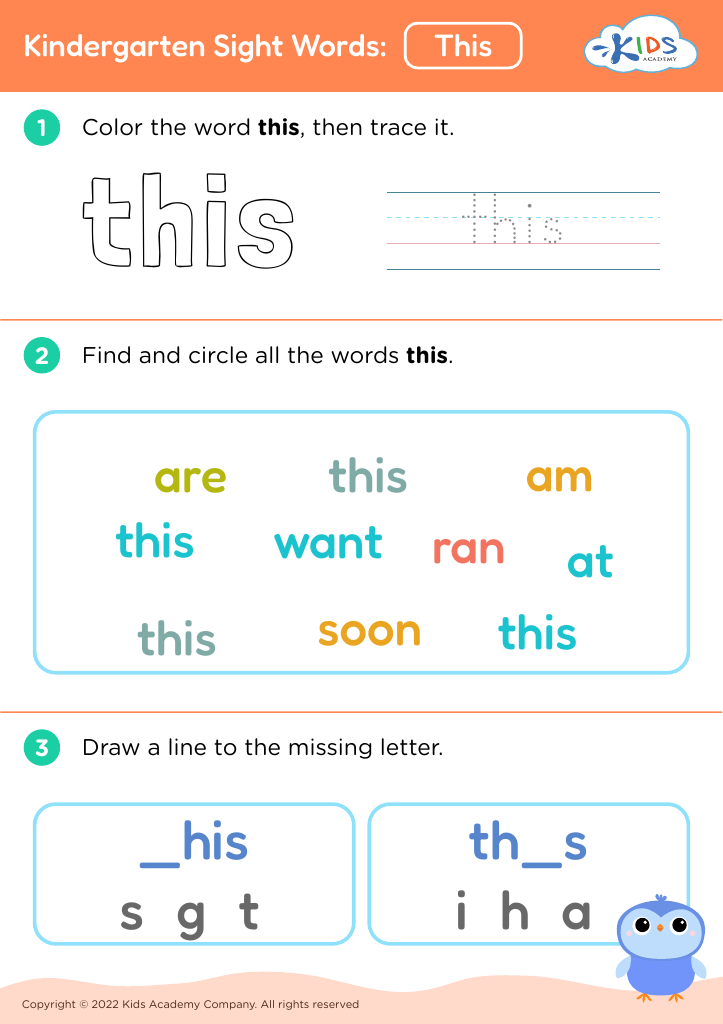







Addition skills are foundational to a child's overall mathematical understanding and academic success. Parents and teachers should prioritize these skills because they are not only essential for future math concepts but also promote critical thinking and problem-solving abilities. Mastery of addition fosters confidence in students, enabling them to tackle more complex arithmetic without fear.
Moreover, addition connects to everyday life; it teaches children how to handle finances, understand quantities, and manage time effectively. For instance, learning to add helps them in situations like counting change when shopping or determining how many friends can join a game.
Additionally, addition skills enhance reading comprehension. Many math-related texts, word problems, and story problems require students to use addition to solve questions or make inferences, thus integrating math with literacy. This progress in both subjects enhances cognitive development, reinforcing the importance of a well-rounded education.
Encouraging children to practice addition not only enriches their academic experience but also prepares them for real-life situations. Whether through games, interactive activities, or daily conversations, developing strong addition skills sets a positive trajectory for lifelong learning and personal growth. Therefore, engaging with addition is vital for both parents and teachers in shaping competent learners.








