Categorization skills Reading Worksheets
5 filtered results
-
From - To
Enhance your child's reading and critical thinking abilities with our Categorization Skills Reading Worksheets! Designed for early learners, these fun and engaging worksheets help kids develop essential skills by sorting words, images, and ideas into categories. Through interactive activities, children will improve their vocabulary, comprehension, and cognitive abilities by recognizing patterns and making connections between concepts. Ideal for both classroom use and at-home practice, our worksheets support long-term educational development. Start boosting your child’s categorization skills today with our expertly crafted reading materials tailored to promote confident, independent learners.
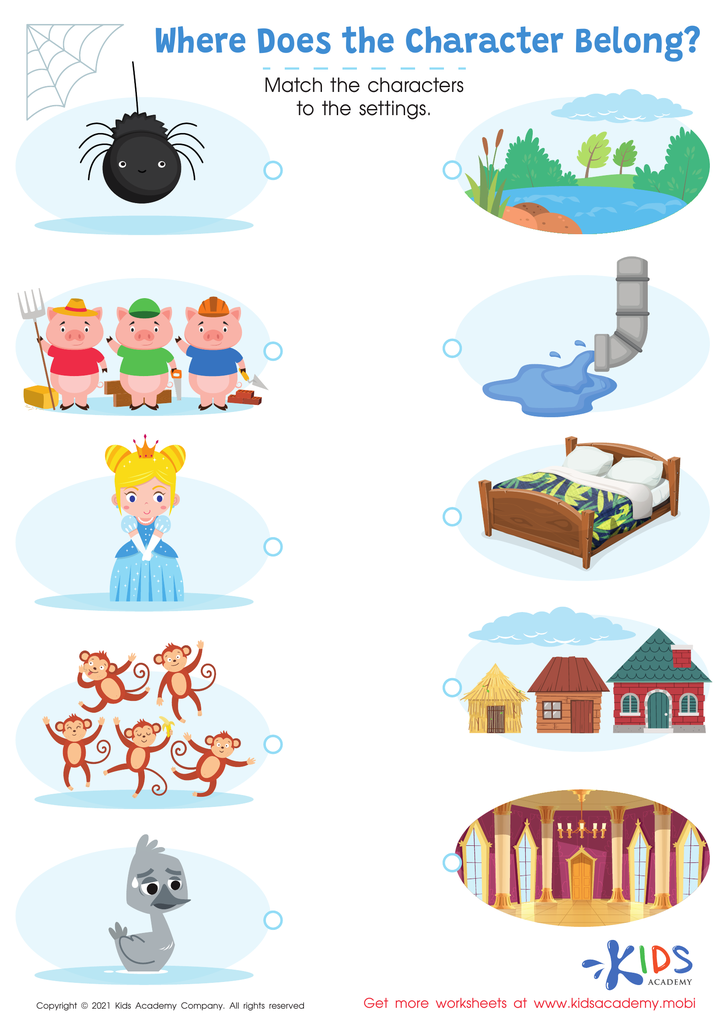
Where Does the Character Belong? Worksheet
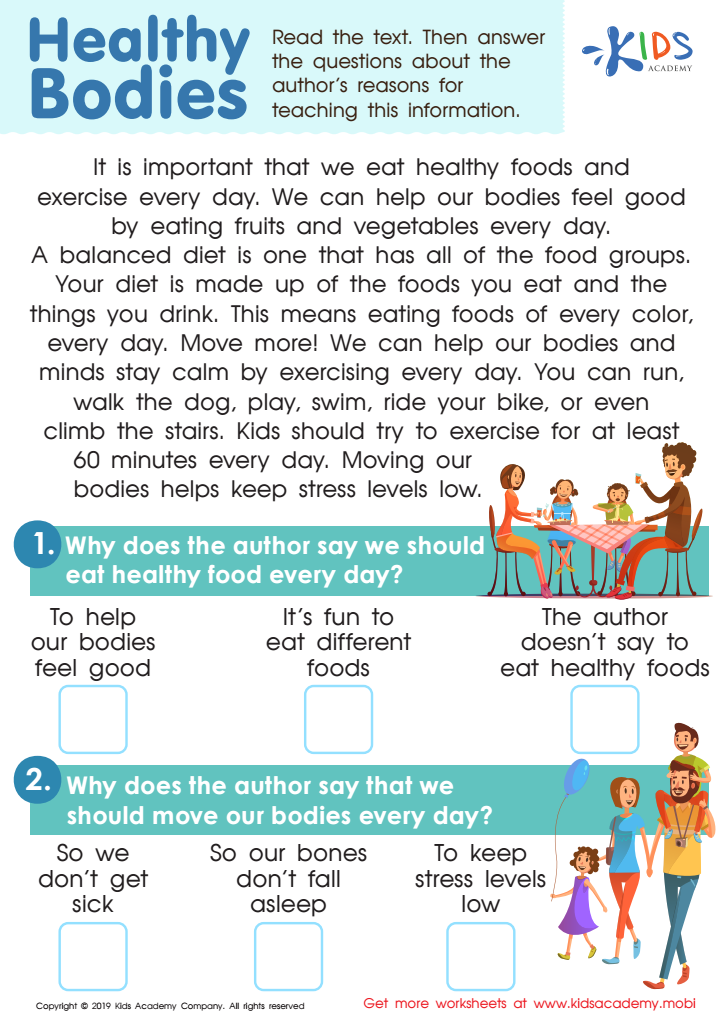
Healthy Bodies Worksheet
 Assign to My Students
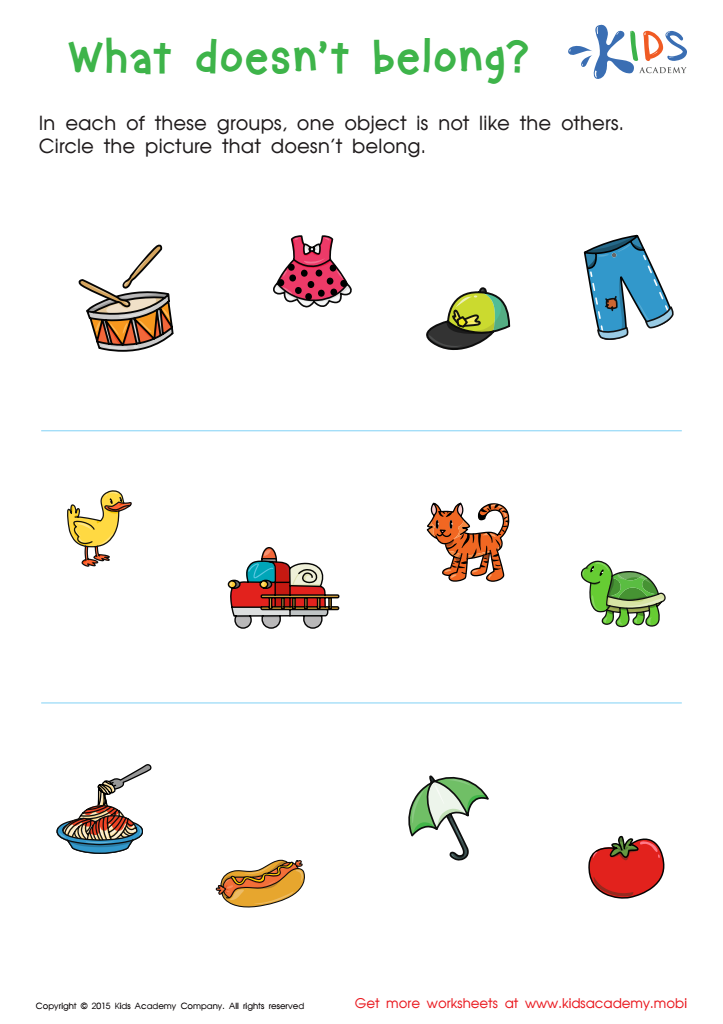
First Words: What Doesn't Belong Worksheet
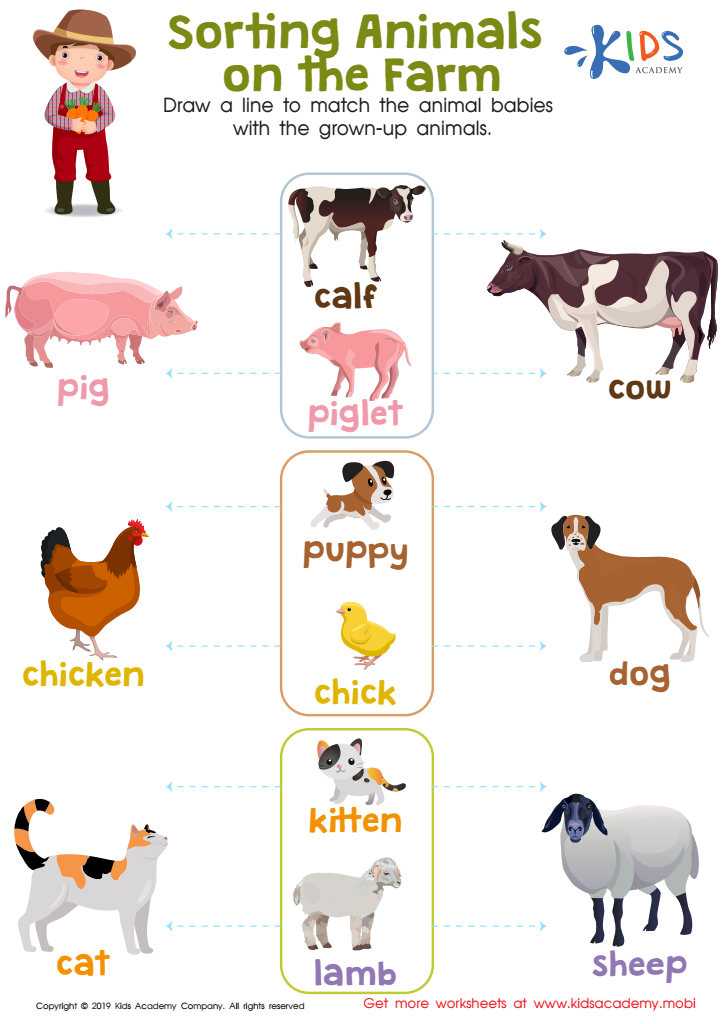
Sorting Animals on the Farm Worksheet
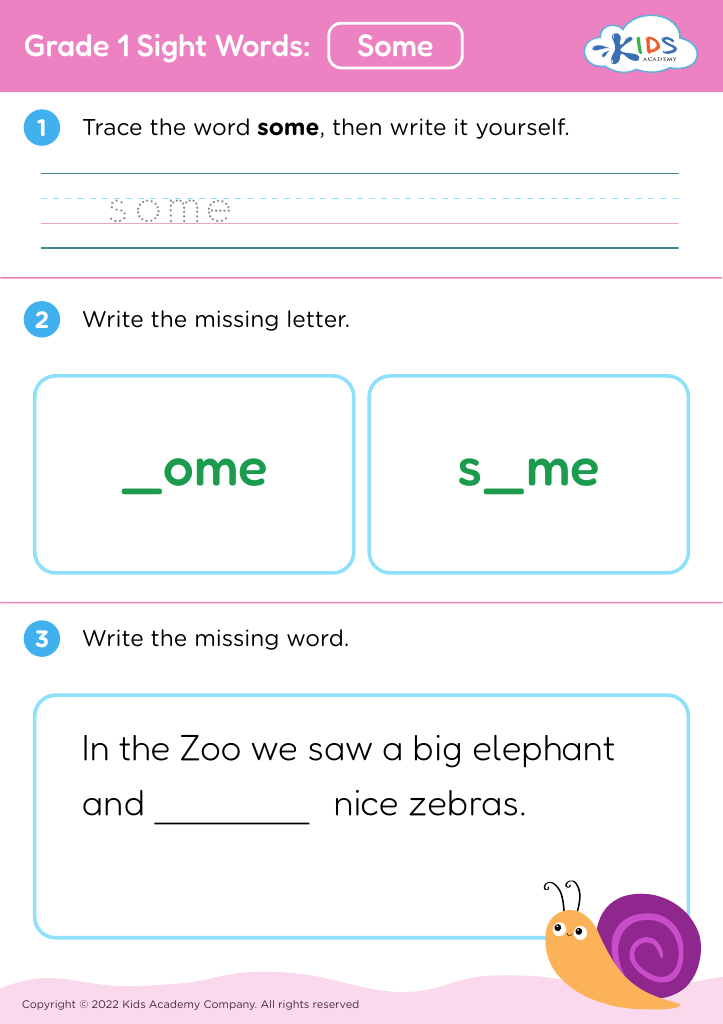







Categorization skills in reading are foundational cognitive abilities that dramatically influence a child's overall academic success and daily life problem-solving abilities. These skills allow children to group objects, ideas, and information based on common characteristics, facilitating better understanding and recall. For parents and teachers, nurturing categorization skills is essential because it boosts a child's ability to organize thoughts, a crucial underpin to effective learning.
For example, in early reading, when children learn to categorize words by patterns or meanings (such as sorting animals by habitat or foods by their food groups), they are essentially honing their ability to make connections between different pieces of information. This helps in comprehension beyond simple memorization. Children who can effortlessly categorize are more adept at understanding complex texts, and following instructions, and often excel not just in reading, but also in math and science, where these skills are equally important.
Furthermore, strong categorization skills support social development. Children can better understand social cues and categorize behaviors, leading to more effective peer relationships. By prioritizing categorization skills, parents and teachers not only support academic growth but also lay the groundwork for critical thinking, problem-solving, and the overall successful navigation of life's various complexities, fostering well-rounded, adaptive learners.








