
Character analysis Reading Worksheets
6 filtered results
Difficulty Level
Grade
Age
-
From - To
Subject
Activity
Standards
Enhance your students’ reading comprehension with our engaging Character Analysis Reading Worksheets! Designed for early learners, these printable resources offer structured activities that help children identify and evaluate the traits, motivations, and development of characters in various texts. Through captivating illustrations and targeted questions, students will build critical thinking skills and deepen their understanding of storytelling elements. Our worksheets cater to diverse learning styles, making them perfect for classrooms and home use alike. Foster a love for literature in your students while empowering them to express their insights. Explore our collection and inspire a new generation of confident readers today!
Favorites
With answer key
Interactive
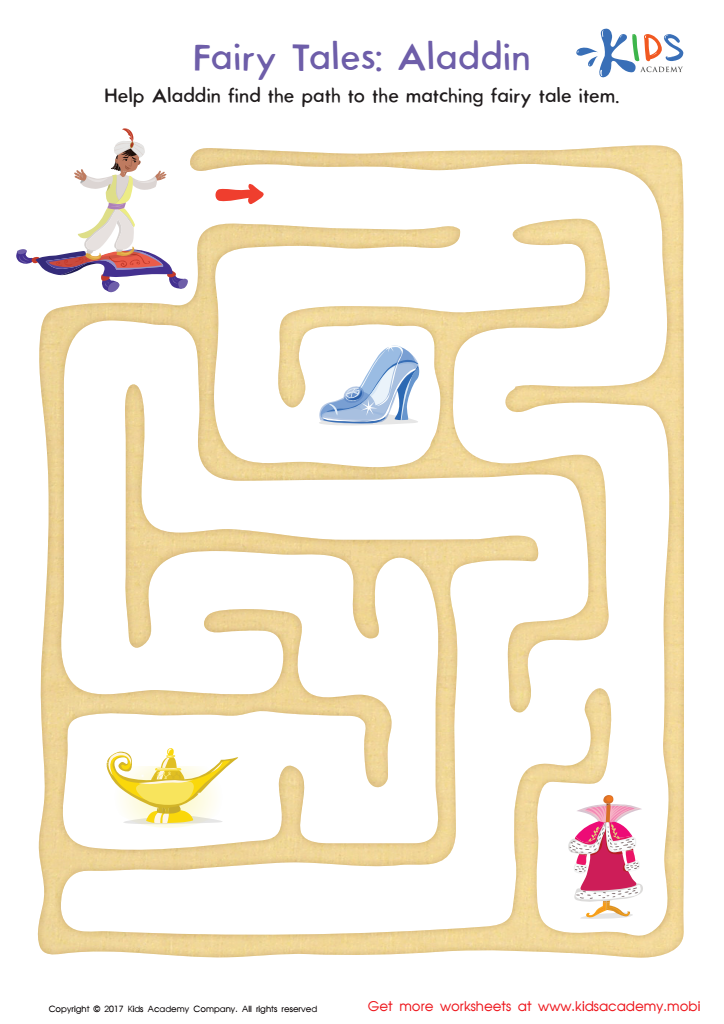
Fairy Tales Aladdin Printable
Test your child's reading recall with this challenge: the Aladdin maze worksheet! Guide your learner to identify objects linked to the story, then ask them to retell it afterwards. Hone those memory skills while having fun!
 Assign to My Students
Fairy Tales Aladdin Printable
Worksheet
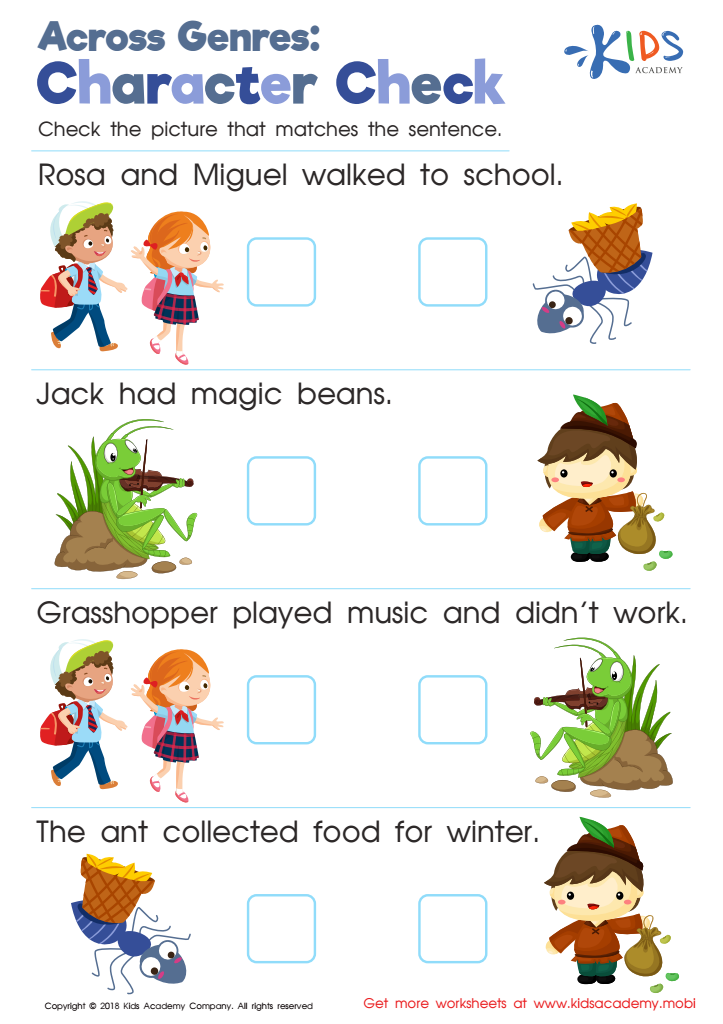
Across Genres: Character Check Worksheet
Read the sentences to your kids, then have them match the pictures to them. Ask them to look at the pictures and help them check which one goes with the sentence. The aim is to see how well they can do this exercise. (80 words)
Across Genres: Character Check Worksheet
Worksheet
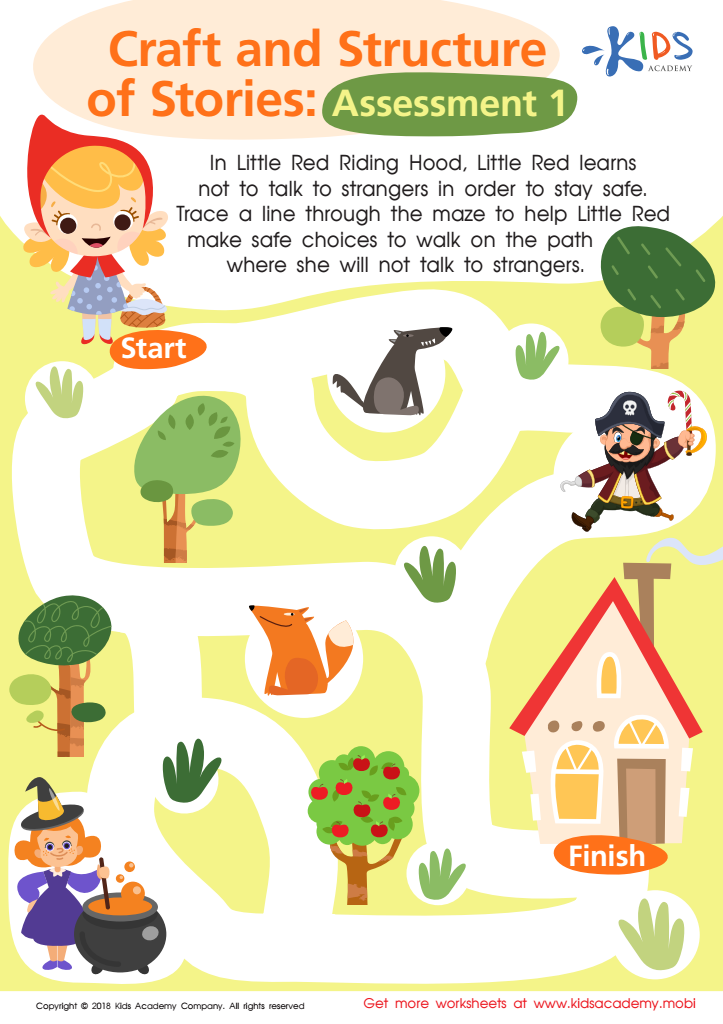
Craft and Structure of Stories: Assessment 1 Worksheet
Turn Little Red Riding Hood into a maze to review author's craft and characterization. Kids must lead her through the woods, avoiding strangers. Give them the main theme of not talking to strangers and watch as they draw a path to her grandmother's house. Fun and educational!
Craft and Structure of Stories: Assessment 1 Worksheet
Worksheet
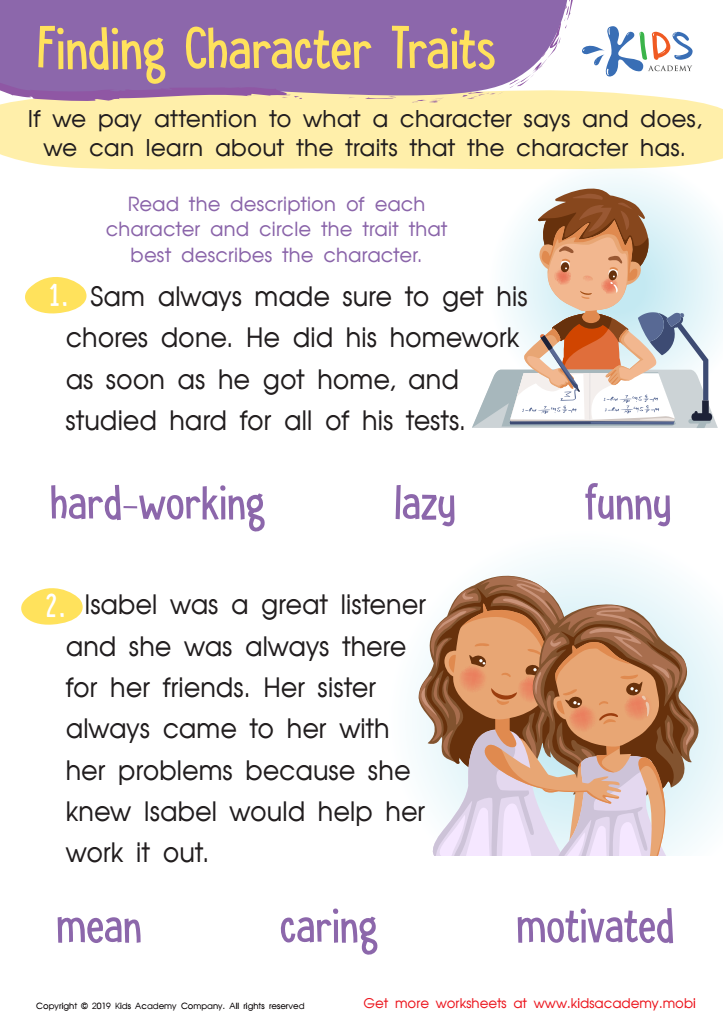
Finding Character Traits Worksheet
Before you start, make sure your kids know the difference between a character trait and a feeling. Traits are part of a character's entire personality and can be inferred from what they say and do in a story. Read the character descriptions on the worksheet and help your kids circle the best trait for each.
Finding Character Traits Worksheet
Worksheet
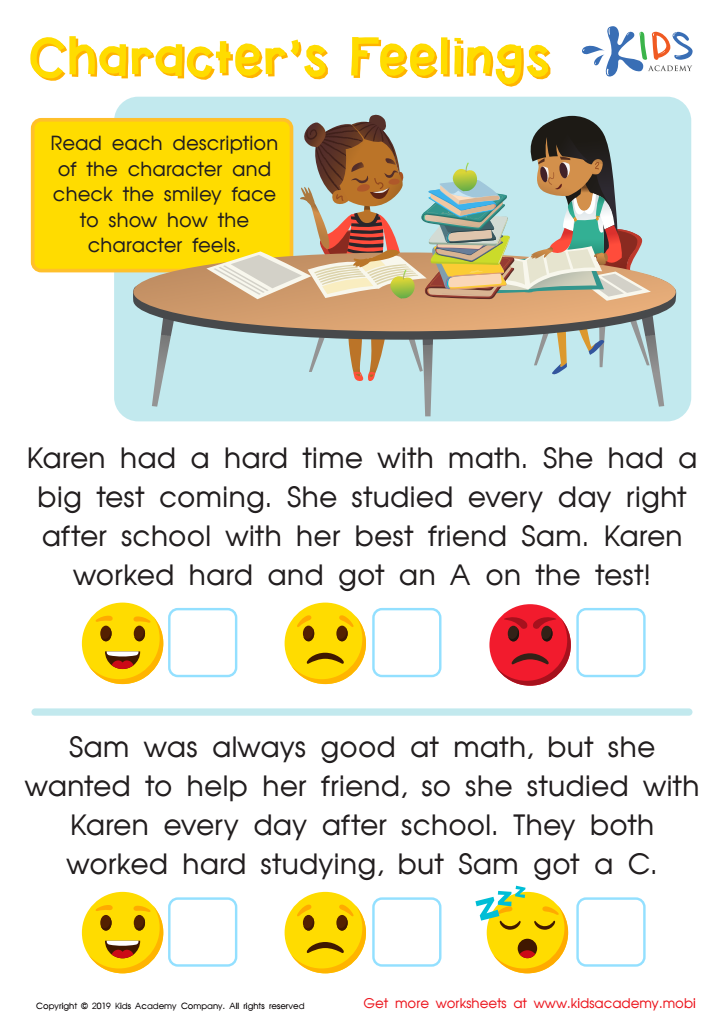
Character’s Feelings Worksheet
To help your child with reading and writing, encourage them to read simple texts and comprehension passages. This will help them learn new words, build their grammar and practice their reading skills. Go through a worksheet together, read the character descriptions then ask your child to pick the smiley face which shows how the character feels.
Character’s Feelings Worksheet
Worksheet
Join Kids Academy for Free
Who is primarily going to use this learning content?







Character analysis in reading is a crucial component of developing strong literacy skills and deeper comprehension among students. Understanding characters enriches a reader's engagement with the text, allowing them to empathize with diverse perspectives and experiences. When students analyze characters, they learn to identify motivations, desires, and conflicts, which helps them consider the underlying themes and messages of the story.
Teachers and parents should care about character analysis because it fosters critical thinking. Students learn to ask questions like, "Why did the character make that choice?" or "How does this character’s journey reflect real-life experiences?" These inquiries encourage them to not only infer meaning but also connect the literature to their own lives and societal issues.
Moreover, character analysis supports emotional and social development. Engaging with a character’s struggles and growth enables students to reflect on their values and morals, reinforcing concepts of empathy and respect for diversity. This reflective process cultivates essential life skills, including problem-solving, emotional intelligence, and communication.
By prioritizing character analysis, parents and teachers promote literacy, critical thinking, and personal growth in young learners, equipping them with tools they will need both academically and socially throughout their lives.








