Moral understanding Reading Worksheets
6 filtered results
-
From - To
Explore our engaging Moral Understanding Reading Worksheets, designed to help young learners develop essential ethics and values through reading. These carefully crafted worksheets foster critical thinking and empathy by presenting relatable scenarios that encourage children to reflect on right and wrong. Each activity features captivating stories and questions, motivating students to analyze characters' decisions and their consequences. Ideal for both classroom and home use, our resources promote discussions about morals, social responsibility, and personal growth. Enhance your students' foundational skills while nurturing their ability to discern moral dilemmas effectively. Discover the joy of learning with our interactive worksheets today!
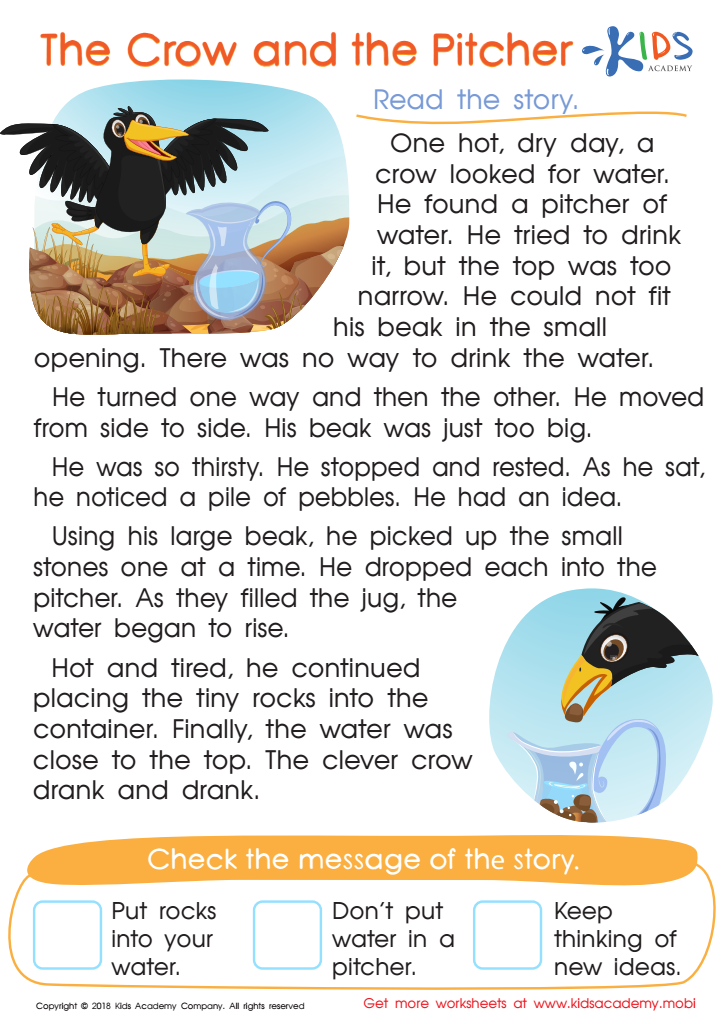
The Crow and the Pitcher Worksheet
 Assign to My Students
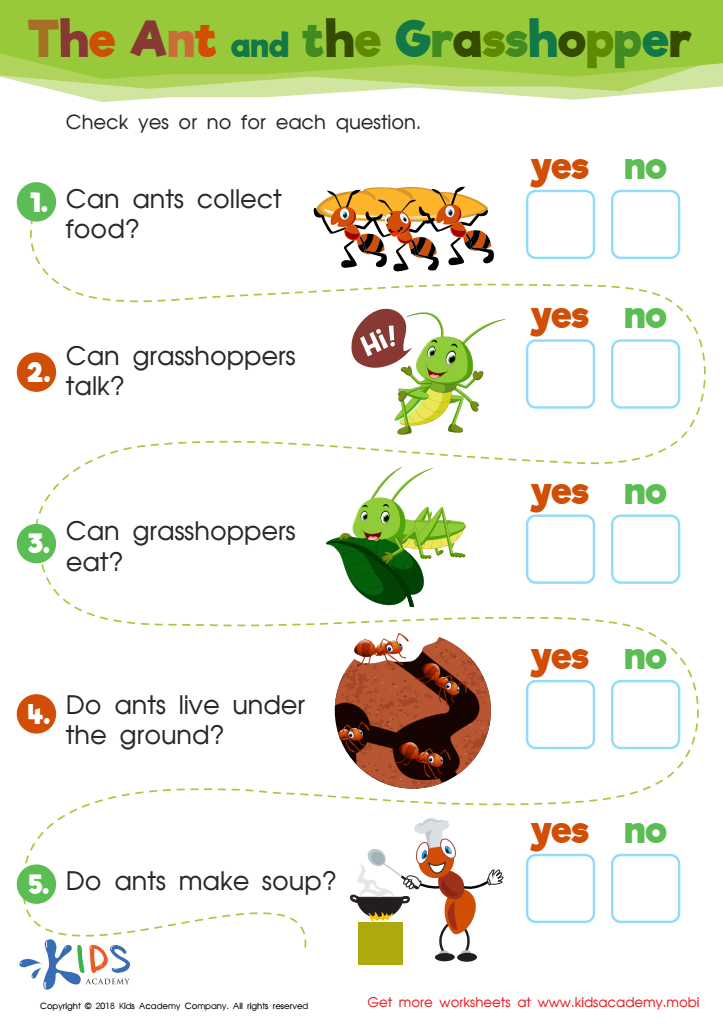
The Ant and The Grasshopper Worksheet
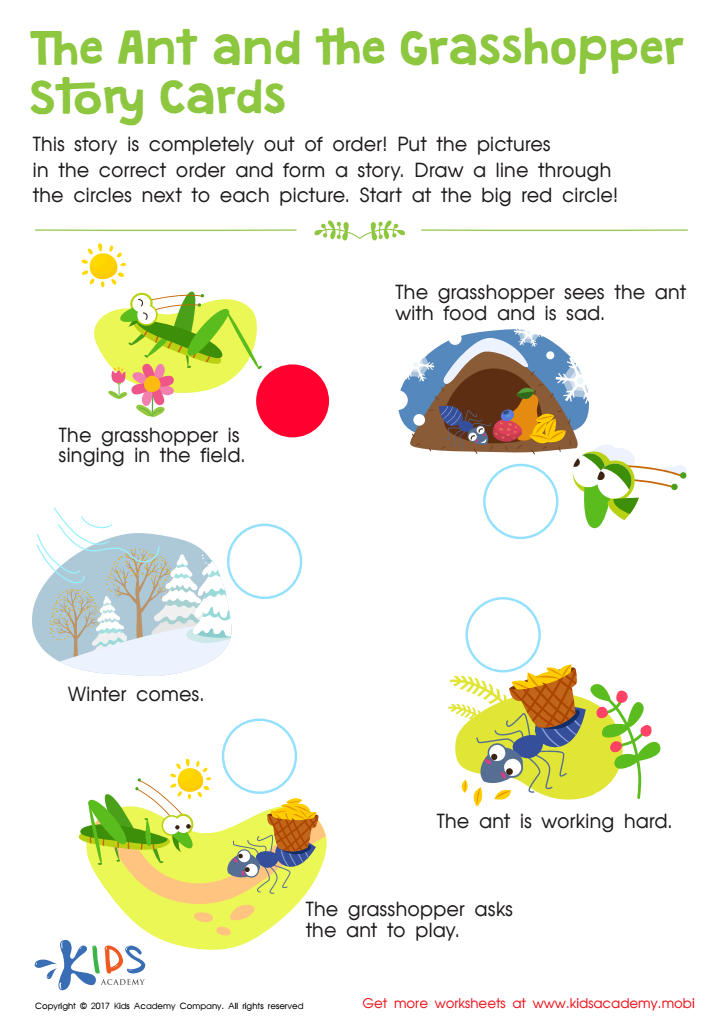
The Ant and The Grasshopper Worksheet
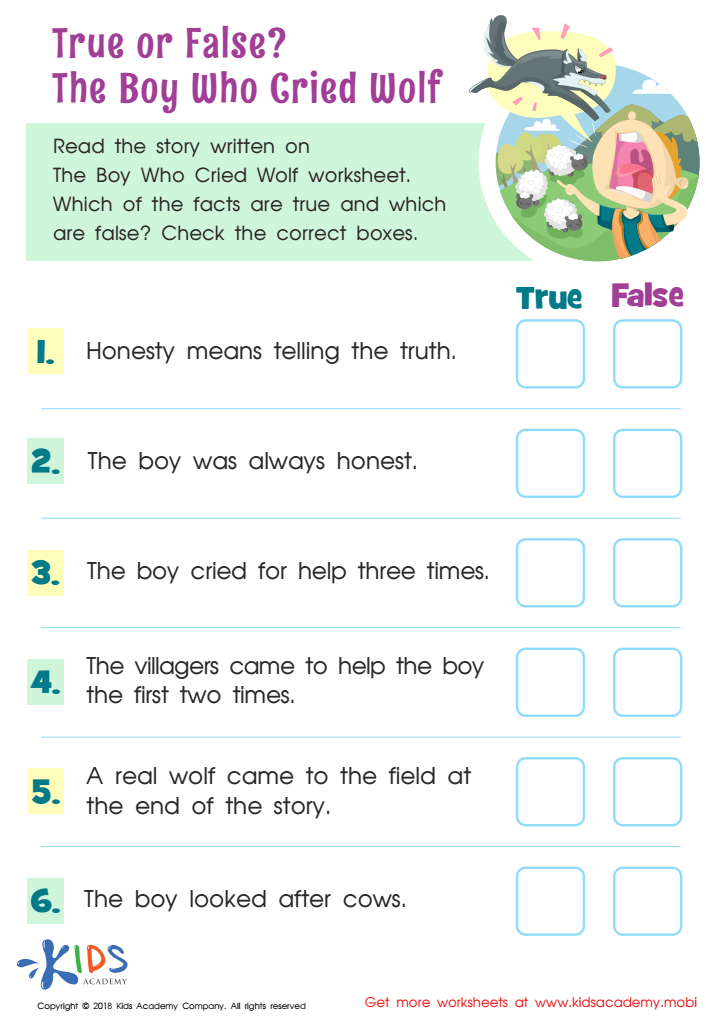
True or False? The Boy Who Cried Wolf Worksheet
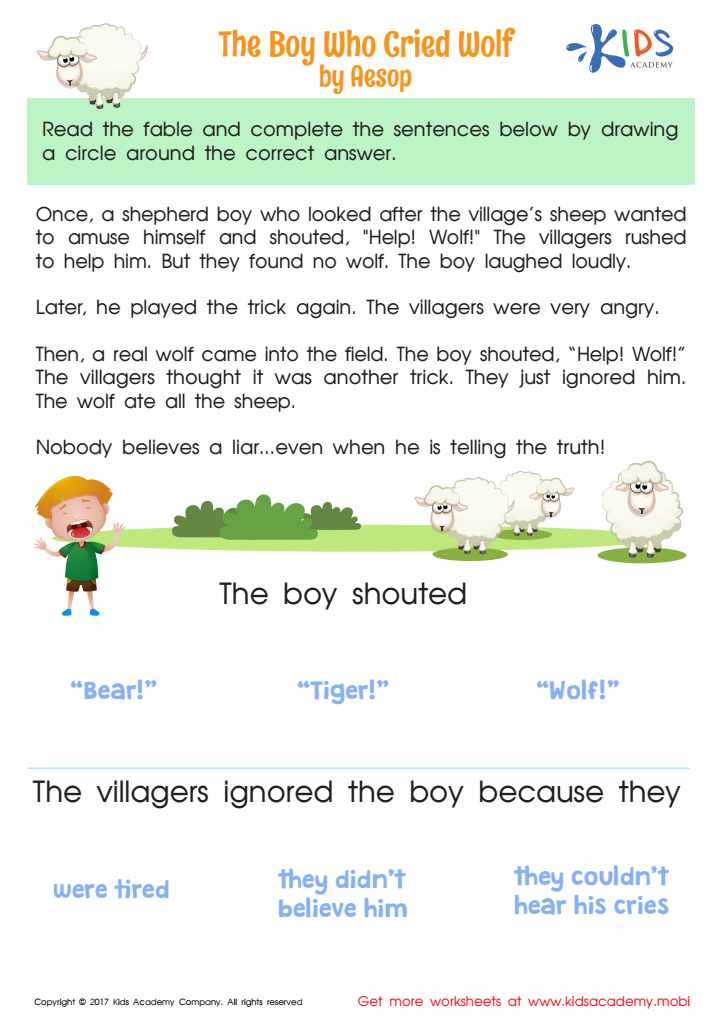
The Boy Who Cried Wolf Worksheet
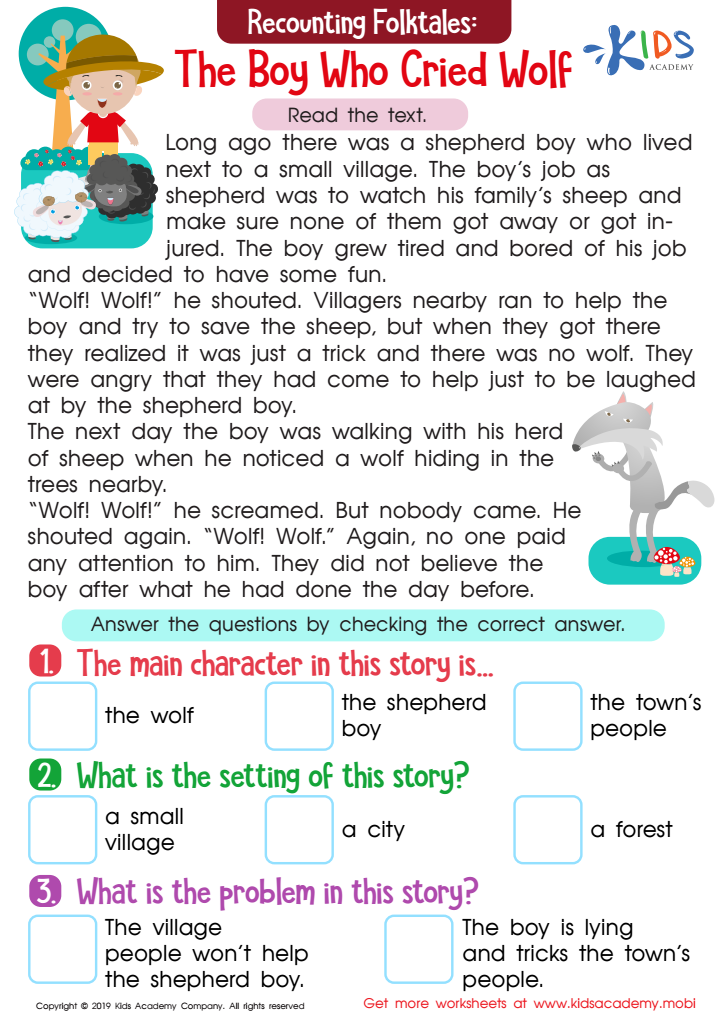
The Boy Who Cried Wolf Part 1 Worksheet







Moral understanding in reading is crucial for a variety of reasons. First, stories often illuminate ethical dilemmas and social issues, providing a context for children to explore complex moral principles. Engaging with narratives that focus on empathy, fairness, and integrity helps young readers develop their moral compass, helping them understand the impact of actions on others.
Additionally, when parents or teachers emphasize moral understanding in reading, they foster important discussions around values and responsible decision-making. These discussions can lead to increased empathy in children, as they learn to see the world from different perspectives and appreciate diverse experiences, cultures, and viewpoints.
Moreover, reading stories with moral lessons allows children to practice critical thinking skills as they analyze characters' choices and their consequences. This equips them with the tools to navigate ethical challenges in real life.
Finally, fostering moral understanding through reading contributes to creating a positive classroom and home environment where respect, kindness, and cooperation are prioritized. As children embolden their moral and ethical foundations, they are better prepared to become compassionate and responsible members of society. Thus, parents and teachers play a vital role in nurturing this multifaceted aspect of child development through literature.








