Rhyming skills development Reading Worksheets
3 filtered results
-
From - To
Enhance your child's reading and language skills with our engaging Rhyming Skills Development Reading Worksheets! These thoughtfully designed worksheets are perfect for early learners, focusing on recognizing and creating rhymes, which are essential for phonemic awareness. By incorporating fun activities and colorful illustrations, our worksheets make learning interactive and enjoyable. Kids will develop their vocabulary and reading fluency while sharpening their listening and comprehension skills. Ideal for use at home or in the classroom, our rhyming worksheets provide a comprehensive and effective approach to literacy development. Explore our resources today and support your child’s journey to becoming a confident reader!
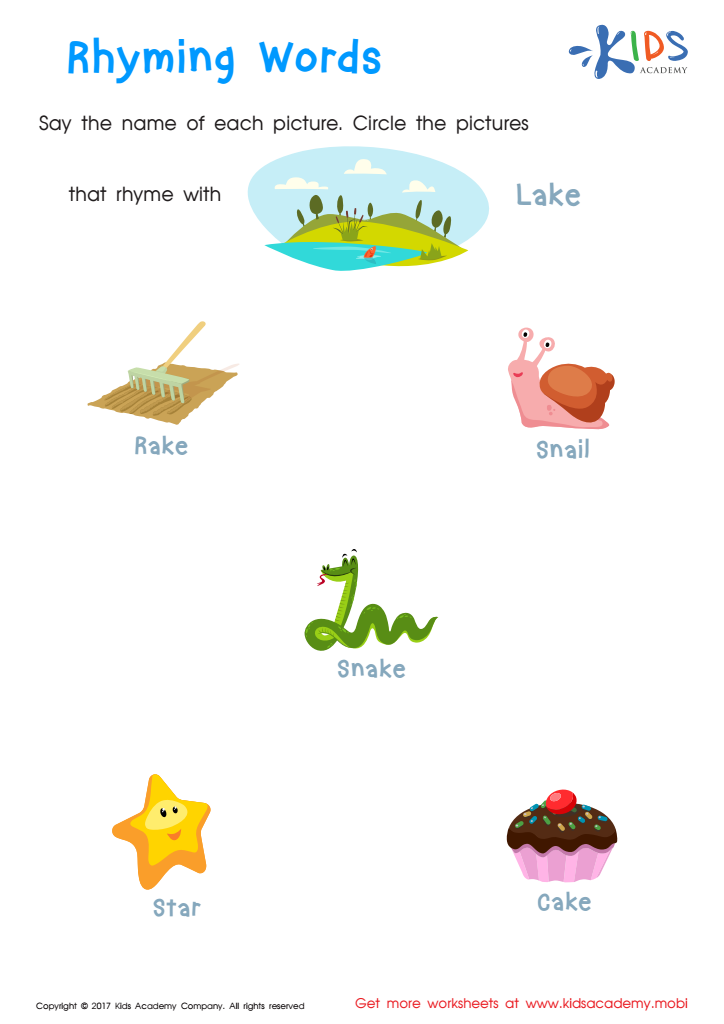
Rhyming Words Rhyming Worksheet
 Assign to My Students
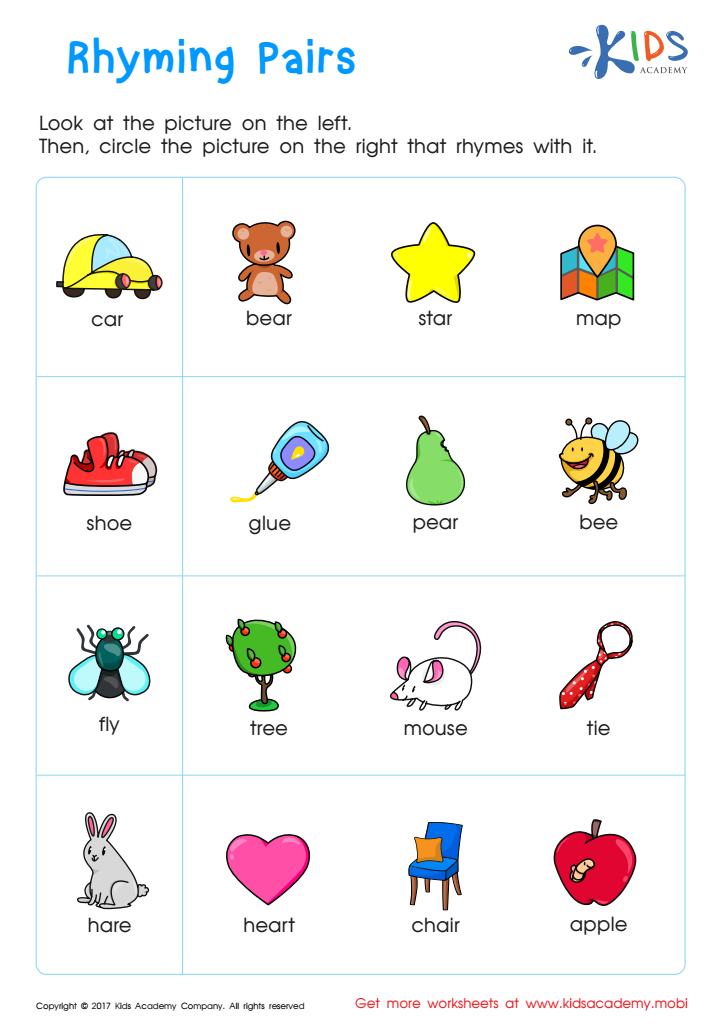
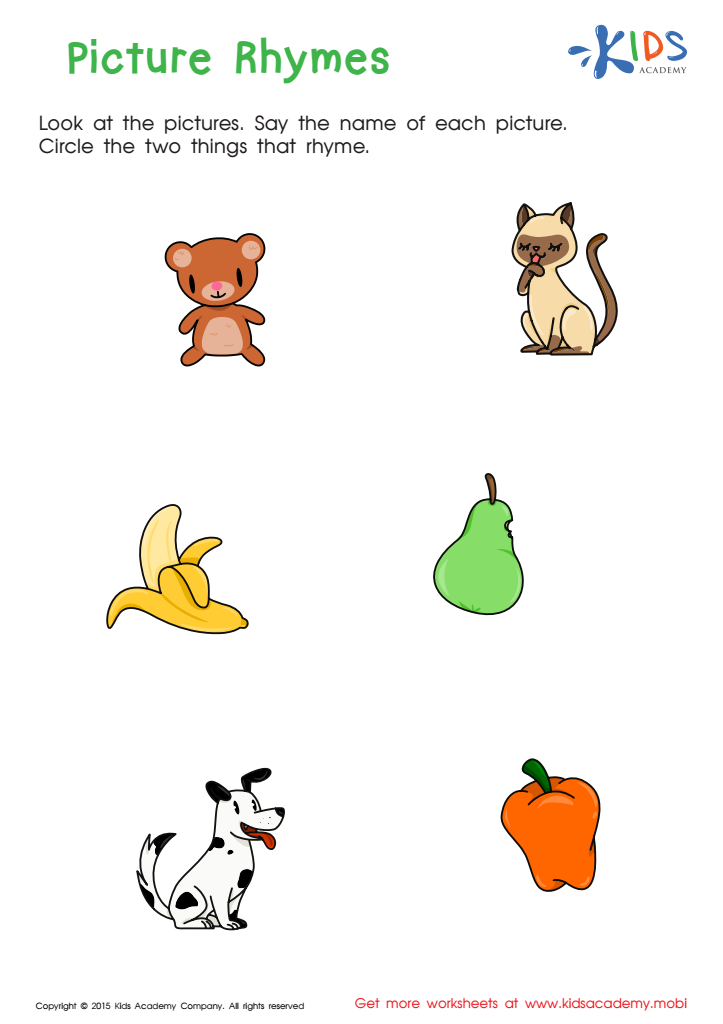
First Words: Picture Rhymes Worksheet



.jpg)




Rhyming skills development is crucial for early literacy and overall language acquisition. When parents and teachers encourage children to engage with rhymes, they enhance phonological awareness, a foundational skill for reading proficiency. Recognizing and producing rhyming words helps children become familiar with the sounds of language, facilitating decoding and word recognition when they start reading independently.
Moreover, rhyming exposes children to patterns in language, helping them predict words and build an understanding of syntax. This exposure fosters vocabulary growth, as children are more likely to grasp the meanings of new words when they connect them to familiar rhymes.
Additionally, rhyming activities are engaging and fun, making learning feel effortless. They promote listening skills, memory, and creativity, allowing children to experiment with language and express themselves. Furthermore, shared reading and singing rhymes strengthen the bond between parents, teachers, and children, creating a positive emotional connection to literacy.
In summary, rhyming is more than just word play; it is a vital component of linguistic development that supports reading readiness and joy in language, making it an essential focus for both parents and educators. Engaging in activities that enhance rhyming skills is an investment in children's academic success and confidence.








