Understanding sequencing Reading Worksheets
3 filtered results
-
From - To
Enhance your child’s reading comprehension journey with our Understanding Sequencing Reading Worksheets. Crafted to help young learners pinpoint the sequence of events in a story, these worksheets guide kids through logical order identification. By engaging in activities like filling in missing pieces or reordering events, children develop essential skills in storytelling, critical thinking, and comprehension. The fun and educational exercises make the learning process enjoyable and impactful. Ideal for early-grade students, these worksheets ensure that kids grasp the concept of sequencing while fostering a love for reading. Spark their curiosity and boost their literacy skills today with our expertly designed resources!
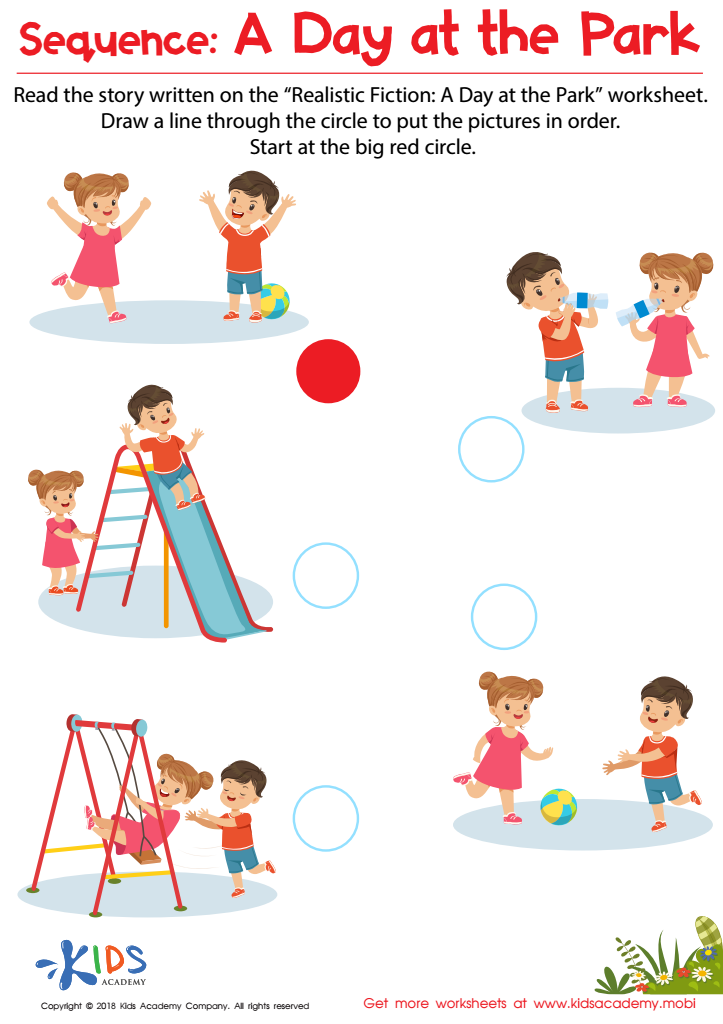
Sequence: A Day at the Park Worksheet
 Assign to My Students
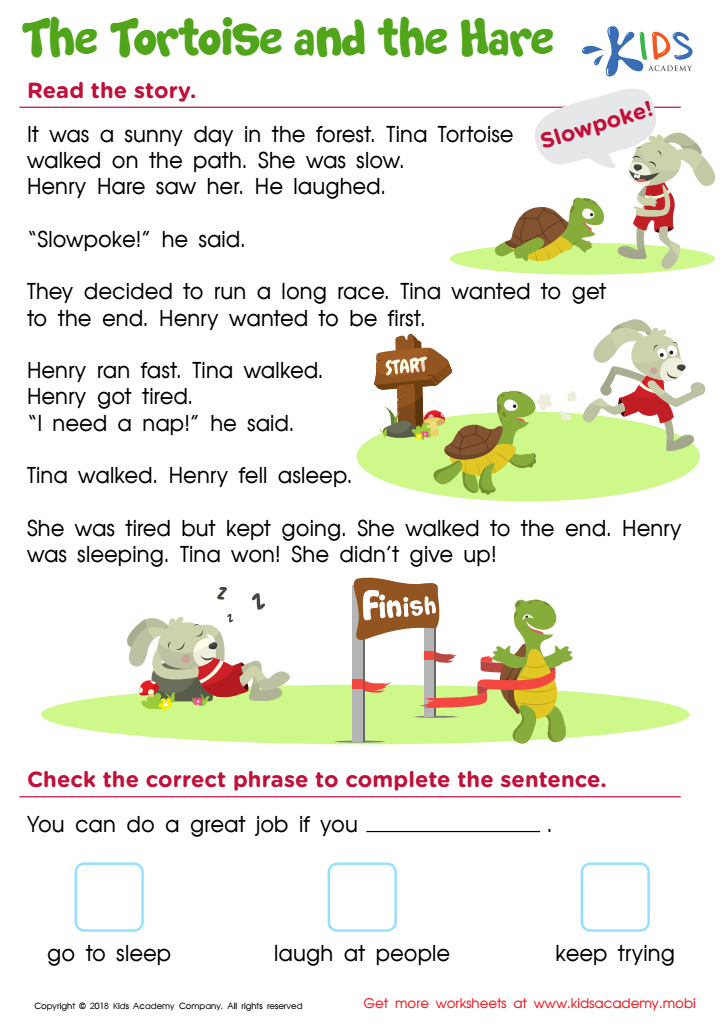
The Tortoise and the Hare Worksheet







Understanding sequencing in reading is crucial for both parents and teachers to support children's literacy development. Sequencing refers to the ability to understand and recount the order of events or steps in a story or a text. This skill is foundational not only for reading comprehension but also for critical thinking and problem-solving.
When children grasp sequencing, they can follow the narrative structure, which helps them predict what will happen next or recall details accurately. This enhances their overall comprehension and retention. For instance, understanding that events follow a beginning, middle, and end structure allows children to make sense of the storyline, integrate new information, and engage more deeply with the text.
Moreover, sequencing is a key component in writing and organizing thoughts. Children learn to articulate ideas coherently and logically, which is essential for effective communication. For example, when recounting a day at school, a child who understands sequencing will narrate it in an order that makes sense, reflecting a clear thought process.
By focusing on sequencing, parents and teachers can better identify reading difficulties early on and implement targeted strategies to address them. Activities such as storytelling, discussing the day’s events, and sequencing games strengthen this skill, contributing to a solid foundation in literacy and overall cognitive development. In sum, sequencing fosters not just reading skills but also broader academic and life competences.








