
Understanding Simple Machines Reading Worksheets
3 filtered results
Difficulty Level
Grade
Age
-
From - To
Subject
Activity
Standards
Discover our "Understanding Simple Machines" reading worksheets, designed to introduce young learners to the fascinating world of simple machines. These printable worksheets engage students with a mixture of informative texts and interactive activities, helping them grasp the function and importance of levers, pulleys, wheels, and more. Perfect for reinforcing reading comprehension and scientific concepts, each worksheet encourages critical thinking and curiosity. Ideal for classroom use or at-home enrichment, our worksheets make learning about simple machines enjoyable and accessible, setting a strong foundation for future STEM education. Explore today and watch your child's understanding soar!
Favorites
With answer key
Interactive
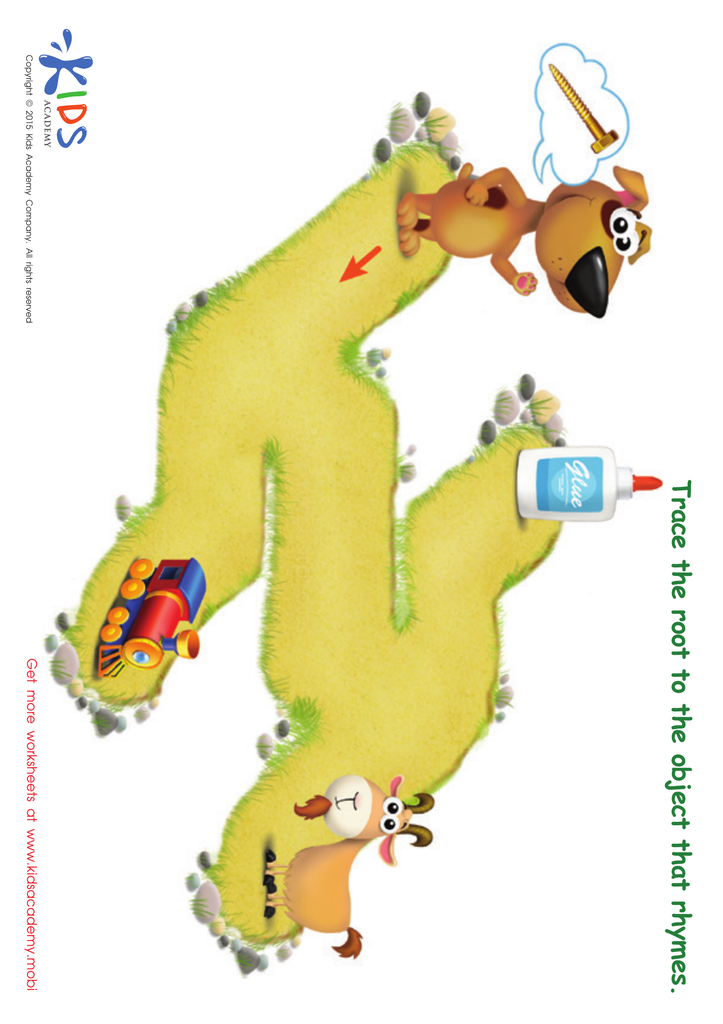
Screw Rhyming Words Worksheet
Worksheet
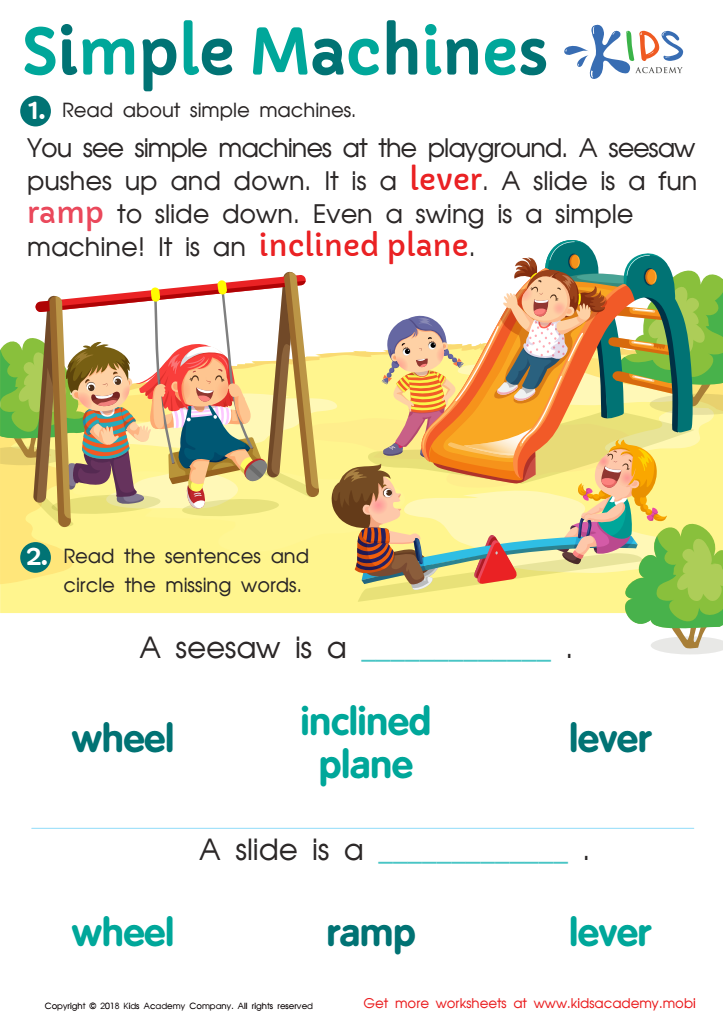
Simple Machines Worksheet
At the playground, your kids likely love to play and swing. Swings are simple machines – they work by using force to move something. Read the following sentences to them, with some words missing - help them fill in the blanks. Simple machines make work easier by __changing__ the size or __direction__ of a force. Swings use a _fulcrum_ and a _lever_ to move.
 Assign to My Students
Simple Machines Worksheet
Worksheet
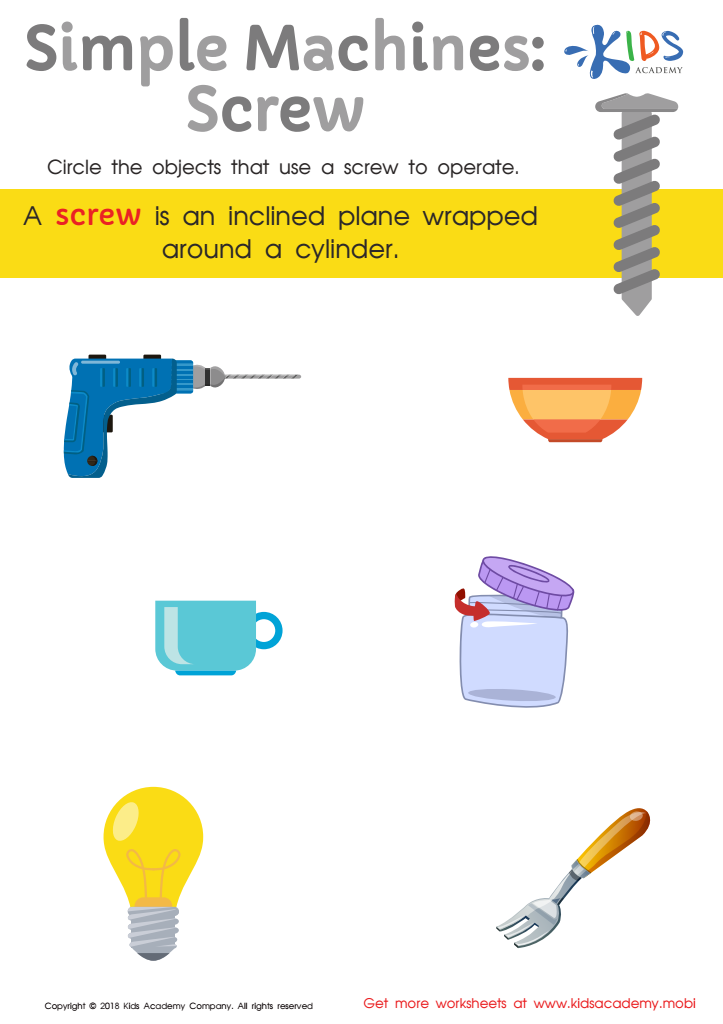
Simple Machines: Screw Worksheet
Explain to your kids that learning about simple machines can be fun - like the swings they love on the playground. Ask them to name some of their favorites. Point out that screws are used to connect simple machines. Then, look at pictures together and have your kids circle the objects that use a screw.
Simple Machines: Screw Worksheet
Worksheet
Join Kids Academy for Free
Who is primarily going to use this learning content?




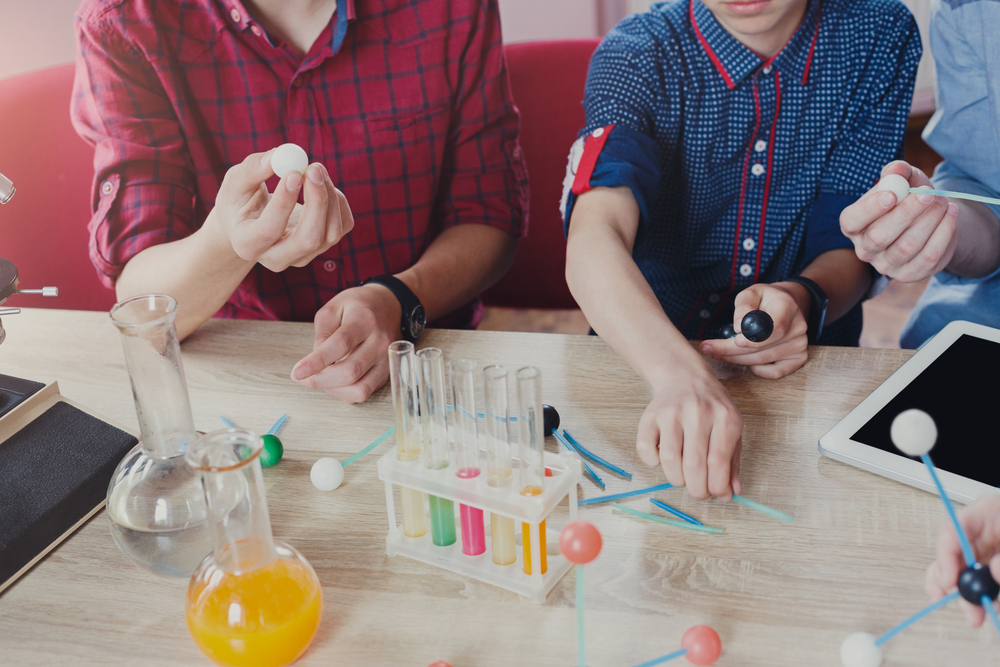

Understanding simple machines is foundational in developing a child's problem-solving and critical thinking skills. Simple machines—levers, wheels, pulleys, inclined planes, screws, and wedges—are basic mechanical devices that make work easier by altering the direction or magnitude of a force. Introducing these concepts early in life can spark curiosity in the scientific principles governing everyday objects, encouraging exploration and experimentation.
For parents, nurturing an interest in simple machines can lead to enriched interactions at home. Activities such as building with blocks, fixing toys, or even cooking (knives as wedges, screws in bottle caps, etc.) become opportunities for practical science lessons. This fosters a collaborative learning environment, where children feel supported and motivated to ask questions and seek understanding.
For teachers, integrating simple machines into the curriculum can make abstract concepts more concrete and relatable. Lessons on simple machines also support STEM education initiatives, helping children grasp fundamental principles of physics and engineering. These skills are practically beneficial and contribute to longer-term academic and career success, as students who develop strong analytical skills from a young age are better equipped for advanced studies.
Ultimately, understanding simple machines builds not only cognitive abilities but also hands-on skills, helping children become better problem-solvers in daily life and future endeavors. parents and teachers play a vital role in making these learning experiences engaging and impactful.








