Filters

7 filtered results

Clear all filters
Favorites
With answer key
Interactive

7 filtered results

Difficulty Level

Grade


Enhance your child's learning experience with our "Critical Thinking Animals Worksheets"! Designed for young learners, these engaging activities encourage curiosity and exploration within the animal kingdom. Each worksheet promotes critical thinking skills by challenging students to analyze, infer, and problem-solve, fostering a deeper understanding of animal behavior and habitats. From identifying different species to exploring food chains, our resources are tailored to attract young minds and support classroom or home learning. Perfect for educators and parents alike, these worksheets make learning fun and interactive while building essential cognitive skills. Dive into the world of animals and watch your child's critical thinking flourish!

Check out this FREE Trial Lesson on Animals!

Animal Adaptations

Favorites
With answer key
Interactive
  • Critical Thinking
  • Animals
Am I a Mammal or Bird? Worksheet

Am I a Mammal or Bird? Worksheet

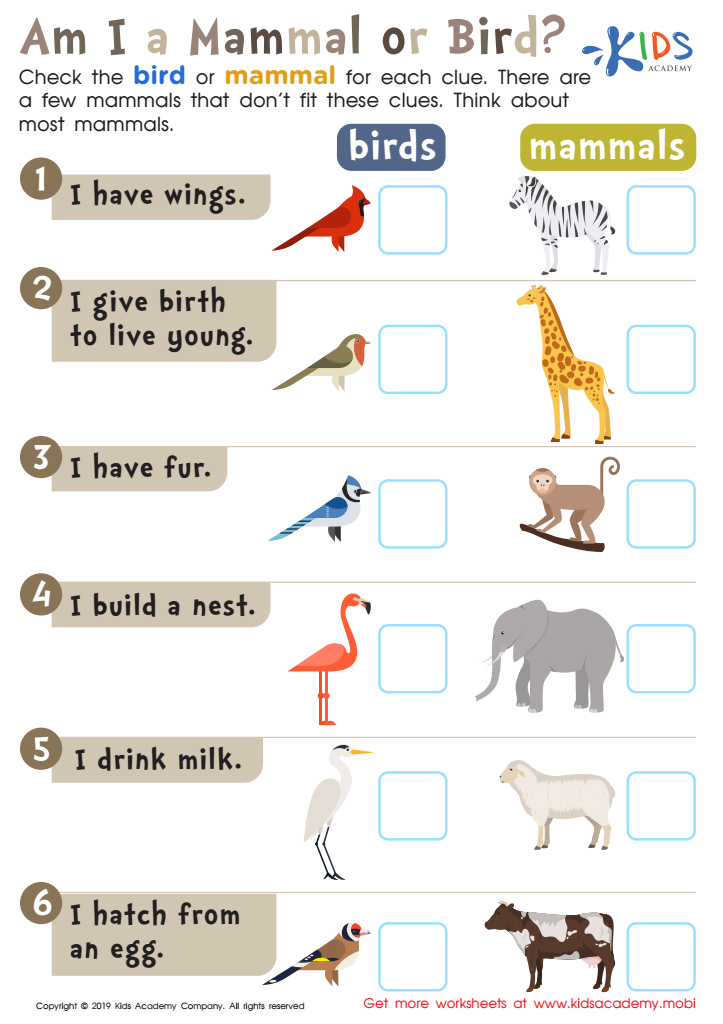
We categorize animals into groups such as mammals, birds, reptiles, etc. This worksheet helps kids understand the difference between birds and mammals. Read through the clues and think about each one. Then decide if it describes a bird or mammal, check the box and complete!
Am I a Mammal or Bird? Worksheet
Worksheet
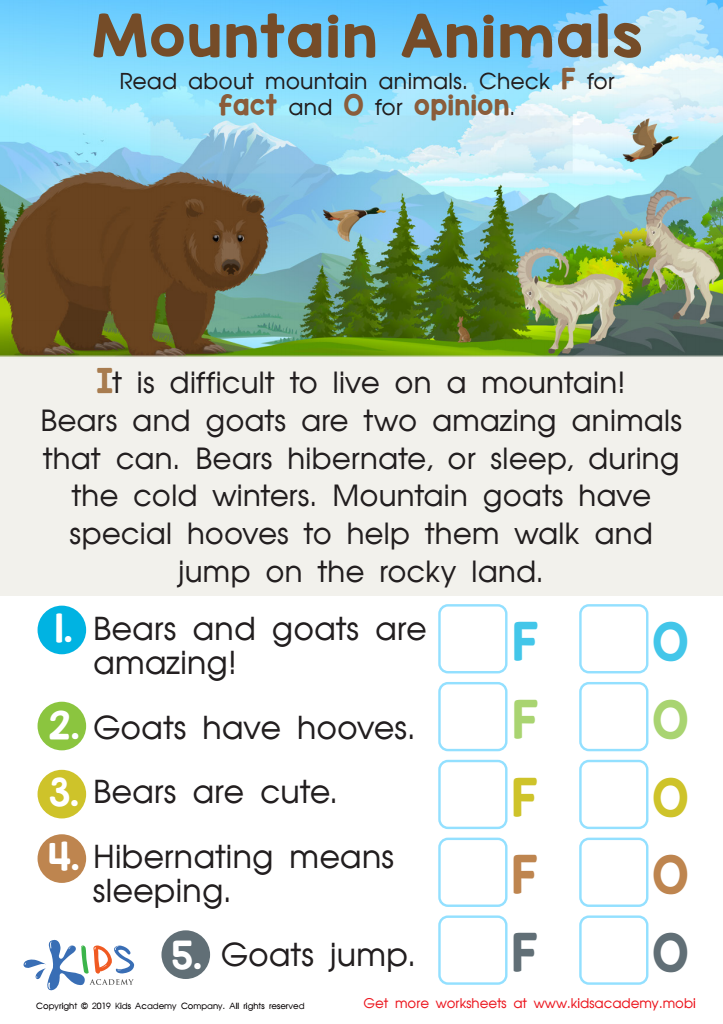
Mountain Animals Worksheet

Mountain Animals Worksheet

Is mountain wildlife amazing? Fact or fiction? Help your child sharpen critical-thinking skills with this engaging worksheet. Featuring a fun nonfiction passage about animals like bears and goats, your child will read through the text and identify each statement as fact or fiction. Perfect for boosting reading comprehension and analytical abilities!
Mountain Animals Worksheet
Worksheet
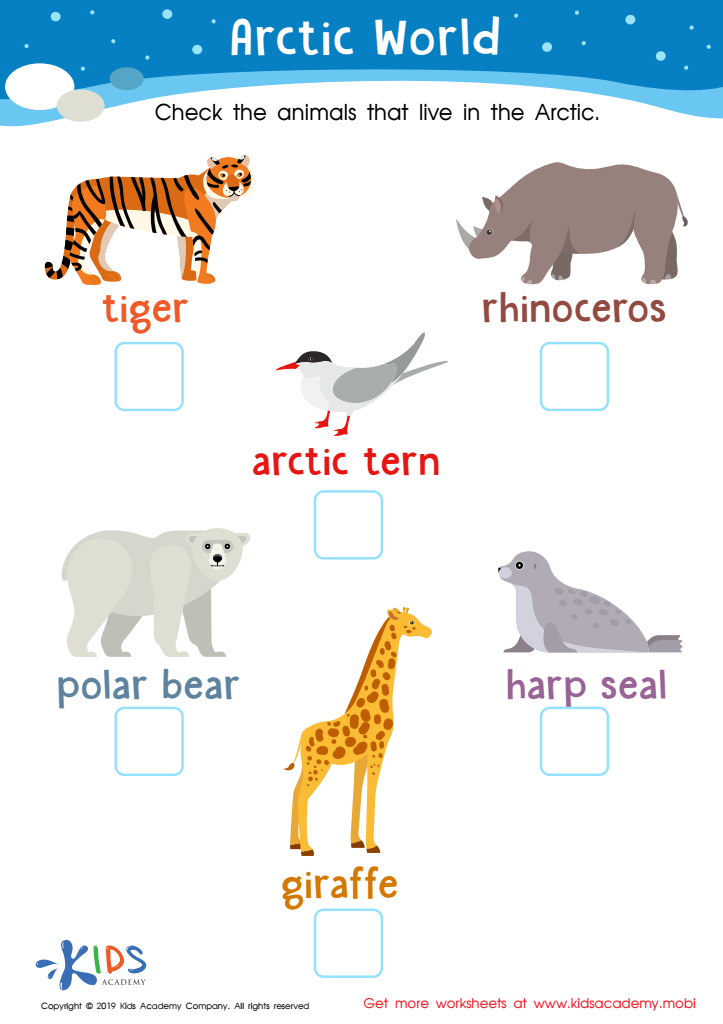
Arctic World Worksheet

Arctic World Worksheet

Ask your students if they know where the Arctic is located and what lives there. If not, use a world atlas to show them. The Arctic is very cold and snow-covered; native animals have adapted to survive the harsh conditions. Look at the animals in the worksheet and help your students decide which ones live in the Arctic.
Arctic World Worksheet
Worksheet
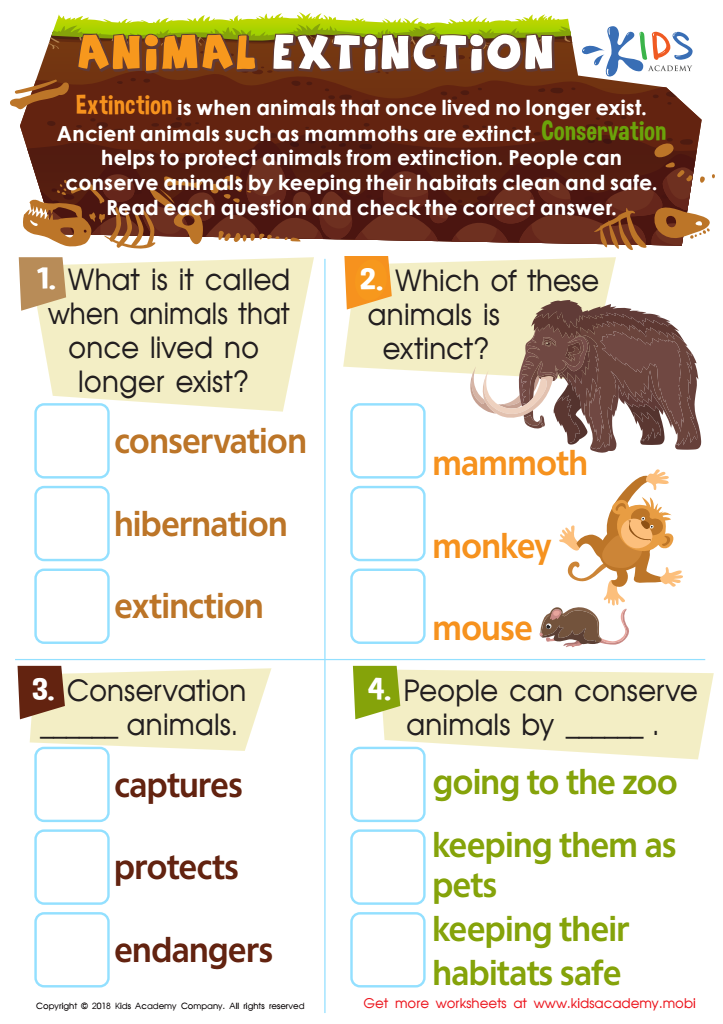
Animal Extinction Worksheet

Animal Extinction Worksheet

Children can learn how their actions can help endangered animals with this free PDF worksheet. It explains extinction, looks at the mammoth as an example, and poses questions about conservation. Keeping habitats clean and safe is key to protecting animals and keeping them abundant. Learning about this now can make a huge difference for future generations.
Animal Extinction Worksheet
Worksheet
Classifying animals worksheet 2nd grade

Classifying Animals Worksheet

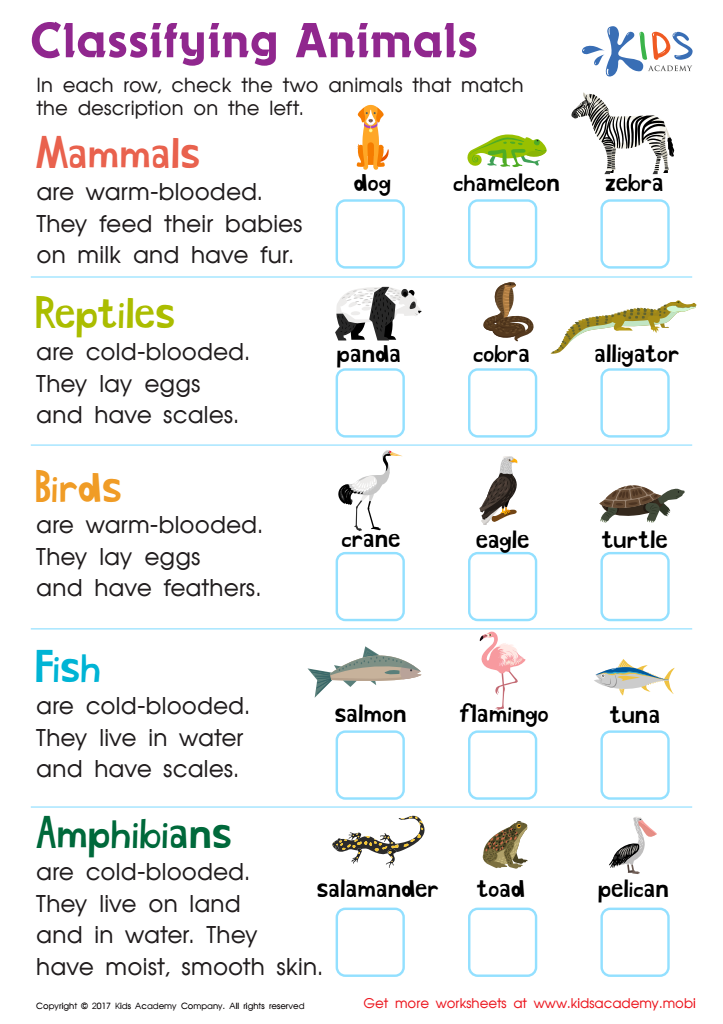
Print the 2nd grade animal classification worksheet and help kids study the differences between mammals, reptiles, birds, fish and amphibians. Let them pick two examples from the options given.
Classifying Animals Worksheet
Worksheet
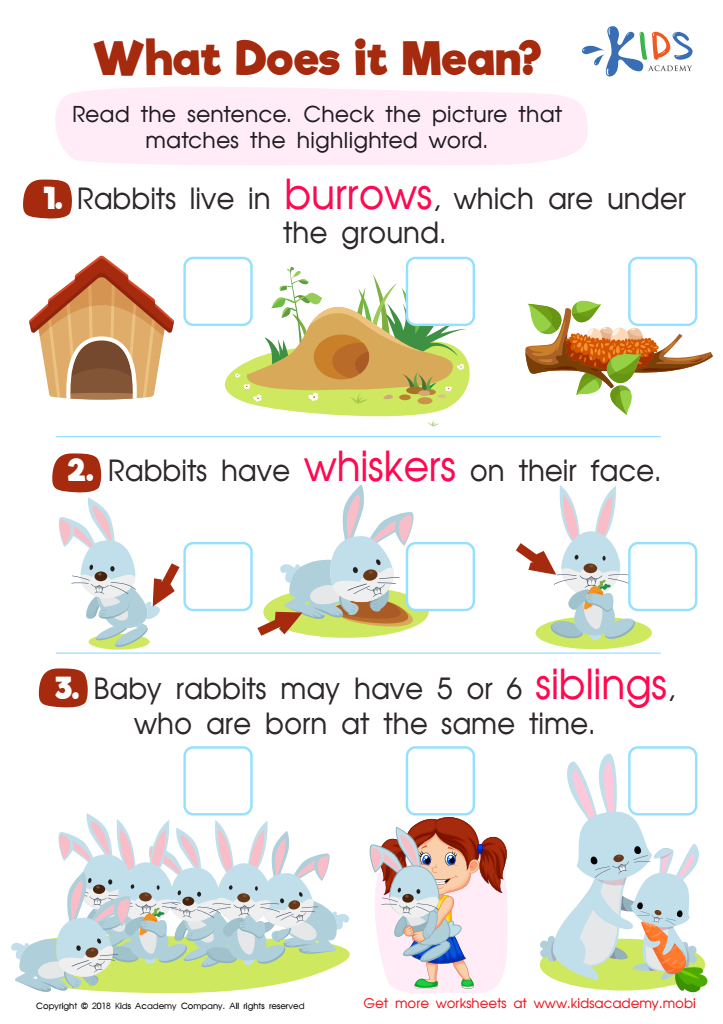
What Does It Mean? Worksheet

What Does It Mean? Worksheet

Teach your child to use context clues with this engaging Kids Academy worksheet. Read the sentences and find the pink-highlighted word. Use the other words in the sentence to figure out the meaning, then check the box next to the picture that represents it.
What Does It Mean? Worksheet
Worksheet
Animal Nests Worksheet


Animal Nests Worksheet

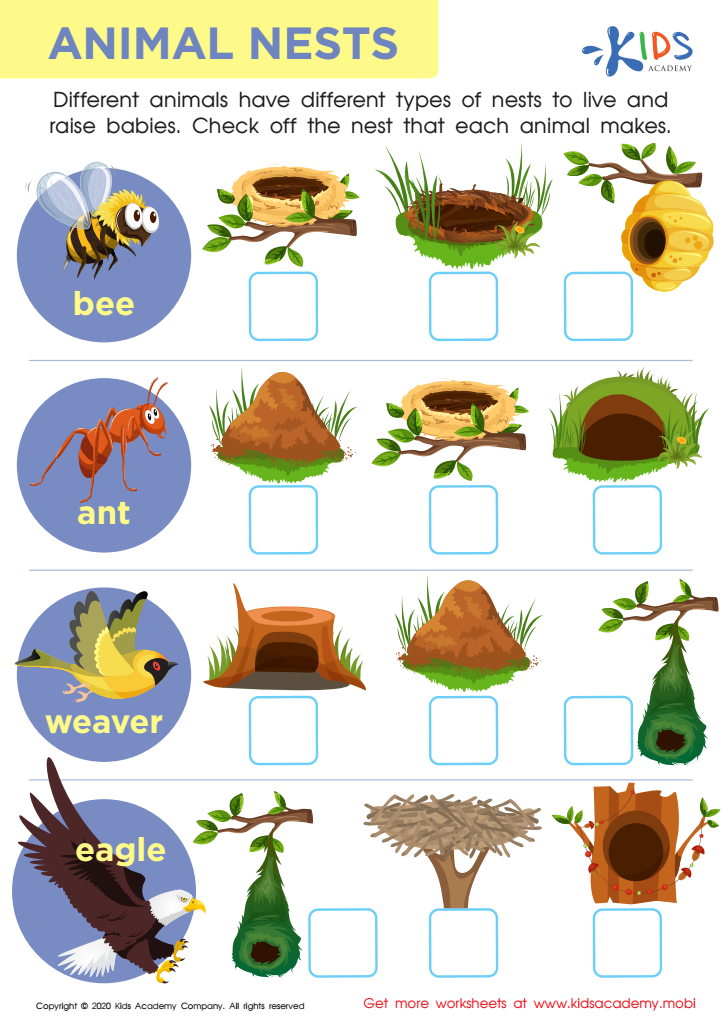
Animals need homes to sleep and stay safe. Look at the animal on the left and examine the nests and hives to the right. Check off the correct one for each animal to complete the worksheet! From birds to bees, it's a great way to show different types of homes animals make!
Animal Nests Worksheet
Worksheet


Parents and teachers should profoundly value the concept of Critical Thinking Animals because it fosters essential cognitive skills in children. Engaging with creative activities that introduce Critical Thinking Animals—whether through stories, games, or discussions—can significantly enhance a child's problem-solving abilities and decision-making skills. These activities encourage kids to analyze situations, consider various perspectives, and develop conclusions based on evidence.

Furthermore, teaching critical thinking through relatable animal characters makes the learning process more enjoyable and relatable for young learners. Animals often symbolize various traits, allowing children to explore complex themes such as morality, teamwork, and responsibility in a manner they can understand. This thematic approach cultivates empathy and emotional intelligence, foundational aspects of holistic education.

Moreover, in today’s rapidly changing world filled with information overload, critical thinking empowers children to navigate challenges, make informed choices, and develop a lifelong love for learning. It equips them with the skills needed for success in their future academic and personal pursuits. Ultimately, integrating Critical Thinking Animals into education not only enriches content but shapes thoughtful, innovative, and compassionate individuals ready to tackle real-world issues. Parents and teachers, therefore, should earnestly advocate for this practice to ensure their child's bright future.