Learning about ecosystems Animals Worksheets
4 filtered results
-
From - To
Discover an engaging collection of "Learning about Ecosystems Animals Worksheets" designed to enhance young learners' understanding of the intricate connections within ecosystems. These worksheets encourage students to explore various animal habitats, interactions, and adaptations, fostering critical thinking and environmental awareness. With a mix of fun activities, such as matching, labeling, and drawing, kids will develop a solid foundation in ecology while honing essential learning skills. Perfect for classrooms or at-home learning, these resources inspire curiosity about the natural world and promote a deeper appreciation for biodiversity. Dive into the fascinating world of ecosystems with our visually captivating and educationally enriching worksheets!
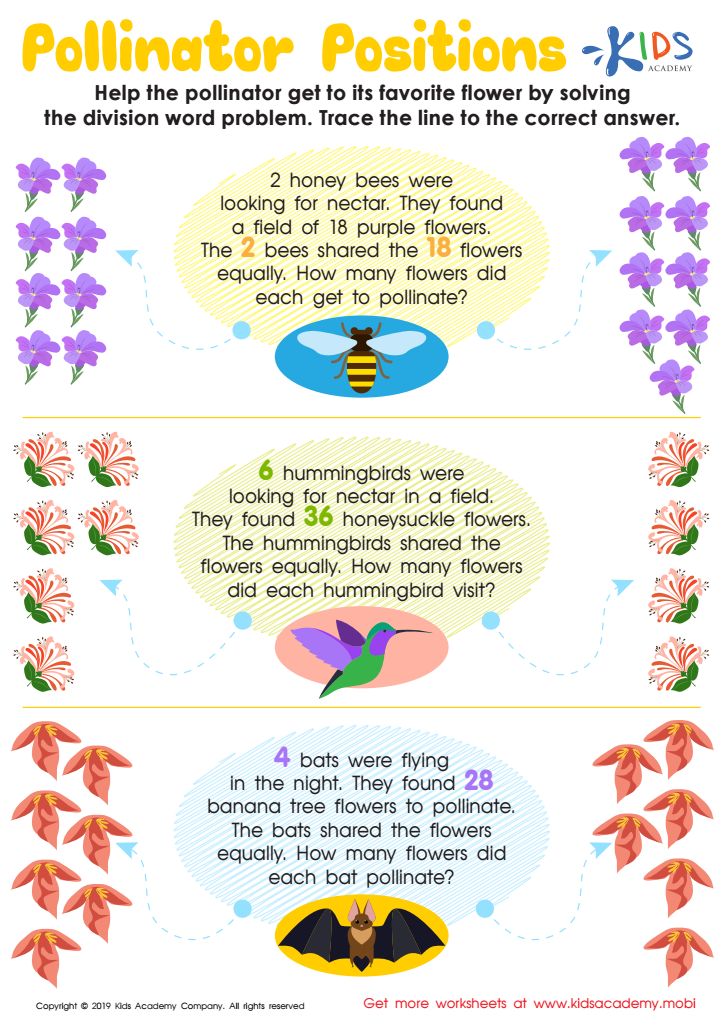
Pollinator Positions Worksheet
 Assign to My Students
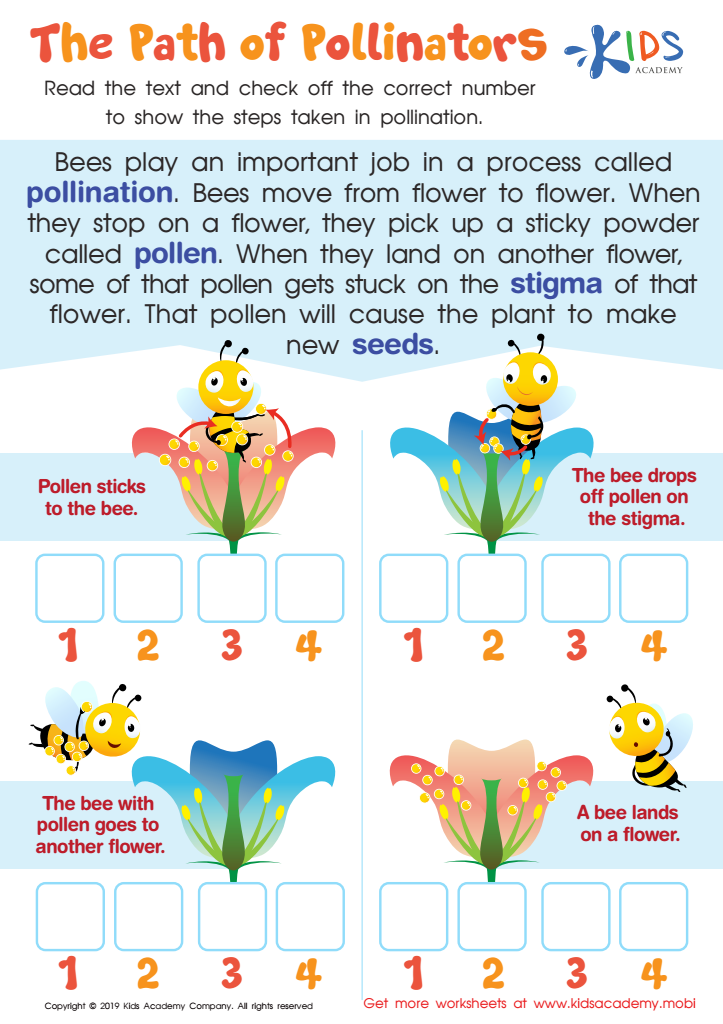
The Path of Pollinators Worksheet
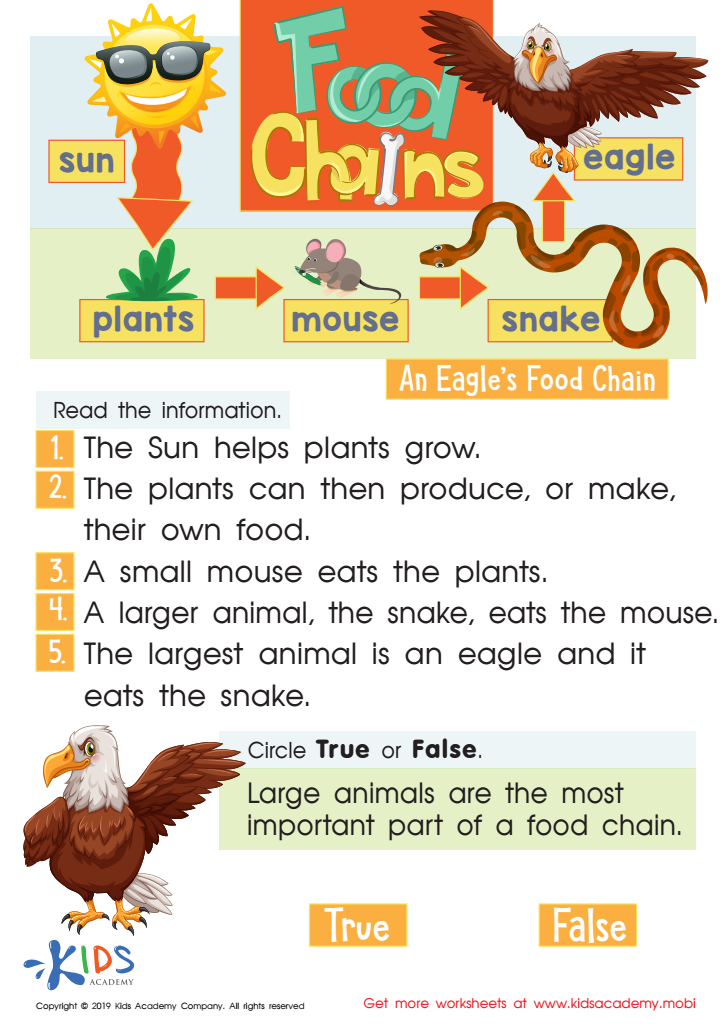
Food Chains Worksheet
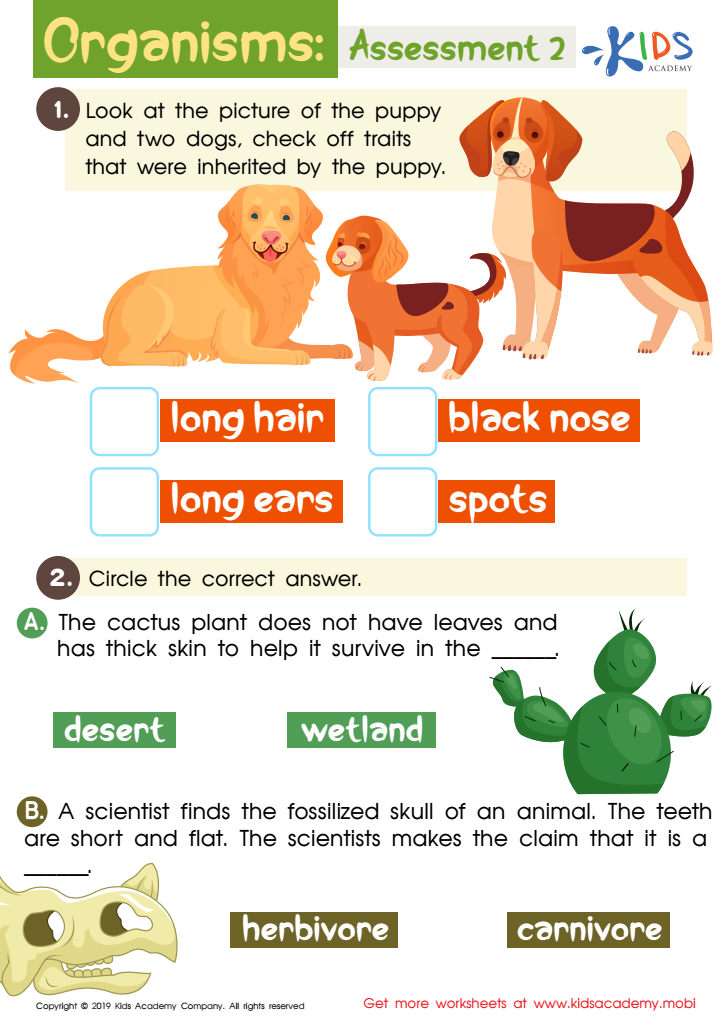
Organisms: Assessment 2 Worksheet








Parents and teachers should prioritize learning about ecosystems and animals because it cultivates environmental awareness, fosters compassion, and enhances critical thinking skills in children. Understanding ecosystems allows children to appreciate the intricate relationships between living organisms and their environments, promoting a sense of responsibility toward nature. As future stewards of the planet, children learn the importance of biodiversity and the impact of human activities on ecosystems.
Additionally, integrating lessons about animals encourages empathy and ethical considerations regarding wildlife and their habitats. It nurtures an emotional connection between children and the earth, fostering more caring and informed individuals who advocate for conservation.
Moreover, exploring ecosystems can enhance interdisciplinary learning. It incorporates science, geography, art, and even language arts, allowing children to develop a well-rounded skill set. Engaging in hands-on activities, like field trips or school gardens, makes learning experiential, solidifying concepts in a memorable way.
As children learn about ecosystems and animals, they develop critical thinking and problem-solving skills that are vital for tackling global challenges. Educating young minds helps nurture informed, responsible citizens who are prepared to contribute positively to their communities and the environment, ensuring a healthier planet for future generations.