Information retention Science Worksheets
3 filtered results
-
From - To
Boost your students' memory and comprehension with our Information Retention Science Worksheets from Kids Academy. Designed for young learners, these printables effectively enhance long-term information retention through engaging, hands-on activities. Our worksheets cover diverse topics and are crafted to build and reinforce critical thinking and retention skills in science. By combining visual aids, puzzles, and interactive exercises, we create an enriching educational experience that keeps students motivated and eager to learn. Ideal for classroom and home use, our science worksheets empower children to absorb and retain important scientific concepts, paving the way for academic success.
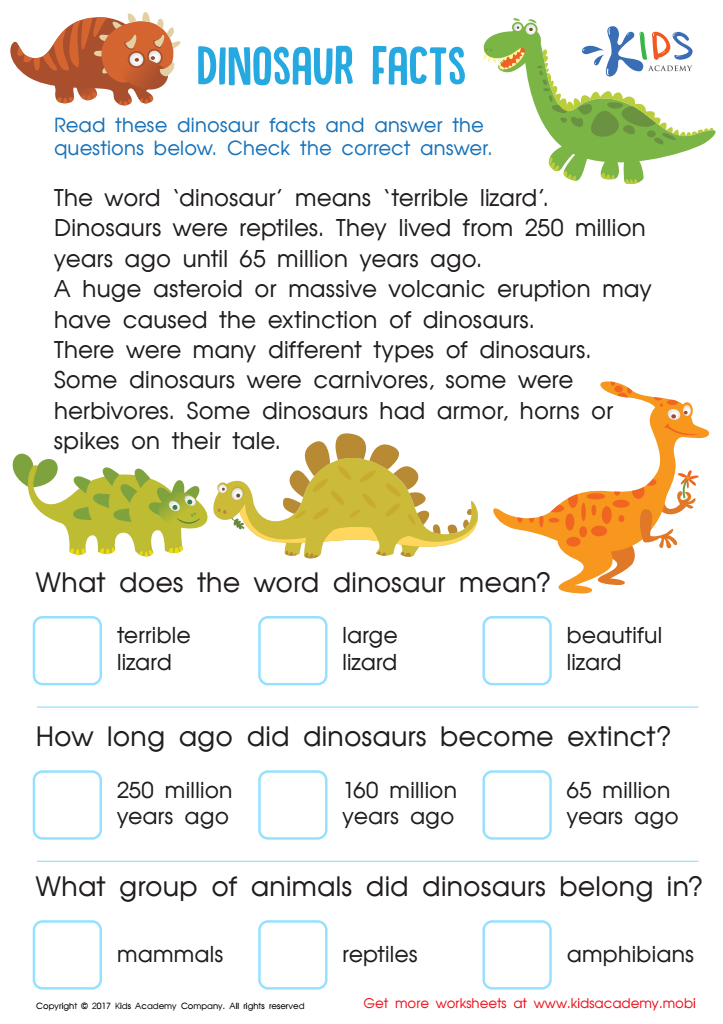
Dinosaur Facts Worksheet
 Assign to My Students
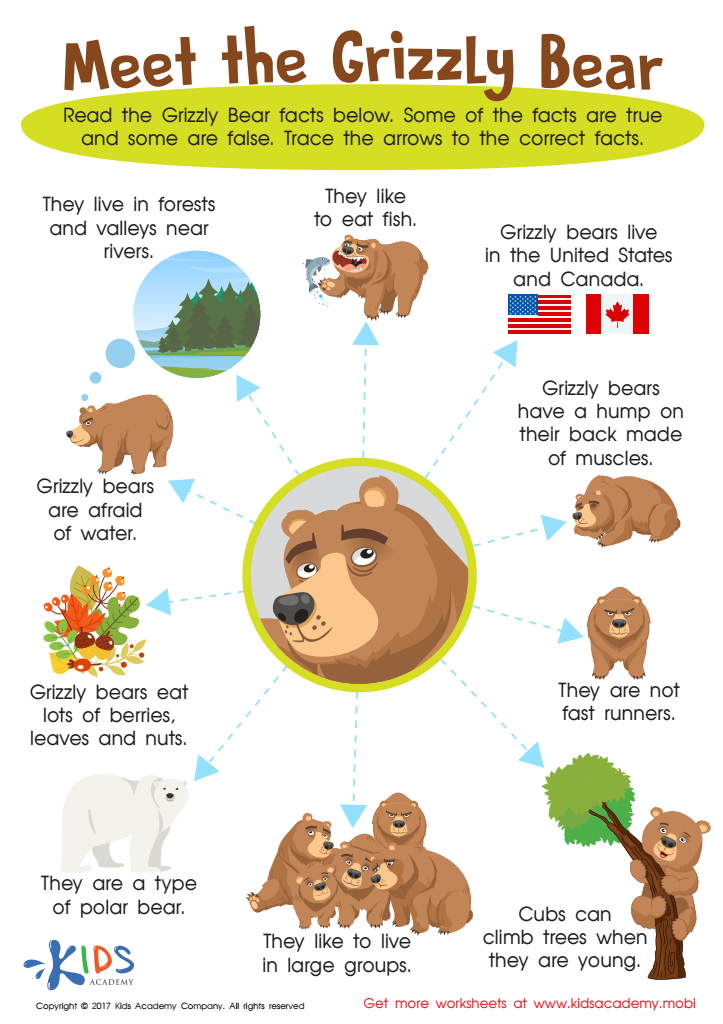
Grizzly Bear Facts Worksheet
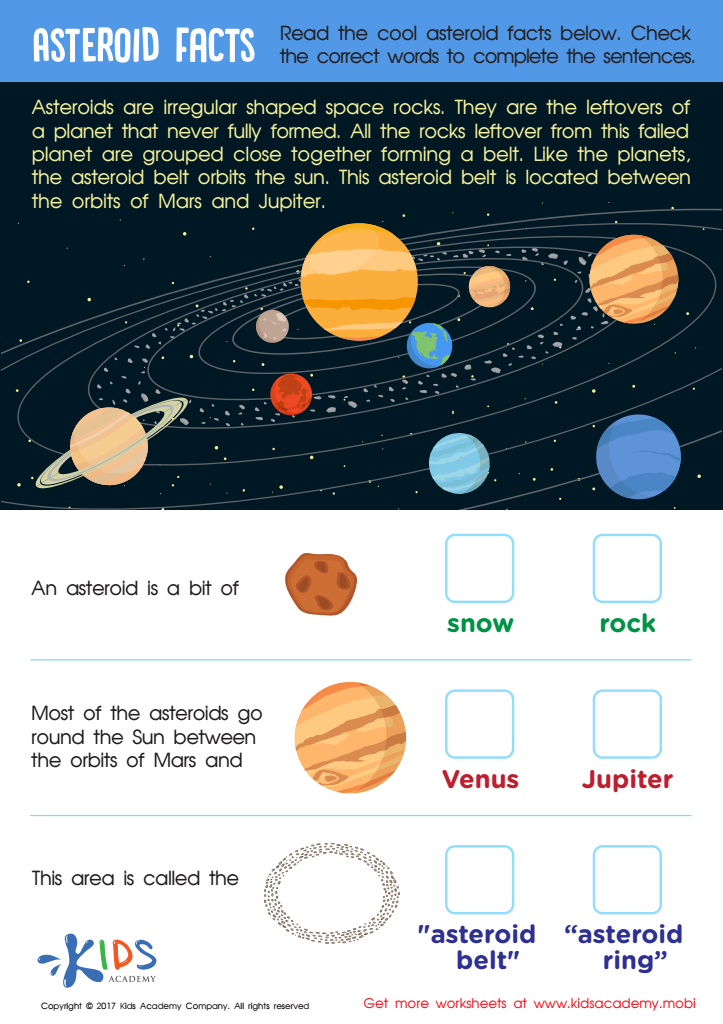
Asteroid Facts Worksheet








Information retention science, which explores how people retain and recall information, is vitally important for both parents and teachers who want to support effective learning and long-term academic success for children. Understanding the principles of this science can guide adults in creating better educational strategies that can help students remember important information longer.
For parents, applying retention science can transform home’s learning routines. Knowing techniques such as spaced repetition, where material is reviewed over gradually increasing intervals, can make homework time more productive and less stressful. Parents can also help by creating environments that reduce stress and distractions, factors known to negatively impact memory.
For teachers, incorporating insights from retention science into lesson plans can foster better engagement and comprehension. Techniques like active recall—where students actively stimulate memory during learning—can be introduced through quizzes or interactive discussions. Furthermore, employing multimodal teaching approaches that combine verbal, visual, and kinesthetic aids can cater to individual learning preferences, thus improving recall rates.
Thus, knowledge of how we retain information empowers parents and teachers to create supportive, effective, and efficient learning environments that promote long-term academic achievement and intellectual growth for children. Employing these strategies ensure that children not only absorb information more efficiently but also apply it successfully across different contexts.







