Observational skills Science Worksheets
14 filtered results
-
From - To
Enhance your child's observational skills with our engaging Science Worksheets! Designed for early learners, these worksheets provide a fun and interactive way to develop critical thinking and attention to detail. Through captivating activities, children will practice observing and making connections in the world around them. Each worksheet encourages exploration of nature, experiments, and everyday phenomena, fostering a love for science. With colorful illustrations and clear instructions, your child will be excited to learn while improving their ability to observe, analyze, and interpret information. Discover the joy of science as your young learner builds essential skills for future academic success! Download your worksheets today!
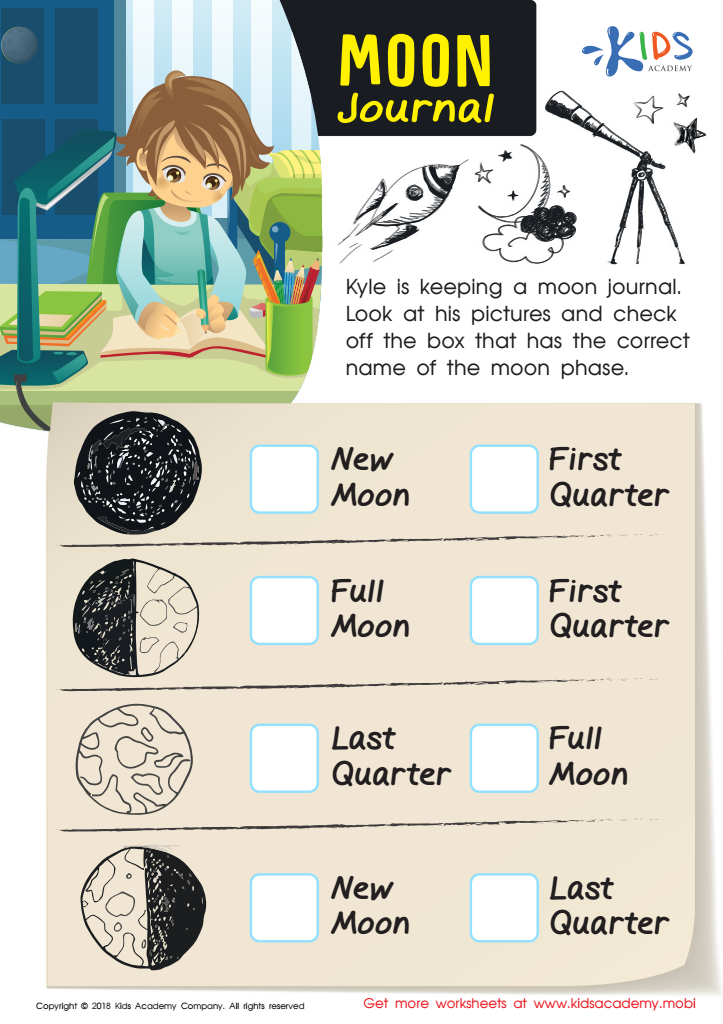
Moon Journal Worksheet
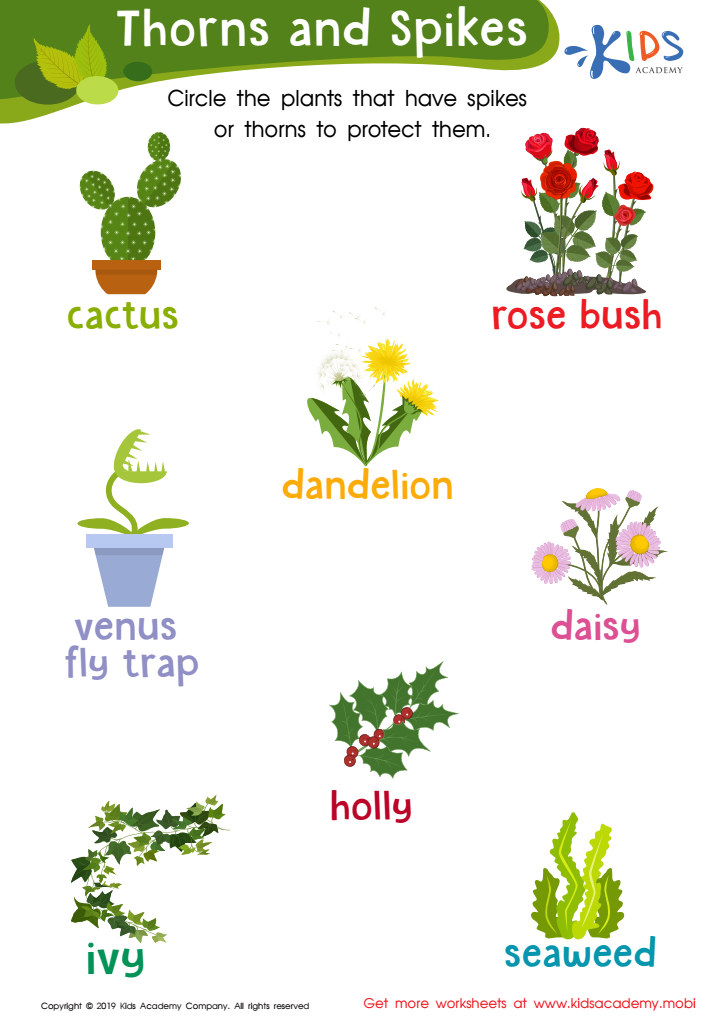
Thorns and Spikes Worksheet
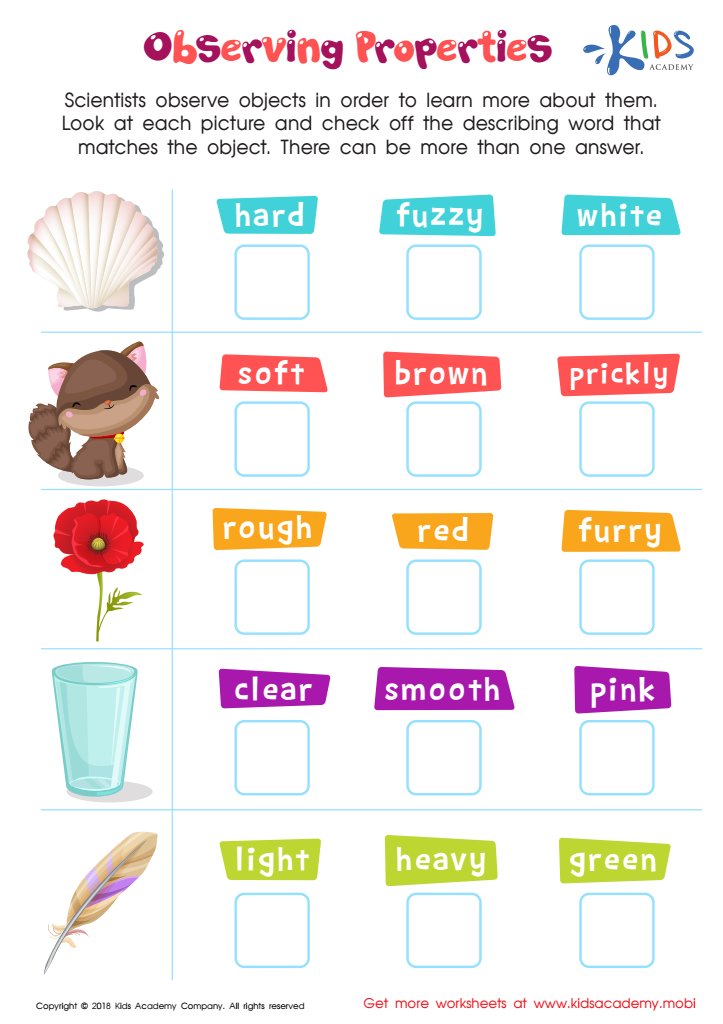
Observing Properties Worksheet
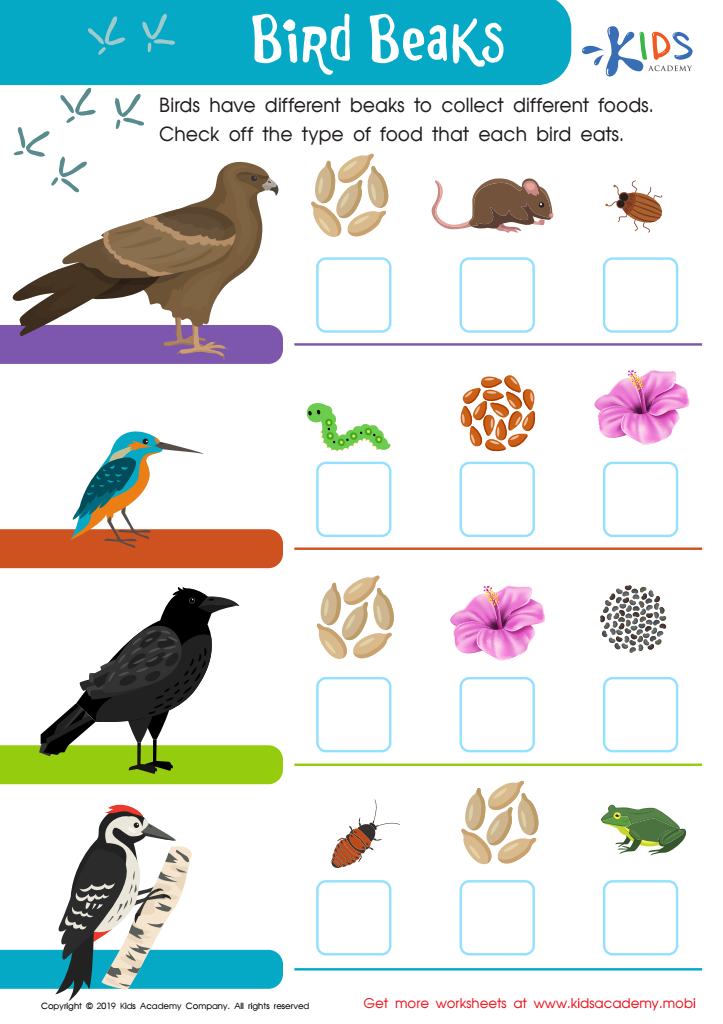
Bird Beaks Worksheet
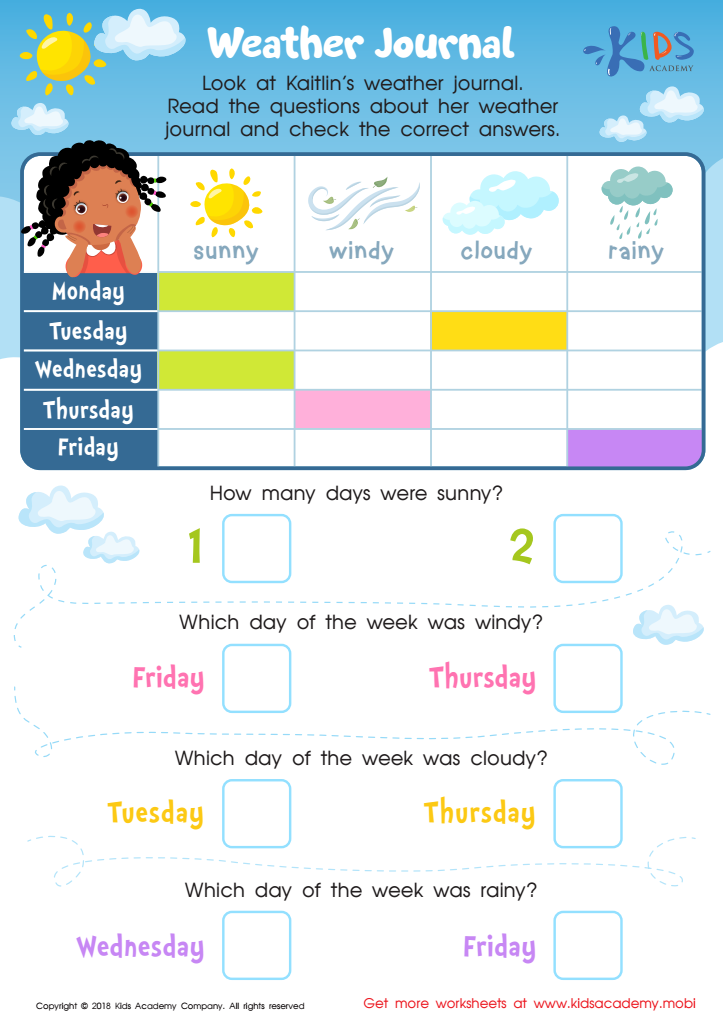
Weather Journal Worksheet
Summer and Winter Worksheet
 Assign to My Students
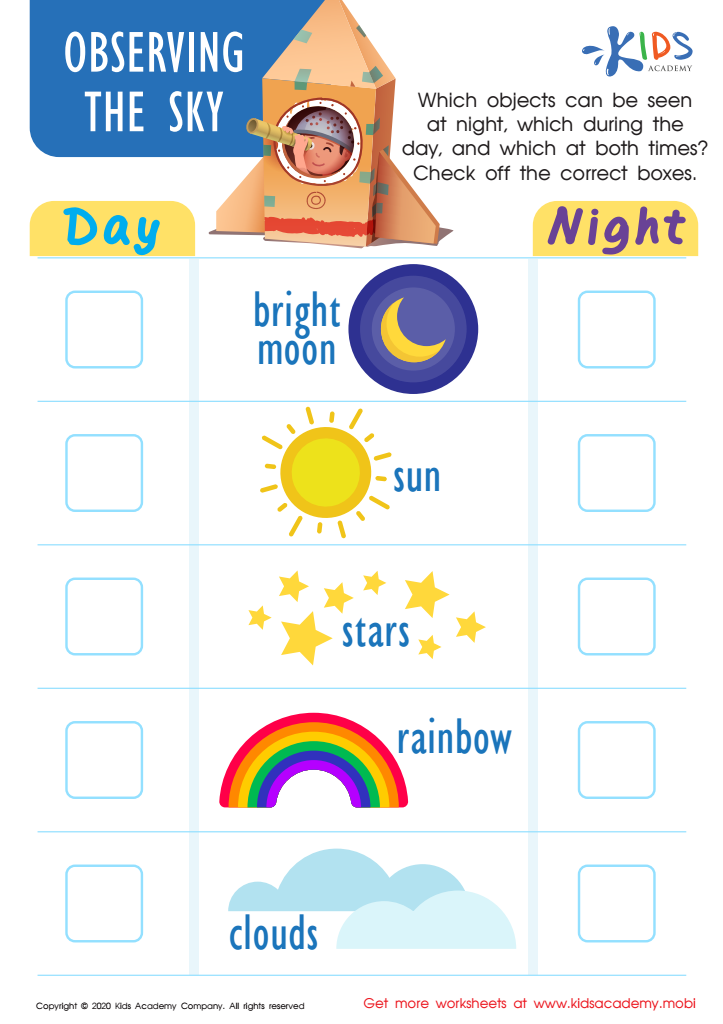
Observing the Sky Worksheet
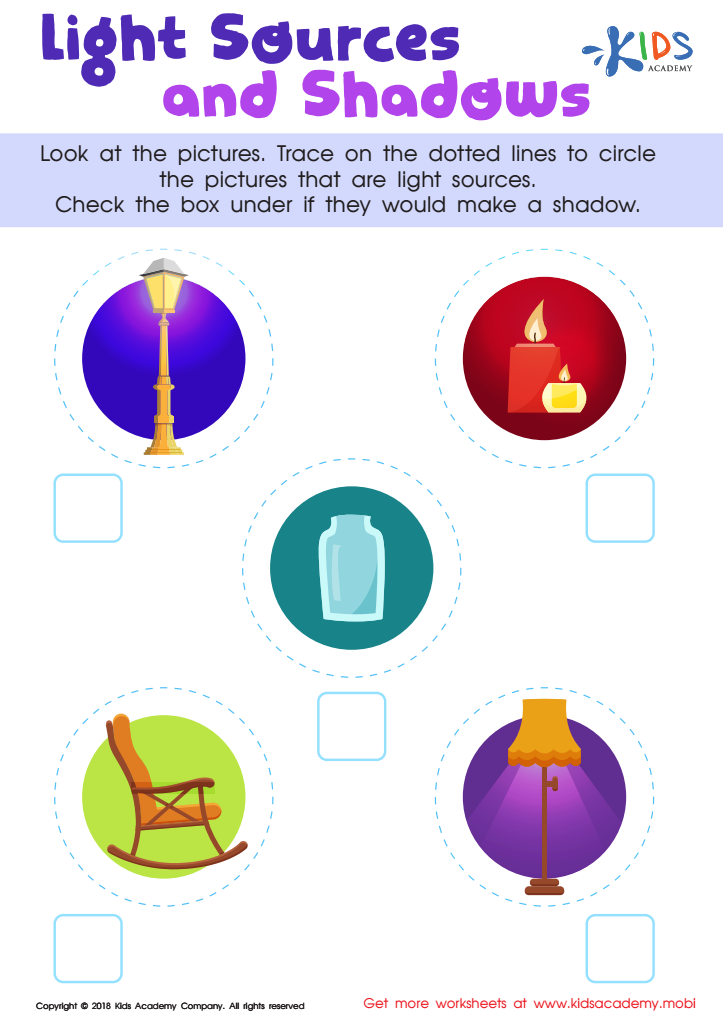
Light Sources and Shadows Worksheet
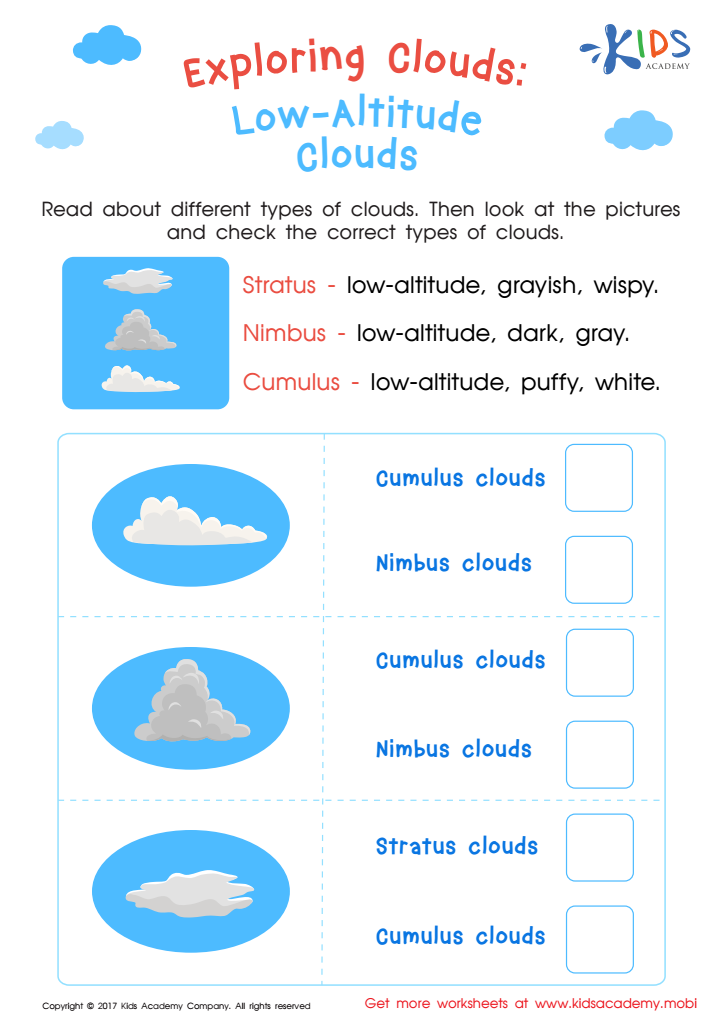
Exploring Clouds: Low Altitude Clouds Printable
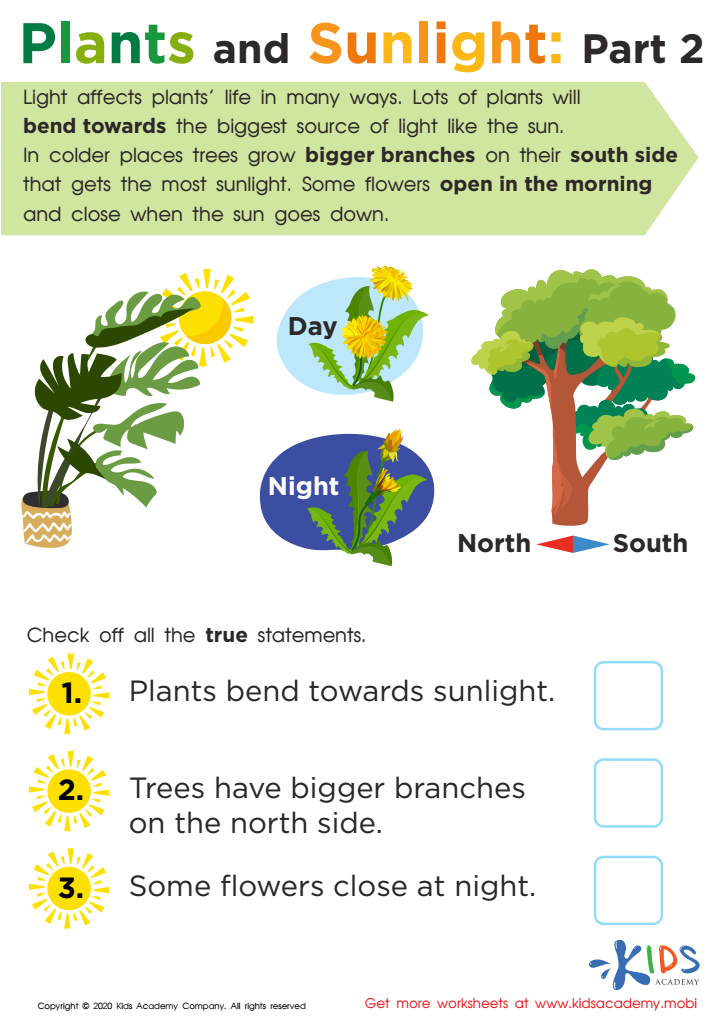
Plants and Sunlight: Part 2 Worksheet
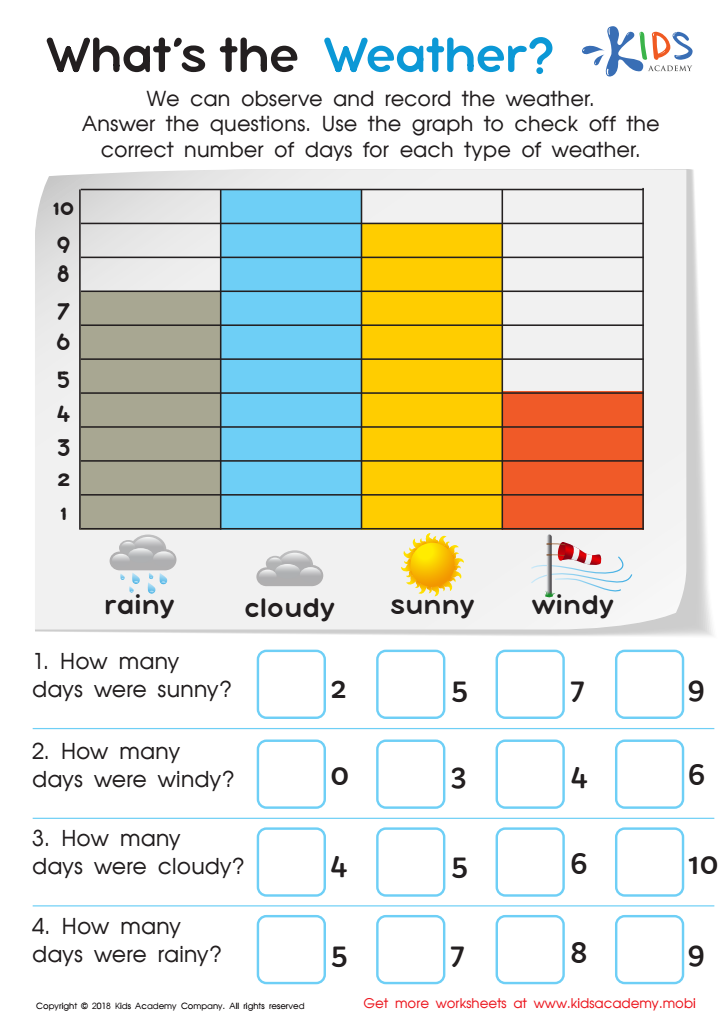
What's the Weather? Worksheet
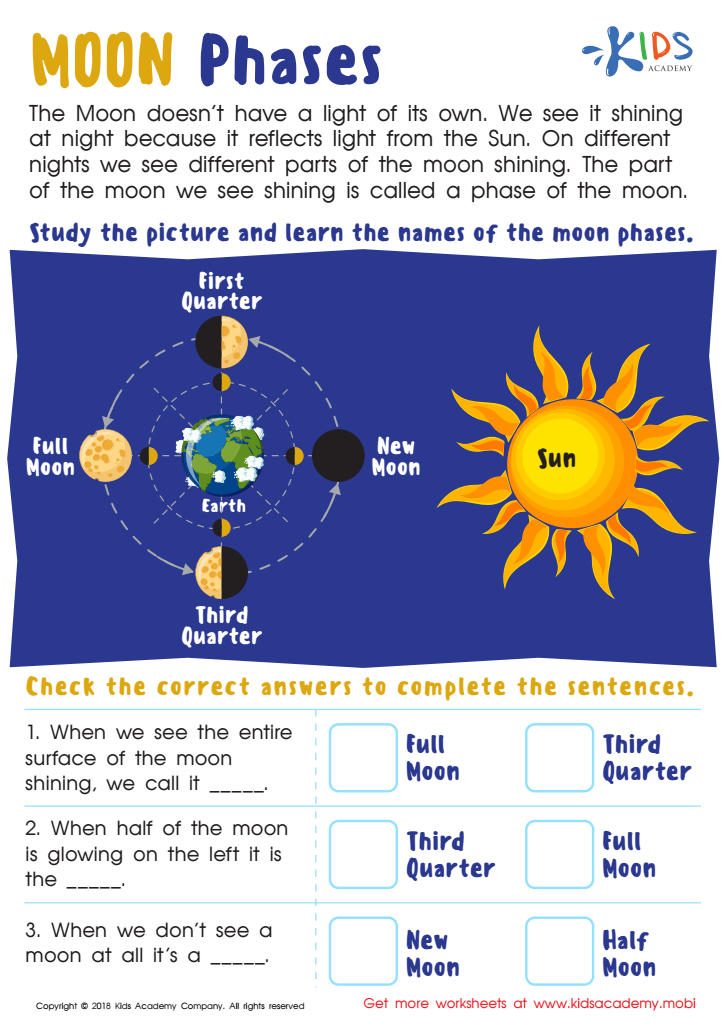
Moon Phases Worksheet
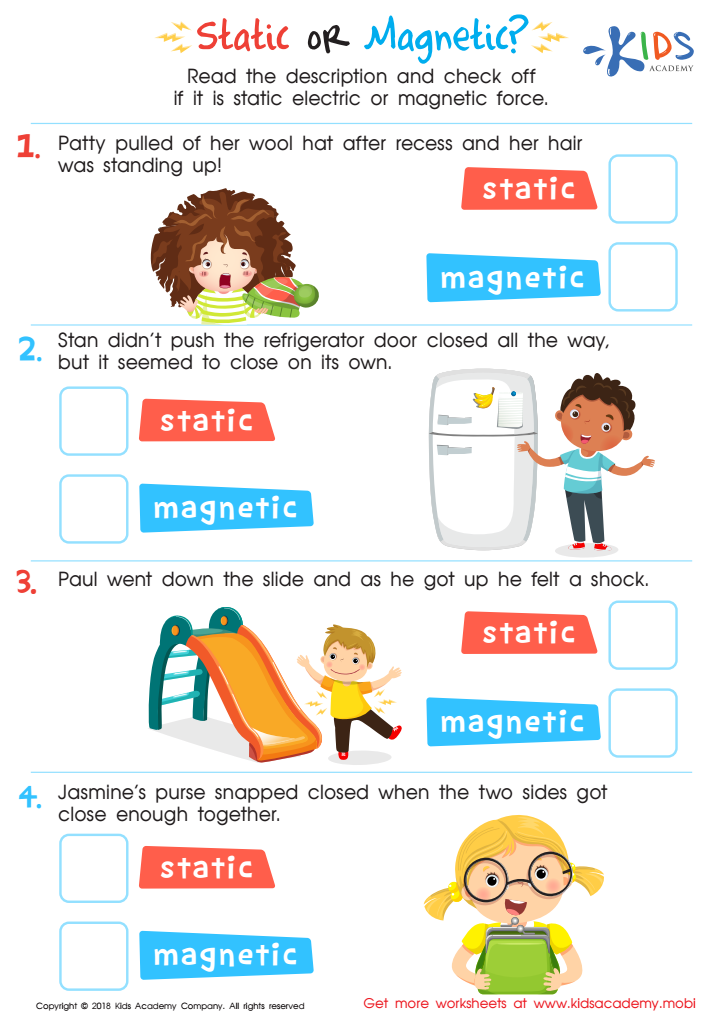
Static or Magnetic Printable Worksheet
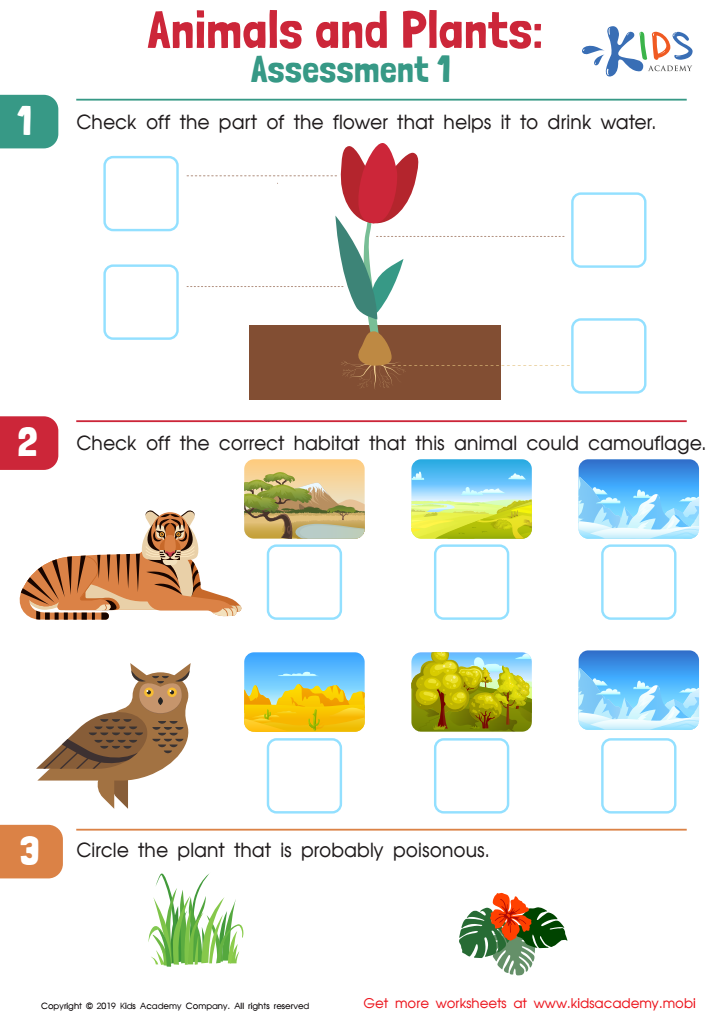
Animals and Plants: Assessment 1 Worksheet



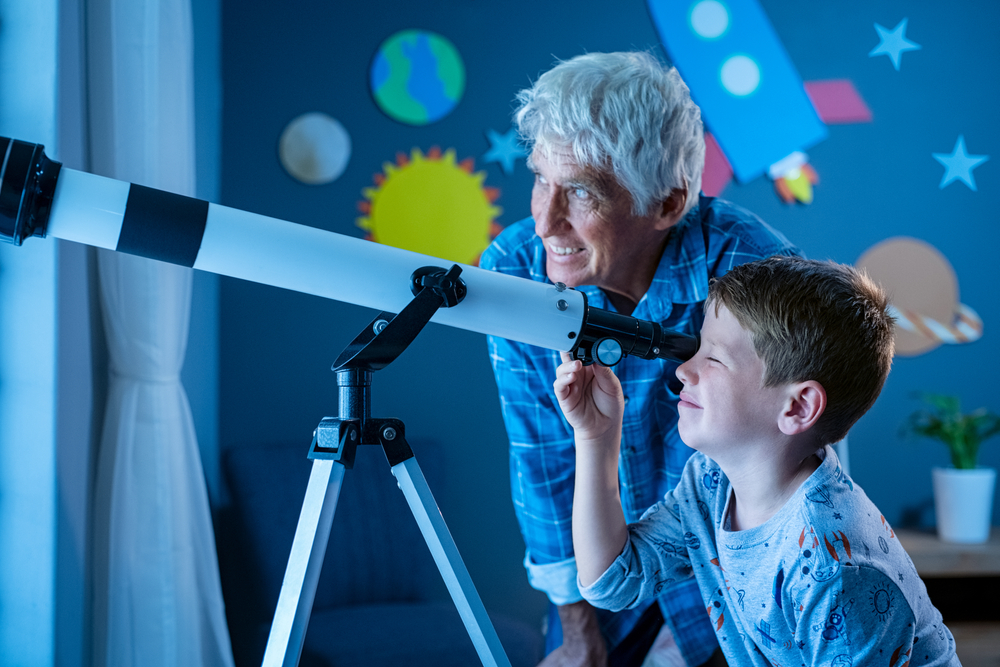



Observational skills in science are crucial for both parents and teachers, as they serve as the foundation for scientific inquiry and critical thinking. Developing strong observational skills enables children to notice details, ask questions, and make connections between concepts in their environment. This is essential not only for understanding scientific principles but also for fostering a lifelong curiosity about the world around them.
Parents and teachers should prioritize observational skills because they encourage children to engage actively in their learning process. Observational activities, such as studying natural phenomena, can enhance a child's ability to gather evidence, analyze information, and draw conclusions, which are vital skills across disciplines, including math and literacy.
Additionally, nurturing observational skills in young learners helps them develop empathy and social skills by encouraging them to observe and understand different perspectives. In an increasingly complex world, these abilities translate into better problem-solving, decision-making, and collaborative efforts.
In summary, supporting the development of observational skills prepares children not only for scientific endeavors but also equips them with essential life skills that contribute to their overall academic success and personal growth. Engaging children’s natural curiosity and eagerness to explore the world paves the way for meaningful educational experiences.







