Understanding matter Science Worksheets
3 filtered results
-
From - To
Discover our "Understanding Matter" Science Worksheets, designed to engage young learners and foster a solid foundation in elementary science concepts. These worksheets introduce students to the different states of matter—solids, liquids, and gases—through interactive activities and real-life examples. Children will explore properties, changes, and classifications of matter, enhancing their critical thinking and observational skills. Ideal for classroom use or at-home learning, these resources promote a hands-on approach to science education. Supplement your curriculum with colorful visuals and engaging exercises that make learning about matter fun and memorable. Unlock the wonders of the physical world with our comprehensive worksheets today!
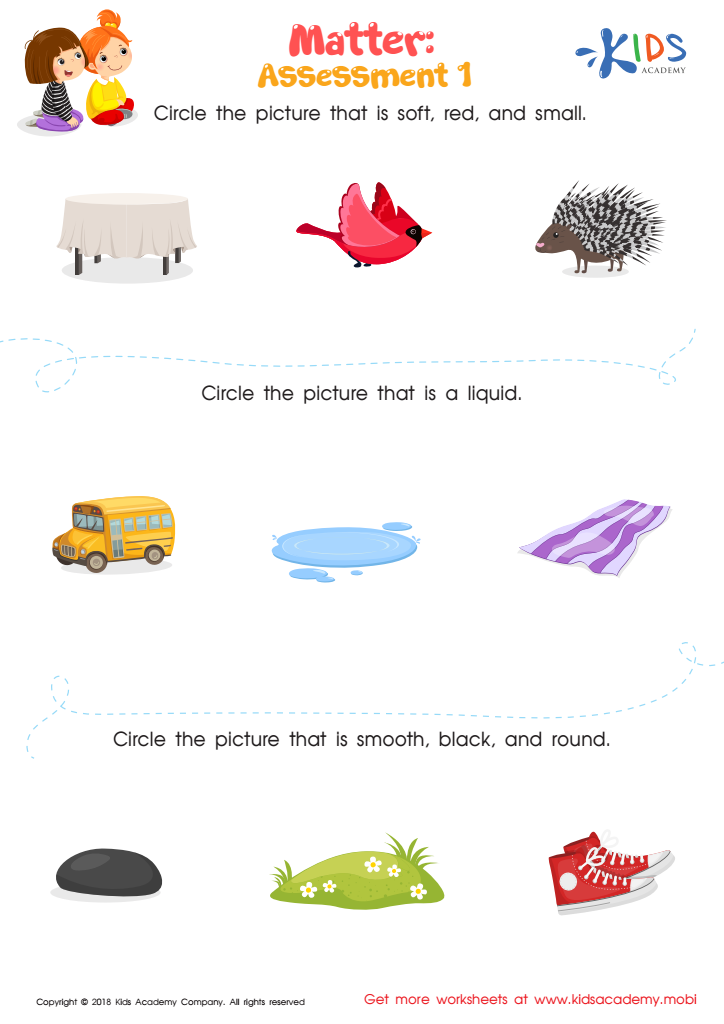
Matter: Assessment 1 Worksheet
 Assign to My Students
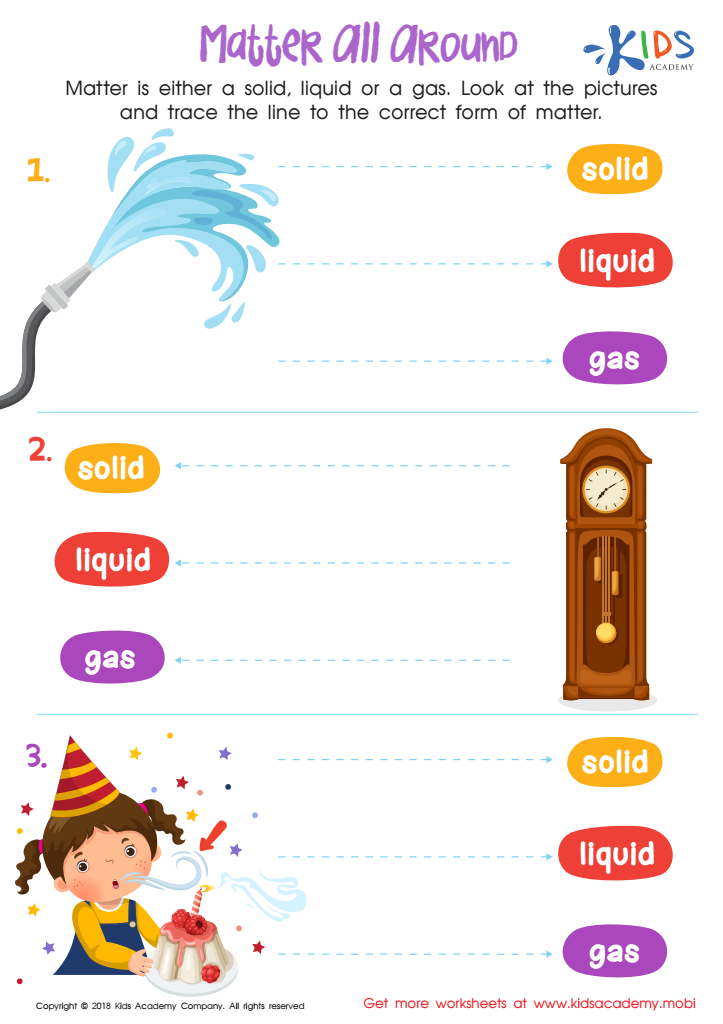
Matter all Around Worksheet
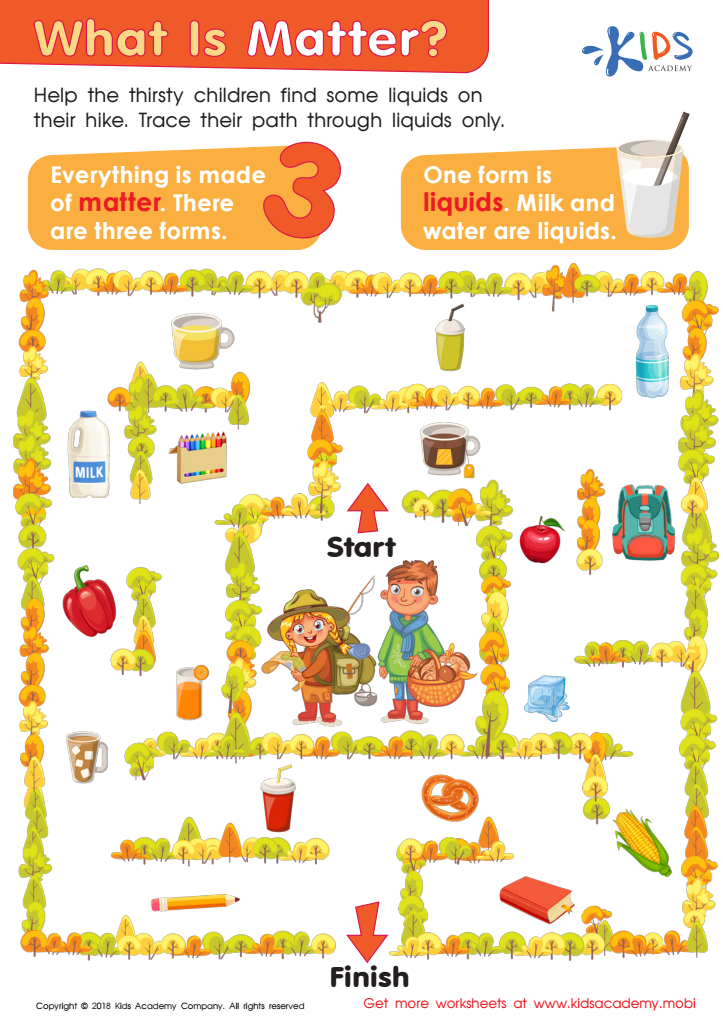
What Is Matter? Worksheet




.jpg)



Understanding matter science is crucial for both parents and teachers as it forms the foundation of scientific literacy for children. Matter science involves the study of the properties, structures, and changes of matter which underpin all physical processes. Teaching children about matter encourages curiosity and critical thinking, as they learn to explore the world around them through observation and experimentation.
For parents, early exposure to concepts of matter can cultivate a supportive learning environment at home. Engaging with basic concepts like solid, liquid, and gas provides children with essential knowledge that will be built upon in later education. This foundational understanding fosters a love for science and prepares children for challenges in more advanced topics.
For teachers, integrating matter science into the curriculum aligns with educational standards and enhances students’ problem-solving skills. It encourages inquiry-based learning, allowing students to ask questions and seek solutions through hands-on experiences. This methodology not only aids academic achievement but also nurtures lifelong learning skills.
In an increasingly STEM-oriented world, fostering an understanding of matter science in young learners equips them with critical thinking abilities, making them better prepared to tackle real-world problems and innovations in the future. Together, parents and teachers play a pivotal role in this developmental process.







