Understanding life cycles Life Science Worksheets
3 filtered results
-
From - To
Ignite curiosity with our "Understanding Life Cycles" Life Science Worksheets! Crafted for early learners, these worksheets are designed to make the concept of life cycles fun and engaging. Through vibrant illustrations and interactive activities, kids explore the stages of growth and development in plants, animals, and insects. Each worksheet is tailored to enhance comprehension and retention, making complex processes simple and understandable for young minds. Perfect for both classroom teaching and homeschooling, these resources foster a love for science and nature from an early age, laying a strong foundation for future scientific learning. Discover the wonders of life cycles with Kids Academy today!
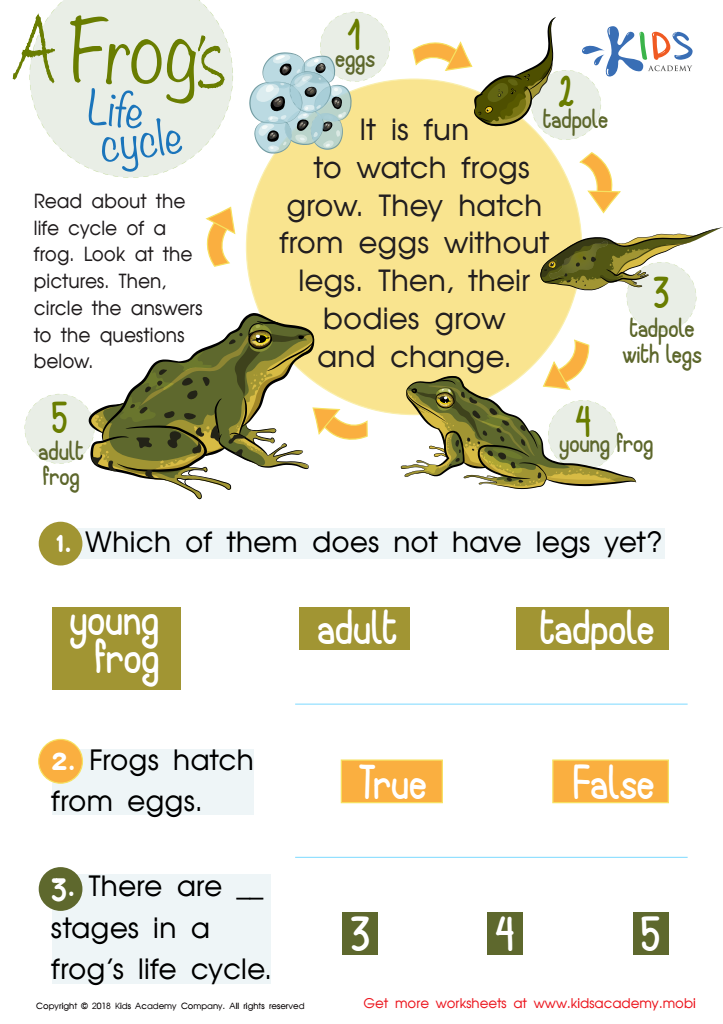
A Frog’s Life Cycle Worksheet
 Assign to My Students
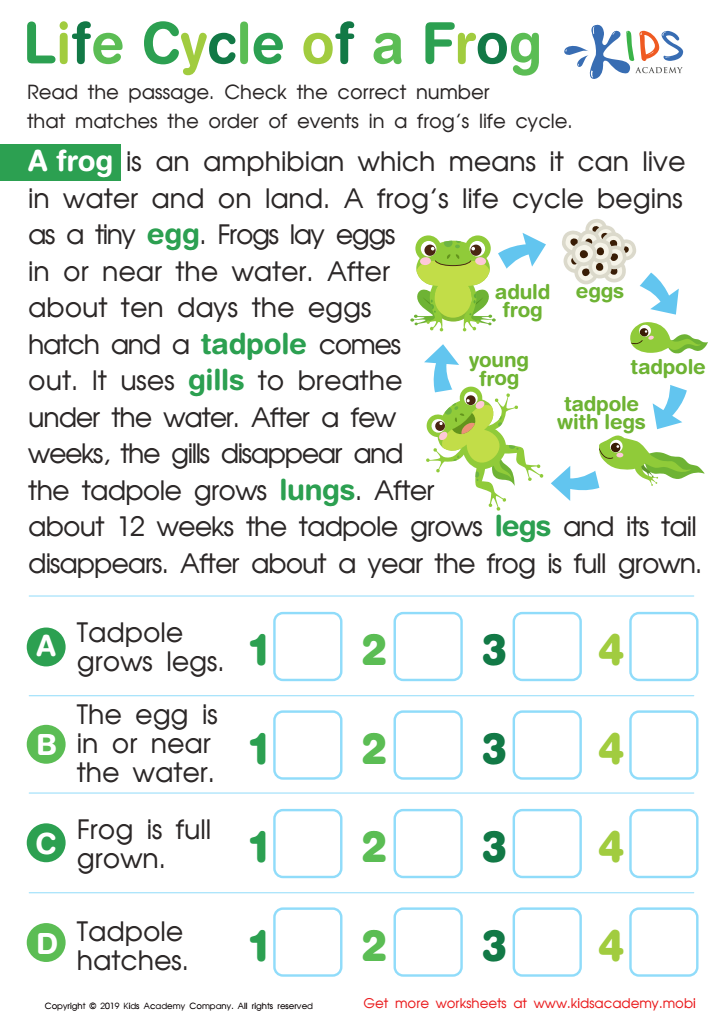
Life Cycle of a Frog Worksheet
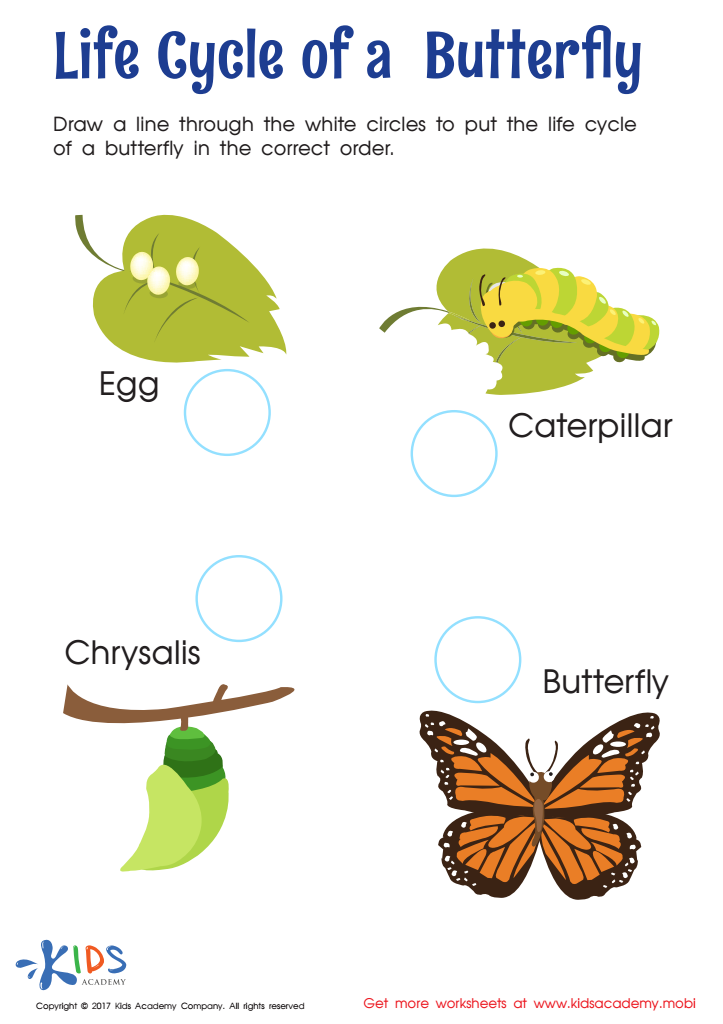
Life Cycle of Butterfly Worksheet





Understanding life cycles in life science is essential for both parents and teachers, as it serves as a foundational concept that enhances children's comprehension of the natural world. Grasping life cycles allows children to observe and appreciate the stages of growth and development in various organisms, including plants, animals, and humans. This knowledge sparks curiosity, encourages respect for living things, and fosters a sense of responsibility towards the environment.
For educators, teaching life cycles can make science more engaging and interactive, utilizing hands-on activities like planting seeds or observing insect metamorphosis to vividly illustrate concepts. Such activities align with inquiry-based learning, where children develop critical thinking and observation skills. Moreover, connecting these biological processes to everyday life helps demystify complex scientific ideas, making them more accessible and relevant to young learners.
For parents, discussing life cycles can enrich at-home learning experiences and support children's educational journey. It also provides opportunities for quality interactions, like observing nature together, which can strengthen family bonds and encourage a lifelong passion for learning and discovery.
Together, parents and teachers who prioritize understanding life cycles help build a foundation for scientific literacy, equipping children with the knowledge and skills necessary to become informed, empathetic, and responsible stewards of our world.