
Observational skills Physical Science Worksheets
4 filtered results
Difficulty Level
Grade
Age
-
From - To
Subject
Activity
Standards
Enhance your students' understanding of Physical Science with our engaging Observational Skills Worksheets. Designed for early-grade learners, these worksheets focus on developing critical observational skills through fun and interactive activities. Students will explore basic scientific concepts by observing, recording, and analyzing data, fostering a hands-on learning experience. Our thoughtfully curated resources encourage curiosity, exploration, and a deeper understanding of the natural world. Suitable for classroom or home use, these worksheets are perfect for reinforcing essential scientific skills while keeping children entertained. Help your young scientists think like researchers with our easy-to-use Observational Skills Worksheets!
Favorites
With answer key
Interactive
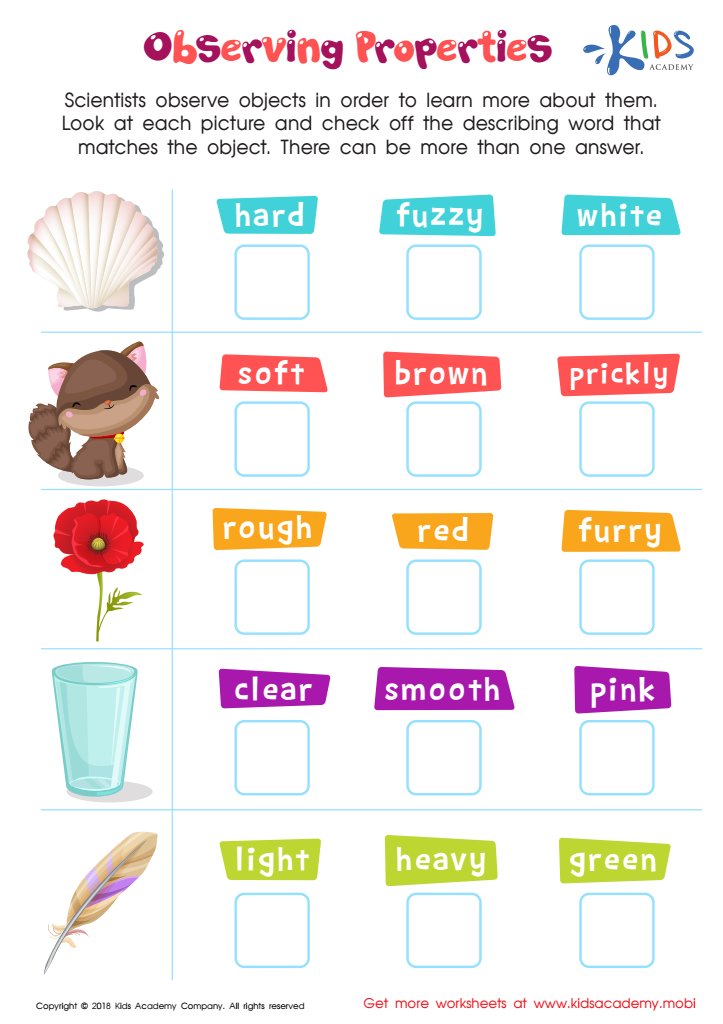
Observing Properties Worksheet
Encourage your kid's interest in science with this fun worksheet! Let them identify the five objects on the left, then choose the most accurate word from the options on the right. There might be more than one answer, so remind them to take their time observing the objects.
 Assign to My Students
Observing Properties Worksheet
Worksheet
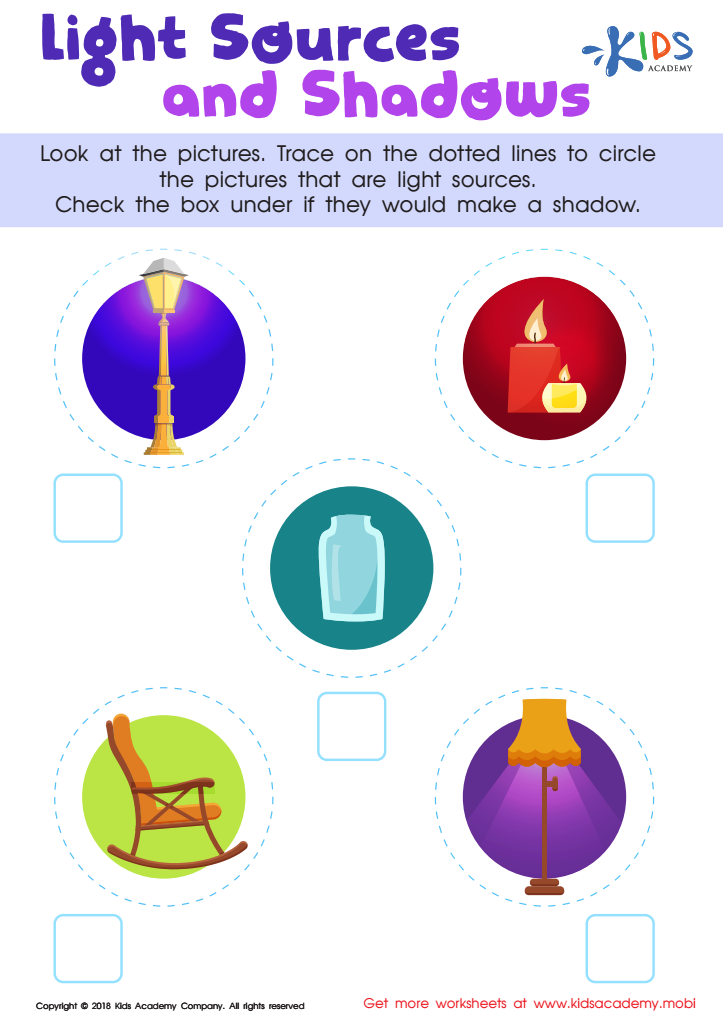
Light Sources and Shadows Worksheet
During the day, the sun radiates bright light. At night, when it's time for bed, the sun sets and darkness takes over. To light our way, we use other sources of light. With your students, trace the dotted lines around the pictures of light sources and check the boxes under the objects that will cast shadows.
Light Sources and Shadows Worksheet
Worksheet
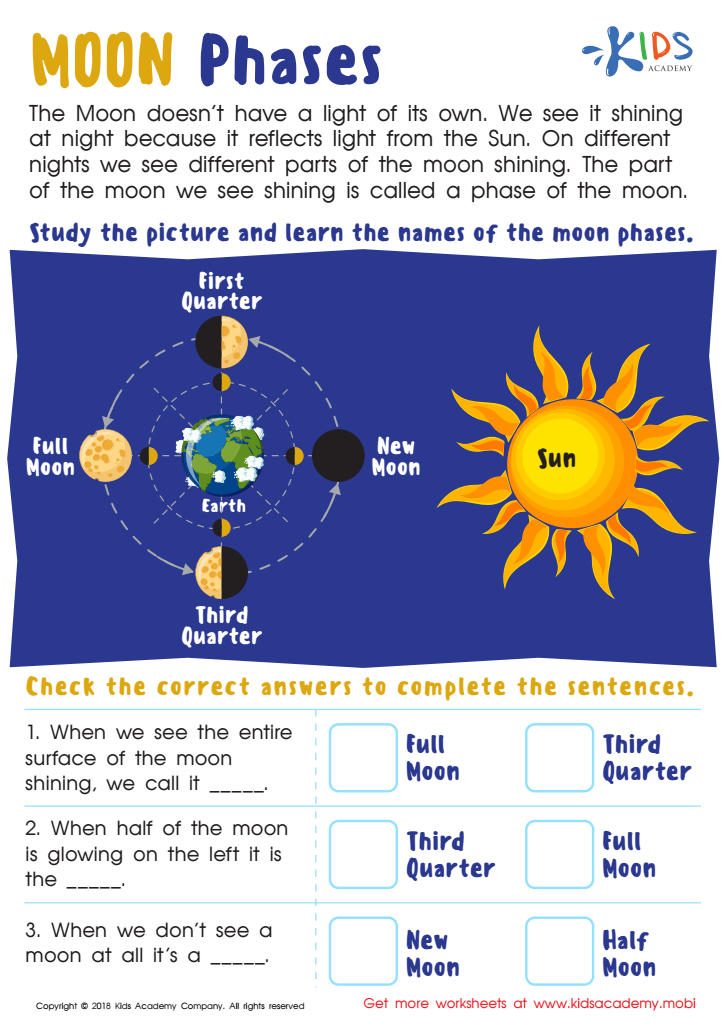
Moon Phases Worksheet
Gaze up at the night sky and the moon's appearance may change from night to night. Encourage your child to learn more about the sun, the moon, and space with this science worksheet. Have them read the text then study the picture. Finally, read the sentences and check the answers to identify the moon's phases.
Moon Phases Worksheet
Worksheet
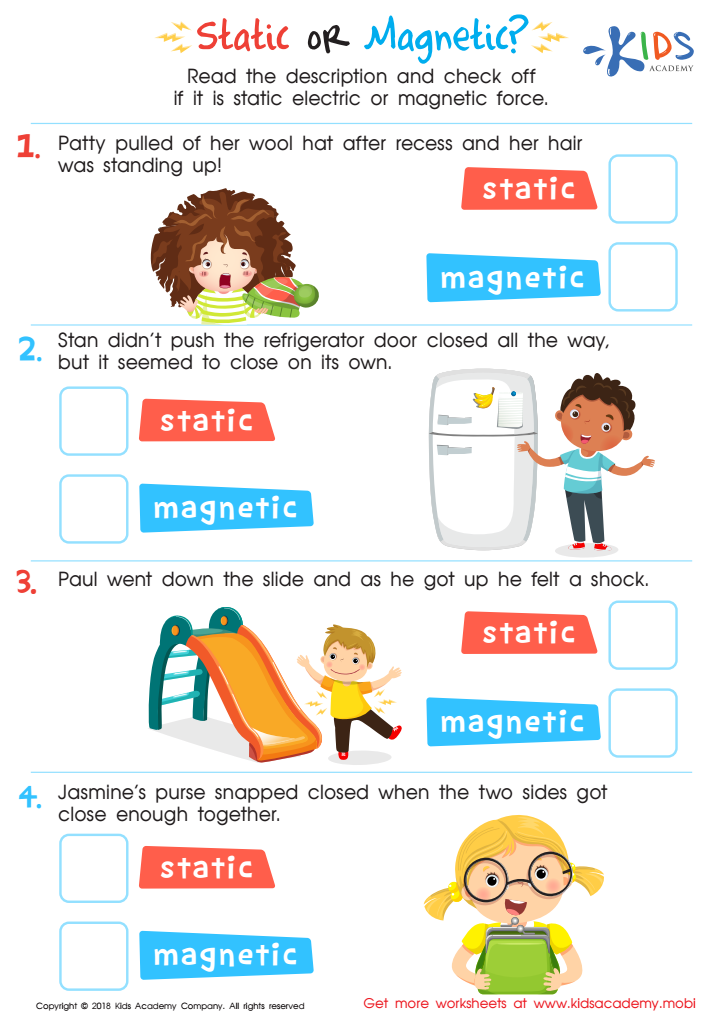
Static or Magnetic Printable Worksheet
Ever wondered if a situation involved static or magnetic force? This printable worksheet has the answer! Read the scenarios and check out the illustrations to decide which force is in play for each. Learn about these two amazing forces with this fun activity!
Static or Magnetic Printable Worksheet
Worksheet
Join Kids Academy for Free
Who is primarily going to use this learning content?








Observational skills are fundamental in the study of physical science, and it's essential for parents and teachers to encourage these skills in young learners. Observational skills enable students to notice, describe, and make sense of the physical world around them. This foundational ability fosters curiosity and critical thinking, crucial for scientific exploration and understanding.
In physical science, learners engage with concepts such as matter, energy, forces, and motion. Developing sharp observational skills allows them to conduct experiments, collect data, and draw meaningful conclusions. When teachers and parents emphasize the importance of observation, they promote active learning and instill a sense of inquiry, encouraging students to ask questions and seek answers.
Moreover, strong observational skills are not limited to science; they have broader applications across subjects and in real-life situations. They help children enhance attention, focus, and analytical abilities, which are vital for academic success. Educators and caregivers play a pivotal role in nurturing these skills by creating engaging, hands-on activities that promote exploration and observation.
Ultimately, caring about observational skills in physical science prepares students for future learning and everyday problem-solving, laying the groundwork for lifelong learning and appreciation for the natural world.







