Shape Recognition Physical Science Worksheets
3 filtered results
-
From - To
Enhance your young learners' understanding of physical science with our engaging Shape Recognition Physical Science Worksheets! Designed for early grade students, these worksheets help kids identify, classify, and understand various shapes found in the world around them. Featuring a variety of interactive activities, our worksheets encourage hands-on exploration and critical thinking, making learning fun and effective. From geometric shapes to real-world objects, students will improve their observation skills while developing a strong foundation in physical science concepts. Perfect for teachers, parents, or homeschoolers, these printable resources are a great way to inspire curiosity and foster a love for learning in every child!
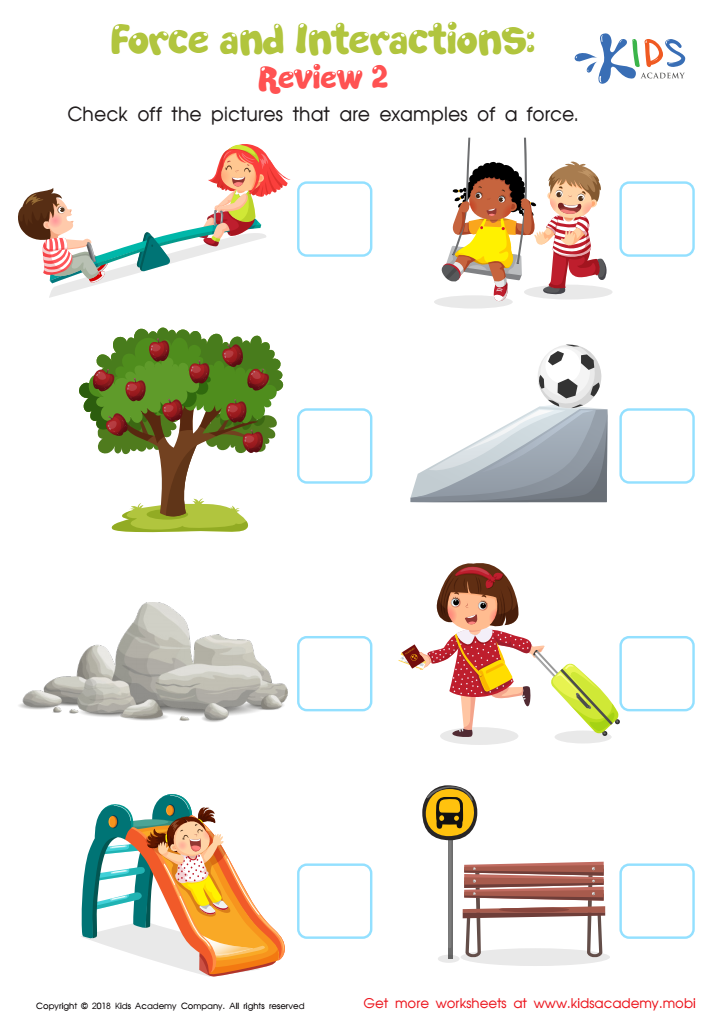
Force and Interactions: Review 2 Worksheet
 Assign to My Students
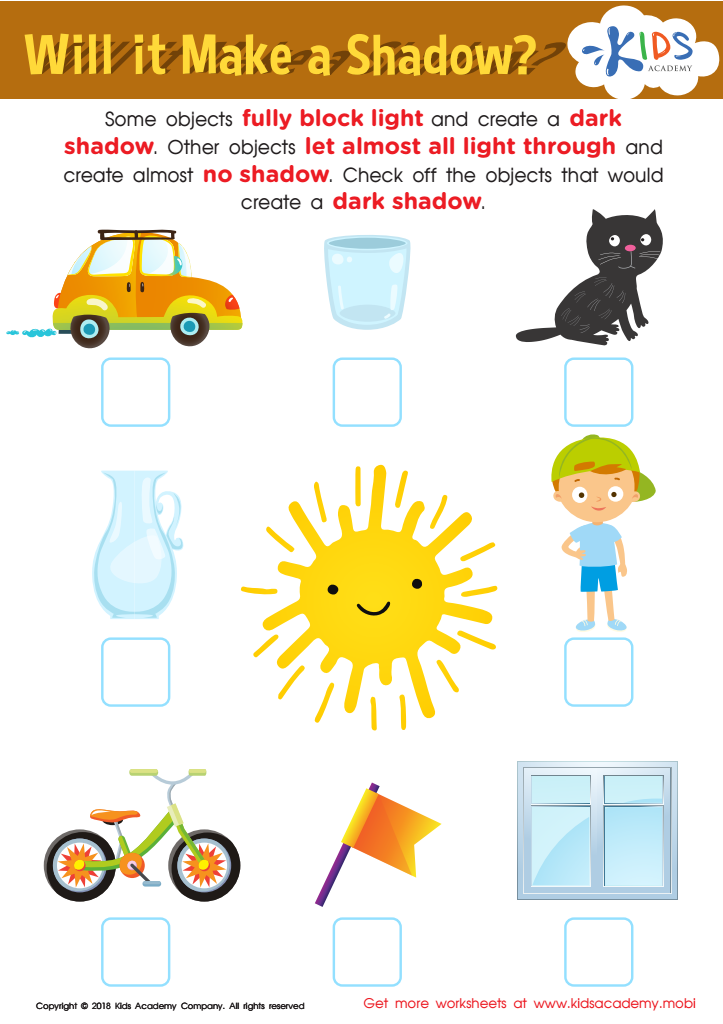
Will It Make a Shadow? Worksheet
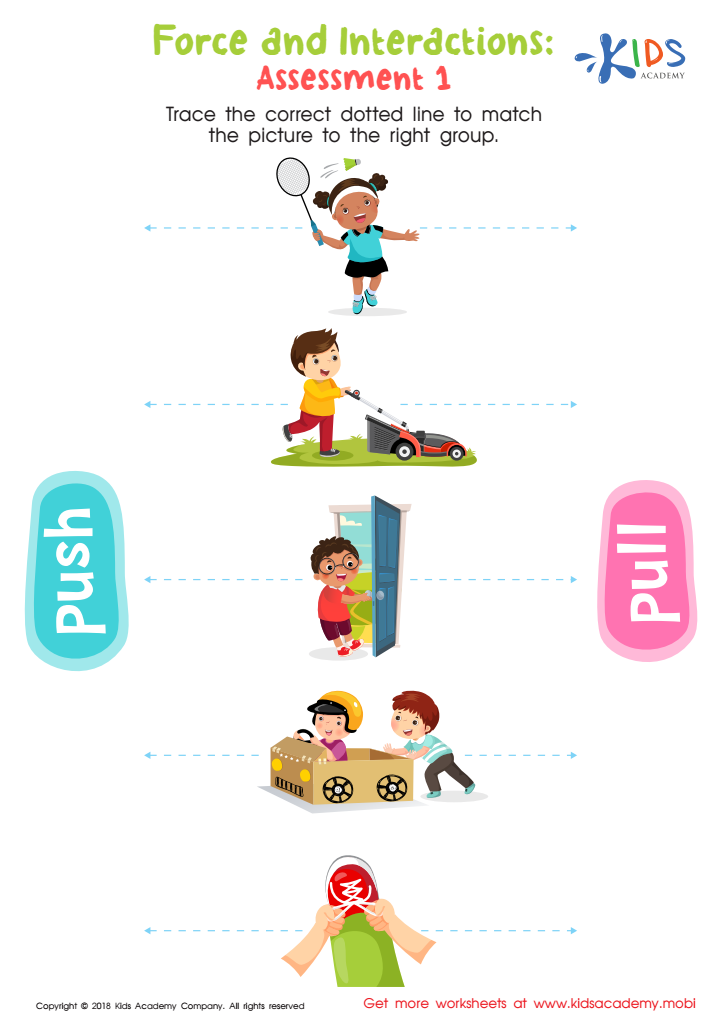
Force and Interactions: Assessment 2 Worksheet


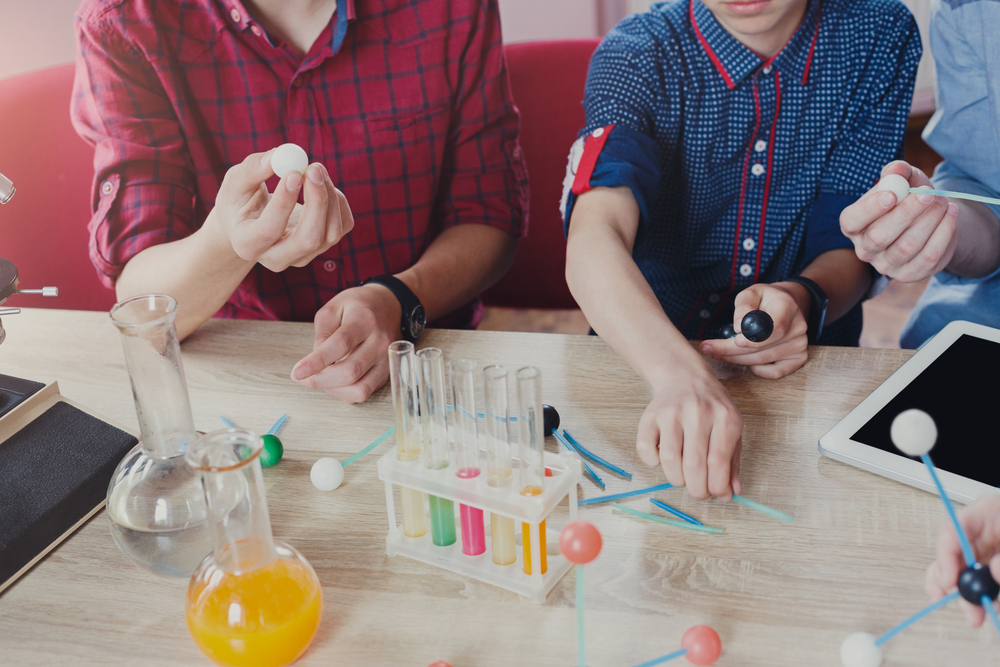



Shape recognition is a fundamental aspect of early childhood development that plays a crucial role in a child's cognitive growth and physical science understanding. Parents and teachers should care about this skill because it lays the groundwork for critical thinking and problem-solving abilities. Recognizing shapes helps children make sense of their world, allowing them to identify patterns, classify objects, and understand spatial relationships.
In addition, shape recognition serves as a stepping stone to more complex mathematical concepts, such as geometry and measurement. By grasping the properties of different shapes, children develop the ability to visualize and manipulate objects in their environment, enhancing their overall spatial awareness.
Furthermore, shape recognition fosters creativity and self-expression. When children learn to recognize and categorize shapes, they can incorporate this knowledge into art, building, and design activities, encouraging innovative thinking. Overall, shape recognition in physical science is not just about identifying geometric figures; it's about instilling a sense of exploration and curiosity. This skill contributes not only to academic readiness but also to the development of essential life skills, making it a key focus for parents and educators alike.







