Understanding magnetism Physical Science Worksheets
4 filtered results
-
From - To
Explore the fascinating world of magnetism with our engaging "Understanding Magnetism" Physical Science worksheets! Designed for young learners, these worksheets provide an interactive way to grasp essential concepts related to magnets, their properties, and how they interact with various objects. Perfect for the classroom or at-home learning, our resources offer a variety of activities that cater to different learning styles, including fun facts, diagrams, and hands-on experiments. Encourage critical thinking as students discover how magnets work in everyday life. Unlock the secrets of magnetism and spark curiosity in your child's scientific journey with our thoughtfully crafted worksheets!
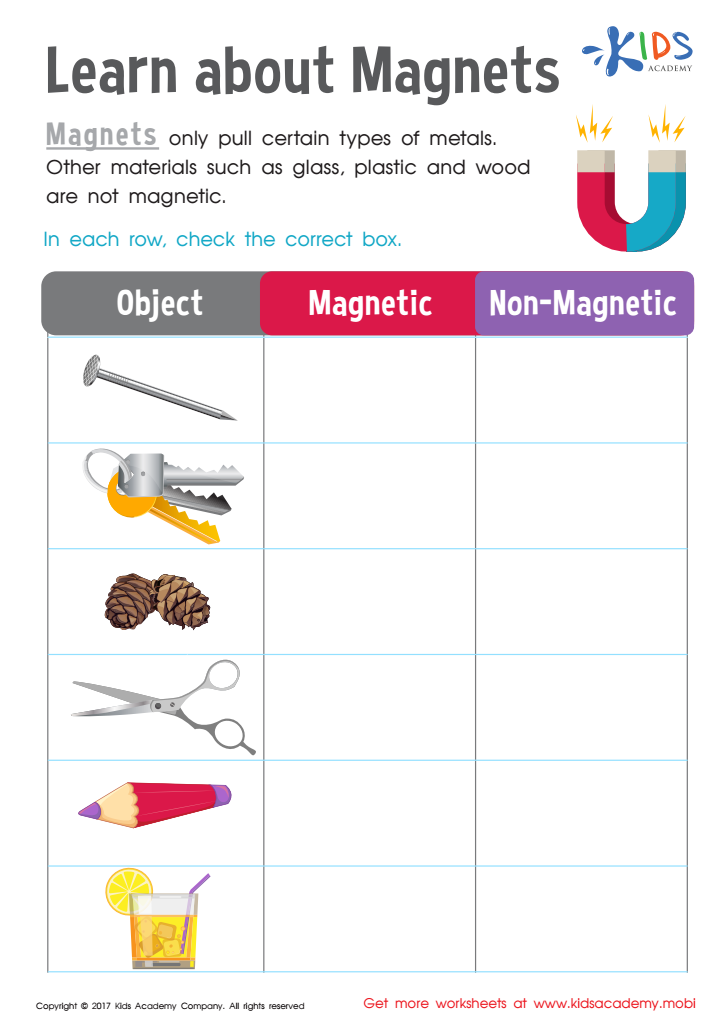
Magnetic Or Not Worksheet
 Assign to My Students
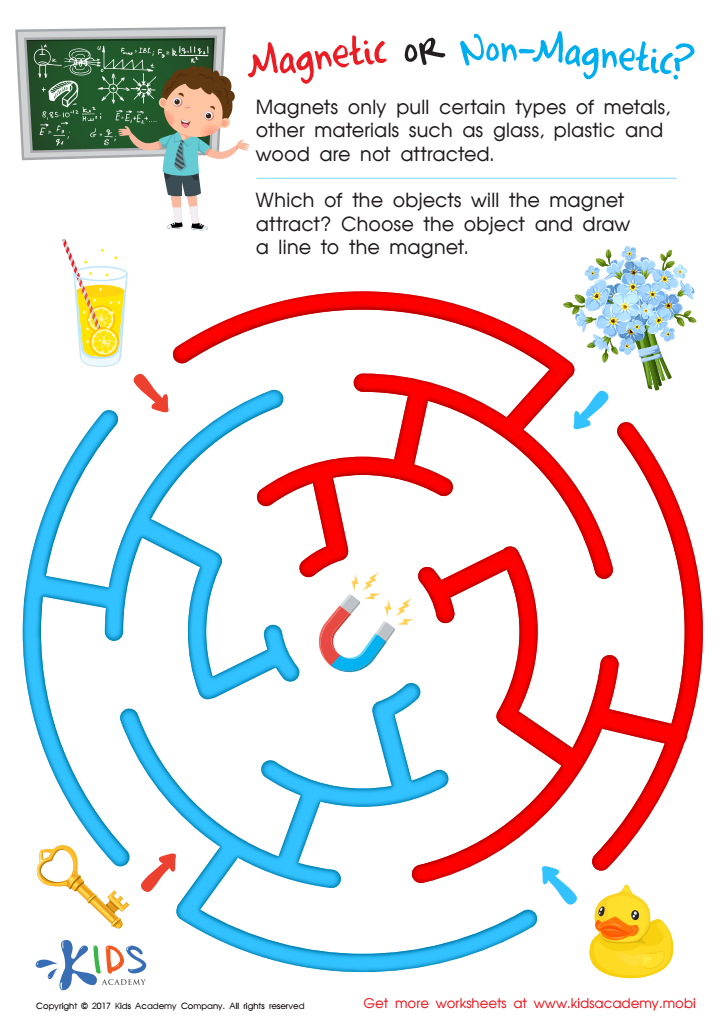
Magnetic or Non–Magnetic Worksheet
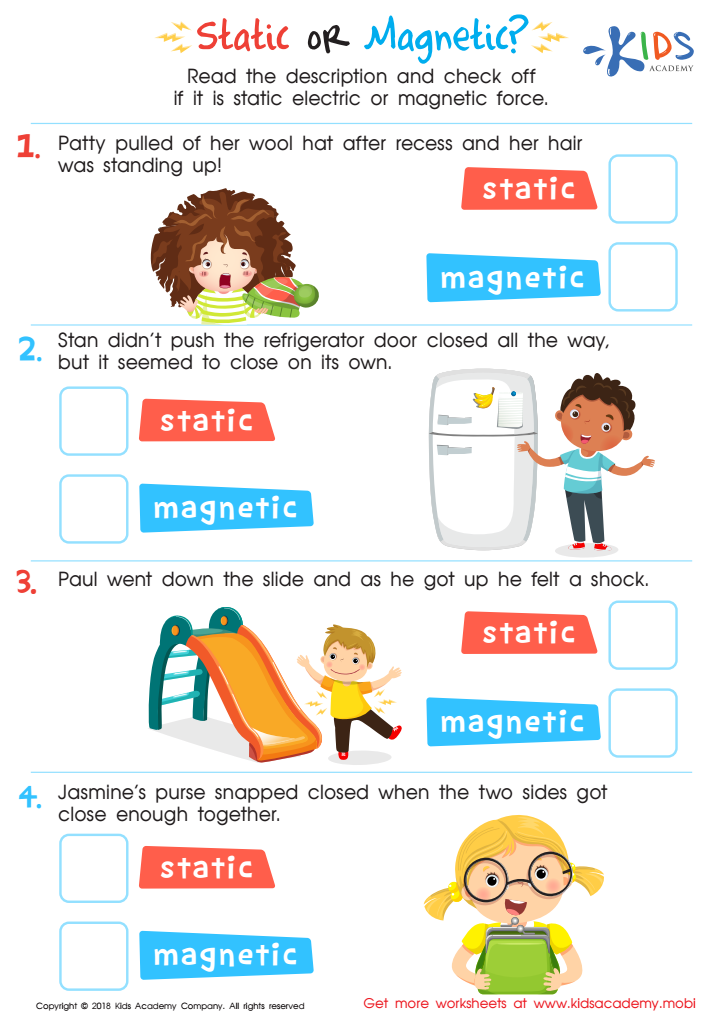
Static or Magnetic Printable Worksheet
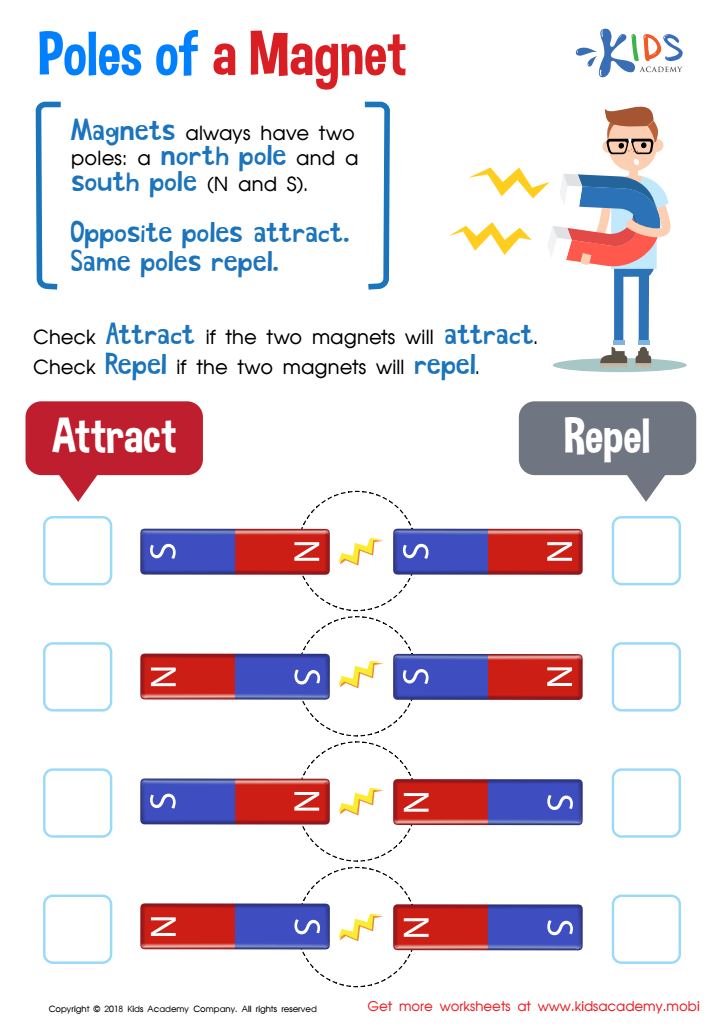
Magnet Poles Attract or Repel Worksheet








Understanding magnetism is crucial for parents and teachers as it lays the foundation for students' grasp of physical science, a core subject that shapes critical thinking and problem-solving skills. Magnetism is not just an abstract concept; it has real-world applications and implications in everyday life, from the compasses we use for navigation to the magnetic resonance imaging (MRI) machines in hospitals.
By familiarizing students with the principles of magnetism, educators can foster curiosity and encourage explorative learning. Children often engage more deeply with science when they can see its relevance in their lives, paving the way for future interest in STEM fields. Additionally, understanding the fundamentals of magnetism helps develop inquiry skills as students hypothesize, experiment, and draw conclusions about how magnetic forces interact with various materials and environments.
Moreover, magnetism embodies principles of attraction and repulsion, which can serve as metaphors in social and emotional learning, enhancing students' understanding of relationships and cooperation. Overall, comprehension of magnetic concepts equips students with the knowledge and skills that enhance not only their academic profile but also their ability to engage thoughtfully with the world around them. Therefore, parents and educators should prioritize this area of physical science in their teaching practices.







