Counting practice Plants and Animals Worksheets
3 filtered results
-
From - To
Enhance your child's counting skills with our engaging Plants and Animals worksheets! Designed for early learners, these printable activities make counting fun and educational. Students will explore the vibrant world of nature while practicing essential math skills, including counting objects, comparing quantities, and more. Each worksheet features delightful illustrations of plants and animals, capturing young minds' attention. Perfect for both classroom and home use, these worksheets cater to various learning styles, ensuring a comprehensive understanding of numbers in a natural context. Foster a love for nature and mathematics in your child with our enjoyable counting practice resources today!
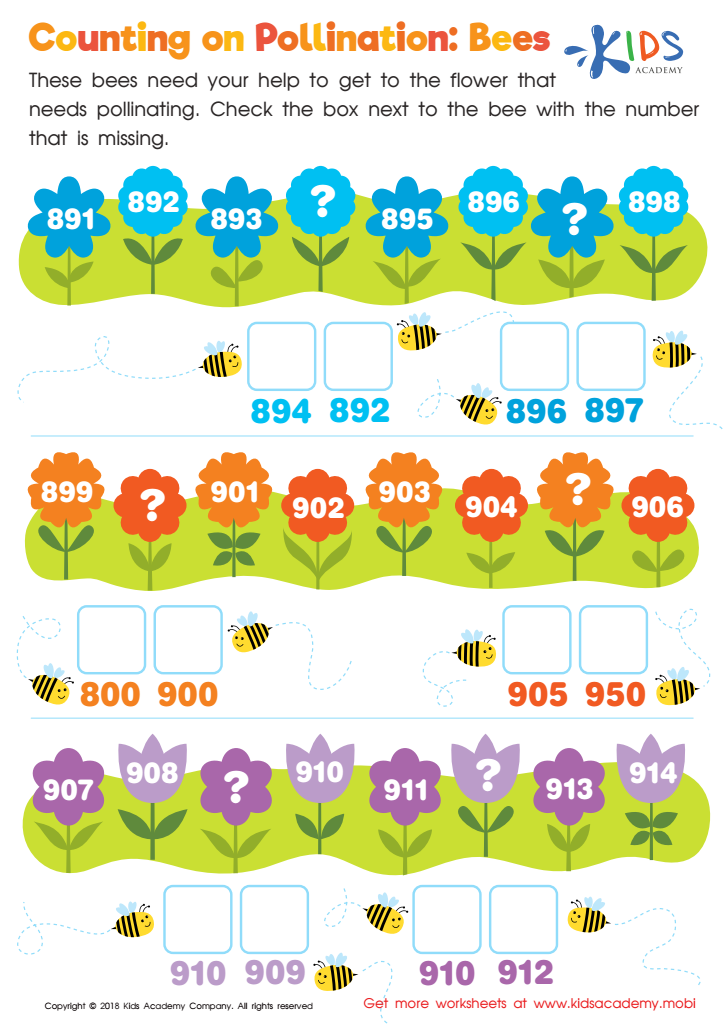
Counting on Pollination: Bees Worksheet
 Assign to My Students











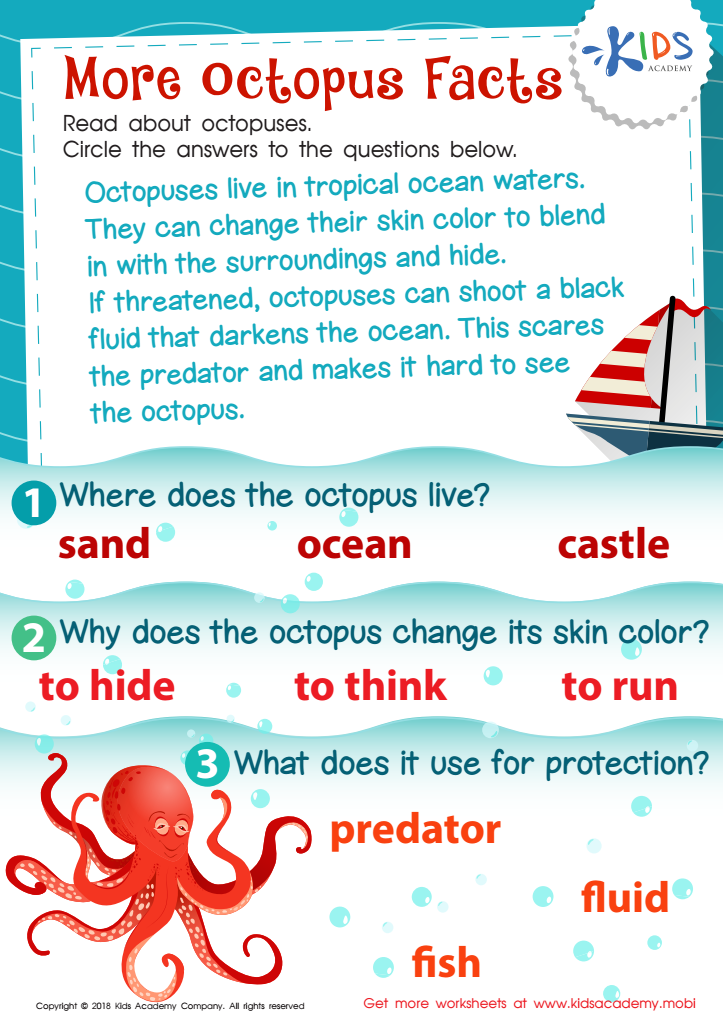
More Octopus Facts Worksheet
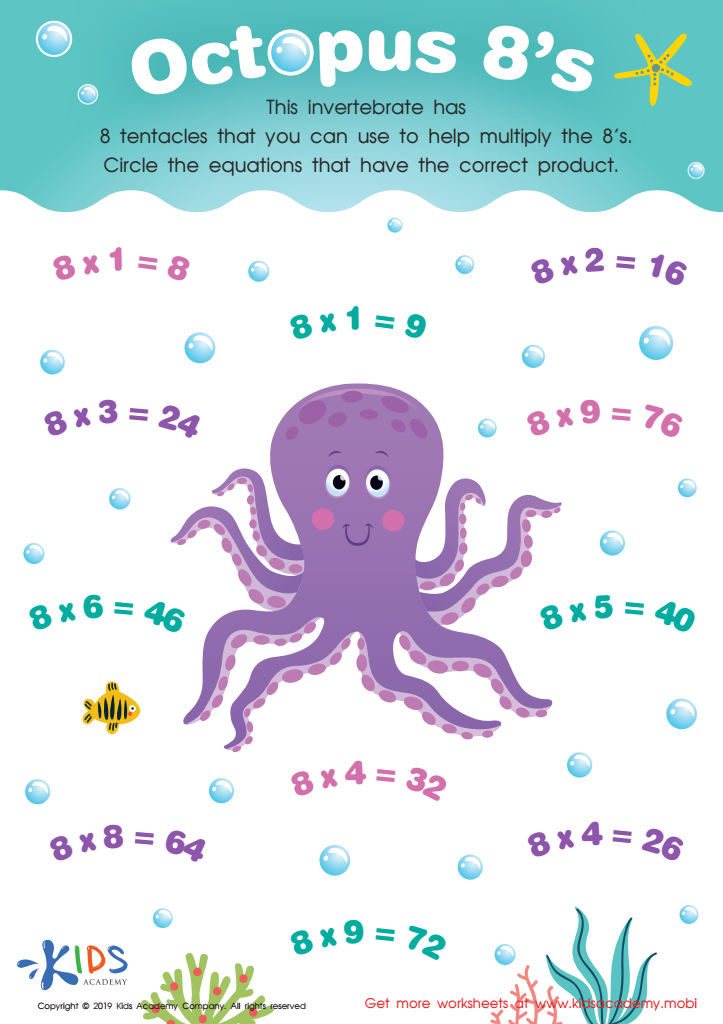
Octopus 8’s Worksheet








Counting practice with plants and animals is crucial for early childhood education. Engaging children in counting activities related to living things fosters a foundational understanding of mathematics while reinforcing their connection to nature. First, it enhances numeracy skills, helping children grasp the concepts of addition, subtraction, and grouping through real-world contexts. For example, counting leaves or flowers encourages children to visualize numbers and understand quantity.
Additionally, incorporating plants and animals into counting exercises ignites curiosity about the natural world. It nurtures observation skills and instills a sense of responsibility towards the environment. As children count different species or track growth patterns, they develop critical thinking and observational skills.
Moreover, these activities support emotional and social development. Working cooperatively in small groups or with family members allows children to communicate their findings, promoting teamwork and confidence. Finally, experiencing counting through hands-on activities related to plants and animals is engaging and enjoyable, making learning more memorable.
In essence, parents and teachers should prioritize counting practice involving plants and animals as it enriches children's educational experience, promotes healthy development, and fosters a lifelong appreciation for mathematics and nature.








