Division practice Plants and Animals Worksheets
4 filtered results
-
From - To
Enhance your child's math skills with our "Division Practice: Plants and Animals Worksheets." These engaging worksheets combine fundamental division concepts with fascinating facts about the plant and animal kingdom. Your little learners will enjoy solving division problems while discovering the intricacies of ecosystems and biodiversity. Designed for early grades, these resources promote critical thinking and help reinforce math fluency in a fun, interactive way. Perfect for classroom activities or homeschooling, these worksheets cater to different skill levels, ensuring every child can master division while exploring the natural world. Download now to inspire a love for both math and science in young learners!
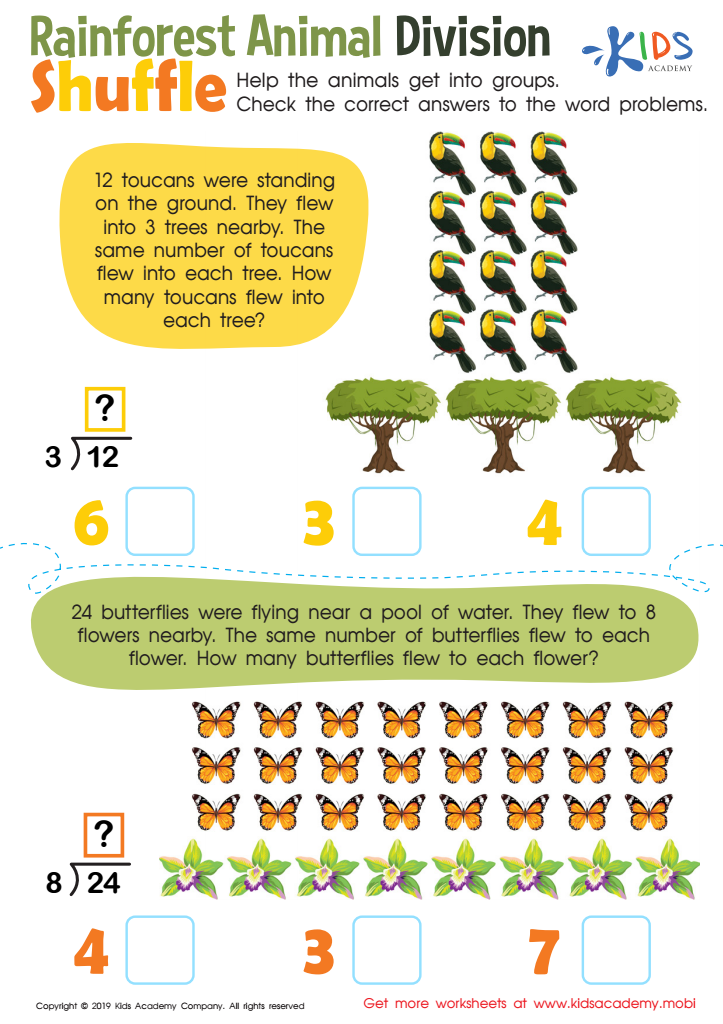
Rainforest Animal Division Worksheet
 Assign to My Students











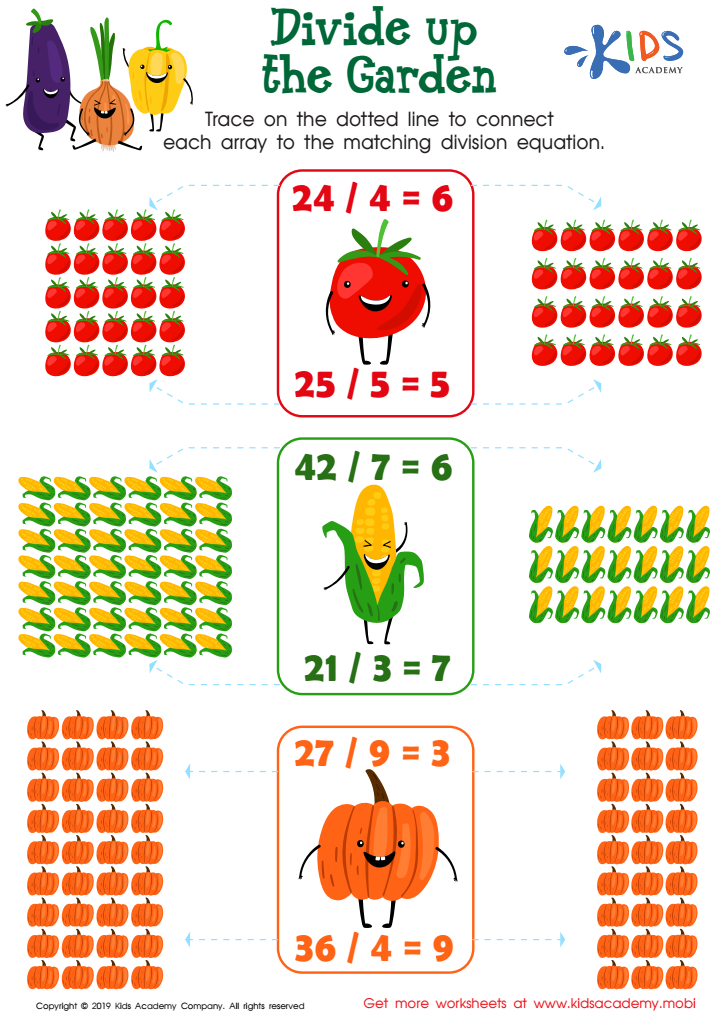
Divide up the Garden Worksheet
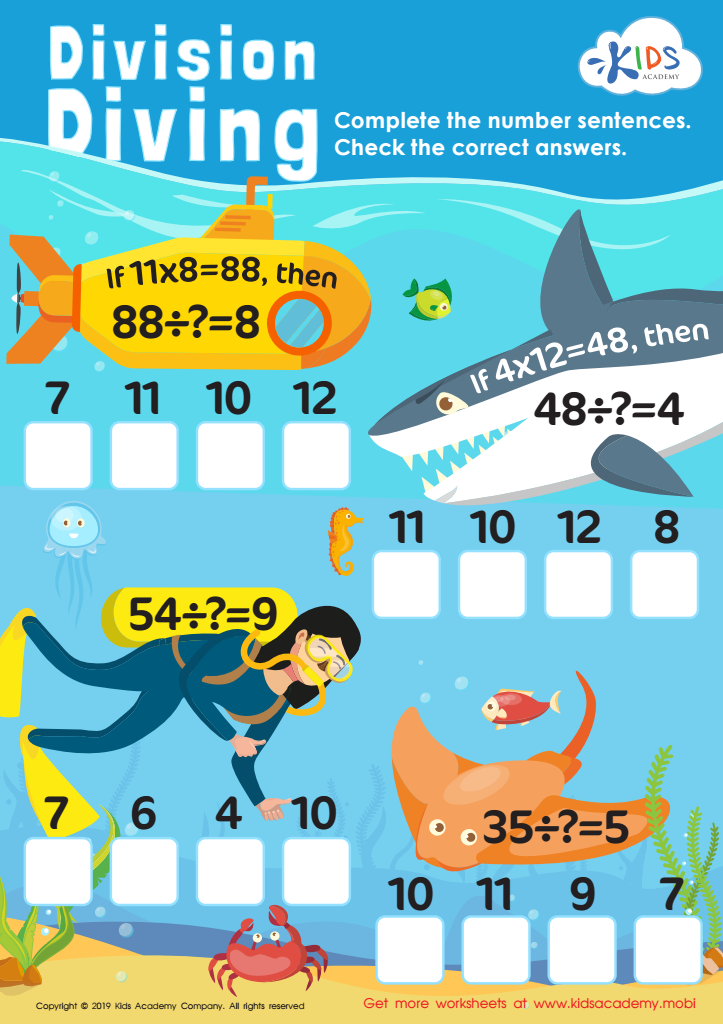
Division Diving Worksheet
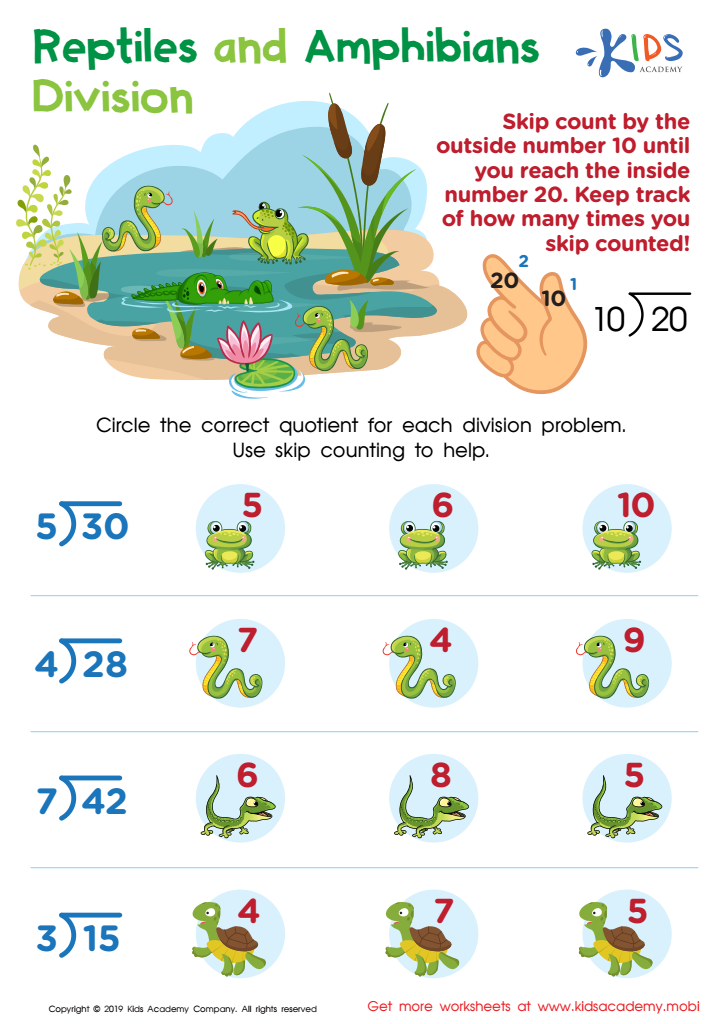
Reptile and Amphibians Division Worksheet




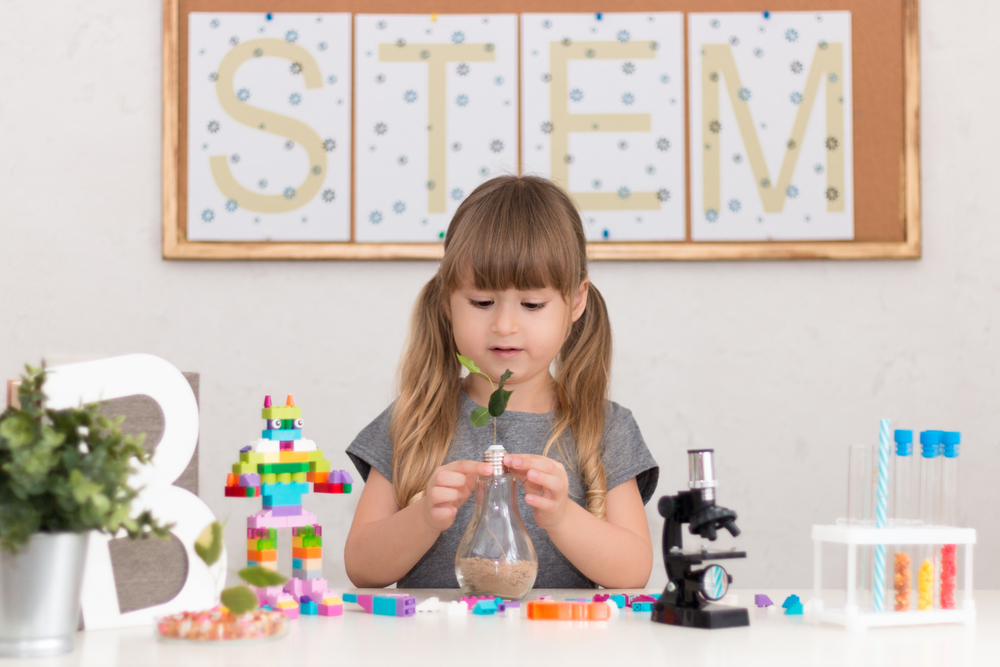


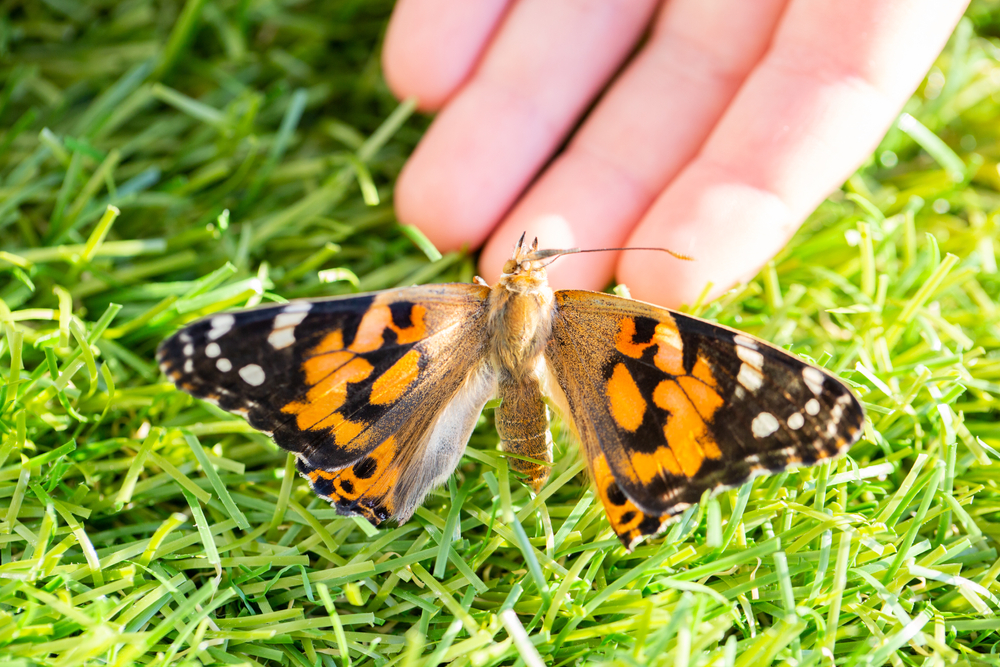
Parents and teachers should prioritize division practice centered around the topics of plants and animals for several compelling reasons. First, integrating division with these relevant themes reinforces mathematical concepts in a context that is relatable and engaging for children. Understanding how to divide, whether it involves distributing seeds among pots or sharing plant nutrients among trees, enhances students’ grasp of real-world applications of math.
Moreover, studying plants and animals while practicing division fosters interdisciplinary learning. It not only improves mathematical skills but also deepens knowledge in biology and ecology, promoting a holistic approach to education. Discussions about biodiversity and ecosystems underscore the importance of caring for nature, instilling environmental awareness in children while they build their math skills.
Additionally, engaging parents in this process allows them to support their children’s learning at home. They can participate in hands-on activities like gardening or animal care, reinforcing division concepts through practical experiences. This collaboration between home and school creates a supportive learning environment, inspiring curiosity and critical thinking.
Ultimately, focusing on division practice within the realms of plants and animals enriches education by making math relevant, fostering a love for nature, and enhancing children’s understanding of the world around them.








