Welcome to our Shape Recognition Grade 2 Worksheets page, designed to enhance your child’s understanding of shapes through engaging activities! These printable worksheets help second graders identify, categorize, and compare different shapes in fun and interactive ways. Perfect for reinforcing geometric concepts, our worksheets include matching games, shape sorting tasks, and drawing exercises. They cater to various learning styles, encouraging creativity while solidifying foundational math skills. Ideal for both classroom use and at-home practice, these worksheets aim to boost confidence and critical thinking. Explore our collection now and watch your child master shape recognition with ease!

Check out this FREE Grade 2 "Shape Recognition" Trial Lesson!

Counting Faces 3D

Favorites
With answer key
Interactive
  • Grade 2
  • Shape Recognition
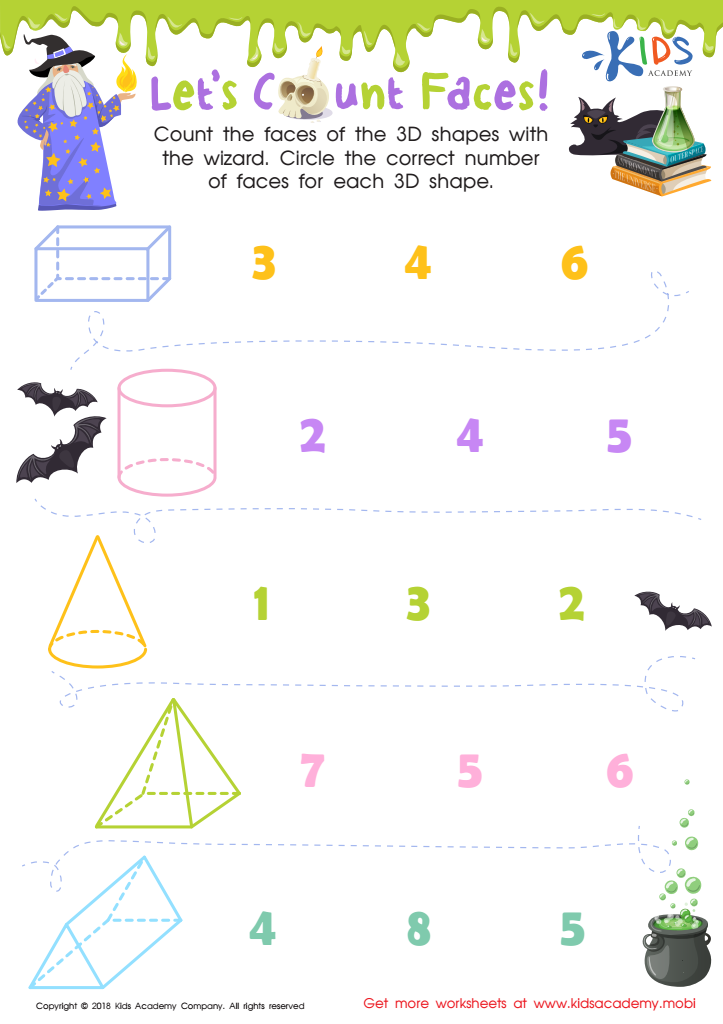
Let's Count Faces! Worksheet

Let's Count Faces! Worksheet

Help the wizard count the faces of 3D shapes! Ask your kids to identify the shapes before beginning, then have them circle the correct number of faces. Enjoy this fun wizard-themed worksheet with your kids!
Let's Count Faces! Worksheet
Worksheet
Matching Halves Worksheet

Matching Halves Worksheet

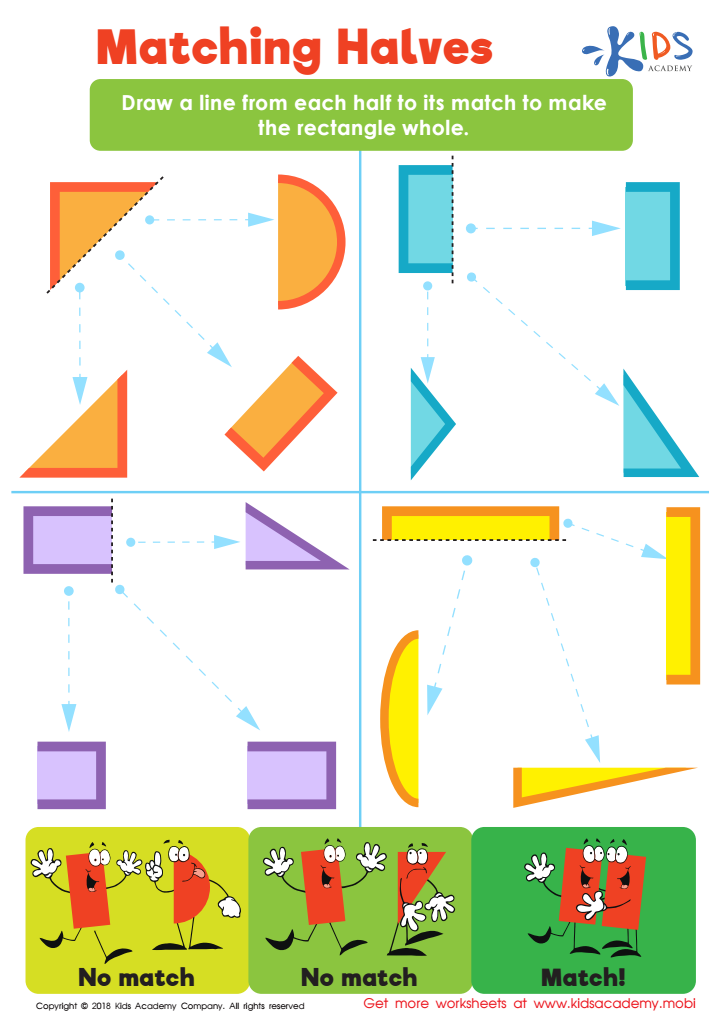
See how your child fares in matching two halves to form a complete rectangle. Provide them with four options, and ask them to draw a line connecting the two correct halves. Put their shape knowledge to the test with this simple worksheet!
Matching Halves Worksheet
Worksheet
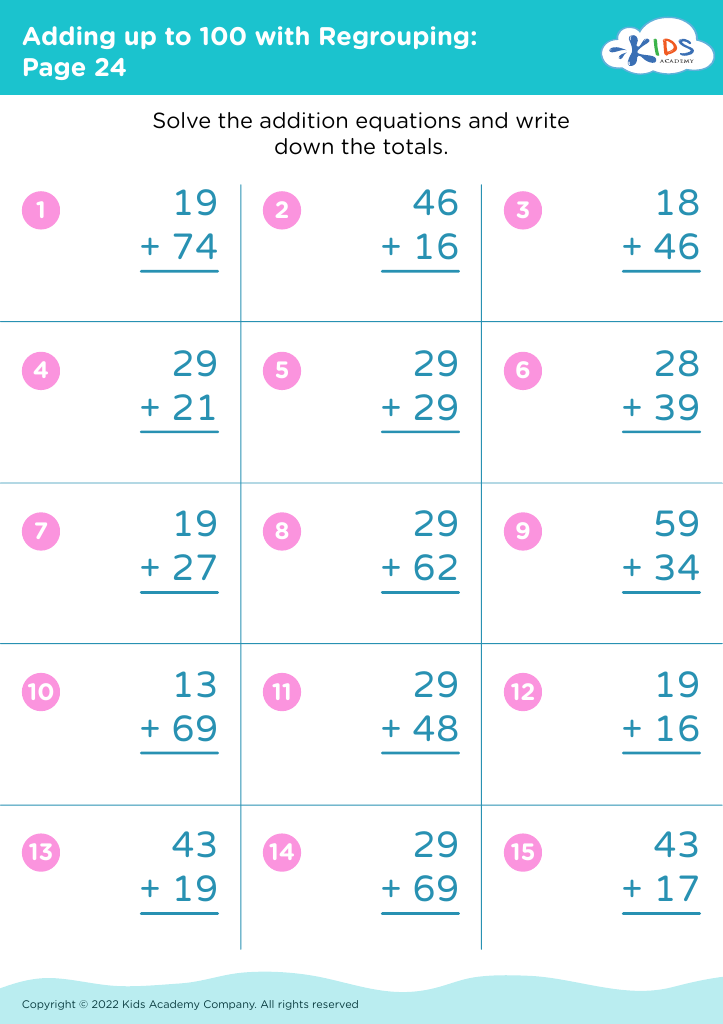
Adding up to 100 with Regrouping: Page 24
Worksheet
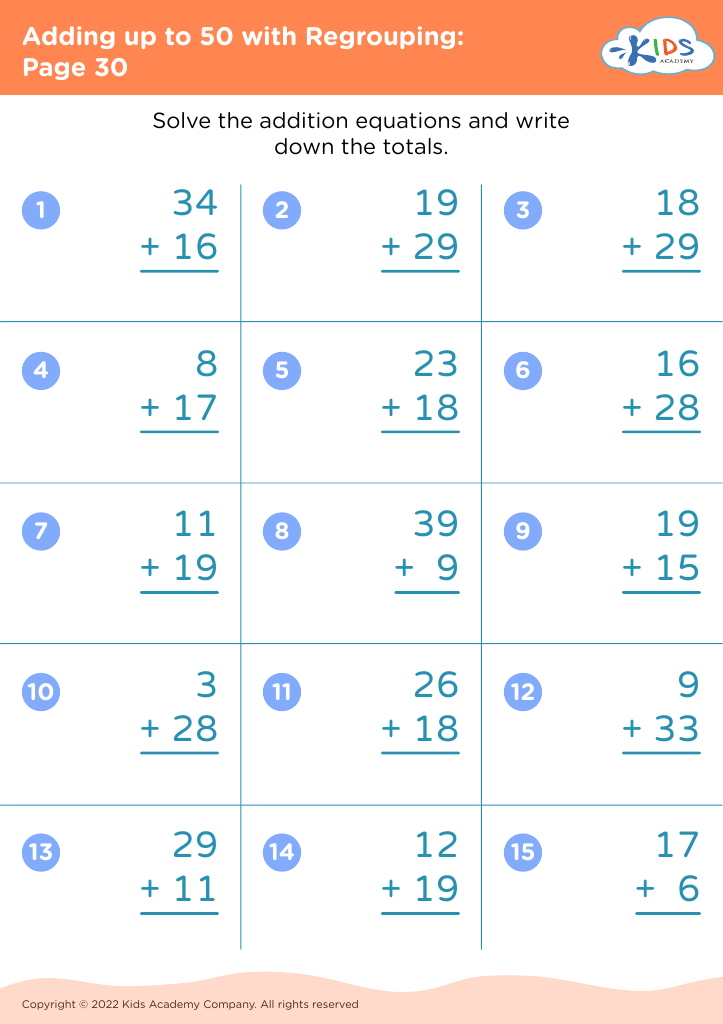
Adding up to 50 with Regrouping: Page 30
Worksheet
Sorting Jewels Worksheet
Sorting Jewels Worksheet
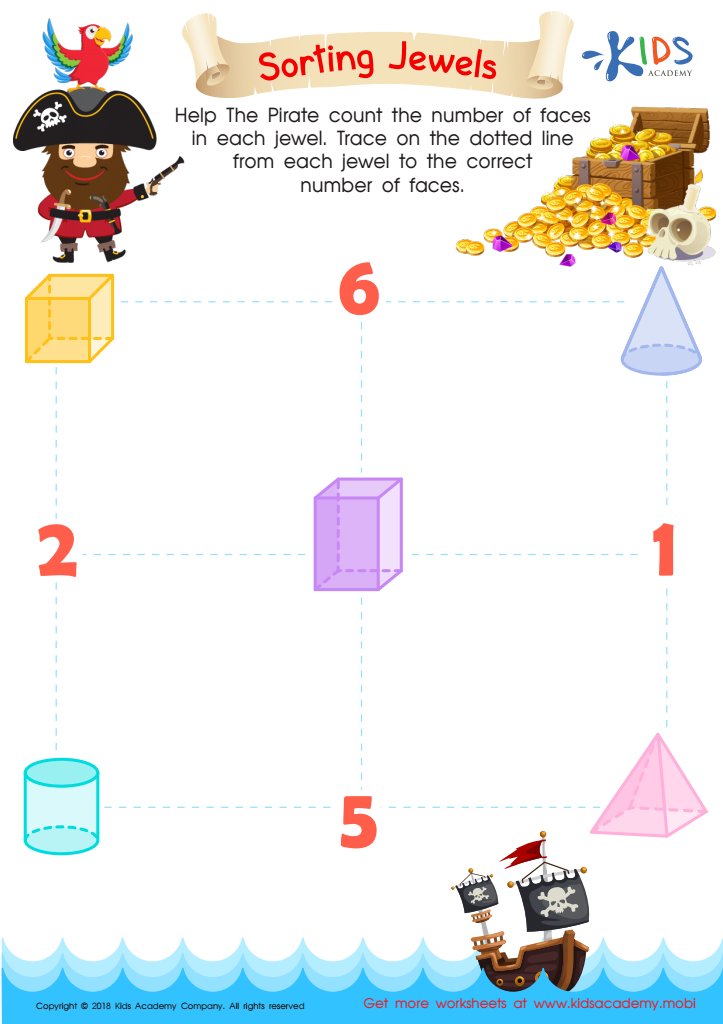
Help your kids explore their pirate fantasies with this tracing sheet. Ask them to count the number of faces in each jewel and then trace the dotted line to the correct number. How many faces does a rectangle have? What about a triangle and a cone? This fun worksheet is a great way to teach your kids the basics of identifying the number of faces on shapes.
Sorting Jewels Worksheet
Worksheet
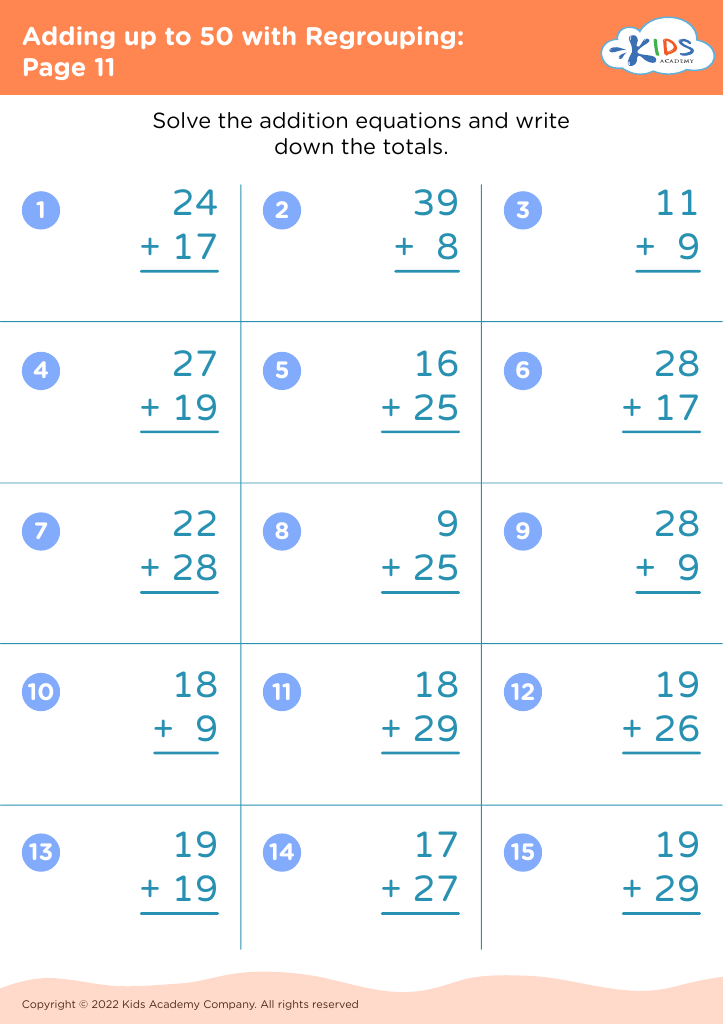
Adding up to 50 with Regrouping: Page 11
Worksheet
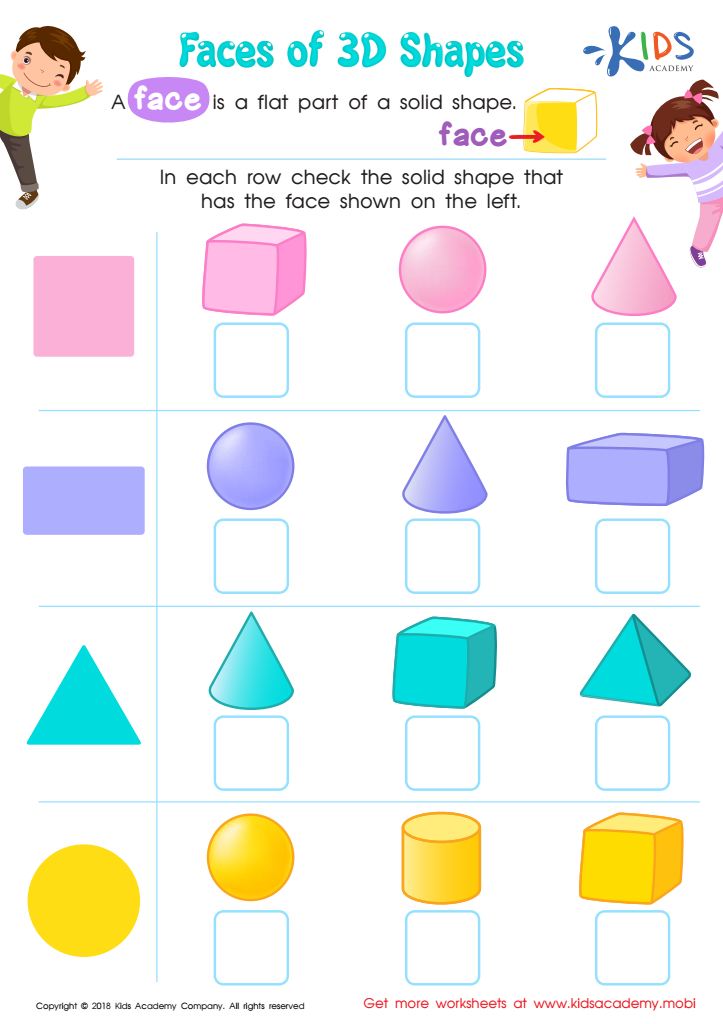
Faces of 3D Shapes Worksheet
Faces of 3D Shapes Worksheet
Point at random body parts and ask your child to name them. Point to their face and ask them to identify it. Use this worksheet to show how "face" doesn't just refer to body parts - it can also mean the flat surface of a solid shape. Check the picture to find the matching solid shape for each face shown.
Faces of 3D Shapes Worksheet
Worksheet
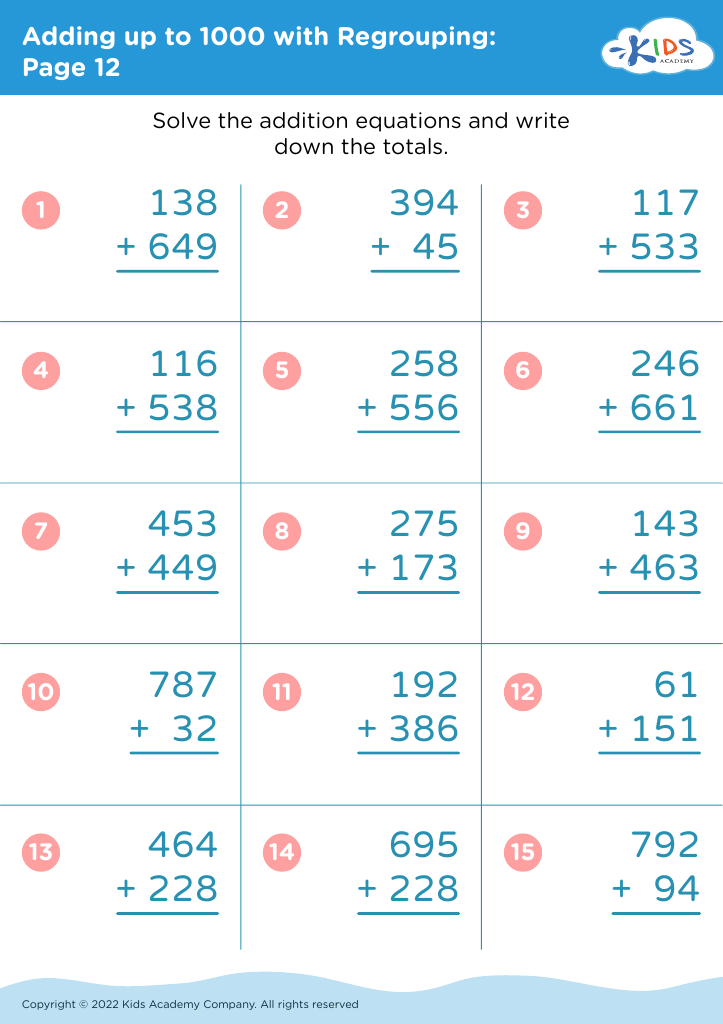
Adding up to 1000 with Regrouping: Page 12
Worksheet
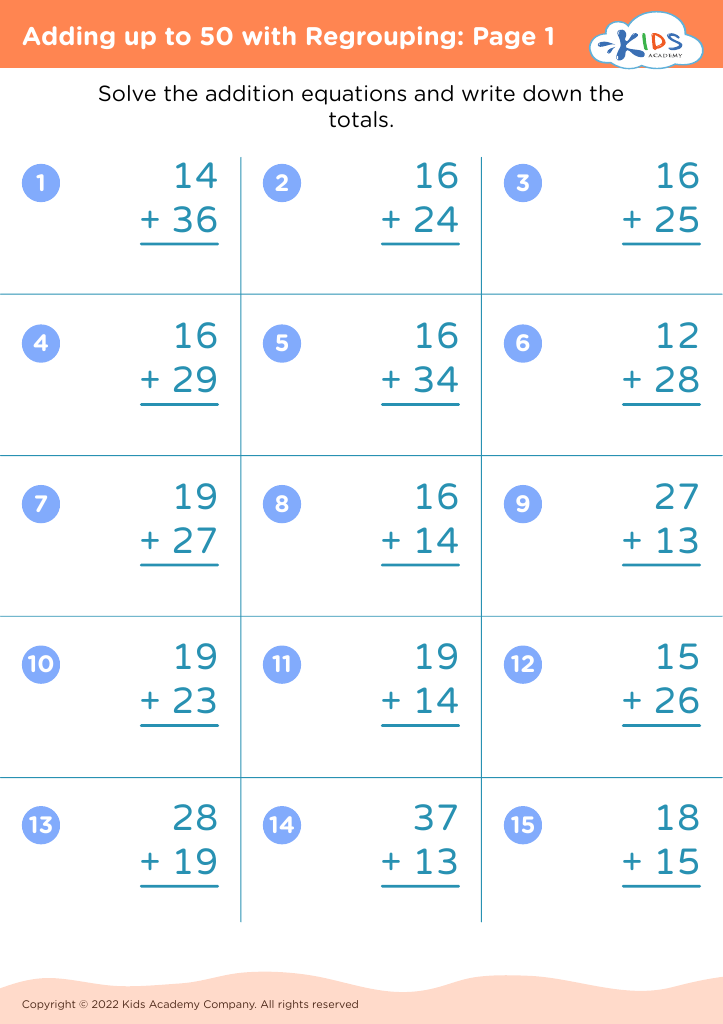
Adding up to 50 with Regrouping: Page 1
Worksheet
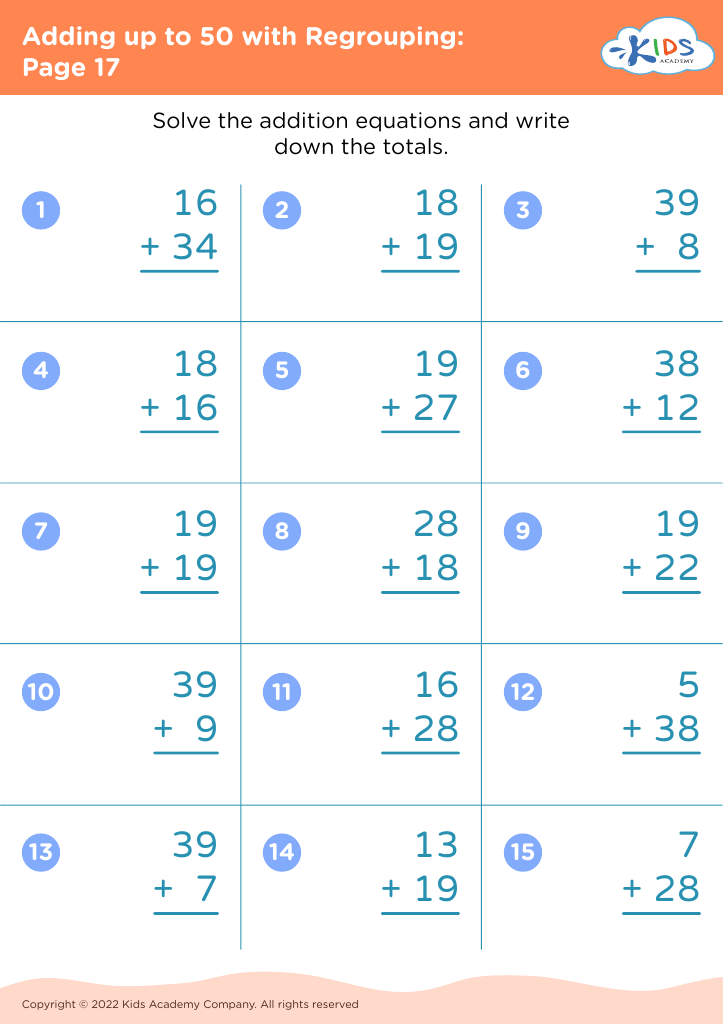
Adding up to 50 with Regrouping: Page 17
Worksheet
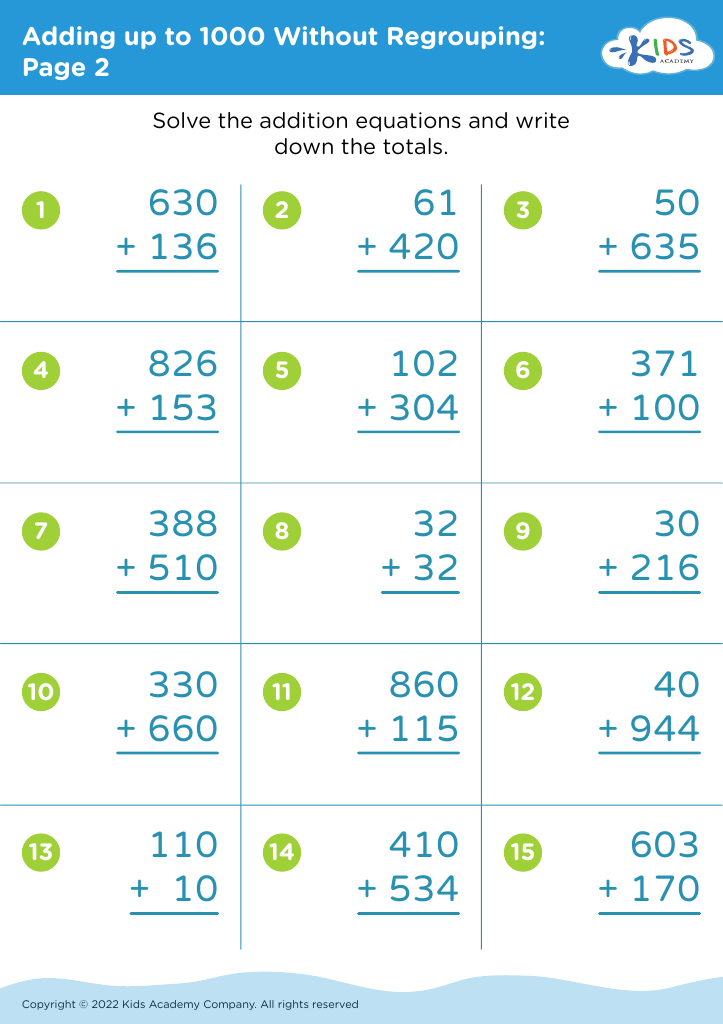
Adding up to 1000 Without Regrouping: Page 2
Worksheet
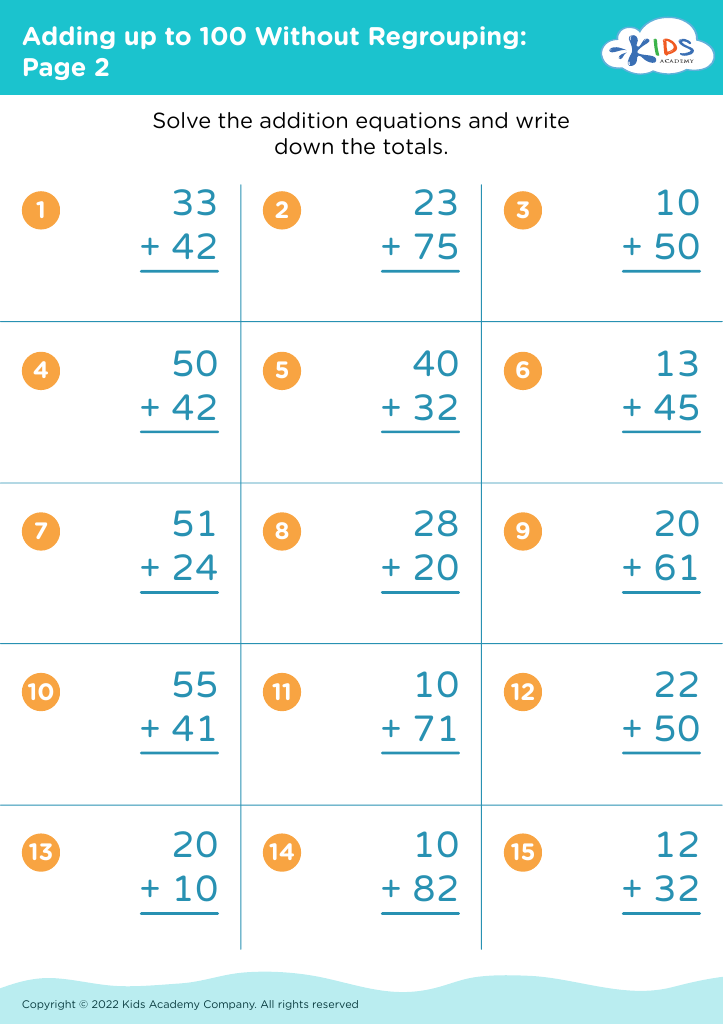
Adding up to 100 Without Regrouping: Page 2
Worksheet
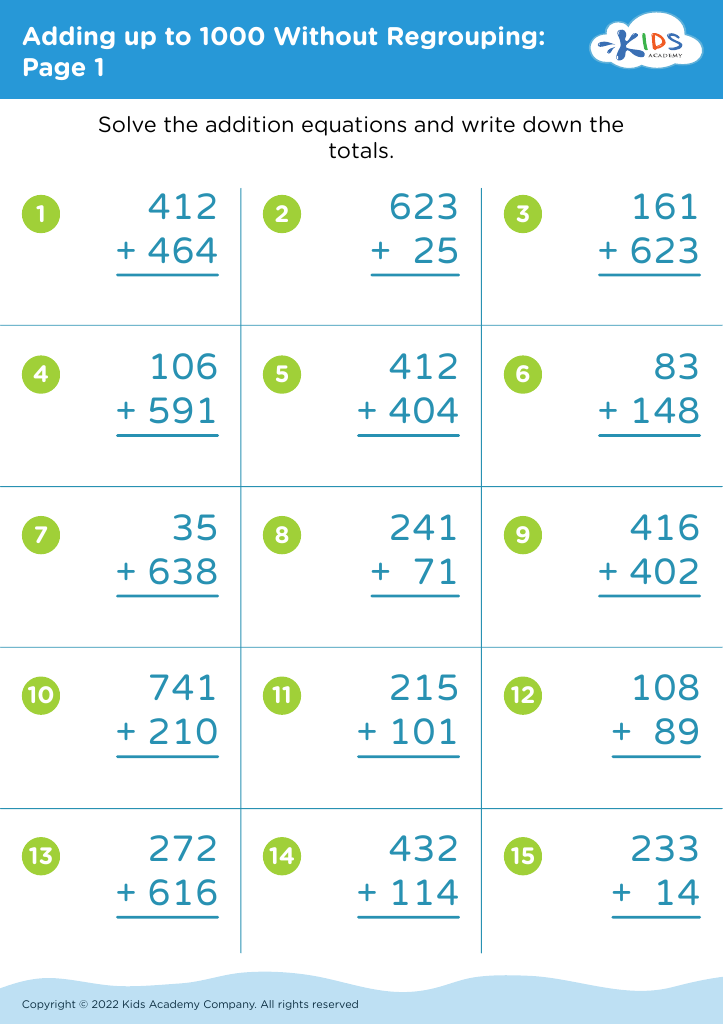
Adding up to 1000 Without Regrouping: Page 1
Worksheet
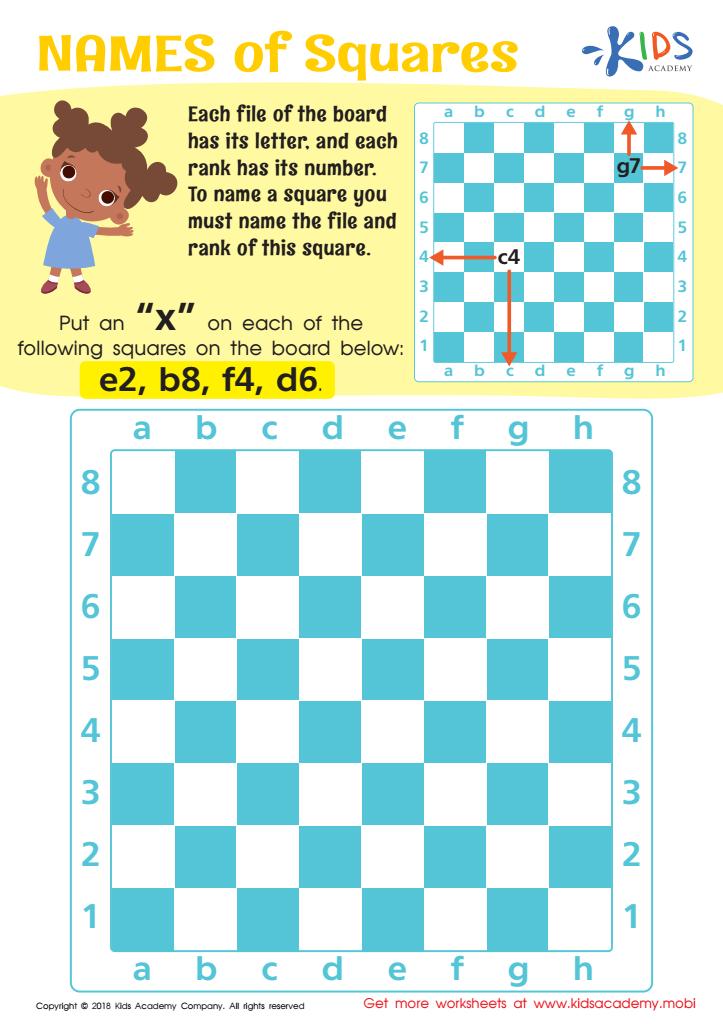
Names of Squares Worksheet

Names of Squares Worksheet

Ask your students to put an X on the appropriate squares. This worksheet is part of learning chess basics. Each file is marked with a letter and rank with a number. This allows moves and squares to be easily named and noted. e.g. The square marked "e5" is the fifth rank of the e-file.
Names of Squares Worksheet
Worksheet
Cutting Rectangles with Alien Worksheet
Cutting Rectangles with Alien Worksheet
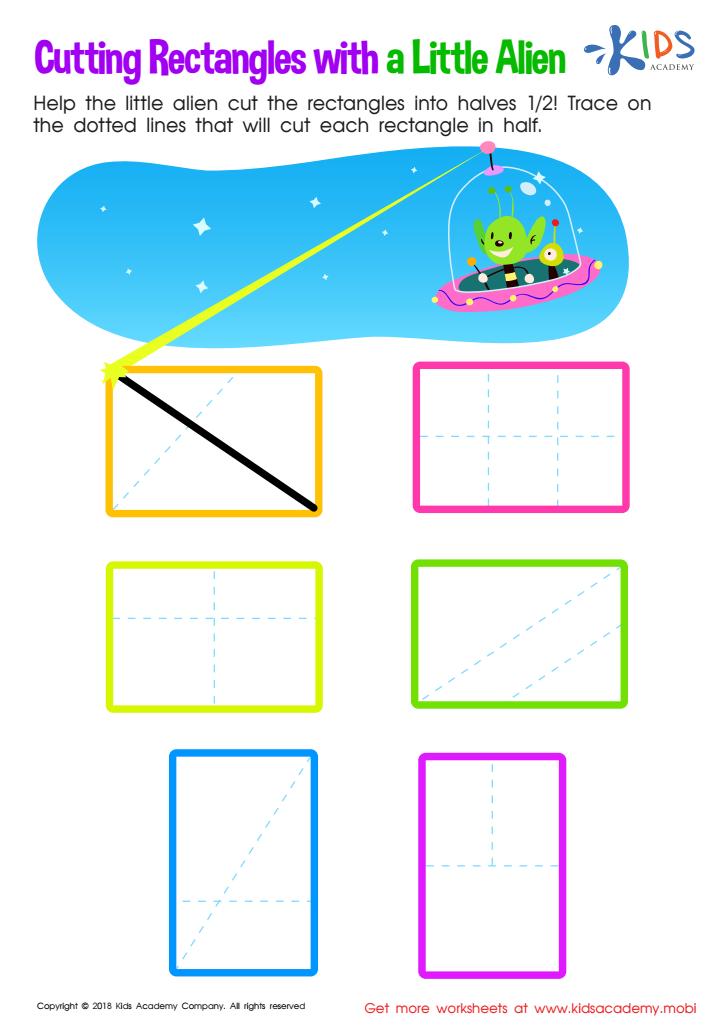
If your students are interested in aliens and otherworldly events, they'll love this exercise! It requires them to help a small alien cut rectangles into halves (½). They must trace the dotted lines to accurately cut each rectangle.
Cutting Rectangles with Alien Worksheet
Worksheet
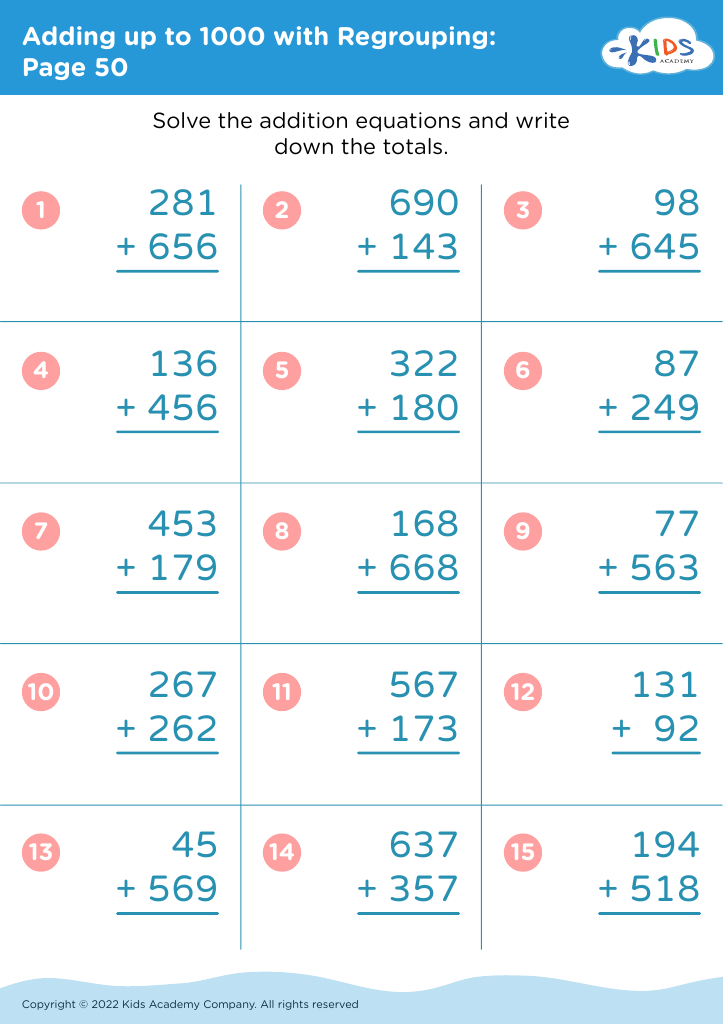
Adding up to 1000 with Regrouping: Page 50
Worksheet
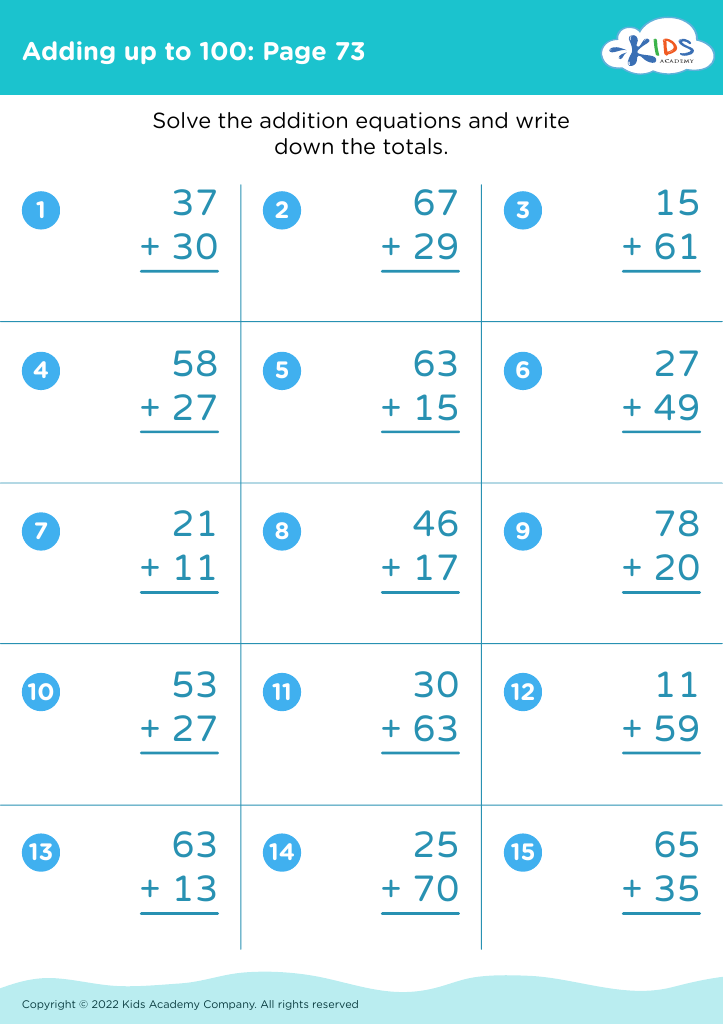
Adding up to 100: Page 73

Adding up to 100: Page 73

Adding up to 100: Page 73
Worksheet
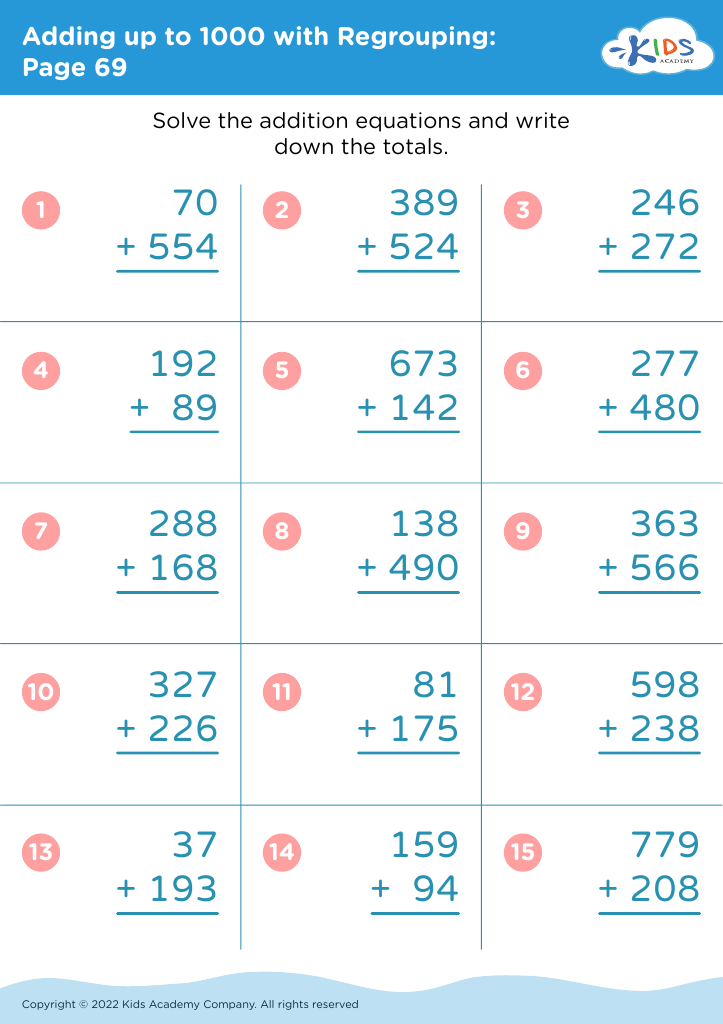
Adding up to 1000 with Regrouping: Page 69
Worksheet
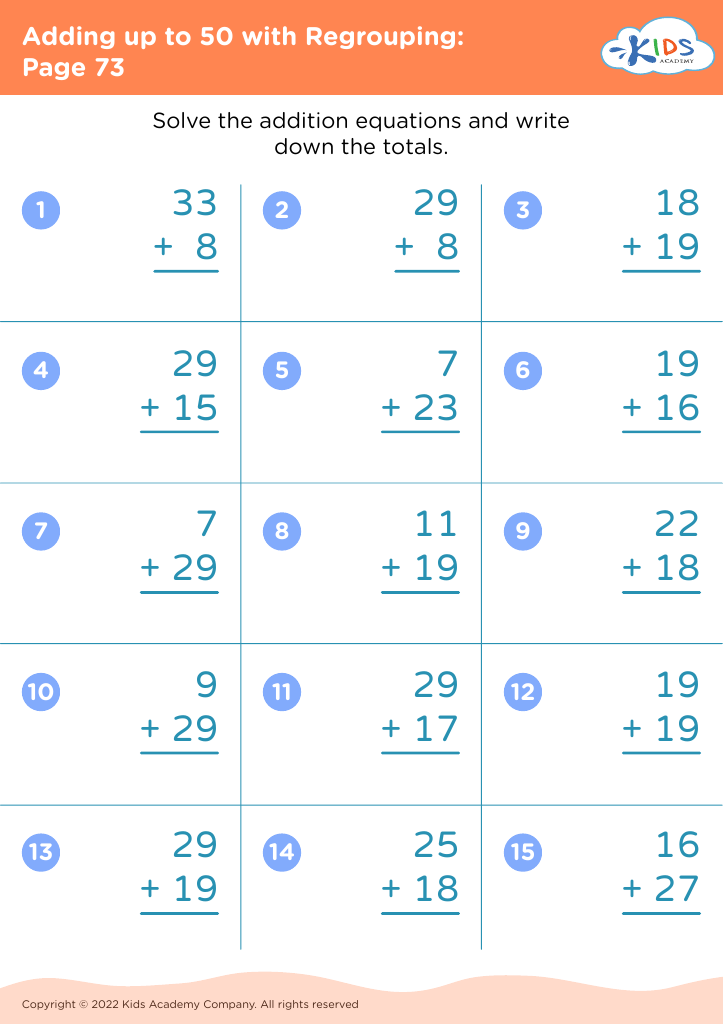
Adding up to 50 with Regrouping: Page 73
Worksheet
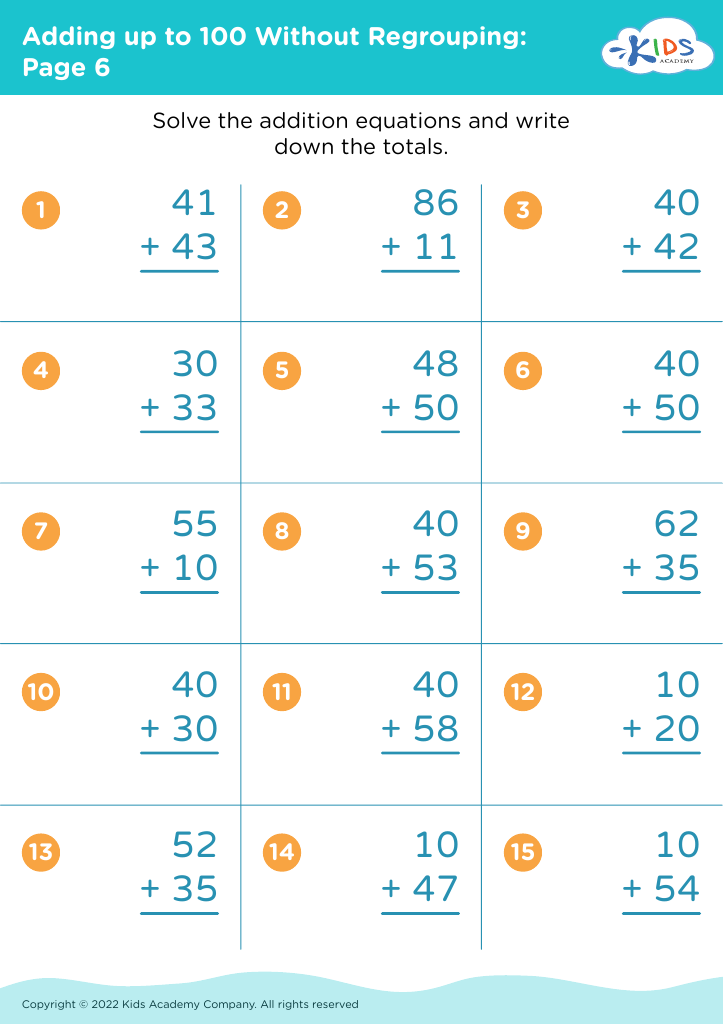
Adding up to 100 Without Regrouping: Page 6
Worksheet
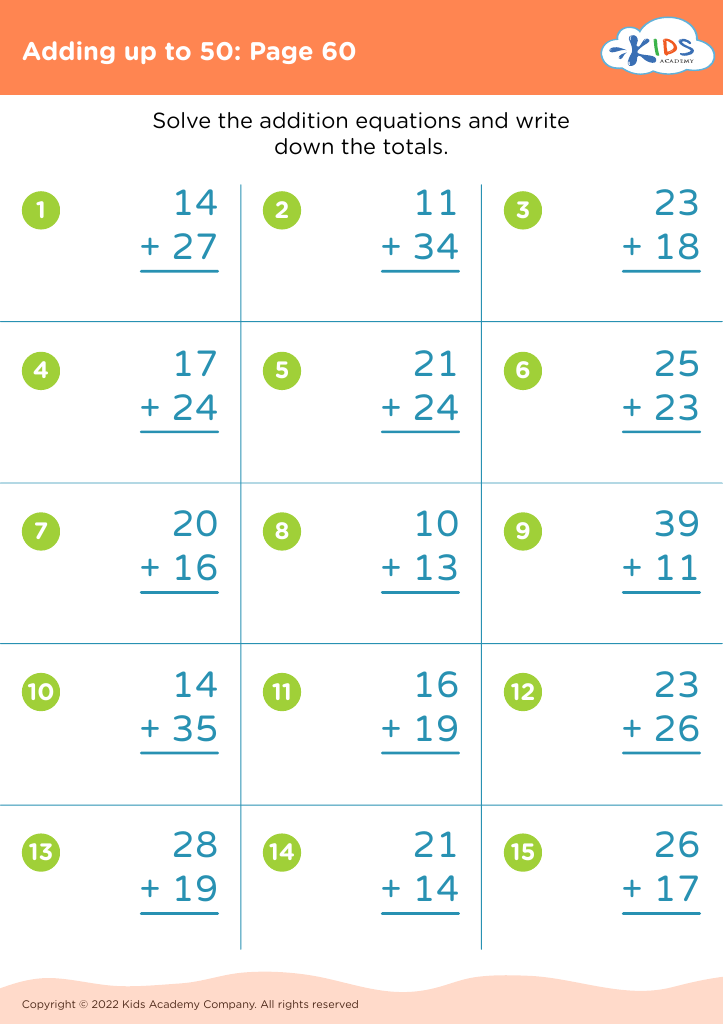
Adding up to 50: Page 60

Adding up to 50: Page 60

Adding up to 50: Page 60
Worksheet
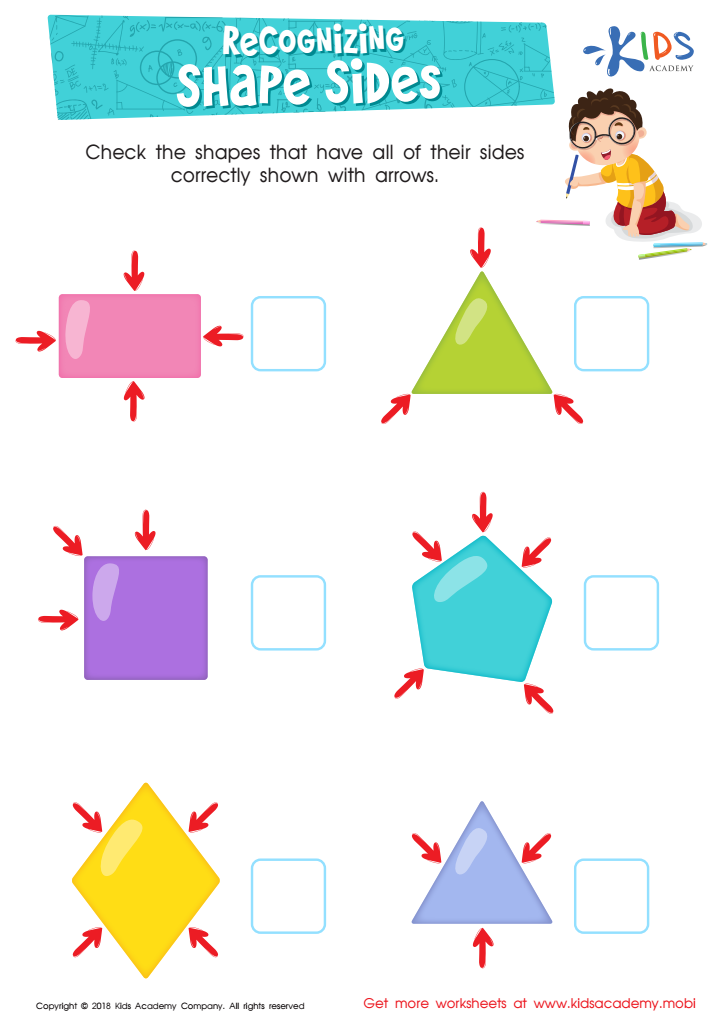
Recognizing Shape Sides Worksheet
Recognizing Shape Sides Worksheet

This exercise will help your child recognize shape sides. Go over the difference between sides and angles first, then have them check the shapes with arrows to show the sides. They'll quickly get the hang of it and find it much easier after completing the colorful worksheet.
Recognizing Shape Sides Worksheet

Worksheet
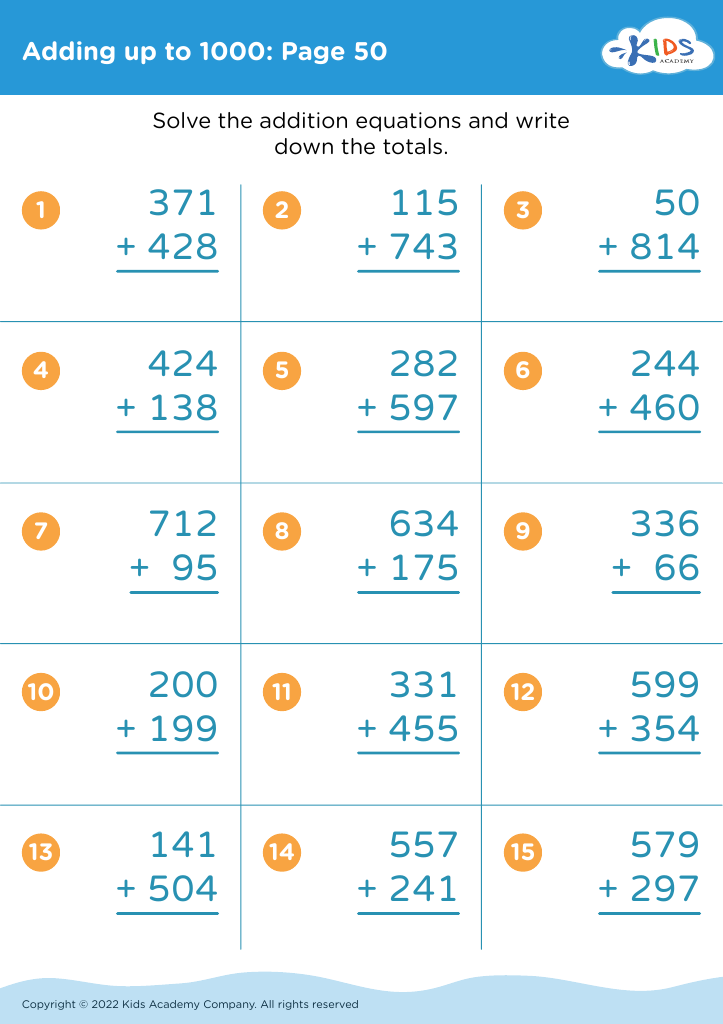
Adding up to 1000: Page 50

Adding up to 1000: Page 50

Adding up to 1000: Page 50
Worksheet
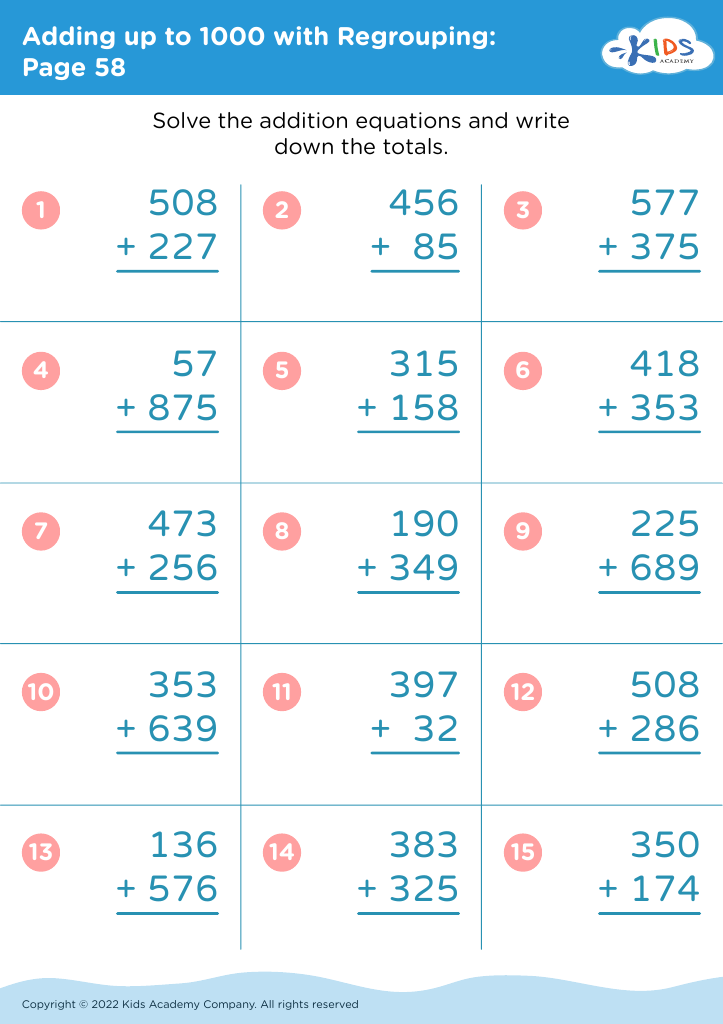
Adding up to 1000 with Regrouping: Page 58
Worksheet


Shape recognition is a foundational skill in early childhood education, particularly in Grade 2. Parents and teachers should prioritize this area of learning for several reasons. Firstly, shape recognition fosters critical cognitive development, as children learn to identify, describe, and categorize various shapes, which enhances their spatial awareness and understanding of the world around them.

Moreover, recognizing shapes is essential for building fundamental mathematics skills. Shapes are integral to geometry, and a solid grasp of different shapes lays the groundwork for more complex math concepts like symmetry, area, and volume. Children who develop these skills early are better equipped for future math challenges.

Additionally, shape recognition promotes pattern recognition and logical reasoning, skills crucial in problem-solving and analytical thinking. Engaging children in activities that involve shape recognition, such as art projects or games, makes learning enjoyable and interactive, inherently boosting their motivation and confidence.

Lastly, understanding shapes is related to literacy skills; children often encounter shapes in letters and numbers, aiding in reading and writing fluency. Therefore, both parents and teachers benefit from emphasizing shape recognition, as it enriches children's overall development and prepares them for future academic success.