Understanding citizenship Community Worksheets
4 filtered results
-
From - To
Explore our "Understanding Citizenship Community Worksheets," designed to engage young learners in the vital concepts of citizenship and community involvement. These worksheets, tailored for early grade students, promote critical thinking and foster a sense of responsibility through interactive exercises. Each activity helps children grasp the importance of civic duty, cooperation, and respect for others. With fun illustrations and relatable scenarios, students will learn how they can actively contribute to their communities. Perfect for classrooms and homeschooling, these resources encourage discussions about rights, responsibilities, and the role they play as citizens, laying a strong foundation for informed, engaged future citizens.
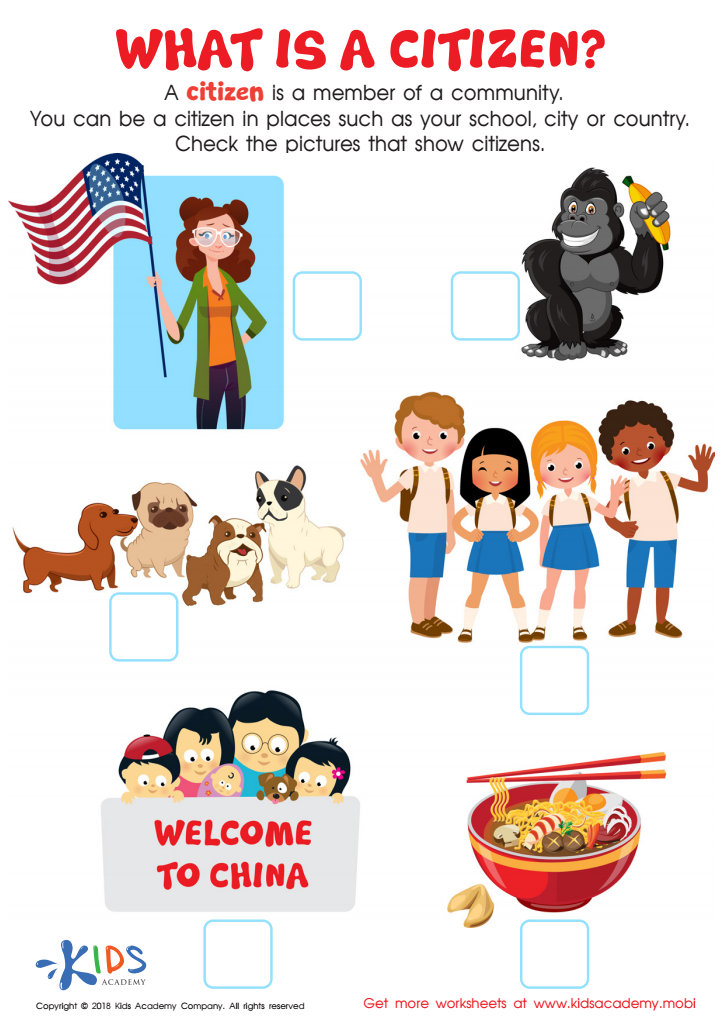
What is a Citizen? Worksheet
 Assign to My Students
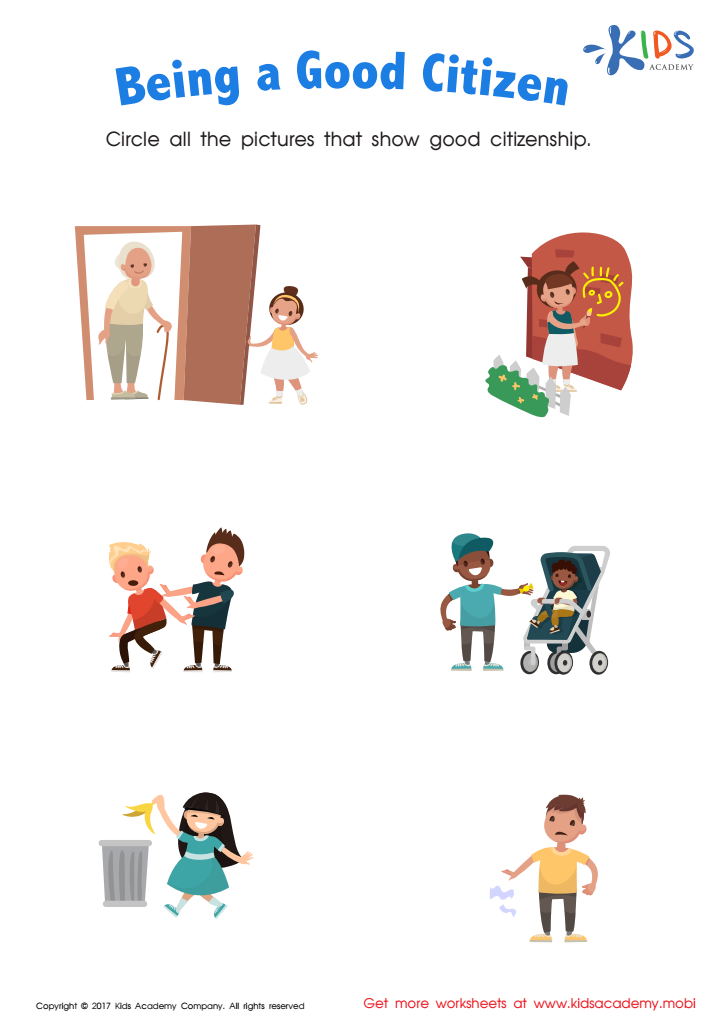
Being a Good Citizen Printable
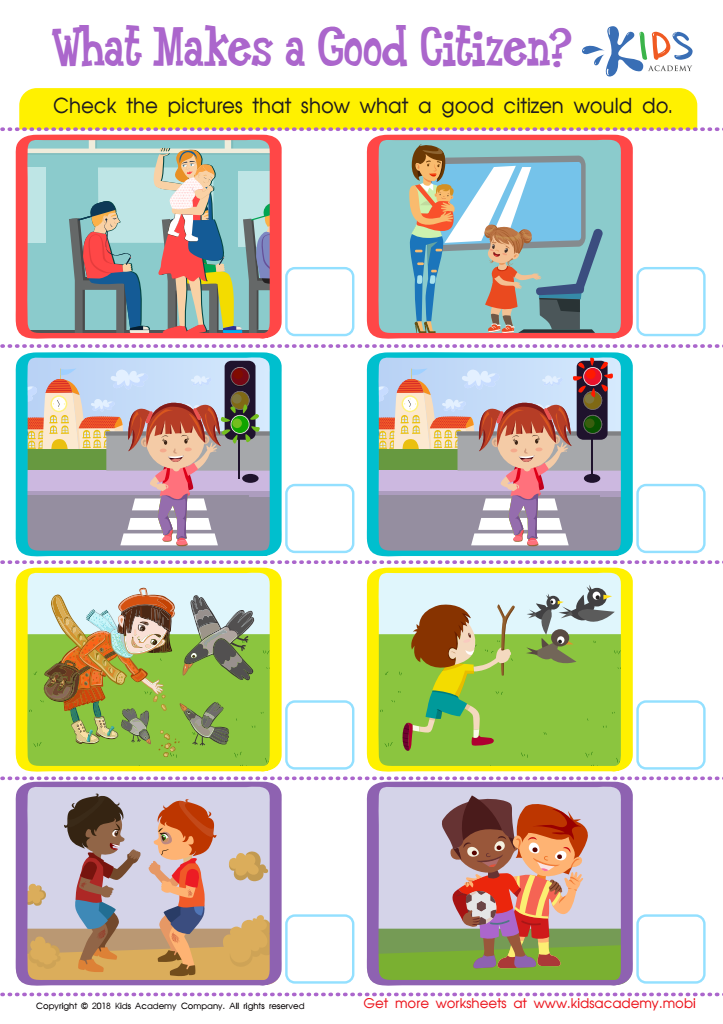
What Makes a Good Citizen? Worksheet
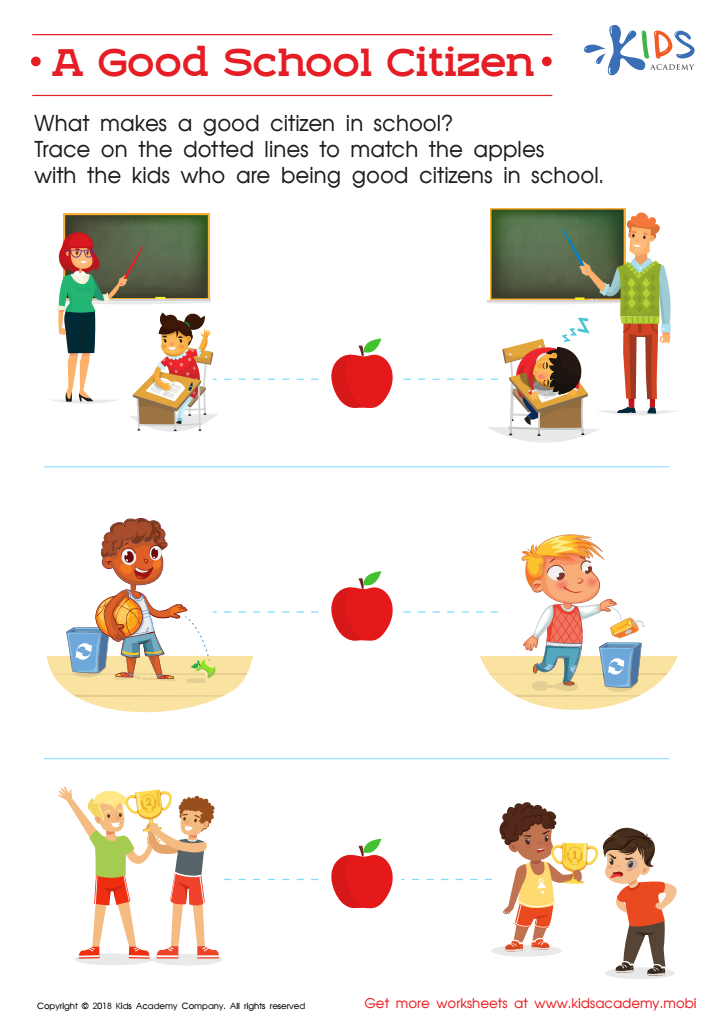
A Good School Citizen Worksheet







Understanding citizenship and community is crucial for parents and teachers because it lays the groundwork for fostering responsible, engaged individuals. Citizenship goes beyond mere legal status; it encompasses the rights and responsibilities individuals hold within their communities. By teaching children about the values of respect, tolerance, and civic engagement, adults help nurture a sense of belonging and accountability in young minds.
For parents, discussing citizenship enables them to instill principles such as empathy, social responsibility, and active participation in community life early on. This involvement cultivates a deeper understanding of societal structures and inspires children to contribute positively to their surroundings.
For teachers, incorporating citizenship education into the curriculum enhances students' critical thinking and social skills, preparing them to face real-world challenges. When students grasp the importance of community interconnectedness, they become more likely to collaborate, advocate for change, and engage in democratic processes.
Moreover, understanding citizenship can lead to a more cohesive society. When parents and teachers prioritize this education, they contribute to empowerment, social justice, and a reflective citizenry, ultimately shaping future generations capable of creating positive changes within their communities. Emphasizing these values helps build stronger, more participatory societies.