Color recognition Social Studies Worksheets
6 filtered results
-
From - To
Discover our engaging Color Recognition Social Studies Worksheets, designed for young learners to explore the vibrant world around them! These worksheets combine colorful visuals and interactive activities, helping students identify and match colors while developing essential social studies concepts. Perfect for preschool and kindergarten classrooms, our resources encourage creativity and critical thinking by connecting colors to real-life scenarios and cultural contexts. Enhance your teaching experience with these accessible resources that make learning fun and meaningful! Download today and watch your students gain confidence as they recognize colors and understand their significance in different societies and environments. Explore the colorful journey of social understanding!

Happy Diwali Printable

Easter Holiday Printable

Archaelogy Coloring Page Worksheet
 Assign to My Students
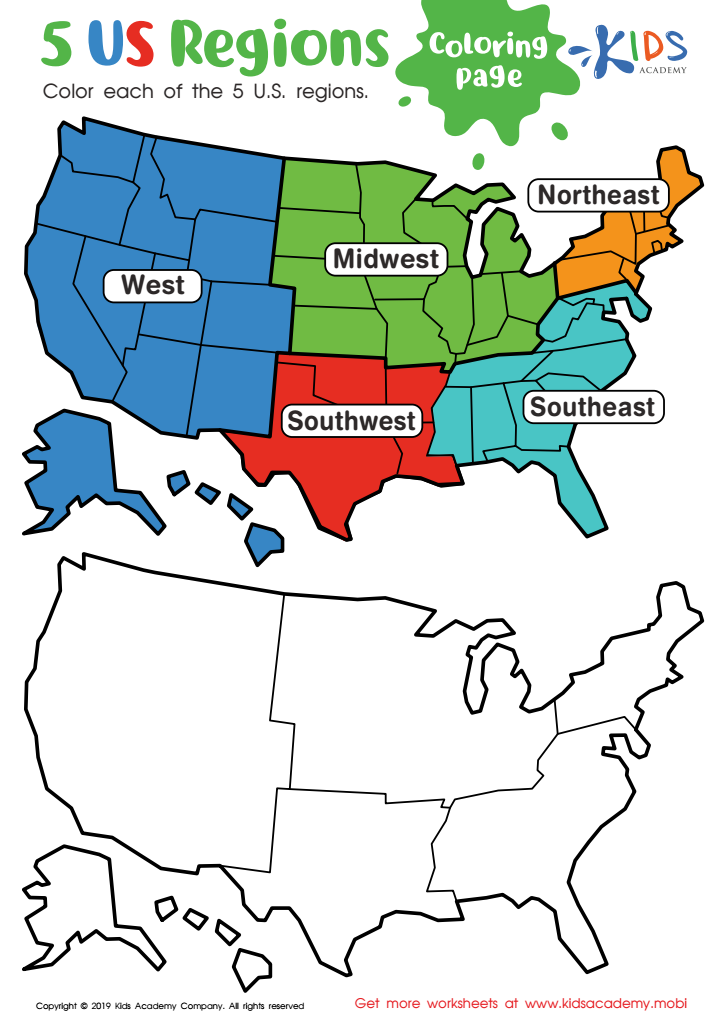
US Regions Coloring Page Worksheet
Assign to My Students

Globe Coloring Page Worksheet
Assign to My Students








Color recognition is a crucial aspect of early childhood education and holds significant implications for social studies. Understanding colors helps children categorize, describe, and make sense of the world around them. In social studies, colors can influence their understanding of cultural representations, symbolism, and emotional meanings attached to different hues in various societies.
For teachers and parents, fostering color recognition can boost holistic development. Colors represent diversity and inclusivity often explored in social studies curriculums. Children learn about various cultures and their unique associations with colors, such as red symbolizing luck in Chinese culture or blue reflecting spirituality in Hinduism. This awareness promotes cultural sensitivity and appreciation from a young age.
Moreover, recognizing colors can enhance children's language skills as they learn to identify and articulate different shades. Engaging activities, such as crafting or exploring artwork, reinforce color understanding while facilitating discussions about social structures, communities, and historical contexts associated with these colors.
By prioritizing color recognition, parents and teachers help lay a foundation for critical thinking, empathy, and a richer comprehension of the diverse world—skills vital for shaping informed and culturally aware future citizens.








