Vocabulary enhancement Grade 3 Alphabet Worksheets
8 filtered results
Difficulty Level
Grade
Age
-
From - To
Subject
Activity
Standards
Unlock your child's language potential with our Vocabulary Enhancement Grade 3 Alphabet Worksheets! Designed to inspire young minds, these engaging and educational worksheets help third graders build a strong vocabulary foundation. Through a variety of fun activities, students will enhance their word recognition, spelling, and definitions. Our worksheets cover a wide range of topics, ensuring that learning remains dynamic and enjoyable. Perfect for at-home practice or classroom use, these printable resources aim to boost literacy skills and promote a deeper love for the English language. Explore and energize your third grader's vocabulary journey with us!
Favorites
With answer key
Interactive
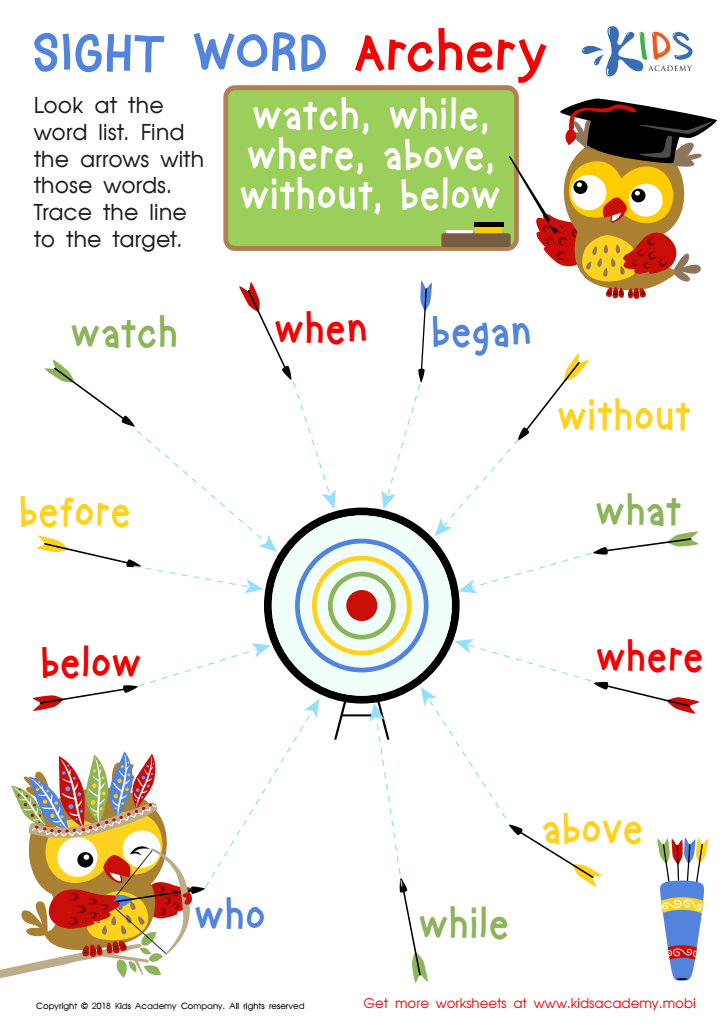
Sight Word Archery Worksheet
Read the words list with your kids, pointing at each one. Ask them to do the same. Help them find the arrows with those words and trace the line to the target in the centre.
 Assign to My Students
Sight Word Archery Worksheet
Worksheet
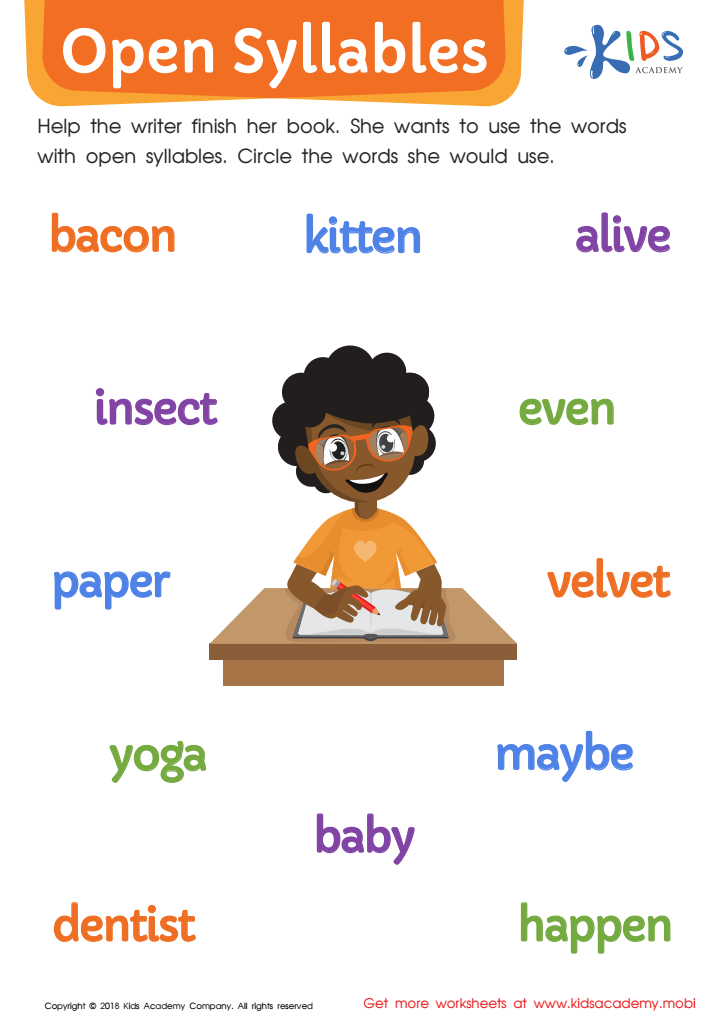
Open Syllables Worksheet
Before beginning this worksheet, make sure your child knows what open syllables are. If not, take time to teach them with examples. Then, help the writer finish her book by circling words with open syllables. She needs your child's help!
Open Syllables Worksheet
Worksheet
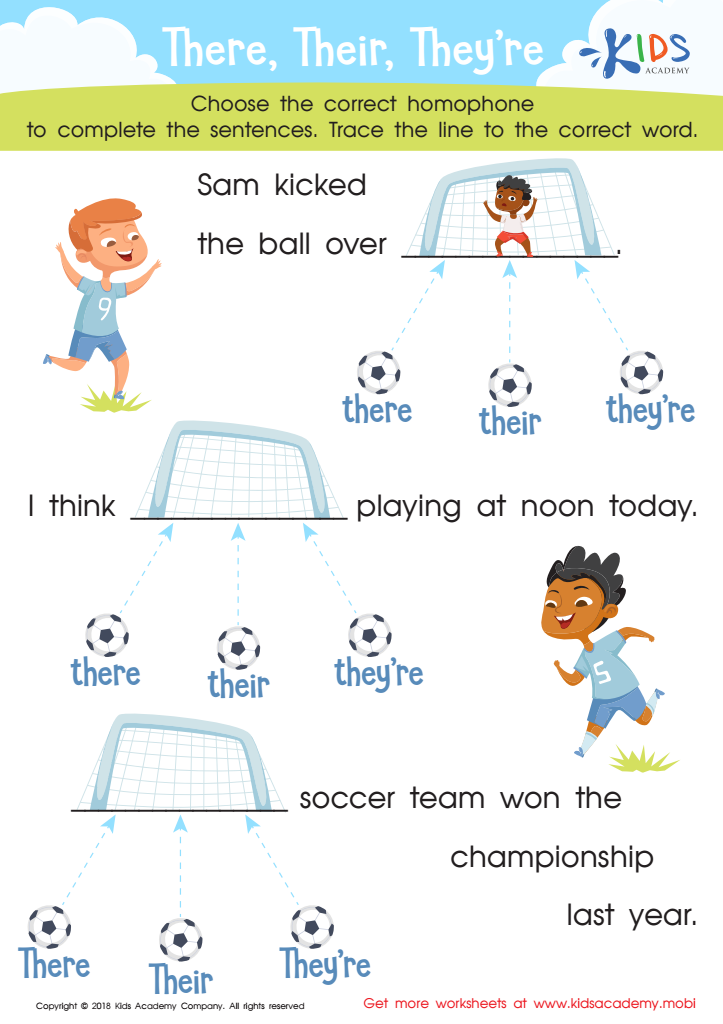
There, Their, They're Worksheet
Explain to your kids the difference between 'there', 'their' and 'they're'. These three words are homophones - spelt similarly but with different meanings. Help them choose the correct homophones when completing sentences, and trace the line to the right word.
There, Their, They're Worksheet
Worksheet
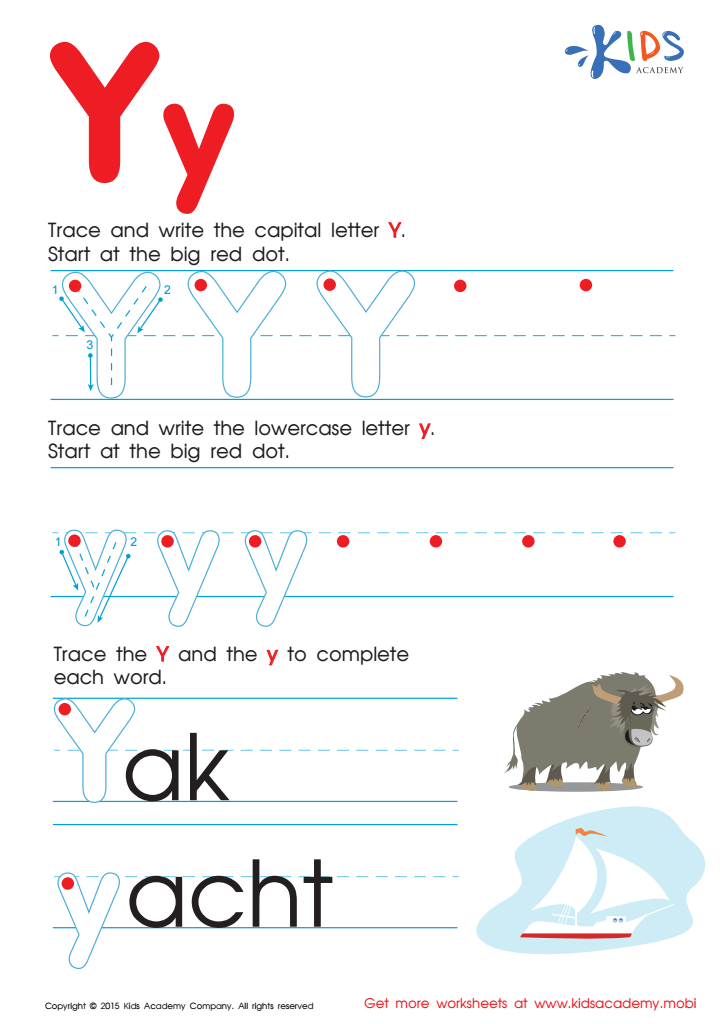
Letter Y Tracing Page
Trace the capital letter "Y" on the red dot, then trace and write the lowercase letter. Complete the words to help the Yak walk and the yacht swim. More worksheets at Kids Academy.
Letter Y Tracing Page
Worksheet
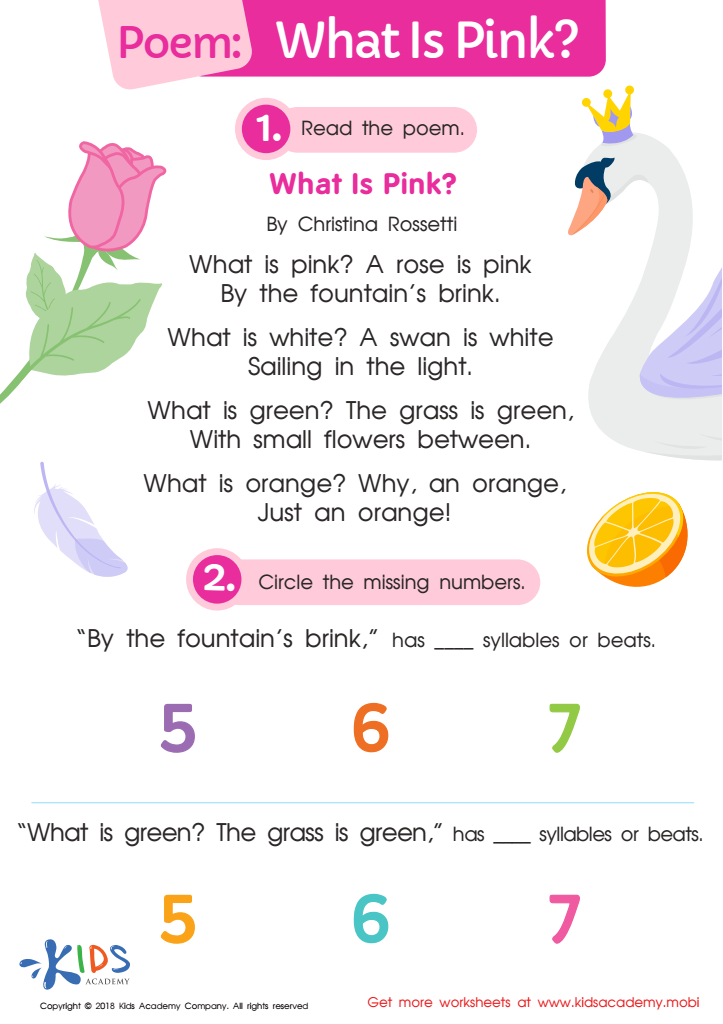
Poem: What Is Pink? Worksheet
Help your kids learn with short, fun, interesting poems! Read it aloud to them and point out the rhyme patterns. Have them circle the missing numbers to answer two questions. Show examples of objects with the colors in the poem. This will help them learn to read, and also understand colors better.
Poem: What Is Pink? Worksheet
Worksheet
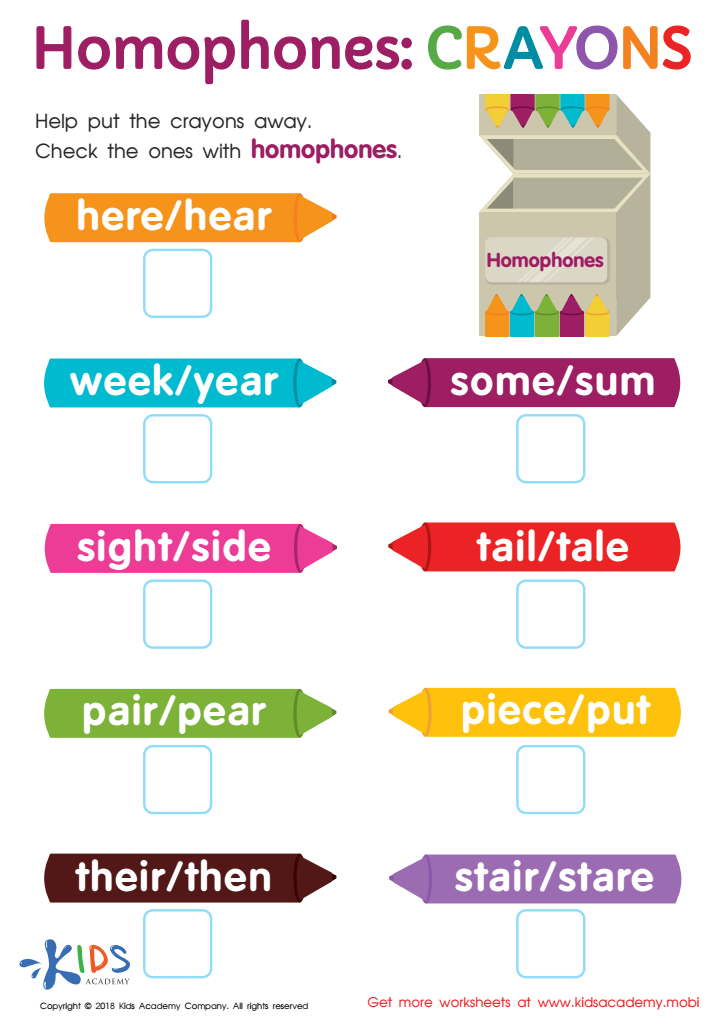
Homophones: Crayons Worksheet
Ask your kids: "What are homophones?" Explain that homophones are words that sound alike but have different meanings, like 'dare' and 'deer'. Ask them to identify homophones by putting the crayons in this printout away according to the words.
Homophones: Crayons Worksheet
Worksheet
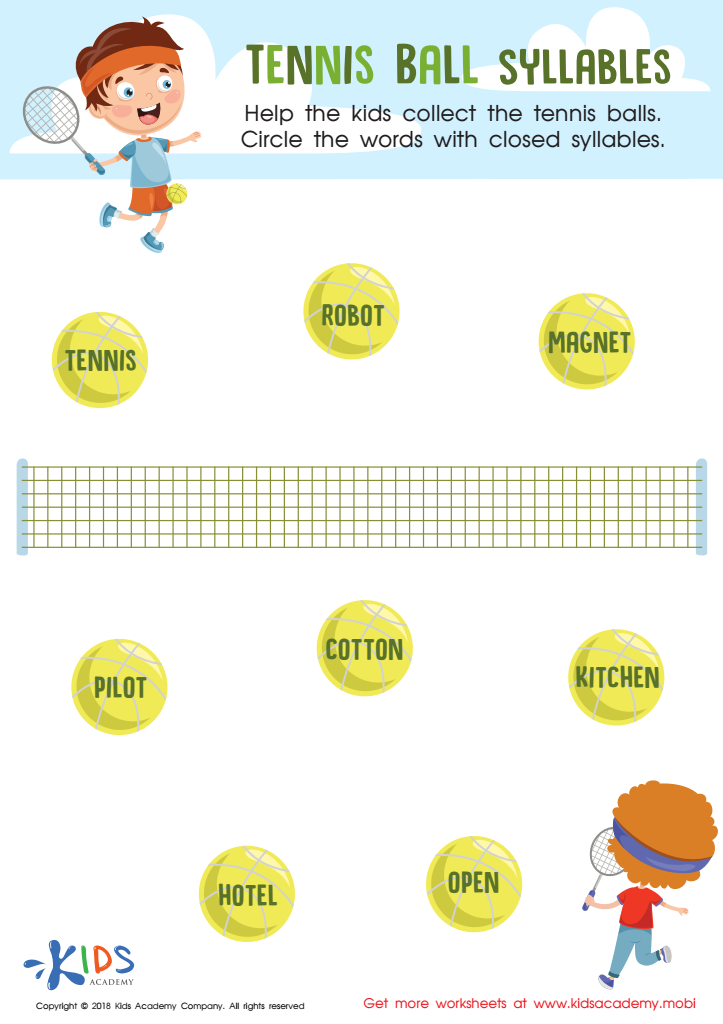
Tennis Ball Syllables Worksheet
To help your kids become fluent speakers, they need to learn syllables. A word can have one to seven syllables, with longer words having more. For this level, they will be working with one or two syllables. Assist them as they circle the words with closed syllables in this worksheet.
Tennis Ball Syllables Worksheet
Worksheet
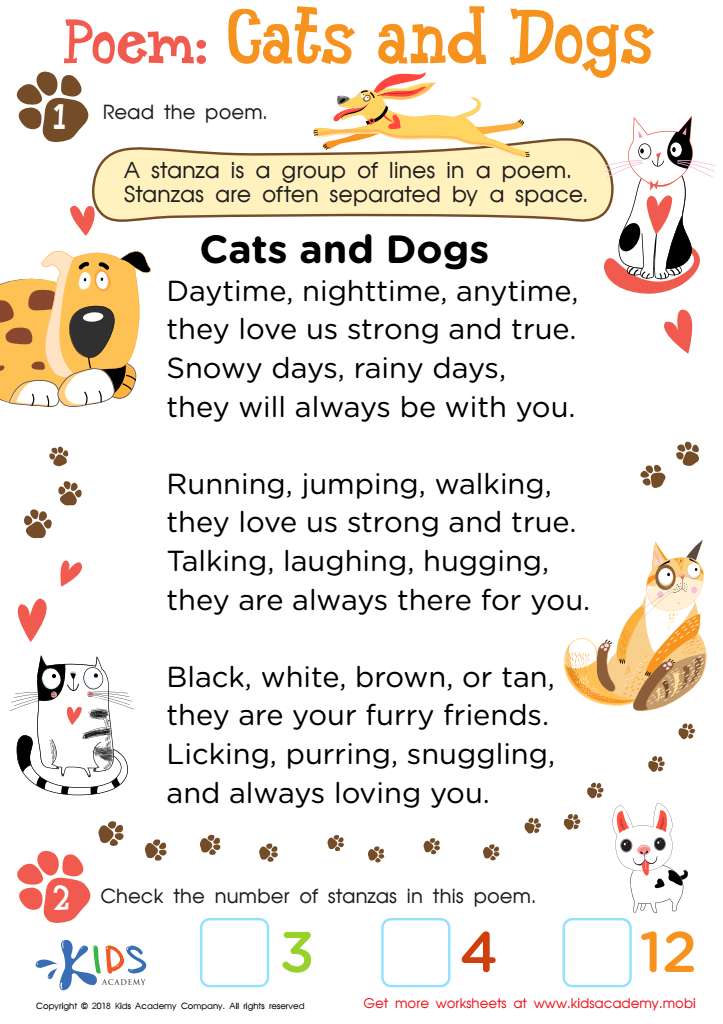
Poem: Cats and Dogs Worksheet
Read the poem to your child and point out where each stanza ends. Ask if they know what a stanza is (if not, explain it's a group of lines in a poem). Help them answer the question at the bottom of the printout. This simple, sweet poem about cats is easy for your child to relate to.
Poem: Cats and Dogs Worksheet
Worksheet
Join Kids Academy for Free
Who is primarily going to use this learning content?








Improving vocabulary, especially during early educational stages like Grade 3, is crucial for both parents and teachers to emphasize. During this developmental phase, children's brains are exceptionally receptive to new information, making it an ideal time to expand their vocabulary. A robust vocabulary serves as the foundation for successful communication, enhancing the ability to express ideas clearly and to understand others.
When children are well-versed in a broad spectrum of words, they experience a ripple effect in other areas of their education. Reading comprehension, for instance, significantly improves because understanding texts relies heavily on knowing the words within those texts. This in turn fosters a love for reading, which is a cornerstone for lifelong learning.
As children begin to write more extensively, a richer vocabulary allows them to articulate thoughts more precisely and creatively, fostering better writing skills. Additionally, a wide-ranging vocabulary helps boost cognitive development by improving memory and critical thinking abilities.
Moreover, vocabulary enhancement aligns directly with socio-emotional development. Kids who can effectively use words to express their feelings and navigate social interactions are typically more self-assured and better equipped to build relationships.
In sum, vocabulary enhancement in Grade 3 is not just about learning words; it's about setting up a strong linguistic and cognitive foundation that supports broader academic and personal growth.