
Understanding syllables Writing Worksheets
3 filtered results
Difficulty Level
Grade
Age
-
From - To
Subject
Activity
Standards
Unlock the power of effective reading and writing with our "Understanding Syllables Writing Worksheets." Designed for early grade learners, these engaging worksheets provide a fun and interactive way to grasp the concept of syllables. Kids will gain essential phonemic awareness as they explore clapping, counting, and writing syllables. By breaking words into manageable units, children enhance their language skills and build a strong foundation for future literacy success. Ideal for classroom or home use, these worksheets support mastery in both reading and writing by making learning an enjoyable and dynamic experience. Empower your young learners today!
Favorites
With answer key
Interactive
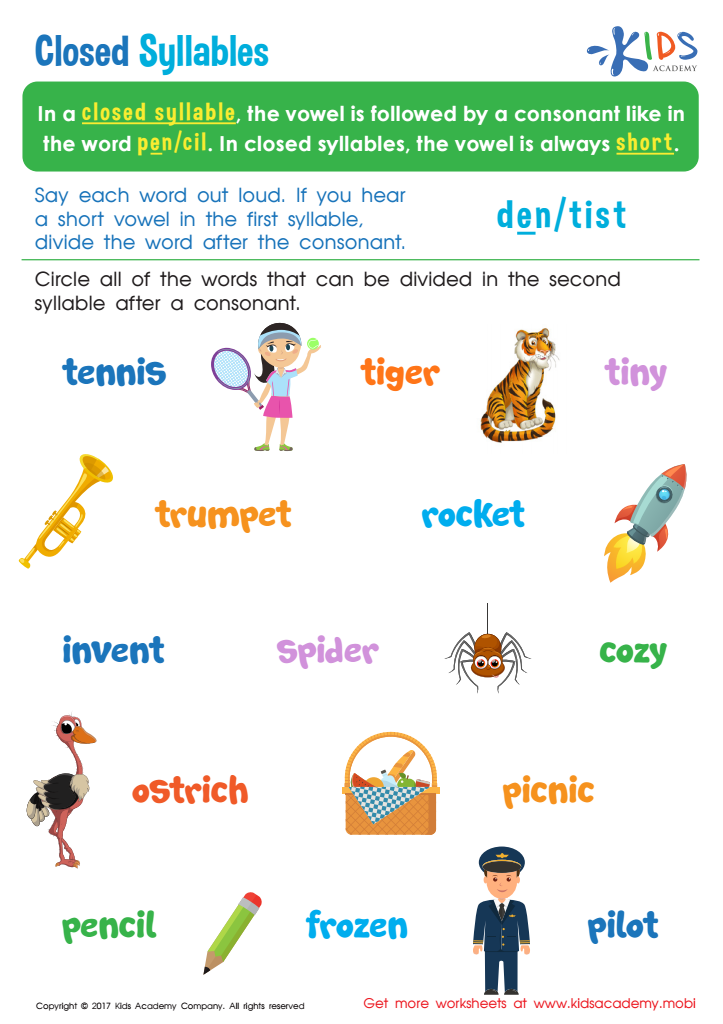
Closed Syllable Spelling Worksheet
Learning syllables can be tough, but we can make it easier! Look for long and short vowel sounds to identify closed syllables. This worksheet can help 3rd graders do just that, with its fun and colorful design.
 Assign to My Students
Closed Syllable Spelling Worksheet
Worksheet
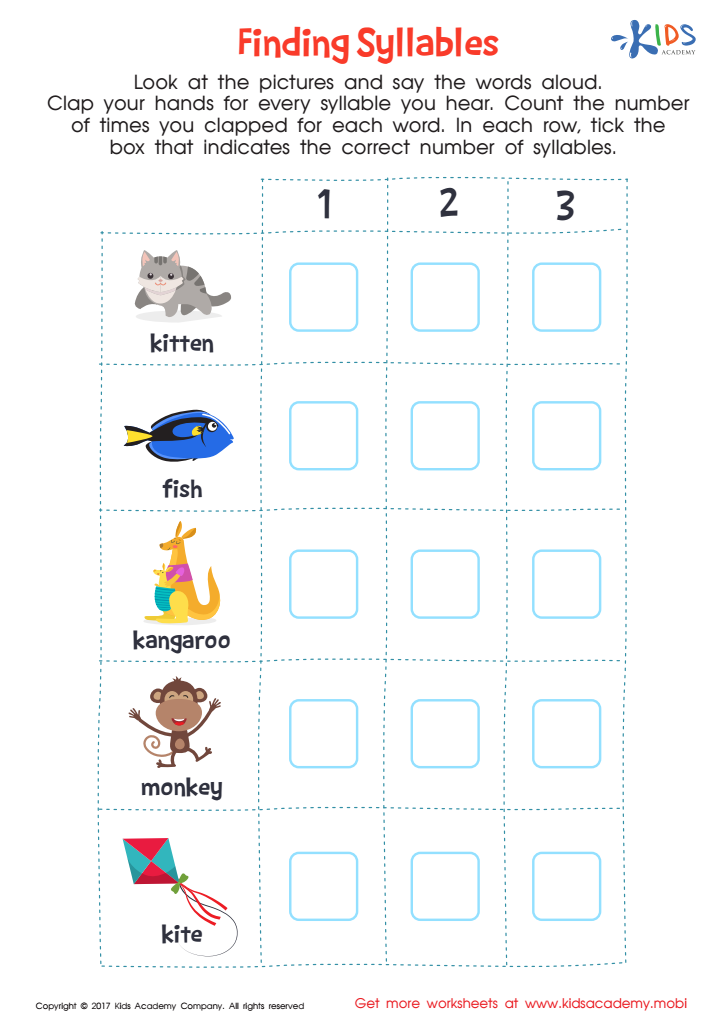
Finding Syllables Word Structure Worksheet
Have your kid clap and count syllables in words to improve their reading and spelling! Use this word structure worksheet for a fun activity - syllables!
Finding Syllables Word Structure Worksheet
Worksheet
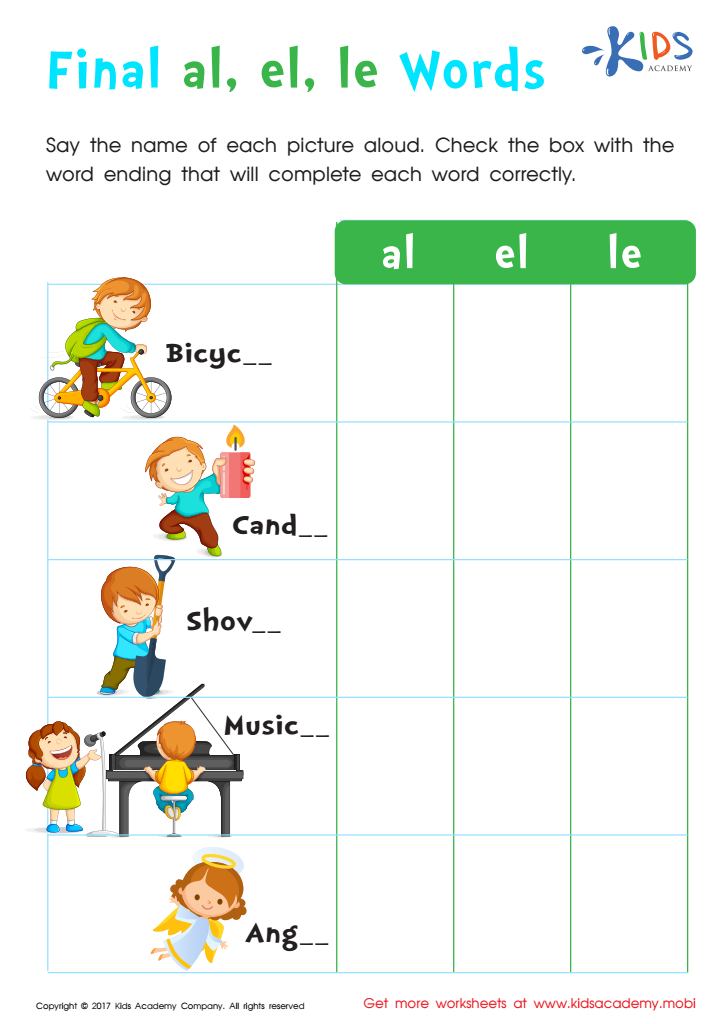
Spelling Words Ending with –le, –el and –al Worksheet
Spelling tricky words with the same ending sounds can be fun with this worksheet! Kids learn to spell -le, -el, and -al words while enjoying colorful pictures. It's a great way to refine their usage of tricky word endings.
Spelling Words Ending with –le, –el and –al Worksheet
Worksheet
Join Kids Academy for Free
Who is primarily going to use this learning content?






Understanding syllables in writing is crucial for young students’ educational development, and parents and teachers play a key role in guiding this process. One reason syllables matter is because they form the building blocks of words. Grasping how syllables work helps children decipher words more easily, improving reading skills and fluency. Recognizing syllable patterns also assists in spelling, as knowing how to break down a word into smaller parts makes it easier to remember and write correctly.
When parents or teachers emphasize syllables, they foster better pronunciation and listening skills. Children learn to recognize stress patterns in speech, which aids in understanding and being understood more clearly. Awareness of syllables enhances reading comprehension, as students can tackle unfamiliar words by segmenting them into manageable parts.
For writing, syllable knowledge supports a more sophisticated and expansive vocabulary. Startling as it may seem, even creativity in writing can be bolstered because students become more confident in experimenting with new, longer words. Additionally, this fundamental understanding lays the groundwork for future language skills, including grammar and syntax, which are pivotal for effective communication.
In summary, emphasizing syllable understanding helps children become proficient readers, accurate spellers, clear speakers, and confident writers, setting a strong foundation for lifelong learning and communication.








