Punctuation worksheets activities for Ages 3-7
3 filtered results
-
From - To
Looking for engaging punctuation worksheets for children aged 3-7? Our collection of fun and interactive activities is designed to help young learners grasp the basics of punctuation in an enjoyable way. Featuring colorful illustrations and appealing formats, these worksheets introduce essential punctuation marks like periods, question marks, and exclamation points. Each activity aims to enhance comprehension and reinforce learning through games, tracing, and matching exercises. By making punctuation accessible and enjoyable, we help children build a solid foundation in writing skills that will benefit them throughout their academic journey. Discover our resources now and ignite your child’s love for learning punctuation!
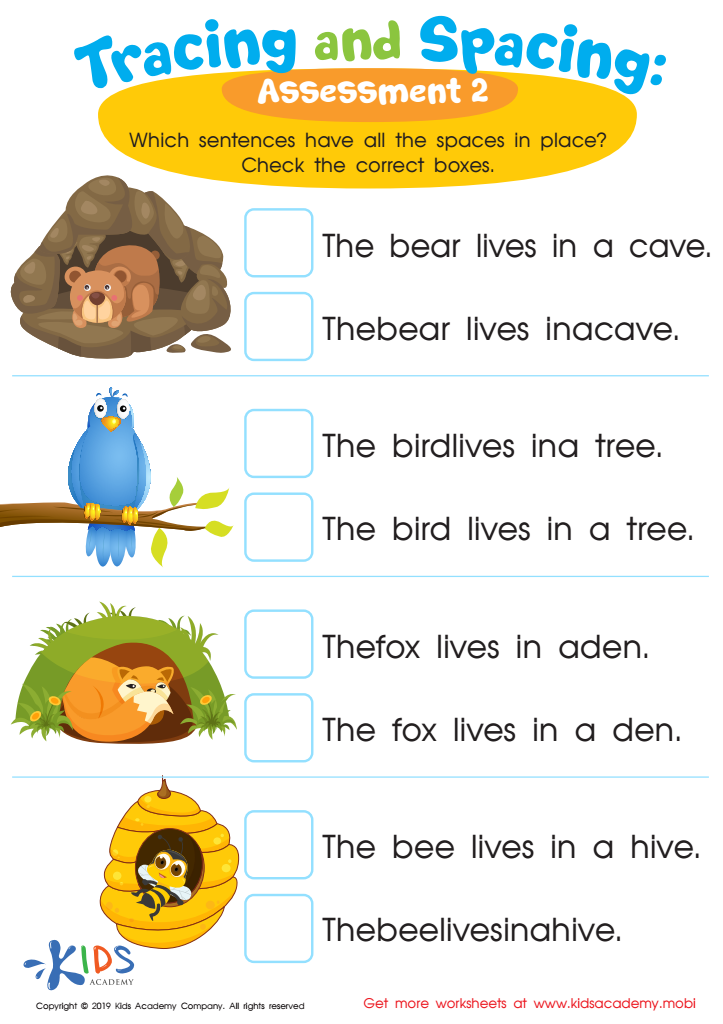
Tracing and Spacing: Assessment 2 Worksheet
 Assign to My Students
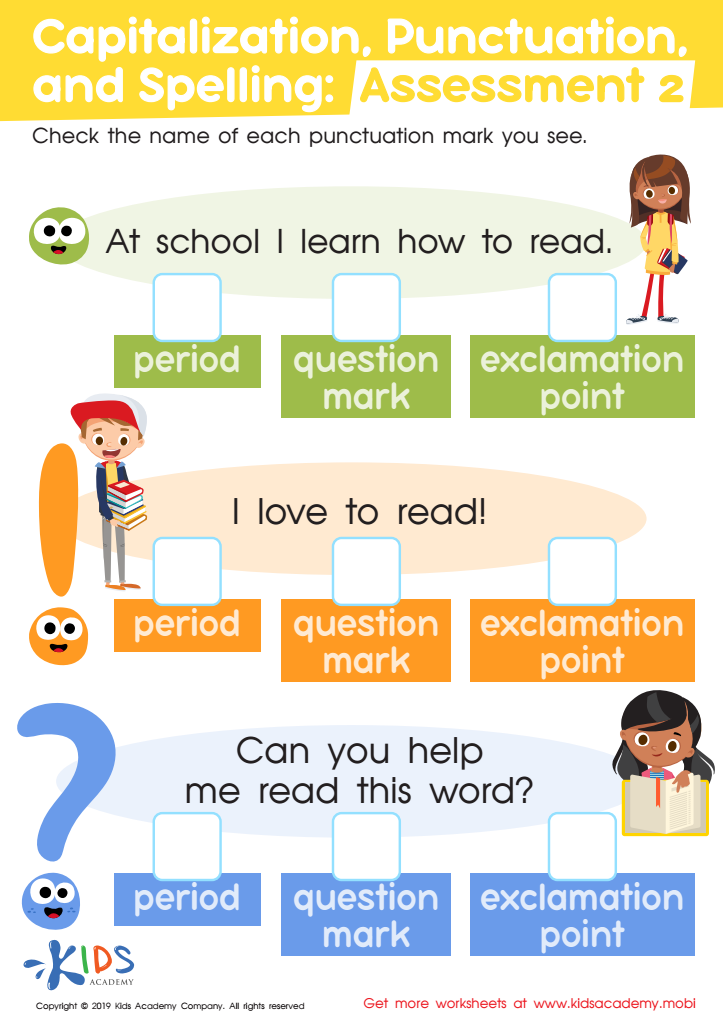
Capitalization. Punctuation. Spelling: Assessment 2 Worksheet
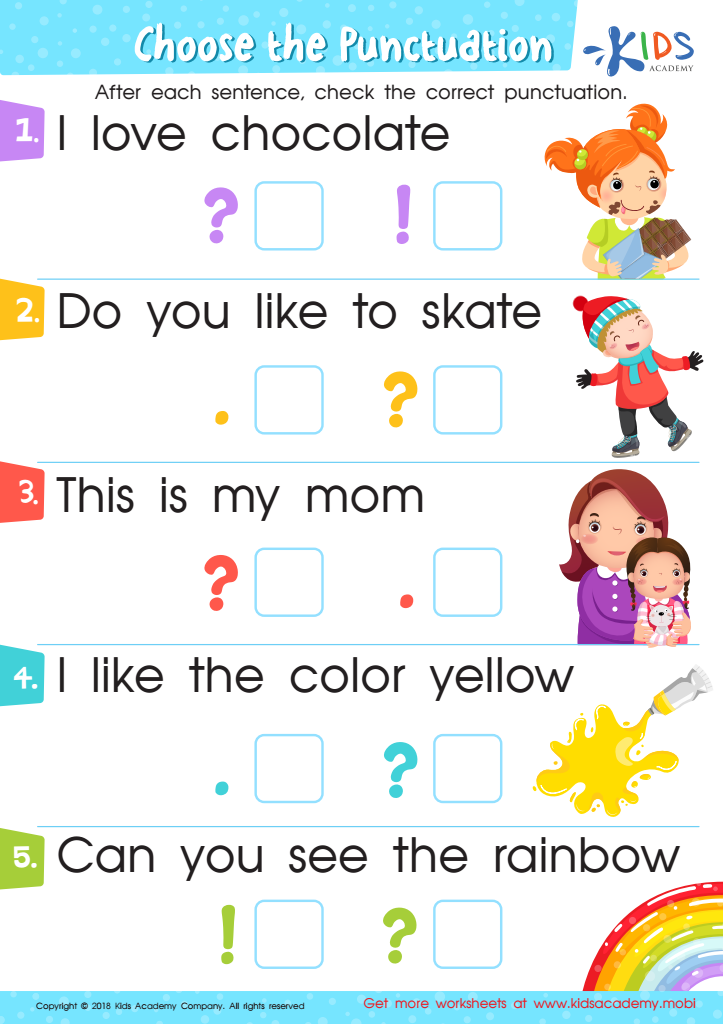
Choose the Punctuation: Assessment Worksheet







Punctuation activities for children aged 3-7 are essential for fostering early literacy and effective communication skills. At this developmental stage, children are not only learning to read and write but are also beginning to understand the structure and rhythm of language. Engaging with punctuation helps them grasp how to convey feelings, intentions, and pauses in their expression, which is critical for both written and verbal communication.
Teachers and parents should prioritize these activities as they enhance children's comprehension by teaching them the significance of punctuation marks like periods, commas, question marks, and exclamation points. This foundational knowledge supports their ability to decode sentences and comprehend text, ultimately building a pathway to more advanced literacy skills.
Interactive and fun punctuation activities can lead to increased motivation and enjoyment in learning. As children play games, create stories, or complete crafts centered around punctuation, they naturally enhance their writing skills and literary confidence. Moreover, incorporating these activities fosters a collaborative learning environment, strengthening the bond between parents and children or between teachers and students. In short, promoting punctuation understanding at an early age equips children with invaluable tools for effective communication, lays the groundwork for future learning, and enriches their academic journey.








