Addition & Subtraction worksheets activities for Ages 4-9 - Page 2
26 filtered results
-
From - To
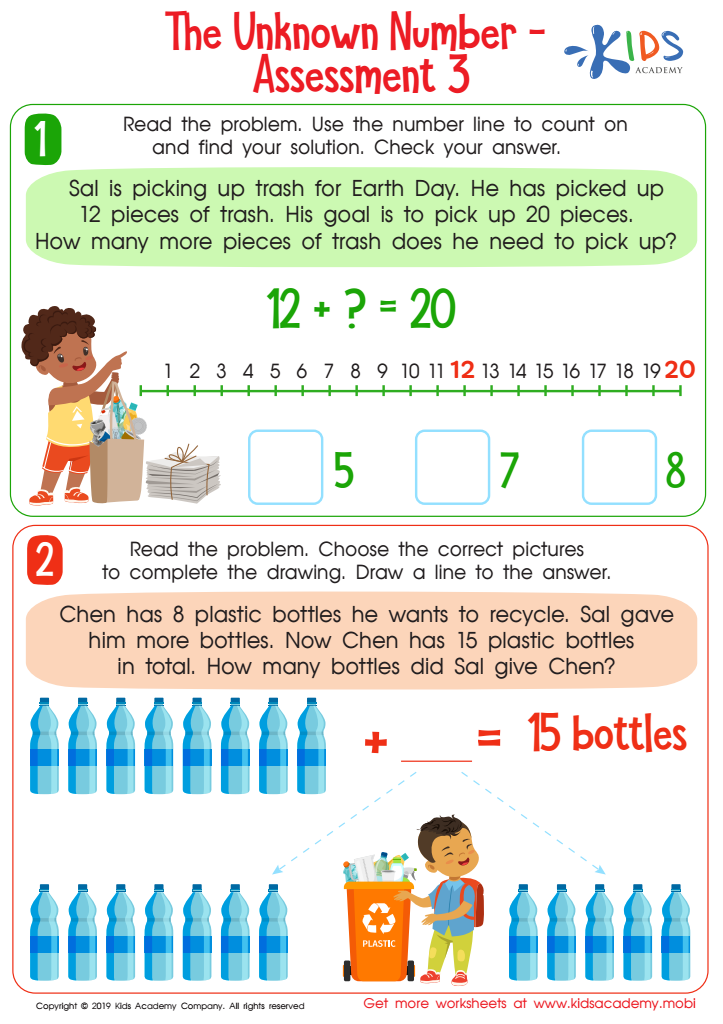
The Unknown Number - Assessment 3 Worksheet
 Assign to My Students
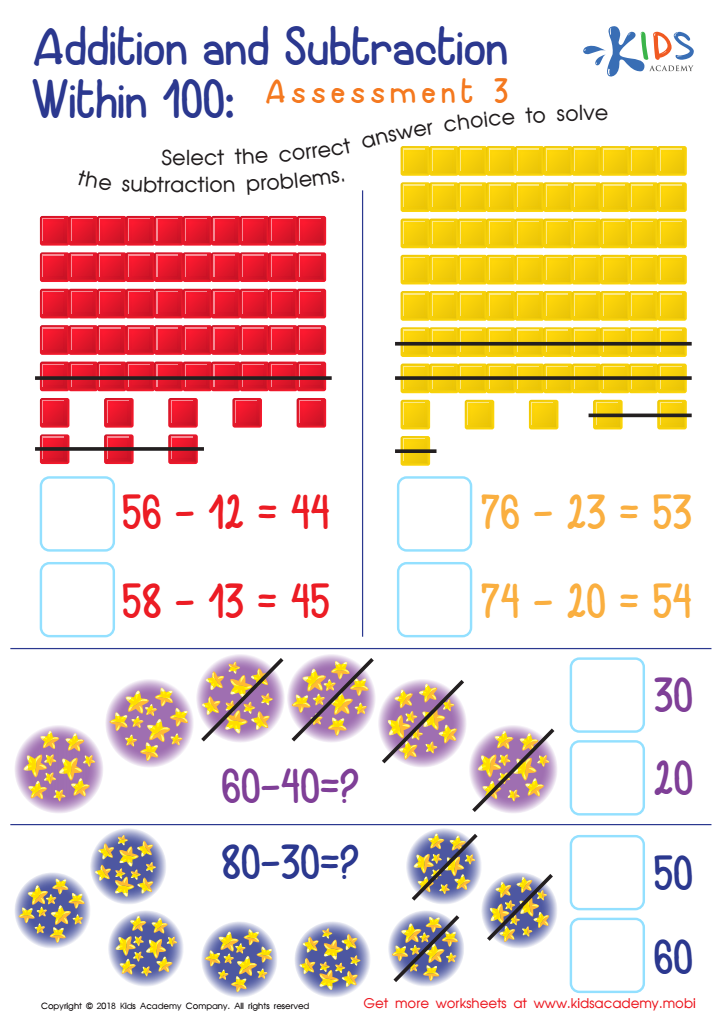
Addition and Subtraction Within 1: Assessment 3 Worksheet








Addition and subtraction activities for children aged 4 to 9 are crucial for several reasons. First, these foundational math skills lay the groundwork for later academic success. Understanding basic arithmetic helps children develop critical thinking and problem-solving skills, which are essential not just in math but across various subjects.
Moreover, engaging in these activities nurtures a child’s cognitive development, boosting their ability to think logically and sequentially. It enhances concentration and perseverance, as young learners practice and refine their skills. Additionally, using hands-on activities, such as games, toys, or everyday objects, makes learning enjoyable and interactive, promoting greater motivation and interest in math.
Parents and teachers also play a vital role in fostering a positive attitude toward math. By providing consistent support and encouragement during addition and subtraction activities, children are more likely to feel confident in their abilities. This confidence is vital as they progress to more complex mathematical concepts.
Furthermore, these activities can strengthen the parent-teacher relationship, creating a cohesive support system for the child's educational experience. Overall, prioritizing addition and subtraction activities is essential in helping young children develop essential skills they will use throughout their lives.








