
Reading Non-Fiction worksheets activities for Ages 4-9
4 filtered results
Difficulty Level
Grade
Age
-
From - To
Subject
Activity
Standards
Discover an engaging collection of reading non-fiction worksheets and activities designed for children ages 4 to 9! Our interactive resources help young learners develop essential comprehension skills and foster a love for real-world topics. Each worksheet features fun, age-appropriate content that encourages curiosity and critical thinking. From nature and science to history and beyond, our non-fiction activities enhance reading fluency and expand vocabulary. Whether in the classroom or at home, these worksheets support diverse learning styles and make exploring factual information exciting. Unlock new knowledge and inspire a passion for learning with our thoughtfully crafted materials!
Favorites
With answer key
Interactive
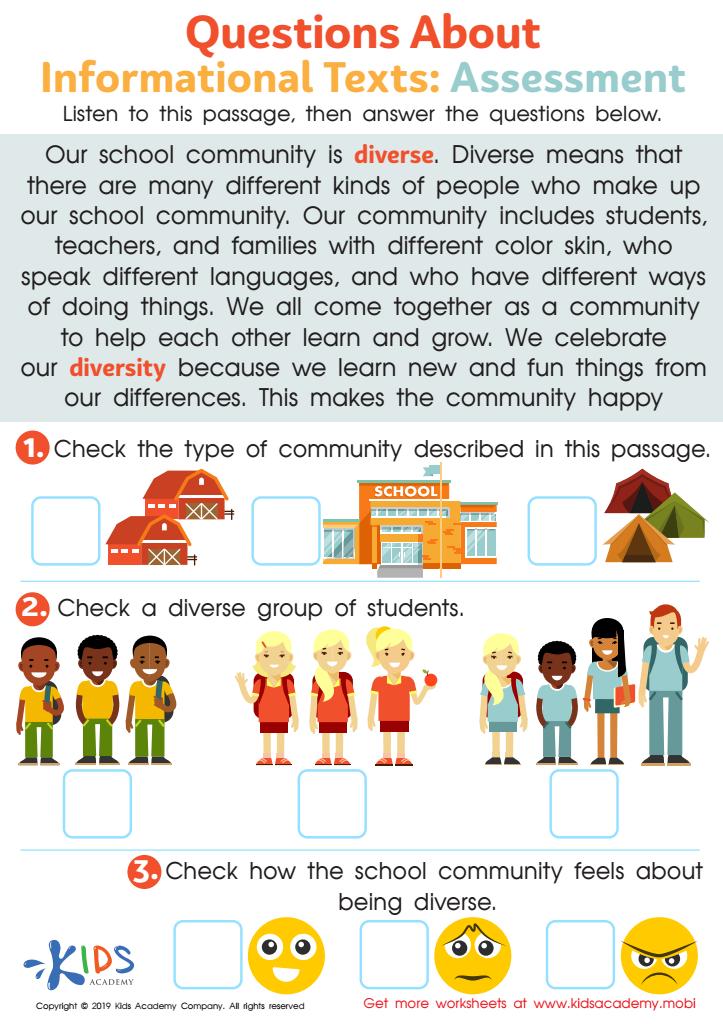
Questions About Informational Texts: Assessment 1 Worksheet
Ask your students: What comes to mind when we talk about a community? What different habits do people practice? What do fellow students do that seems strange? Read this passage aloud to your kindergartners and make sure they understand it. Then, answer the questions at the bottom of the page. (80 words)
 Assign to My Students
Questions About Informational Texts: Assessment 1 Worksheet
Worksheet
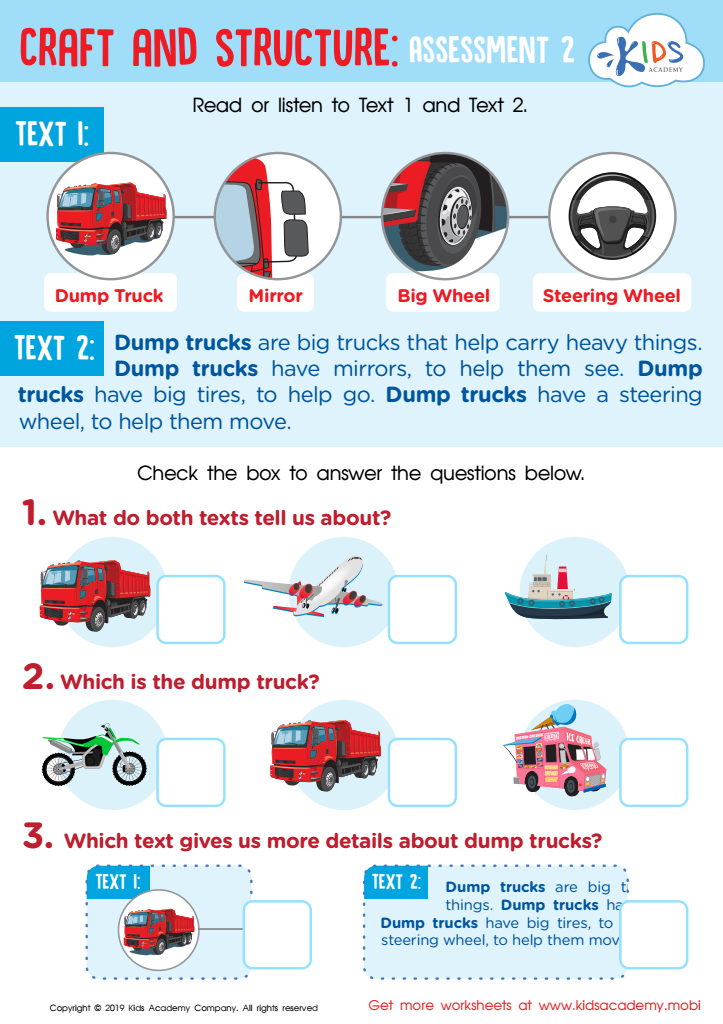
Craft and Structure: Assessment 2 Worksheet
Good readers need to analyze text features and use picture clues to understand. This assessment worksheet gives your child info in different formats and they can show understanding using answer options to check the correct answers. (80 words)
Craft and Structure: Assessment 2 Worksheet
Worksheet
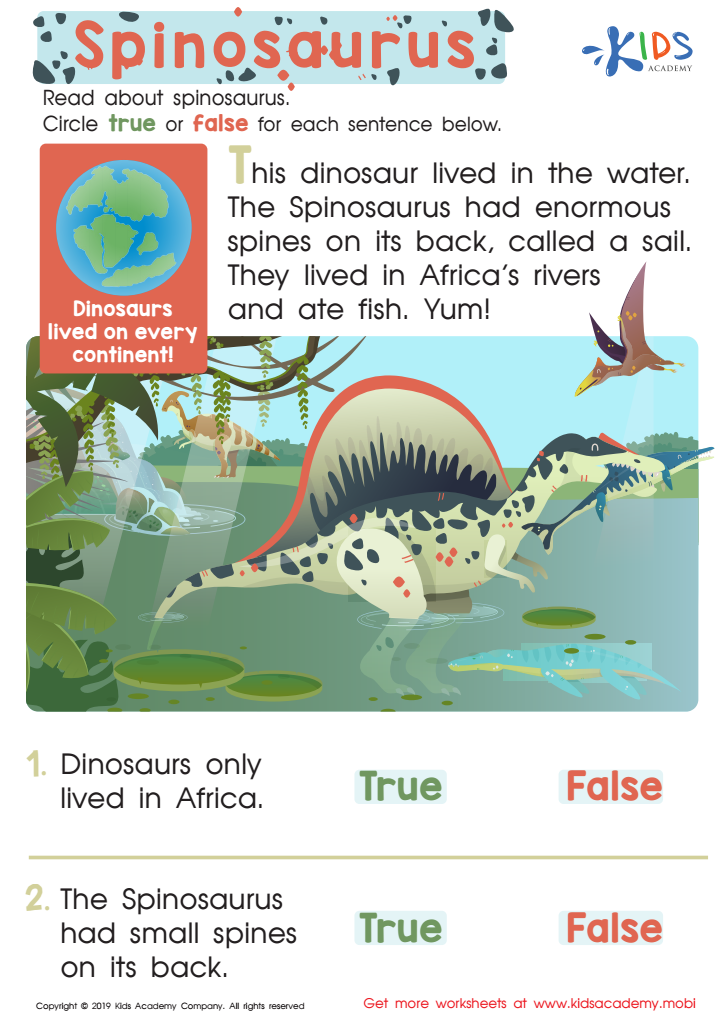
Spinosaurus Assessment Worksheet
Take your child on a journey to discover the Spinosaurus! This worksheet combines an engaging nonfiction passage about this incredible dinosaur with comprehension questions. Invite kids to read the text before deciding if the statements are true or false. Then, have them circle the right answers to complete the activity.
Spinosaurus Assessment Worksheet
Worksheet
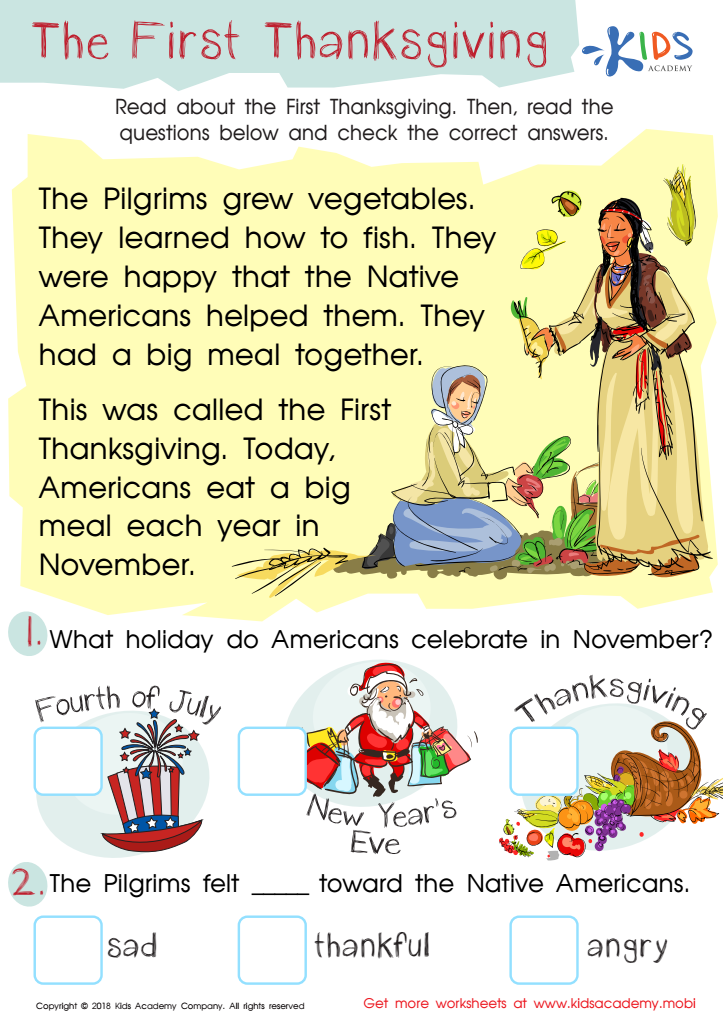
Assessment: First Thanksgiving Worksheet
When the Pilgrims arrived in America in 1620, they met the Native Americans and formed a pact to live in harmony. The Native Americans taught the Pilgrims how to survive in the new land, which helped them celebrate the First Thanksgiving. Read this text to your children and help them answer the questions below.
Assessment: First Thanksgiving Worksheet
Worksheet
Join Kids Academy for Free
Who is primarily going to use this learning content?








Reading non-fiction activities for children ages 4-9 is crucial for their developmental and educational growth. At this age, children are naturally curious about the world around them, and non-fiction texts fuel that curiosity by providing factual information about topics they may find intriguing, such as animals, space, or dinosaurs. Engaging with non-fiction helps boost critical thinking skills as children learn to distinguish between facts and opinions, develop comprehension abilities, and foster a greater understanding of complex concepts.
Moreover, non-fiction reading enhances vocabulary development. Children encounter specialized words and phrases that broaden their linguistic skills, equipping them with the language they need to express their thoughts and ideas effectively. For parents and teachers, introducing non-fiction early helps spark a lifelong love for reading, making learning an exciting adventure.
Additionally, integrating non-fiction into an early literacy program promotes important skills such as research and inquiry, laying the groundwork for more advanced learning later on. As children interact with various informational texts, they also learn how to formulate questions, seek answers, and develop a sense of autonomy in their learning journey. By prioritizing non-fiction activities, parents and teachers can cultivate inquisitive, knowledgeable, and well-rounded individuals prepared for future academic challenges.








