Punctuation worksheets activities for Ages 5-7
3 filtered results
-
From - To
Enhance your child's writing skills with our engaging punctuation worksheets designed specifically for ages 5-7. These fun and interactive activities help young learners understand the importance of punctuation in reading and writing. Our worksheets cover essential punctuation marks, including periods, question marks, and exclamation points, using colorful illustrations and simple exercises. Children will enjoy hands-on learning while improving their ability to convey meaning through proper punctuation. Our materials also encourage critical thinking and creativity, making learning enjoyable and effective. Perfect for homeschooling or classroom use, these worksheets are a fantastic resource to build a strong foundation in written communication!
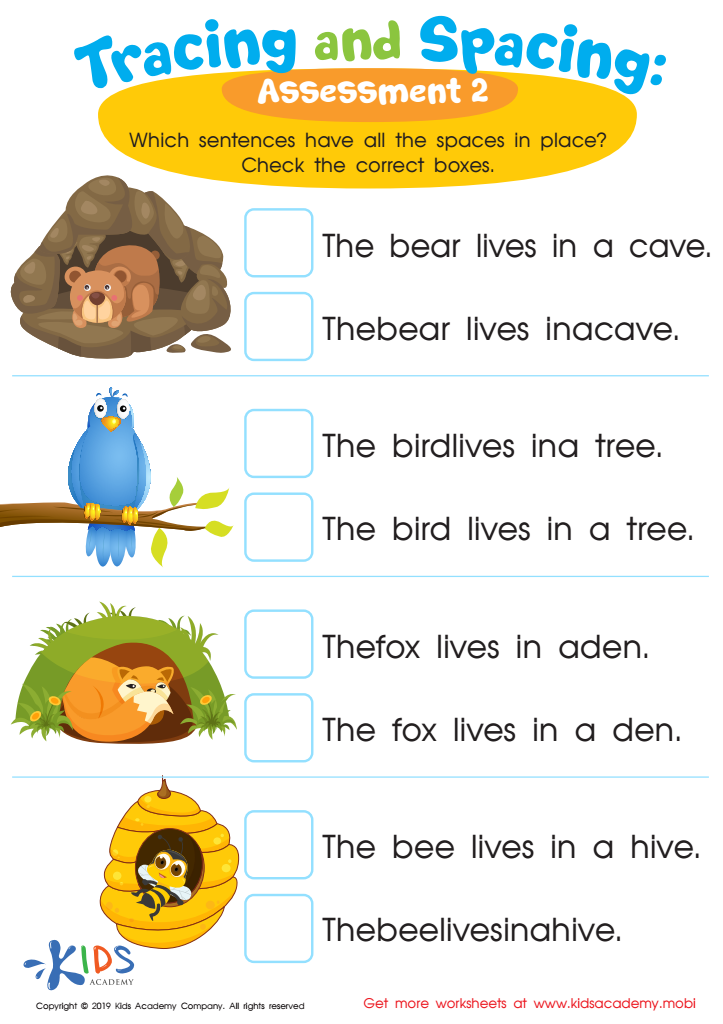
Tracing and Spacing: Assessment 2 Worksheet
 Assign to My Students
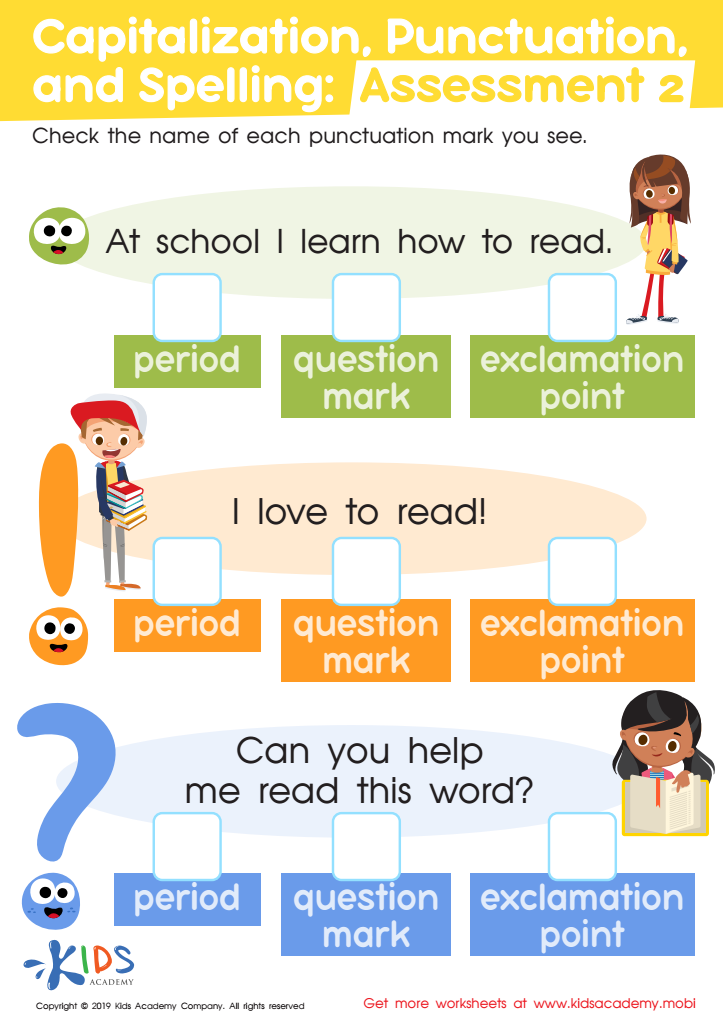
Capitalization. Punctuation. Spelling: Assessment 2 Worksheet
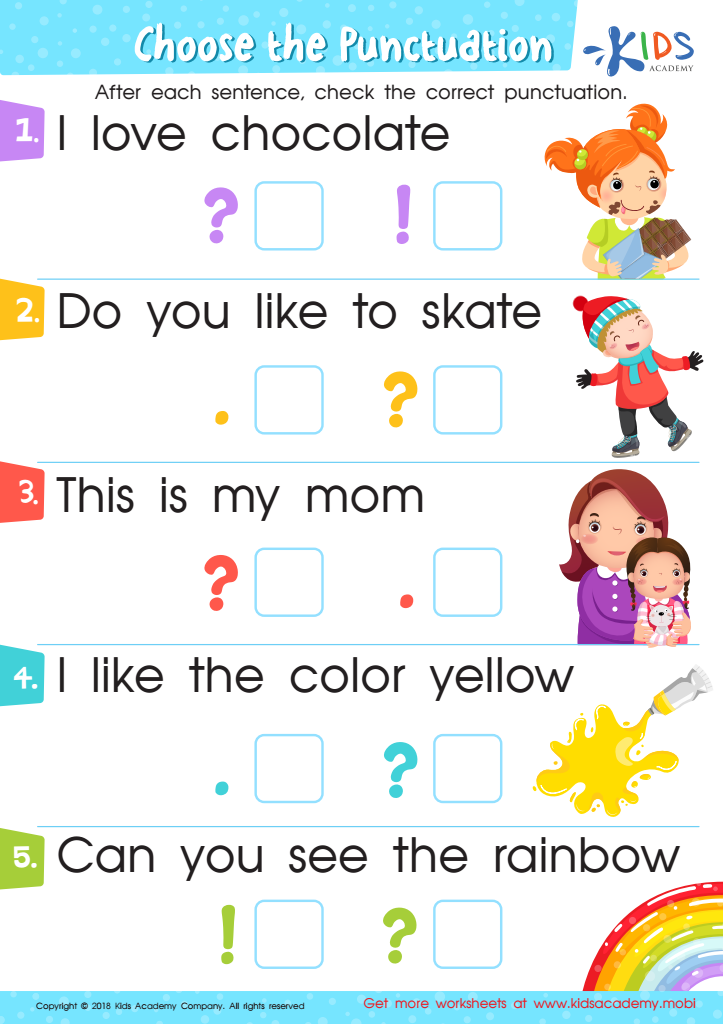
Choose the Punctuation: Assessment Worksheet



.jpg)




Punctuation activities for children aged 5-7 are crucial for several reasons. Firstly, this is a formative period in which young learners are beginning to understand the structure of language. Introducing punctuation marks such as periods, commas, and question marks helps them grasp how written language works. Understanding punctuation enables children to decode sentences accurately, aiding in their reading comprehension and fluency.
Secondly, punctuation impacts the clarity and meaning of their writing. By engaging in activities that teach proper use of punctuation, children learn to express their thoughts clearly, which enhances their communication skills. It empowers them to convey emotions, ask questions, and create dialogue in their written work.
Furthermore, interactive punctuation activities encourage engagement and fun learning experiences, fostering a positive attitude towards literacy. When punctuation is taught through games, storytelling, or arts and crafts, it enhances motivation and retention, making the learning process enjoyable.
Lastly, fostering a strong foundation in punctuation at this early age can lead to greater academic success in later years. Parents and teachers who prioritize these activities help cultivate proficient, confident wordsmiths ready to tackle more complex writing as they progress through school. Ultimately, caring about punctuation helps children become effective communicators.








