Filters

7 filtered results

Clear all filters
Favorites
With answer key
Interactive

7 filtered results

Difficulty Level

Grade


Subject

    Discover engaging geometry worksheets designed for children ages 5-8! Our carefully crafted activities help young learners grasp essential geometric concepts through fun, interactive exercises. From identifying shapes and understanding symmetry to exploring basic measurement, these worksheets make learning geometry enjoyable and accessible. Each activity encourages critical thinking and enhances spatial awareness, allowing kids to develop their skills with confidence. Perfect for classroom use or at-home practice, our geometry resources provide a solid foundation for future math success. Explore our collection today and watch your child build a love for geometry while having fun!

    Check out this FREE Geometry Trial Lesson for age 5-8!

    D

    Favorites
    With answer key
    Interactive
    • Geometry
    • 5-8
    Shapes: Assessment 3 Worksheet
    Shapes: Assessment 3 Worksheet

    Shapes: Assessment 3 Worksheet

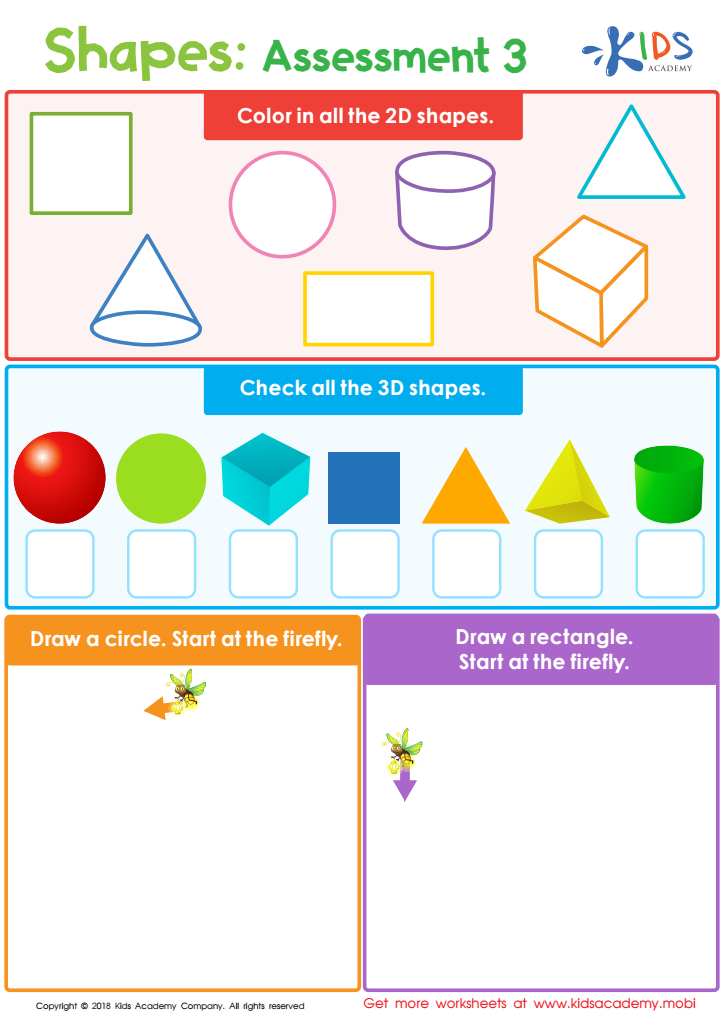
    Shapes are everywhere! Help your students differentiate between 2D and 3D shapes. Ask them the difference between a triangle and pyramid, or a circle and a sphere. This worksheet tests their understanding of both types and is a useful assessment tool.
    Shapes: Assessment 3 Worksheet
    Worksheet
    Geometry - Assessment 1 Worksheet Preview
    Geometry - Assessment 1 Worksheet Preview

    Geometry – Assessment 1 Worksheet

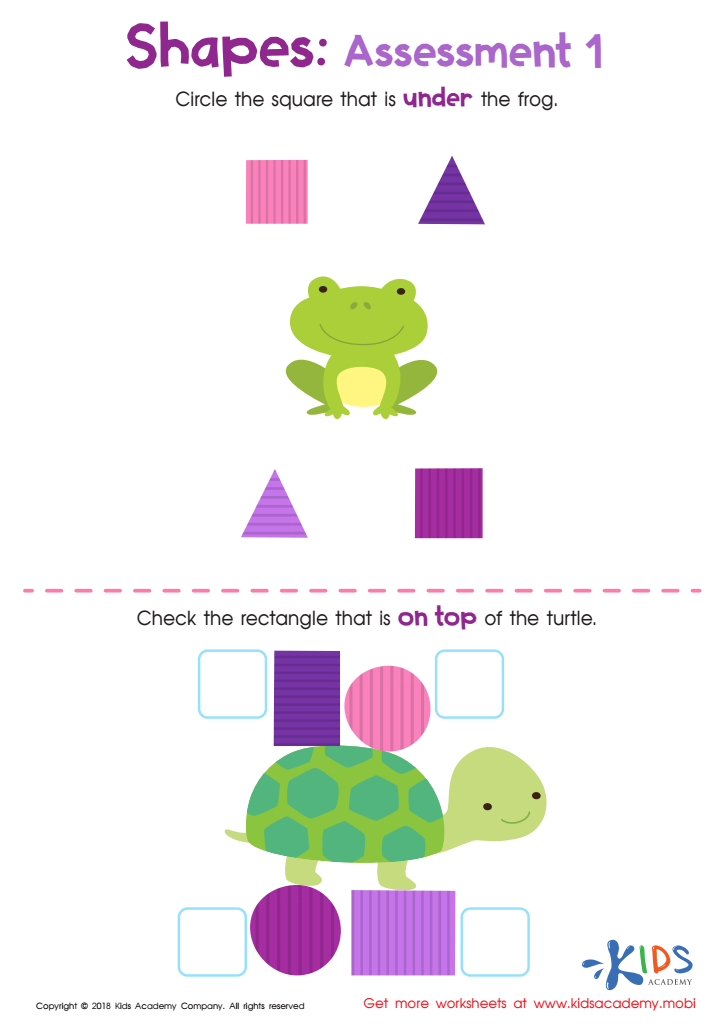
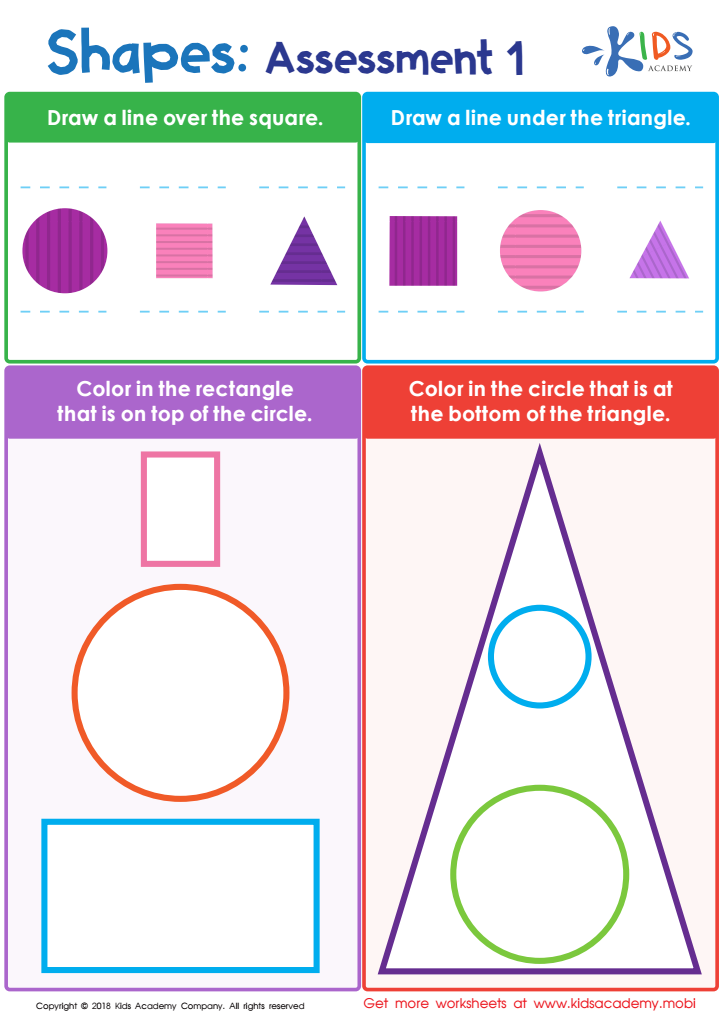
    This activity helps preschoolers find shapes "on top of" and "under" animals. They must identify the correct shapes assigned to them. It's a great way to learn geometry and placements of objects.
    Geometry – Assessment 1 Worksheet
    Worksheet
    Shapes: Assessment 2 Worksheet
    Shapes: Assessment 2 Worksheet

    Shapes: Assessment 2 Worksheet

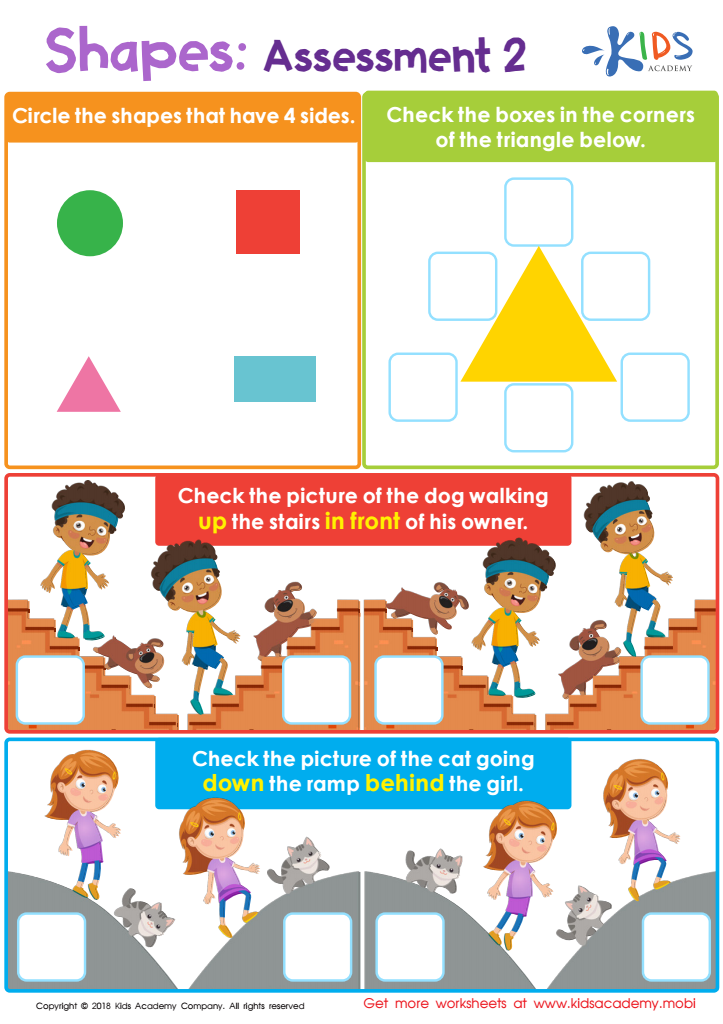
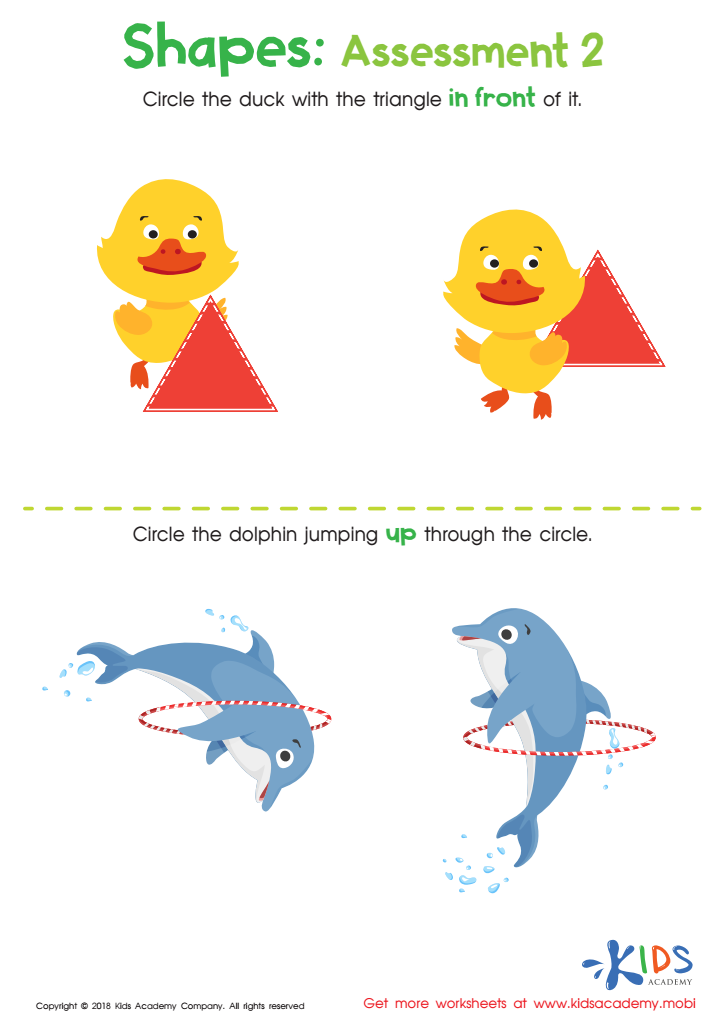
    This geometry worksheet assesses a student's knowledge of shapes and positional words. They must identify shapes with 4 sides and corners on a triangle. The worksheet also tests understanding of words like "up", "front", "down" and "behind". Easily determine what your student knows about these concepts with this downloadable worksheet!
    Shapes: Assessment 2 Worksheet
    Worksheet
    Shapes: Assessment 1 Worksheet
    Shapes: Assessment 1 Worksheet

    Shapes: Assessment 1 Worksheet

    Test your students' understanding of the four basic shapes - circle, square, triangle and rectangle - with this assessment worksheet. Get them to draw a line over or under the shape indicated in the directions to show they can identify it correctly.
    Shapes: Assessment 1 Worksheet
    Worksheet
    Geometry - Assessment 2 Worksheet Preview
    Geometry - Assessment 2 Worksheet Preview

    Geometry – Assessment 2 Worksheet

    Preschoolers will learn to identify circles and triangles and practice using terms like "in front of" to place objects. This skill is key to further learning and is an important part of development.
    Geometry – Assessment 2 Worksheet
    Worksheet
    Data: Assessment 1 Worksheet
    Data: Assessment 1 Worksheet

    Data: Assessment 1 Worksheet

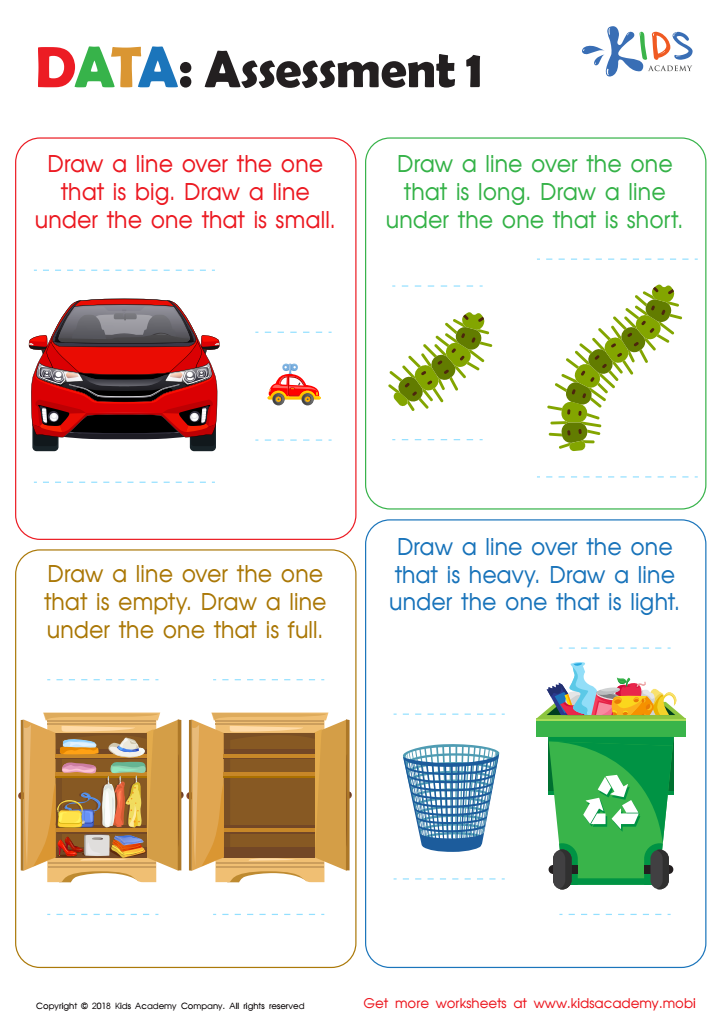
    Assess your students' knowledge of measurement words with this worksheet. Have them compare and describe objects/quantities using words like "big", "small", "long", "short", "empty", "full", "heavy" and "light". Encourage further learning by asking students to provide examples of each word meaning.
    Data: Assessment 1 Worksheet
    Worksheet
    Data: Assessment 2 Worksheet

    Data: Assessment 2 Worksheet

    Data: Assessment 2 Worksheet

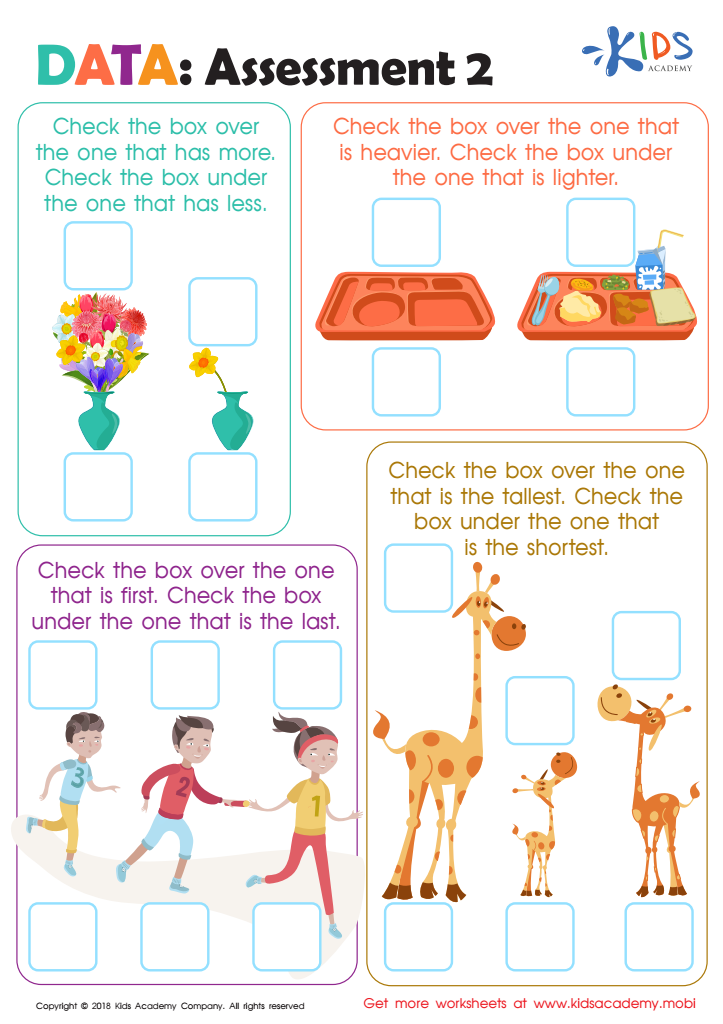
    This printable worksheet tests students' understanding of words related to quantity and measurement, such as "more", "less", "heavy", "light", "first", "last", "tall", and "short". It helps children compare and contrast when solving measurement problems. Ideal for math classes, it encourages students to gain the essential skills needed in subjects like math, science, and reading.
    Data: Assessment 2 Worksheet
    Worksheet


    Parents and teachers should prioritize geometry activities for children ages 5-8 because early exposure to geometric concepts lays a crucial foundation for mathematical understanding. At this age, children are naturally curious and engaged in hands-on learning, making it the perfect time to introduce shapes, spatial relationships, and basic measurements.

    Geometry helps develop critical thinking skills and spatial reasoning, which are essential for problem-solving across various disciplines, from mathematics to science and engineering. Engaging in geometric activities enhances cognitive development by encouraging children to observe, compare, and manipulate shapes, fostering a deeper understanding of the world around them.

    Additionally, geometry activities promote fine motor skills as children practice drawing, constructing, and arranging shapes. They also encourage collaboration and communication through group activities, where children share ideas and work together to solve problems.

    Moreover, incorporating geometry in playful and interactive ways makes learning enjoyable, enhancing motivation and a positive attitude towards math. As geometry concepts build through early childhood, students develop self-confidence and a strong mathematical foundation that supports success in future academic pursuits. Thus, nurturing an appreciation for geometry is vital for a well-rounded education and lifelong learning.