Reading Non-Fiction worksheets activities for Ages 6-9
4 filtered results
-
From - To
Explore our engaging Reading Non-Fiction worksheets designed for children ages 6-9! Foster their critical thinking and comprehension skills through interactive activities that make learning fun. Our worksheets include captivating topics that encourage young learners to discover the world around them, enhancing their knowledge while developing essential reading skills. Each activity is crafted to boost vocabulary, understand structure, and promote analytical thinking in real-world contexts. Perfect for classroom or at-home learning, our resources provide diverse exercises to keep kids motivated and inquisitive. Dive into the realm of non-fiction and watch your child's love for reading flourish!
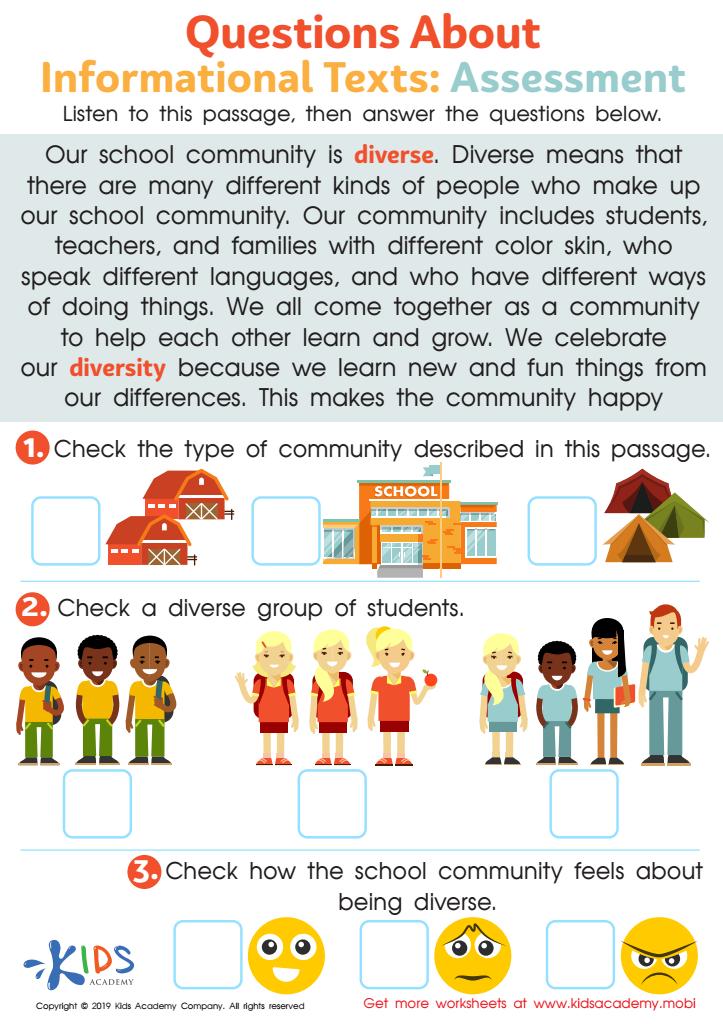
Questions About Informational Texts: Assessment 1 Worksheet
 Assign to My Students
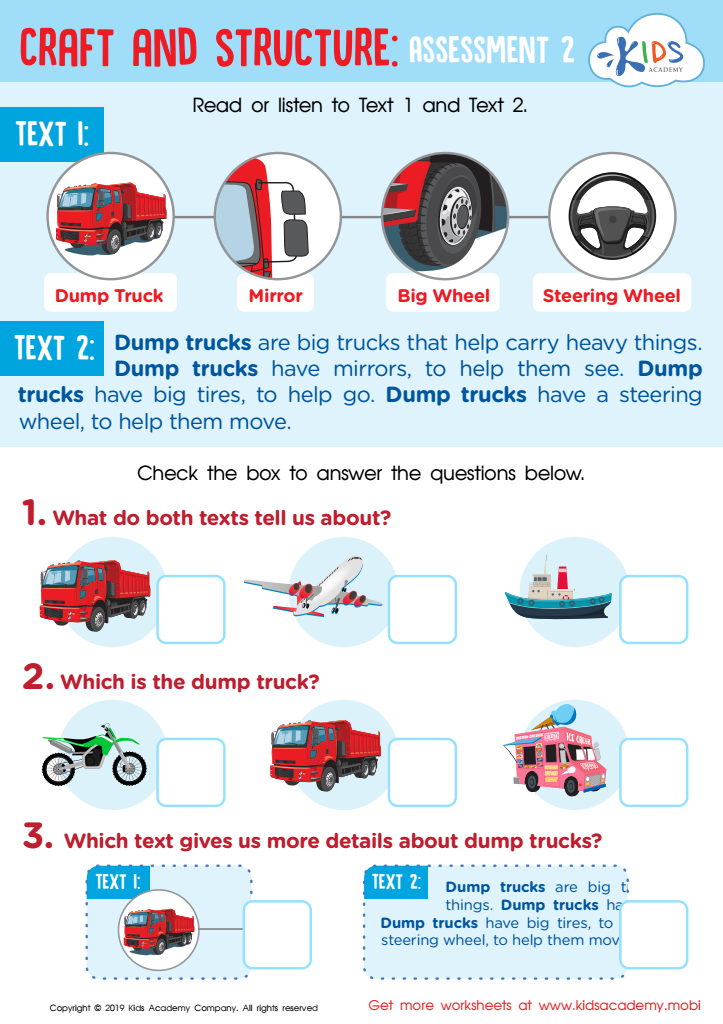
Craft and Structure: Assessment 2 Worksheet
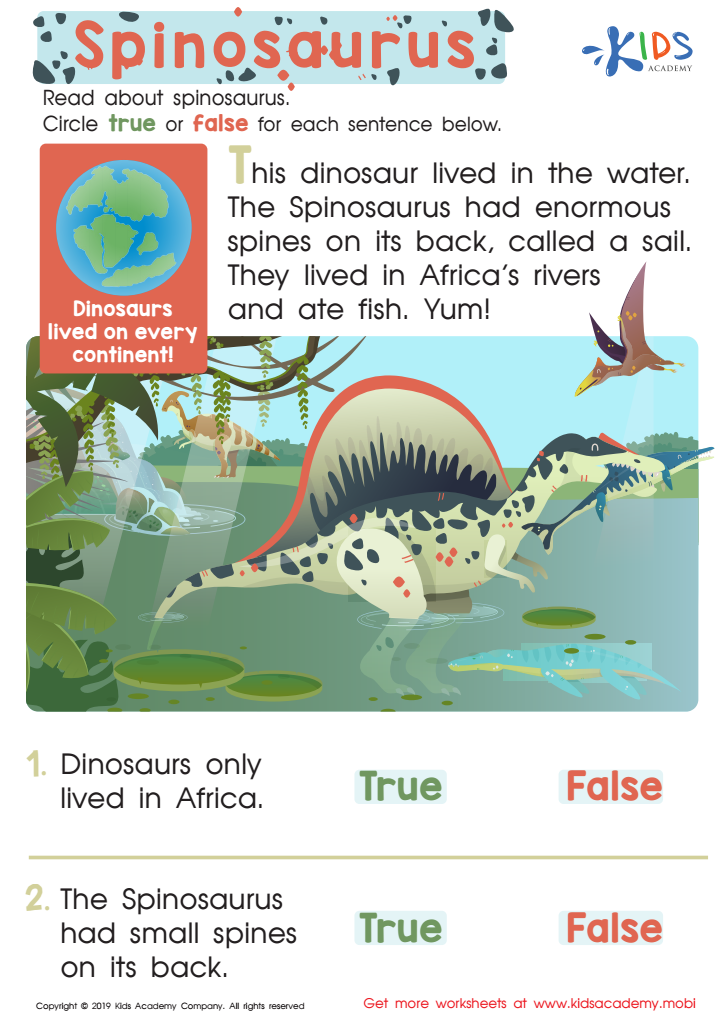
Spinosaurus Assessment Worksheet
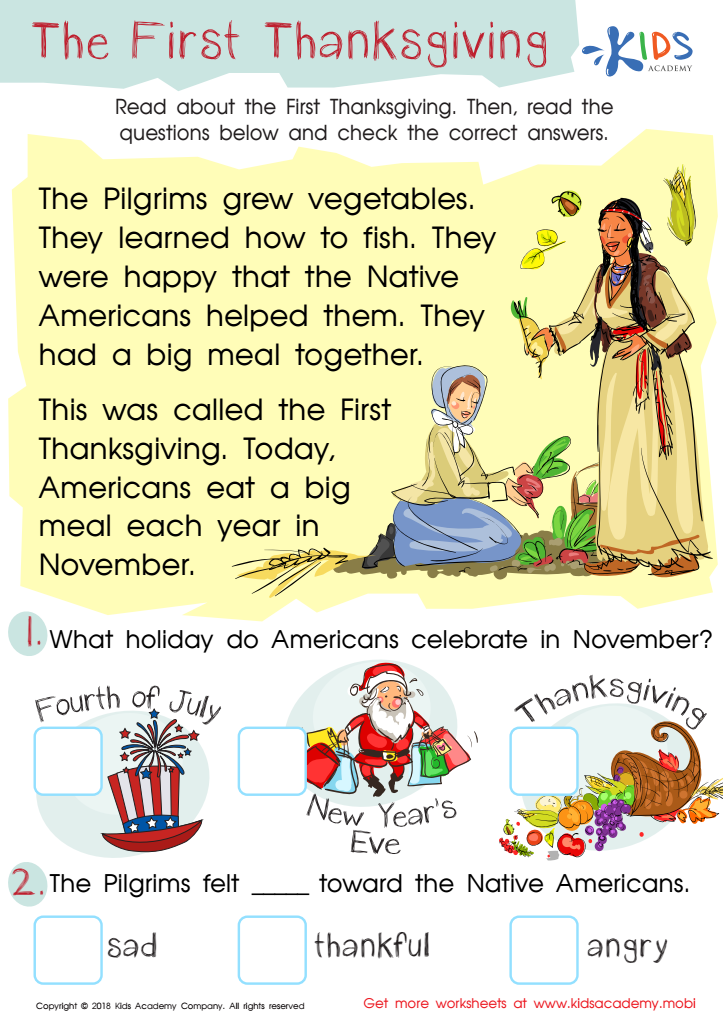
Assessment: First Thanksgiving Worksheet






Reading non-fiction activities for children aged 6-9 is crucial for their cognitive and emotional development, as it lays the foundation for lifelong learning. Engaging with non-fiction materials helps young readers build critical thinking skills by encouraging them to ask questions, analyze information, and distinguish fact from opinion. This age group is naturally curious, and non-fiction satisfies and enhances that curiosity by exposing them to real-world topics, such as science, history, and culture.
Furthermore, non-fiction helps children develop a robust vocabulary and improves their comprehension skills by introducing them to different text structures and formats. As they encounter diverse topics, they also learn to connect information to their world, promoting a deeper understanding of complex subjects.
For parents and teachers, fostering a love for non-fiction aligns with educational standards and prepares children for future academic challenges. It cultivates an informed citizenry by encouraging critical dialogue and understanding of current events. Engaging children with non-fiction builds their confidence, making them enthusiastic participants in discussions, whether in the classroom or at home. Therefore, prioritizing non-fiction reading not only enhances literacy skills but also shapes well-rounded individuals eager to explore and understand the world around them.








