
Easy Phonics worksheets activities for Ages 4-7
4 filtered results
Difficulty Level
Grade
Age
-
From - To
Subject
Activity
Standards
Discover fun and engaging Easy Phonics worksheets designed specifically for children aged 4-7! Our activities help young learners master essential phonics skills through interactive exercises that make learning enjoyable. Each worksheet is filled with captivating illustrations and age-appropriate content, promoting foundational reading abilities. Explore diverse activities, including letter recognition, sound blending, and word building, all tailored to support early literacy development. Perfect for home or classroom use, these printable worksheets encourage children to practice independently while boosting their confidence in reading. Join us in making phonics learning a delightful adventure and watch your child thrive in their literacy journey!
Favorites
With answer key
Interactive
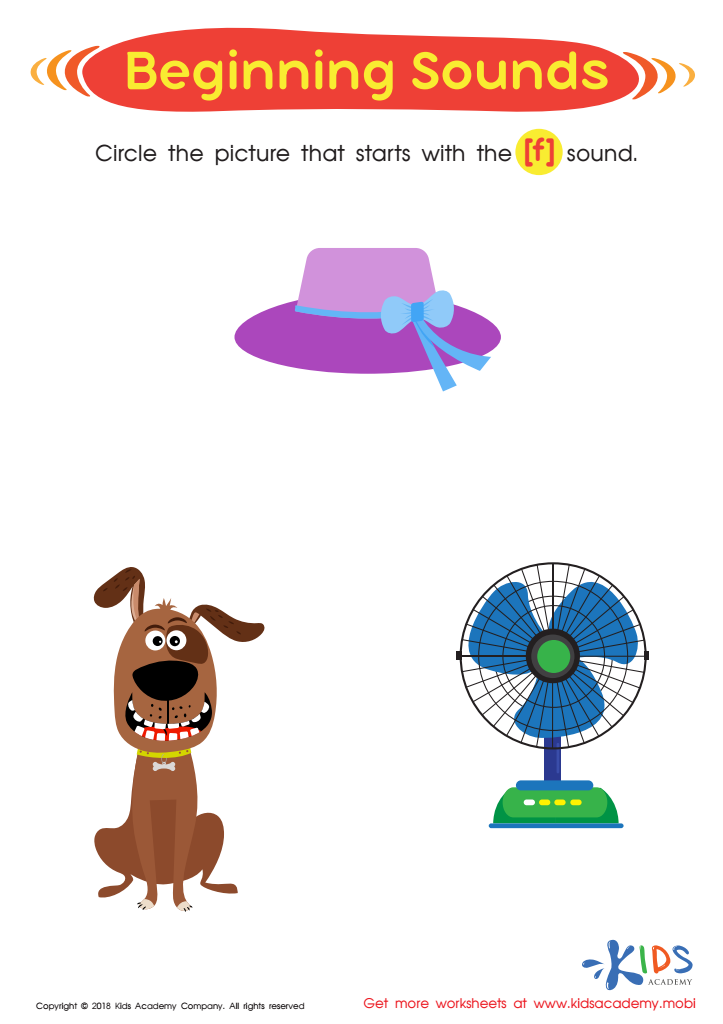
Beginning Sounds Assessment Printable
Test your child's knowledge of the alphabet. Ask them to recite the whole alphabet and the words for each letter. For example: A for apple, B for boy. Identify objects on this worksheet, then ask your child which one starts with the letter "f" and have them circle it.
 Assign to My Students
Beginning Sounds Assessment Printable
Worksheet
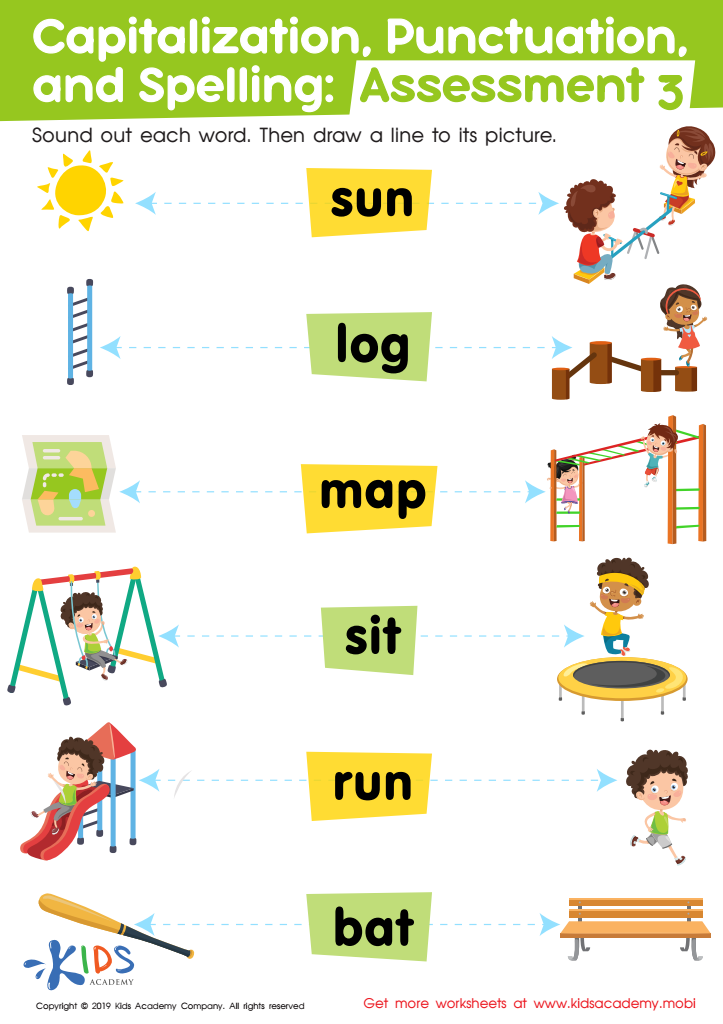
Capitalization. Punctuation. Spelling. Assessment 3 Worksheet
Before starting this worksheet, have your kids spell some simple words. Correct if wrong and show the right spellings. Then, ask them to link the pictures to the words you read out. Spelling is key for a good writer, and kids need to know how to spell to read texts easily.
Capitalization. Punctuation. Spelling. Assessment 3 Worksheet
Worksheet
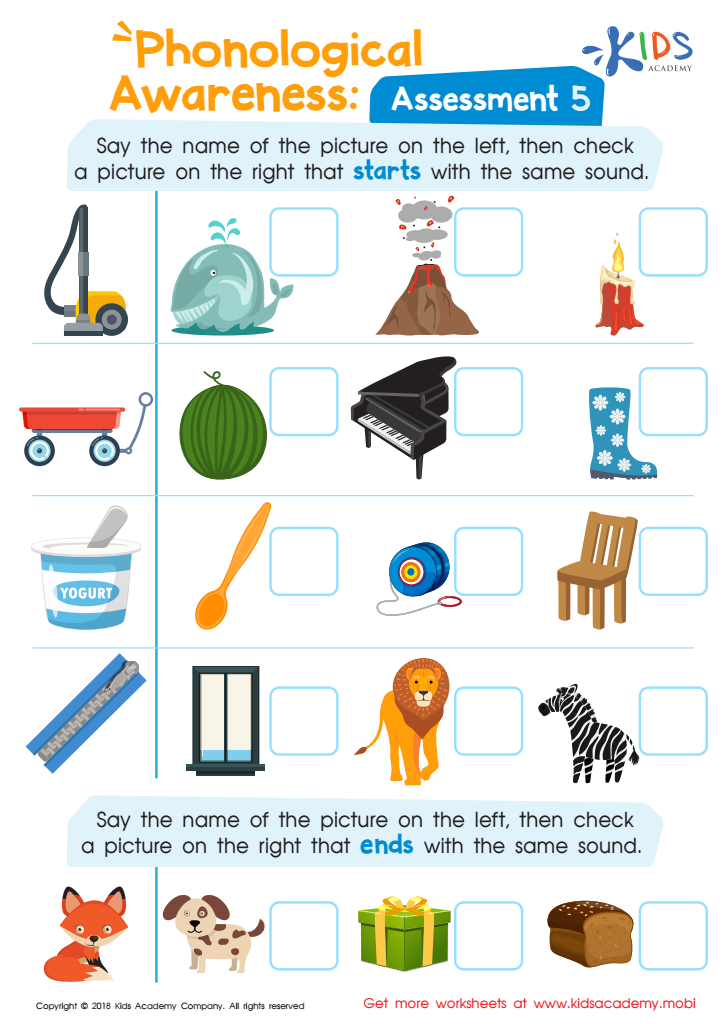
Phonological Awareness: Assessment 5 Worksheet
Repetition is key to success! This worksheet tests kids' ability to match beginning and ending sounds in words. Instruct them to say each word and listen closely to the sounds they make. Focus on the starting sounds for the first four pics, then the last one to hear ending sounds and find the right match!
Phonological Awareness: Assessment 5 Worksheet
Worksheet
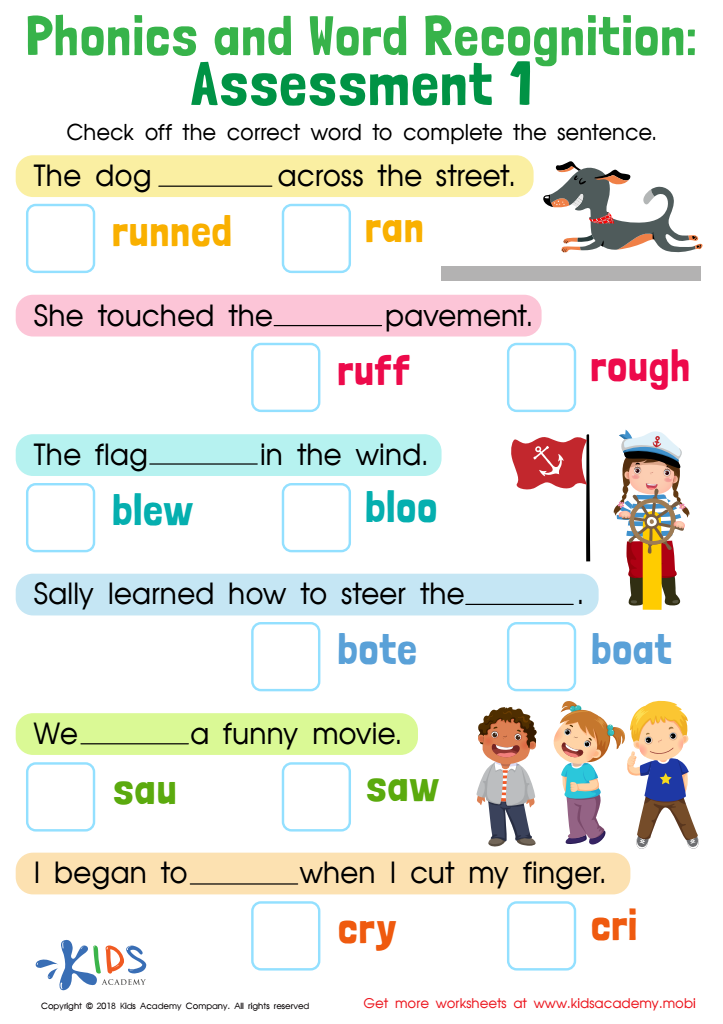
Phonics and Word Recognition: Assessment 1 Worksheet
This worksheet tests phonetics and word recognition. Students should be familiar with past tense verbs. Read incomplete sentences, then read multiple options and help students select the correct one.
Phonics and Word Recognition: Assessment 1 Worksheet
Worksheet
Join Kids Academy for Free
Who is primarily going to use this learning content?






Parents and teachers should pay close attention to Easy Phonics activities for children aged 4-7 because early literacy skills are foundational for a child's academic success. Phonics, the relationship between sounds and letters, helps young learners decode words, enhancing their reading fluency and comprehension. Engaging with phonics activities at this stage can ignite a love for reading, making it a joyful and enjoyable experience rather than a daunting task.
Additionally, these activities can support diverse learning needs, accommodating children who may struggle with traditional teaching methods. Fun, interactive games and hands-on activities create an enthusiastic learning environment where children are more likely to participate and retain information. Early mastery of phonics can also improve vocabulary and writing skills, as children build a better understanding of word construction.
Ultimately, focusing on phonics during these formative years sets the stage for confident readers and eager learners. By investing in Easy Phonics activities, parents and teachers can help cultivate strong literacy habits, supporting not only academic achievement but also fostering a lifelong love for learning and exploration in children. Therefore, incorporating these engaging and effective phonics activities is a vital component of early education.








