
Easy Reading Fiction worksheets activities for Ages 4-8
3 filtered results
Difficulty Level
Grade
Age
-
From - To
Subject
Activity
Standards
Discover a world of imagination with our Easy Reading Fiction worksheets designed for children ages 4-8! These engaging activities encourage early literacy skills, helping young learners develop a love for reading. Our worksheets feature age-appropriate stories, fun comprehension exercises, and interactive tasks that spark curiosity and creativity. Kids will enjoy reading simple narratives while practicing essential skills like vocabulary, sequencing, and character identification. Perfect for classroom use or at-home learning, these worksheets make reading an enjoyable adventure. Fuel your child's literacy journey with our captivating resources and watch them become confident young readers! Visit us now to explore our collection!
Favorites
With answer key
Interactive
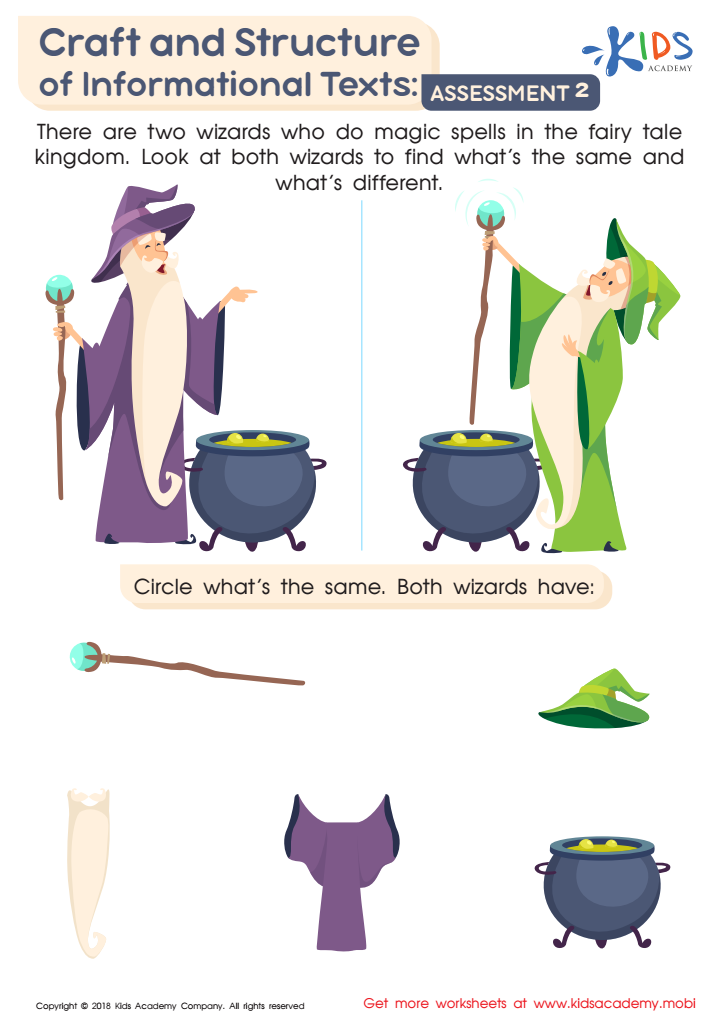
Craft and Structure of Informational Texts: Assessment 2 Worksheet
This assessment has kids looking at two similar fairy tale wizards, focusing on their visuals to find the similarities and differences. Then, they'll circle the things they both have. It's a great way to help children hone their detail-oriented comprehension skills, which is essential when using informational texts.
 Assign to My Students
Craft and Structure of Informational Texts: Assessment 2 Worksheet
Worksheet
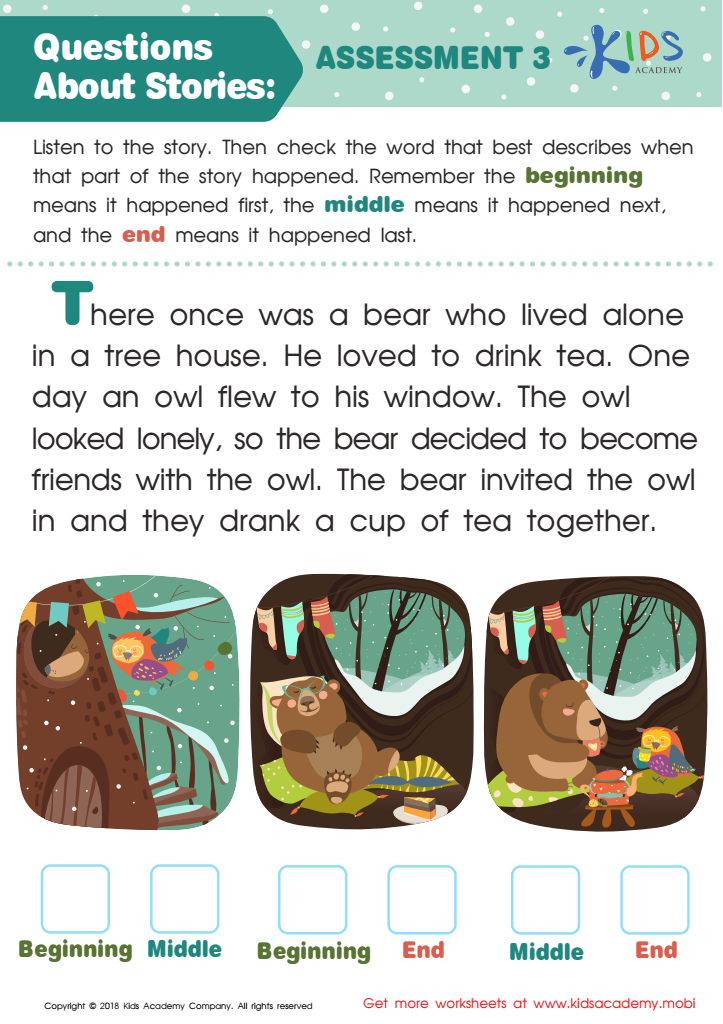
Questions About Stories: Assessment 3 Worksheet
Help kids understand stories by having them listen to a story and check boxes for the beginning, middle, and end. This worksheet makes it fun for even the youngest learners to recall story elements and sequence of events. Let them listen to the story from start to finish, then look at the pictures to check which part of the story they depict.
Questions About Stories: Assessment 3 Worksheet
Worksheet
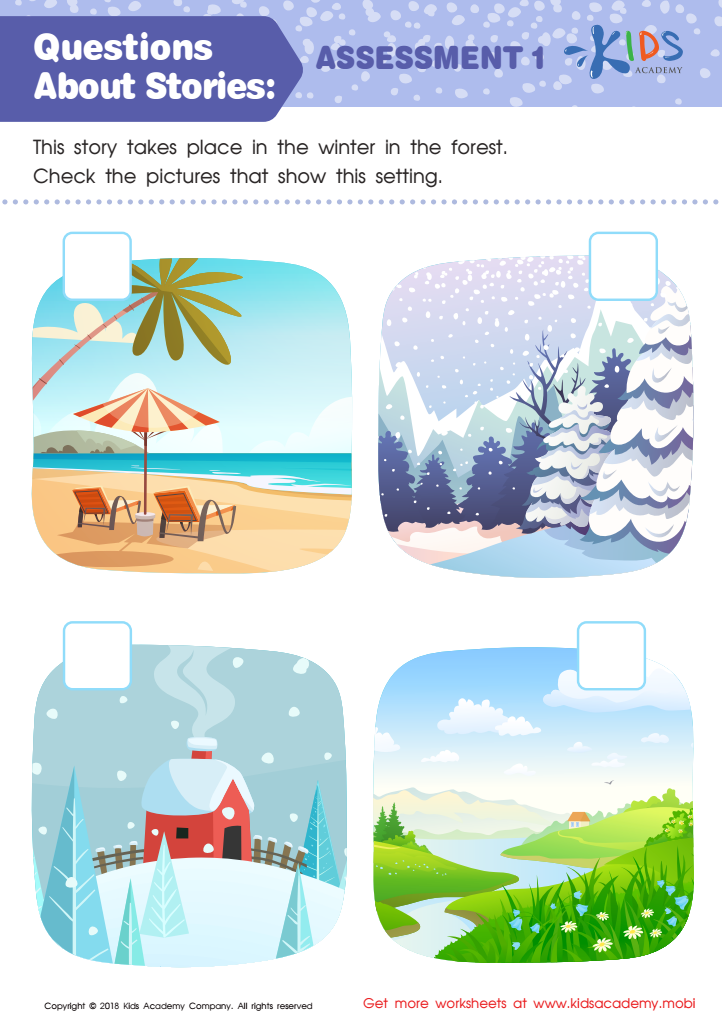
Questions About Stories: Assessment 1 Worksheet
Winter brings snow, cold, short days, and darkness. Schools can even close due to heavy snow. Ask your child what their favourite winter activities are and what color they associate with 'winter'. This worksheet takes place in a winter forest. Look at the 4 pictures with your child, and help them identify which one shows the correct setting.
Questions About Stories: Assessment 1 Worksheet
Worksheet
Join Kids Academy for Free
Who is primarily going to use this learning content?








Parents and teachers should prioritize Easy Reading Fiction activities for children ages 4-8 because these activities serve as foundational tools for developing literacy skills. Early exposure to engaging stories promotes vocabulary expansion, comprehension, and a love for reading, setting the stage for future academic success.
Easy Reading Fiction introduces children to various themes, characters, and narratives, enriching their imagination and critical thinking. Additionally, these activities provide an excellent opportunity for bonding between children and caregivers, enhancing social-emotional learning and creating positive associations with reading.
Moreover, engaging with Easy Reading Fiction helps children develop phonemic awareness and decoding skills necessary for effective reading. By encountering repetitive language and illustrations, they can make connections, predict story outcomes, and learn to express ideas verbally. These skills lay a vital groundwork not only for reading but for overall communication and literacy development.
Furthermore, with a range of formats—from picture books to simple chapter books—Easy Reading Fiction caters to varying interests and developmental stages, ensuring that every child finds something appealing. Ultimately, fostering a love for reading at this early age nurtures lifelong learners who are better equipped to navigate complex texts and contribute meaningfully to society.








