
Normal Phonics worksheets activities for Ages 5-8
9 filtered results
Difficulty Level
Grade
Age
-
From - To
Subject
Activity
Standards
Discover engaging Normal Phonics worksheets designed specifically for children aged 5 to 8! Our activities promote essential phonics skills through fun and interactive exercises, helping young learners grasp fundamental reading and writing concepts. Each worksheet is crafted to enhance phonemic awareness, letter-sound relationships, and vocabulary development, making learning enjoyable and effective. Perfect for both classroom and home use, these worksheets cater to various learning styles, ensuring every child can thrive. Encourage your child’s love for reading with our comprehensive phonics activities that build confidence and foundational skills. Start their literacy journey today with our thoughtfully designed resources!
Favorites
With answer key
Interactive
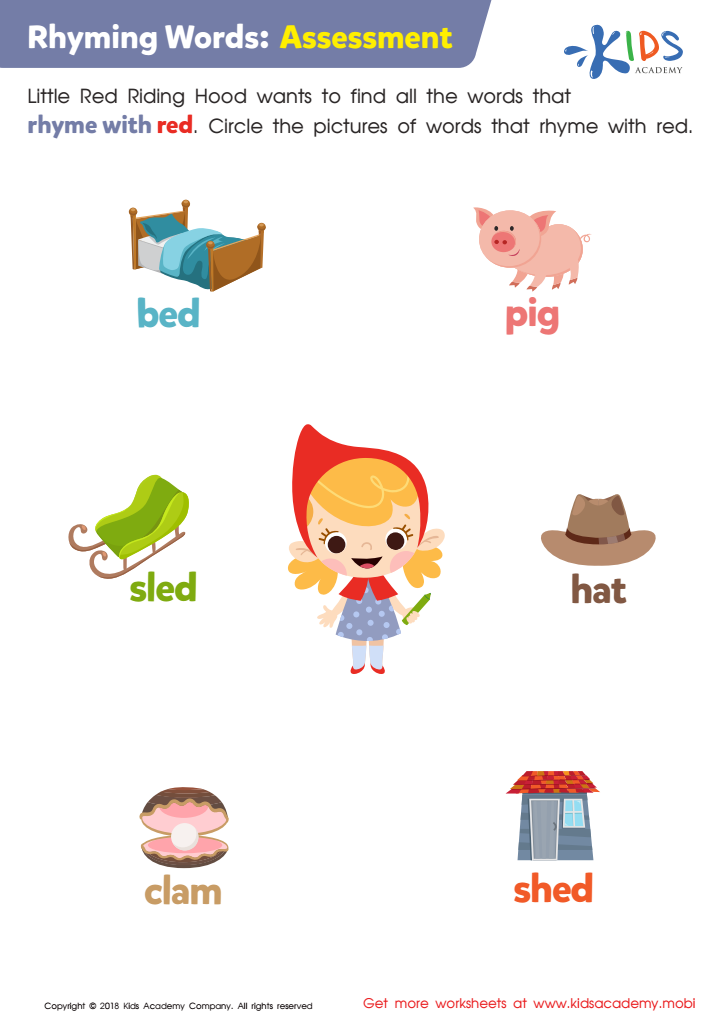
Rhyming Words: Assessment Worksheet
Help Little Red Riding Hood find rhyming words with "red". Download and print this worksheet. Have your child circle the rhyming words and pictures. Get them to say each word out loud and compare it to the word "red". When they're done, review the answers and talk about any words that don't rhyme.
 Assign to My Students
Rhyming Words: Assessment Worksheet
Worksheet
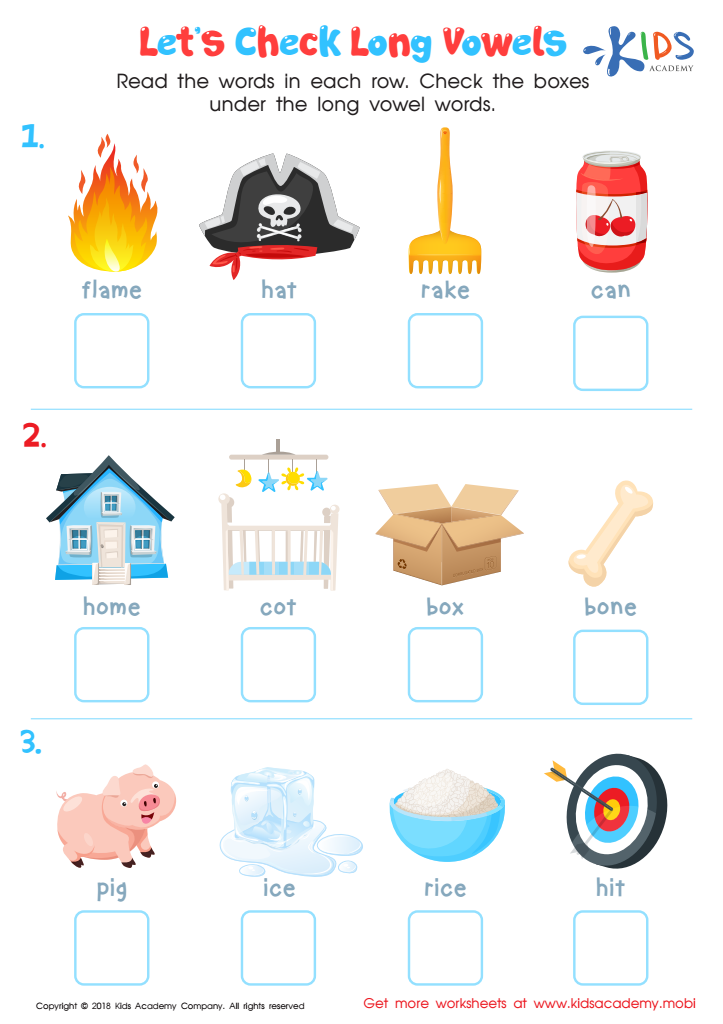
Let's Check Long Vowels: Assessment Worksheet
This worksheet helps your child identify objects and learn long vowel sounds. Ask them to say the names of the four objects in each row. Then, help them check the boxes to confirm they know the long vowel sounds. This will help them develop their reading skills.
Let's Check Long Vowels: Assessment Worksheet
Worksheet
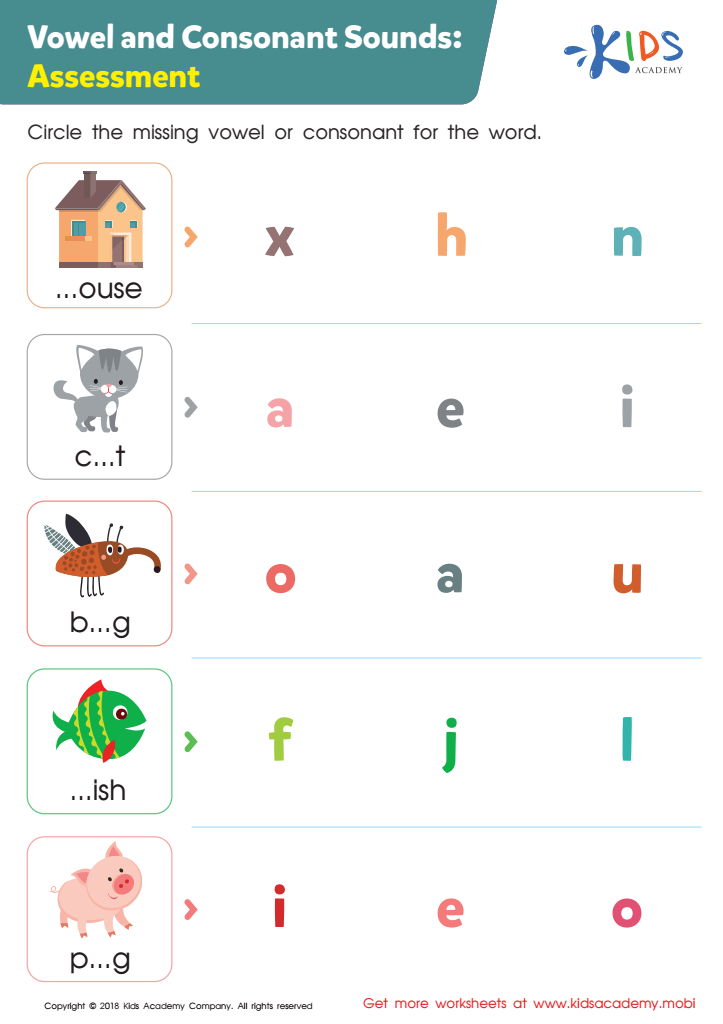
Vowel and Consonant Sounds: Assessment Worksheet
Test young elementary students on vowel and consonant sounds with this friendly phonics assessment worksheet. Get kids to name each image and look at the word underneath. Ask them to sound out the word, then circle the missing letter to complete. This will help assess their knowledge and skills!
Vowel and Consonant Sounds: Assessment Worksheet
Worksheet
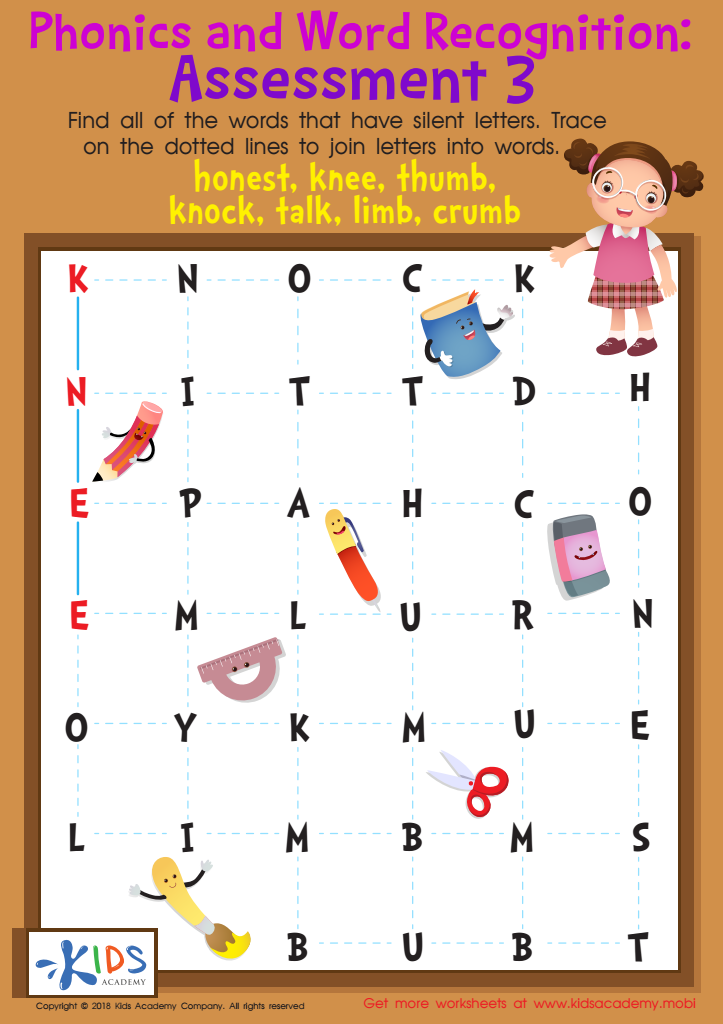
Phonics and Word Recognition: Assessment 3 Worksheet
Silent letters can be tricky for kids learning to read and write. Show them how they work with words like 'knee' and 'dumb'. Then, challenge them to come up with their own. Give them a worksheet with silent letters and trace the lines to join the letters into words.
Phonics and Word Recognition: Assessment 3 Worksheet
Worksheet
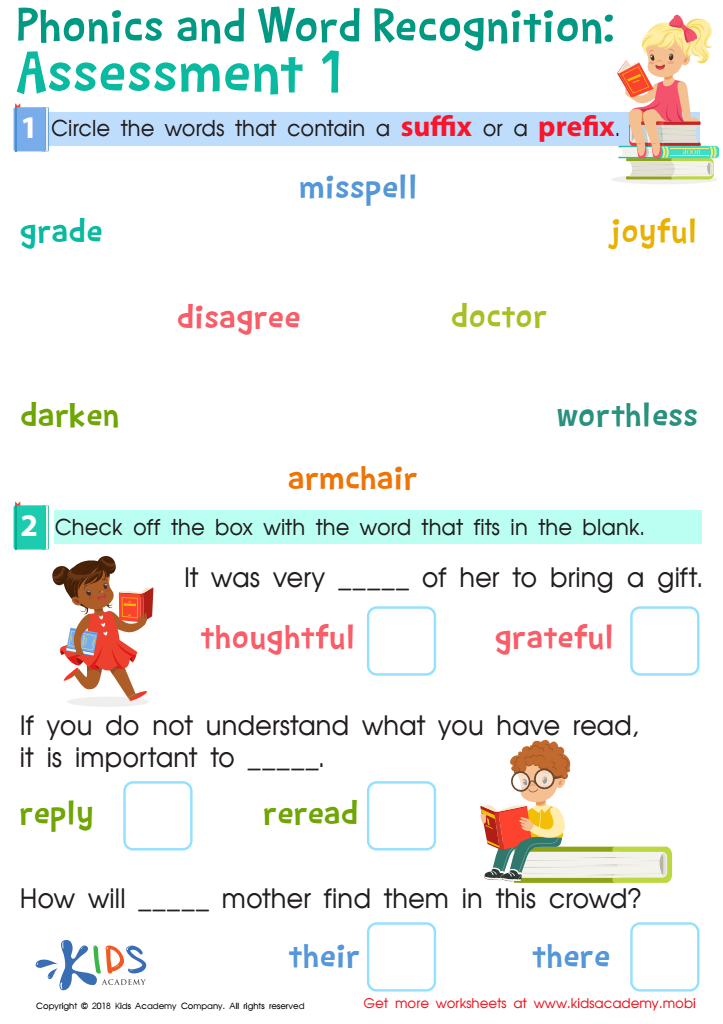
Phonics and Word Recognition: Assessment 1 Worksheet
Explain prefixes (words added to start of another word to give it a new meaning) and suffixes (added to end of word to change its meaning) to your kids with examples like 'unhappy' (prefix) and 'forgetful' (suffix). Now, help your child complete this worksheet, including circling words and checking boxes.
Phonics and Word Recognition: Assessment 1 Worksheet
Worksheet
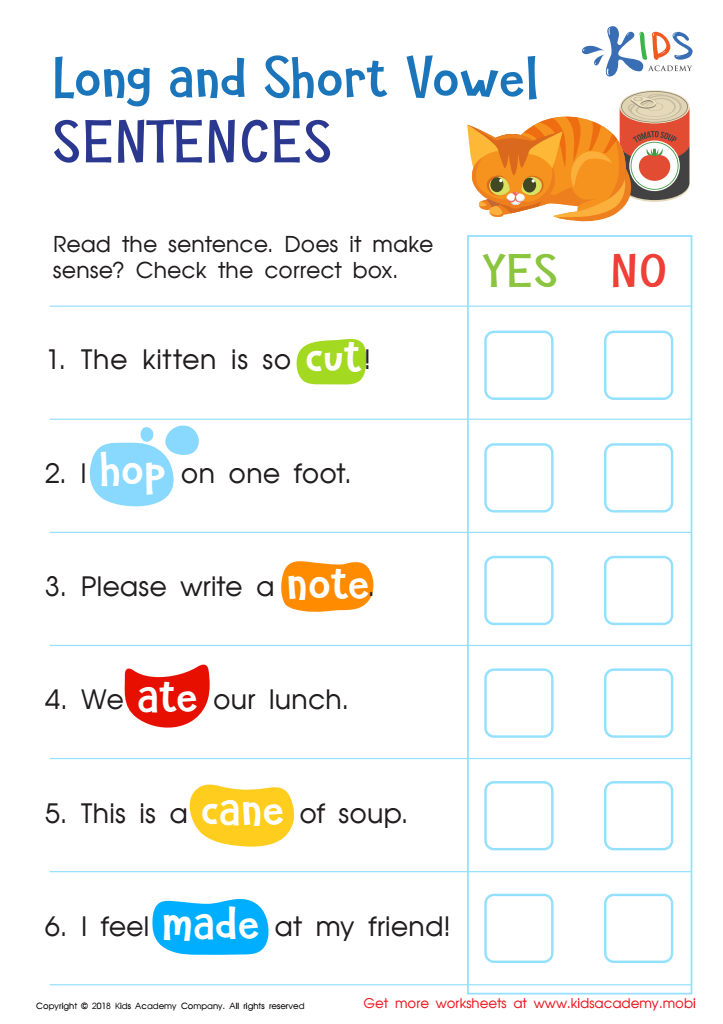
Long and Short Vowel Sentences: Assessment Worksheet
This printable worksheet helps kids practice differentiating between short and long vowel sounds. They'll use context clues to figure out which words make sense in simple sentences. A great way to build reading and writing skills!
Long and Short Vowel Sentences: Assessment Worksheet
Worksheet
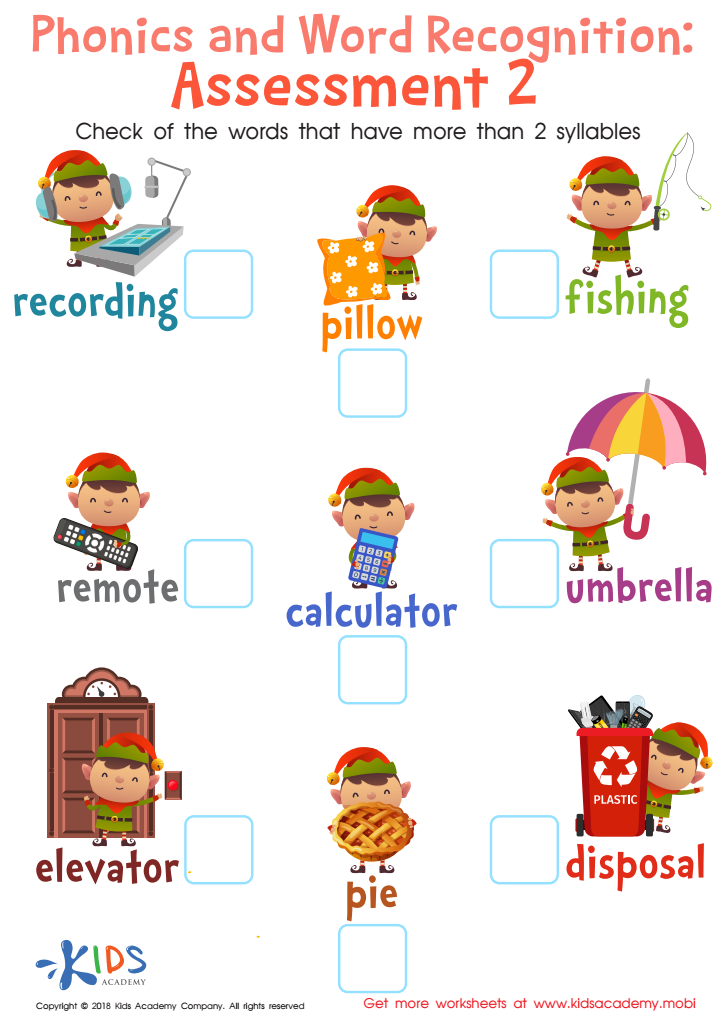
Phonics and Word Recognition: Assessment 2 Worksheet
Help your kids learn proper pronunciation by counting syllables. Most words they'll encounter have 1-3 syllables, making them simple to say. Have them repeat the words in your worksheet after you. Focus on longer words with more than two syllables.
Phonics and Word Recognition: Assessment 2 Worksheet
Worksheet
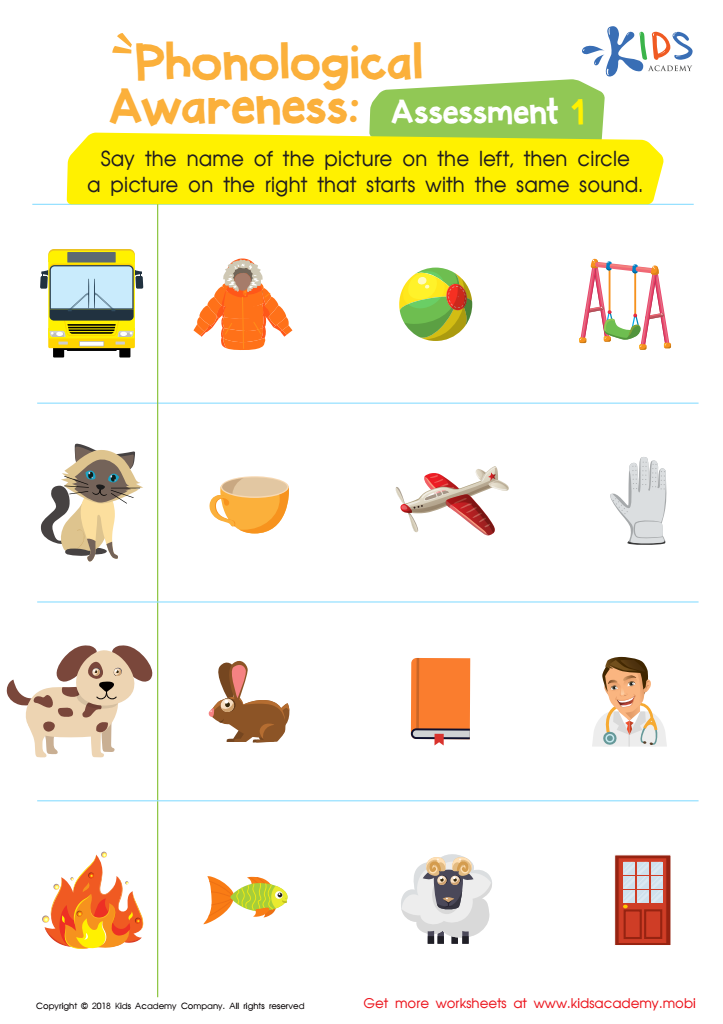
Phonological Awareness: Assessment 1 Worksheet
This worksheet helps kids build key phonics skills for pre-reading. They say each picture name aloud, focusing on the starting sound. Then, they match the sound with an image in the same row. Use as a checkpoint for kindergarten or grade 1 phonics readiness.
Phonological Awareness: Assessment 1 Worksheet
Worksheet
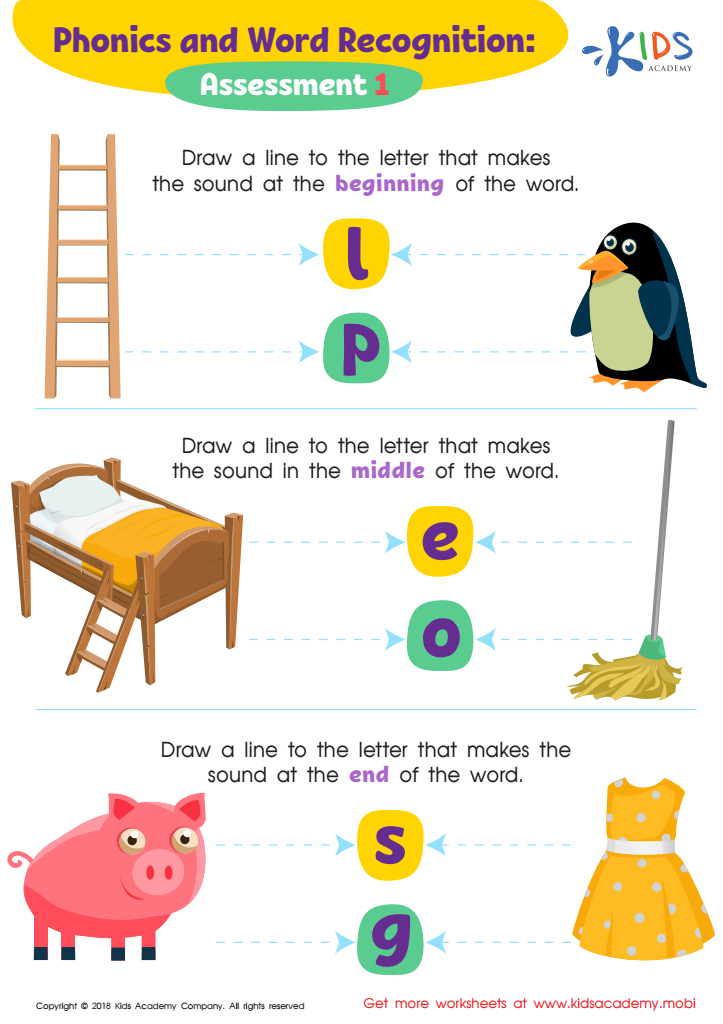
Phonics and Word Recognition: Assessment 1 ELA Worksheet
This fun worksheet tests your child's sound recognition skills for each part of a word. Ask your child to name each image and trace the line to match it with the corresponding letter. Listen for beginning sounds on 1st, middle sounds on 2nd, and ending sounds on 3rd. Encourage learning with this colorful and interactive activity!
Phonics and Word Recognition: Assessment 1 ELA Worksheet
Worksheet
Join Kids Academy for Free
Who is primarily going to use this learning content?


.jpg)


Parents and teachers should care about Normal Phonics activities for children aged 5-8 as these foundational exercises are essential for developing early literacy skills. At this age, children undergo significant cognitive development, making it the perfect time to introduce phonics—a method that teaches the relationship between sounds and letters. Engaging in structured phonics activities helps children decode new words, enhancing their reading fluency and comprehension.
Phonics instruction boosts children’s confidence, empowering them to tackle reading independently. Effective phonics programs also lay the groundwork for good spelling and writing skills, essential for academic success. Moreover, phonics activities often incorporate games and interactive tasks, making learning enjoyable and fostering a positive attitude towards reading.
Furthermore, equipped with phonics skills, children can engage critically with texts, paving the way for lifelong learning. Parents and teachers serve as key facilitators in this process, and by prioritizing phonics activities, they help cultivate proficient readers and confident communicators. Overall, implementing Normal Phonics activities can significantly enhance a child’s educational experience and contribute to their holistic development, ultimately setting them up for success in school and beyond.








