Normal Physical Science worksheets activities for Ages 6-8
4 filtered results
-
From - To
Welcome to our collection of Normal Physical Science worksheets, specially designed for children ages 6-8! These engaging activities help young learners explore the foundational concepts of physical science in a fun and interactive way. Each worksheet fosters curiosity and promotes critical thinking, covering topics such as matter, forces, and energy. With vibrant illustrations and easy-to-follow instructions, kids will enjoy hands-on experiments and problem-solving challenges that encourage them to ask questions and discover the wonders of science. Perfect for use at home or in the classroom, these resources support skill development while making learning enjoyable! Start your science adventure today!
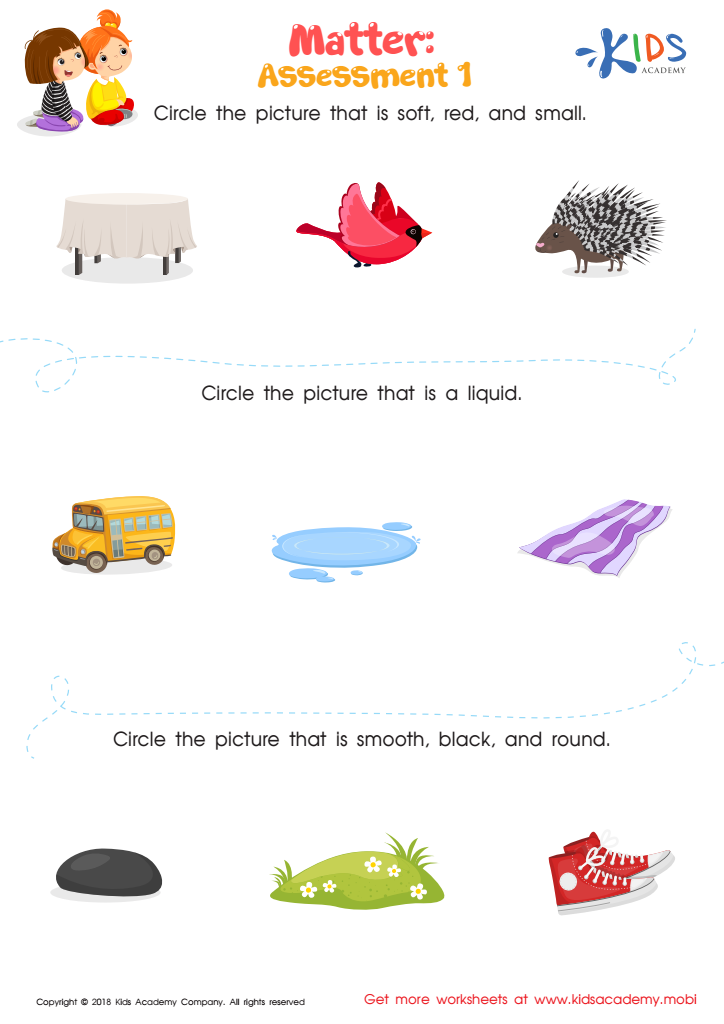
Matter: Assessment 1 Worksheet
 Assign to My Students
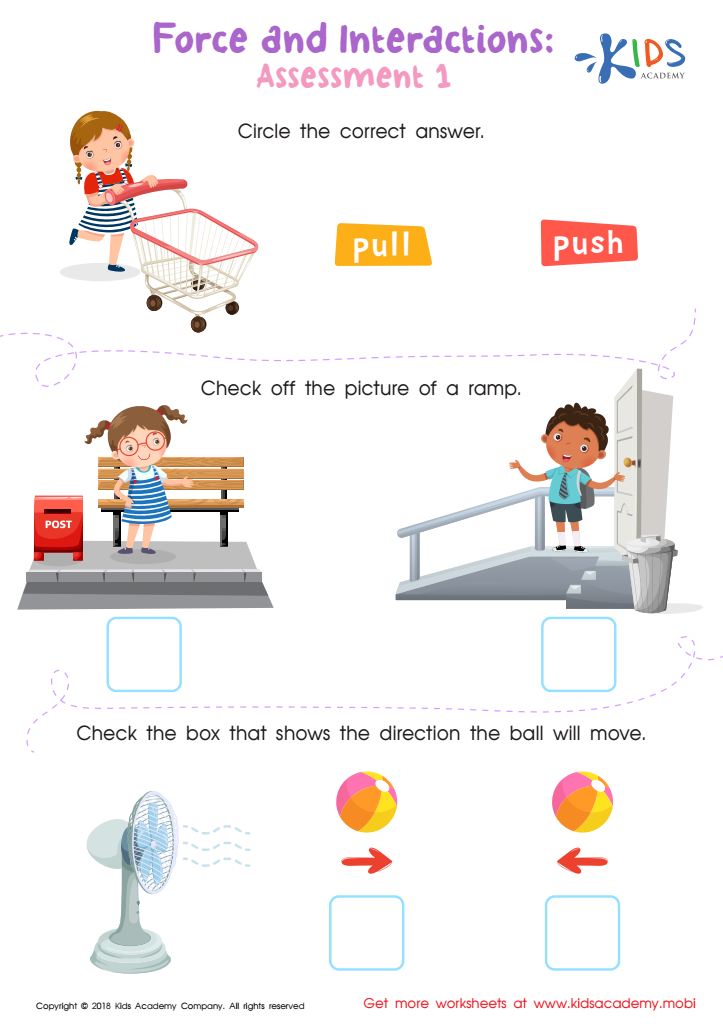
Force and Interactions: Assessment 1 Worksheet
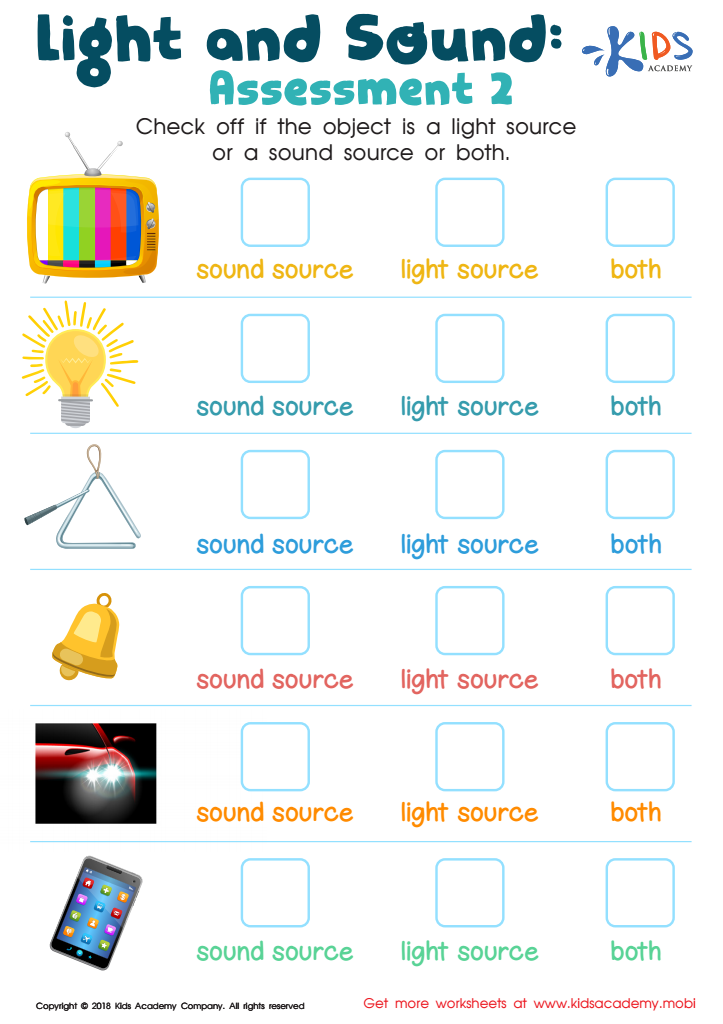
Light and Sound: Assessment 2 Worksheet
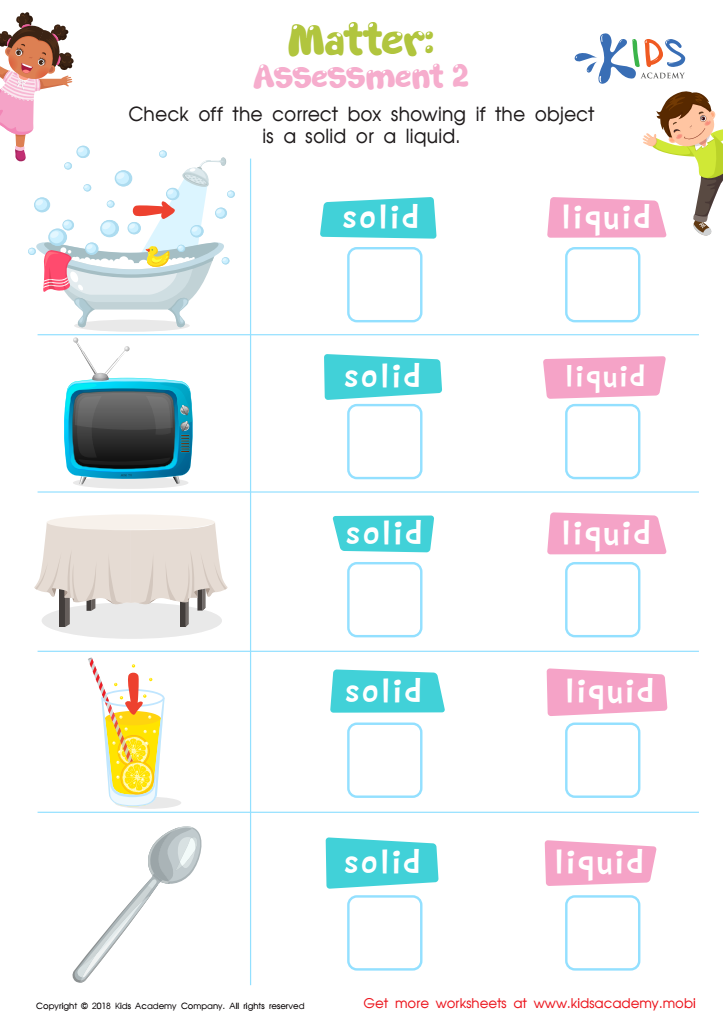
Matter: Assessment 2 Worksheet








Parents and teachers should prioritize Normal Physical Science activities for children aged 6-8 because these experiences lay the foundation for critical thinking and inquiry-based learning. At this age, children are naturally curious about the world around them, making it an optimal time to engage them in hands-on experiments and exploration. These activities promote active learning, allowing children to observe, ask questions, and create hypotheses, fostering a deeper understanding of basic scientific concepts such as matter, energy, and forces.
Moreover, engaging in physical science activities supports the development of essential skills such as problem-solving, collaboration, and communication. Through group work or sharing findings, children practice expressing their ideas and learn to value different perspectives. Additionally, these experiences can instill a lifelong interest in science, encouraging future academic pursuits in STEM (science, technology, engineering, and mathematics) fields.
Furthermore, understanding fundamental physical science principles can connect to real-world scenarios—sparking discussions about technology, environmental issues, and health. By caring about and incorporating Normal Physical Science activities, parents and teachers not only enhance children's educational experiences but also ensure they develop a sense of wonder and affinity for the sciences, ultimately shaping informed and inquisitive future citizens.








