Normal Physical Science worksheets activities for Ages 7-9
3 filtered results
-
From - To
Discover engaging Normal Physical Science worksheets designed specifically for ages 7-9 on our platform! These worksheets cover essential topics such as matter, energy, forces, and basic scientific principles, making learning fun and interactive. Each activity is thoughtfully crafted to enhance understanding and retention through hands-on experiments, clear illustrations, and thought-provoking questions. Perfect for classroom use or at-home learning, our resources help young learners build a strong foundation in physical science. Encourage curiosity and exploration with our user-friendly worksheets that cater to diverse learning styles. Equip your child with the knowledge and skills they need to thrive in their scientific journey today!
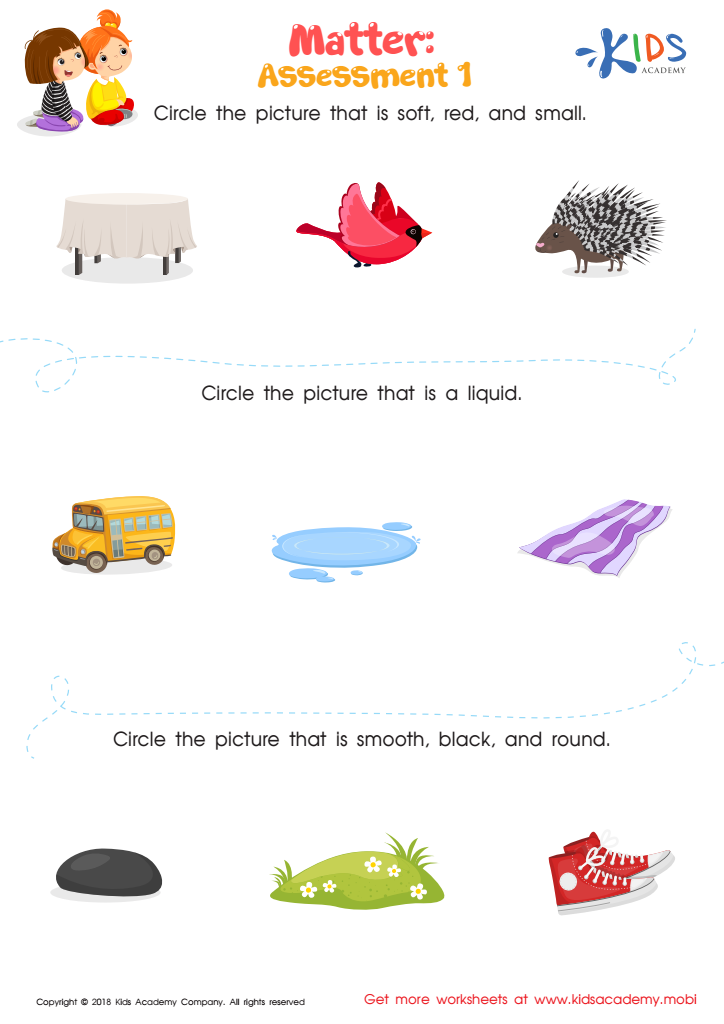
Matter: Assessment 1 Worksheet
 Assign to My Students
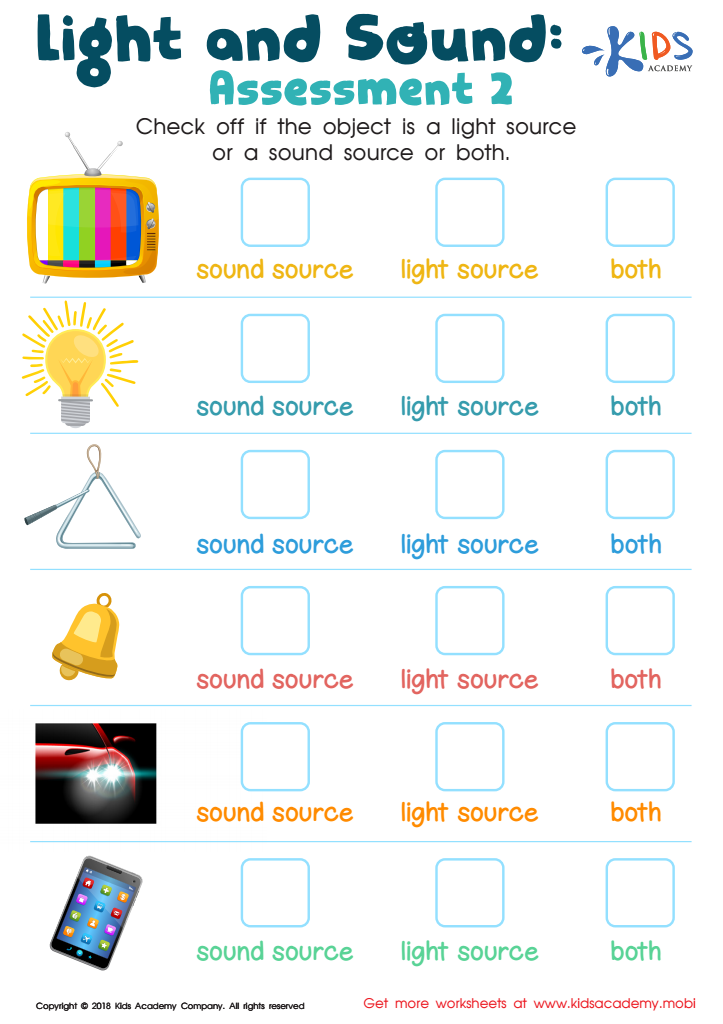
Light and Sound: Assessment 2 Worksheet
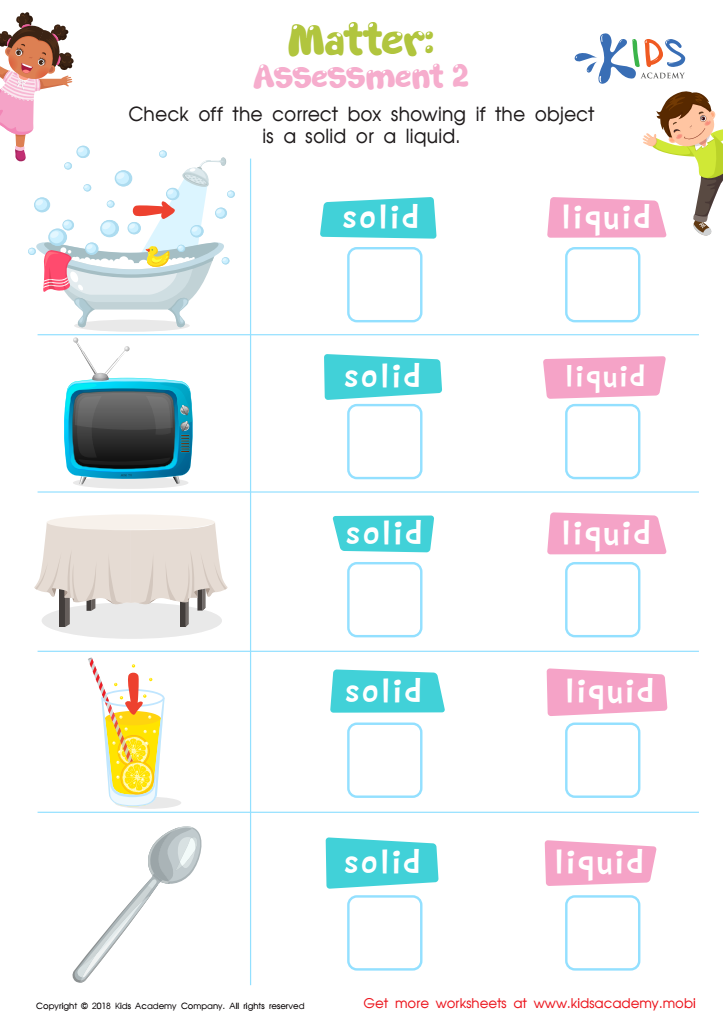
Matter: Assessment 2 Worksheet


.jpg)





Normal Physical Science activities for children aged 7-9 are crucial for several reasons. Firstly, this developmental stage is marked by heightened curiosity and the eagerness to explore the world. Engaging in physical science experiments promotes hands-on learning, allowing children to investigate concepts such as force, motion, and properties of materials through play and exploration.
These activities also foster critical thinking and problem-solving skills, as children hypothesize, experiment, and observe outcomes. Such processes encourage a scientific mindset that becomes foundational for future learning. Additionally, early exposure to physical science lays the groundwork for understanding basic scientific principles which are pivotal in a variety of fields.
Moreover, family involvement in these activities strengthens the bond between parents and children. It creates valuable opportunities for shared learning experiences and discussions about scientific phenomena. Teachers can use these activities to design interactive lessons that make complex concepts more approachable, ensuring that students remain engaged and inspired.
In an age where STEM education is becoming increasingly important, nurturing a child's interests in physical science from a young age can significantly impact their educational trajectory and encourage lifelong curiosity about the world around them. This early engagement can ultimately shape the next generation of scientists and innovators.








