Unlock your child's potential with our "Basic Geometry Understanding Worksheets for Ages 3-4". Specifically designed for early learners, these engaging worksheets introduce fundamental geometric shapes and concepts through fun, interactive activities. By incorporating bright visuals and hands-on tasks, kids can easily grasp the basics of shapes, patterns, and spatial awareness. Perfect for preschoolers, our worksheets aim to develop critical thinking, foster creativity, and prepare young minds for future learning. Boost your child's confidence and enthusiasm for math today with these expertly crafted, educational resources. Ideal for use at home or in a classroom setting.

Check out this FREE "Basic geometry understanding" Trial Lesson for age 3-4!

Find 2 Objects that Share a Trait

Favorites
With answer key
Interactive
  • 3-4
  • Basic geometry understanding
Ordering Size Worksheet

Ordering Size Worksheet

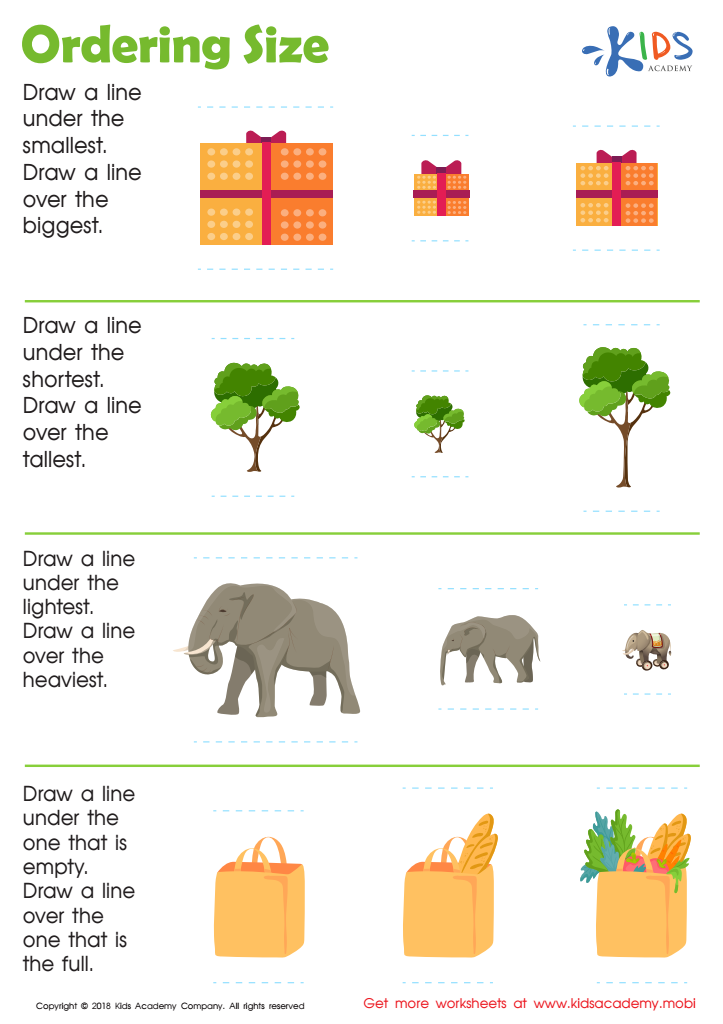
This worksheet helps students practice mathematical vocabulary related to size and quantity. Children look at pictures and draw a line to the objects that are taller, shorter, big, small, light, heavy, empty or full. The teacher can quickly check students' understanding of these measurement terms and then ask for examples of their own.
Ordering Size Worksheet
Worksheet
Geometry Matching Worksheet

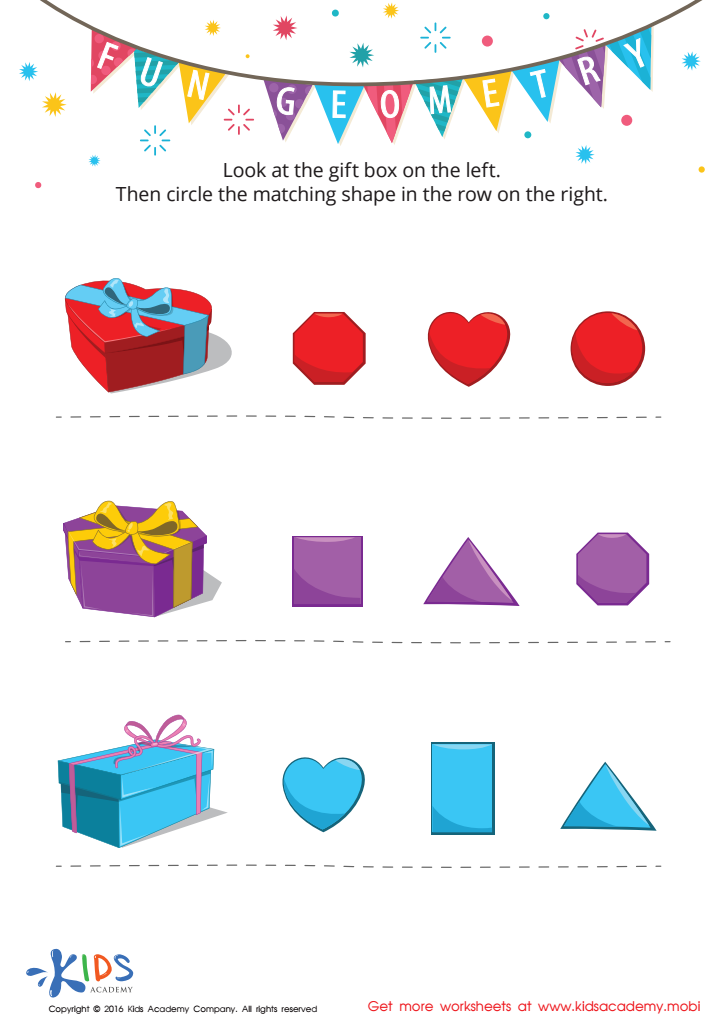
Fun Geometry Worksheet

Give your child the gift of learning with this fun and educational geometry matching worksheet! It'll help them develop essential matching and problem-solving skills while having fun. Vibrant pictures will excite them to complete it and get a better grasp of the world around them.
Fun Geometry Worksheet
Worksheet
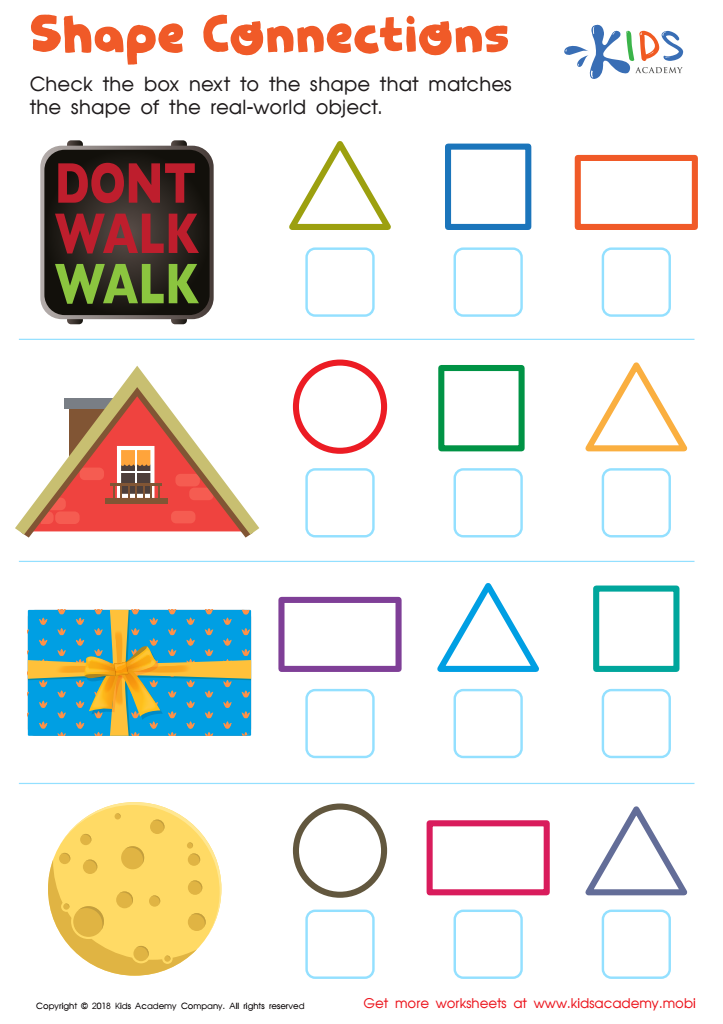
Shape Connections Worksheet

Shape Connections Worksheet

Geometric shapes are all around us and this fun worksheet brings it to life. Kids will match real-world pictures with the corresponding basic shapes, connecting how math is used in various aspects of daily life. A great way to reinforce these concepts!
Shape Connections Worksheet
Worksheet
Geometry Review Printable Worksheet

Geometry Review Printable

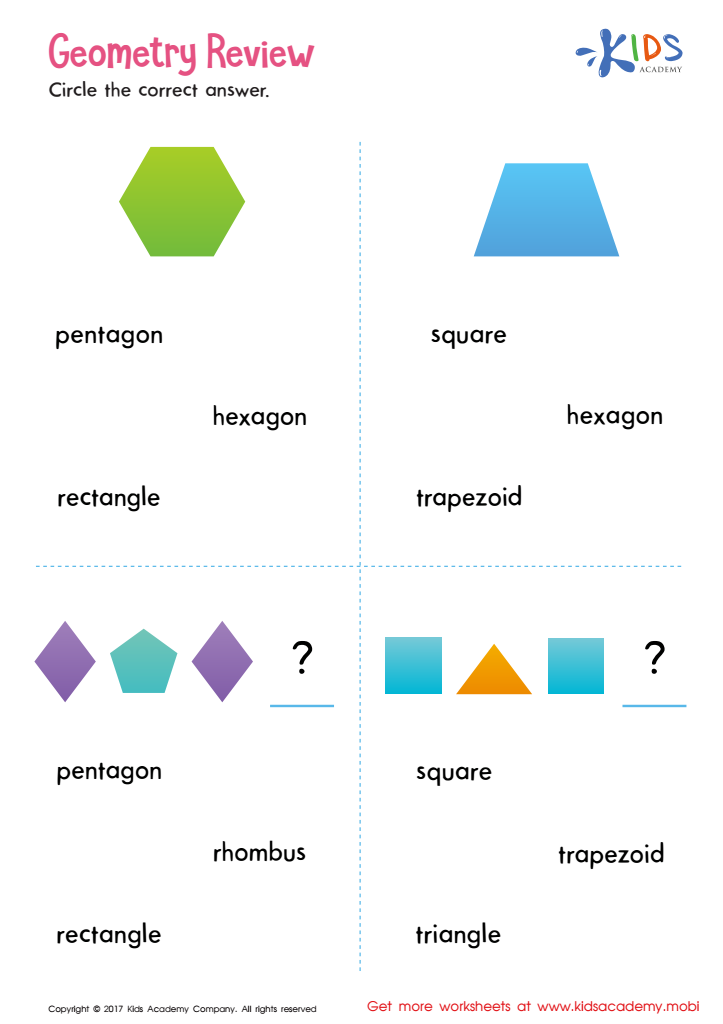
Repetition is key to success; give your child the practice they need with this geometry worksheet.
Geometry Review Printable
Worksheet
Sorting Shapes Worksheets

Preschool Geometry Sorting Worksheet

Preschool Geometry Sorting Worksheet
Worksheet
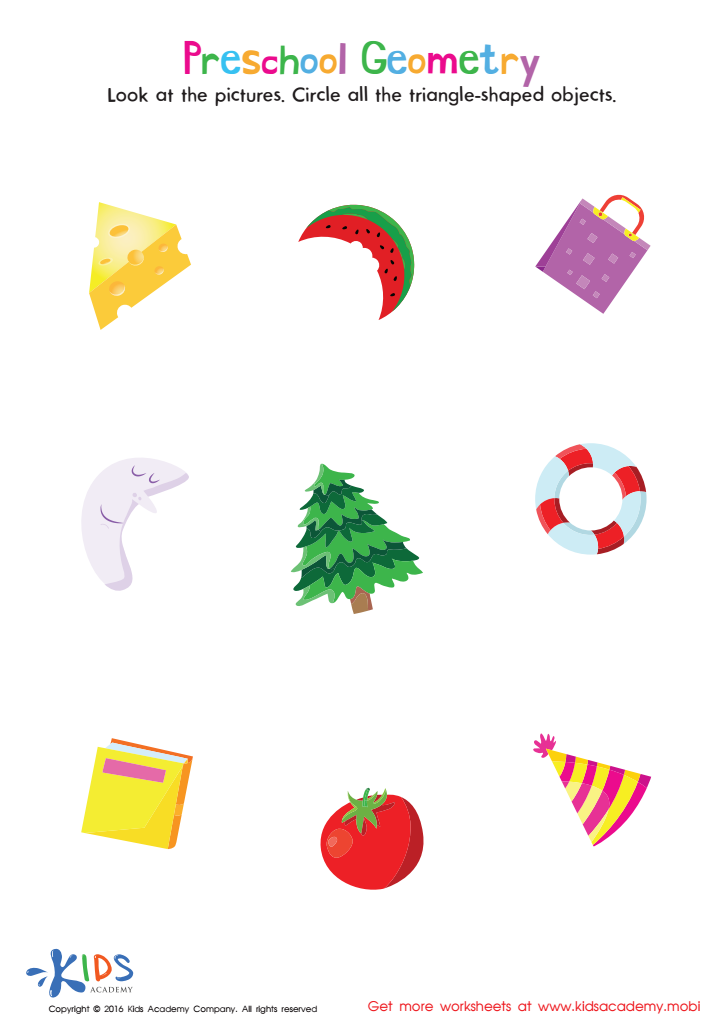
Preschool Geometry Worksheet

Preschool Geometry Worksheet

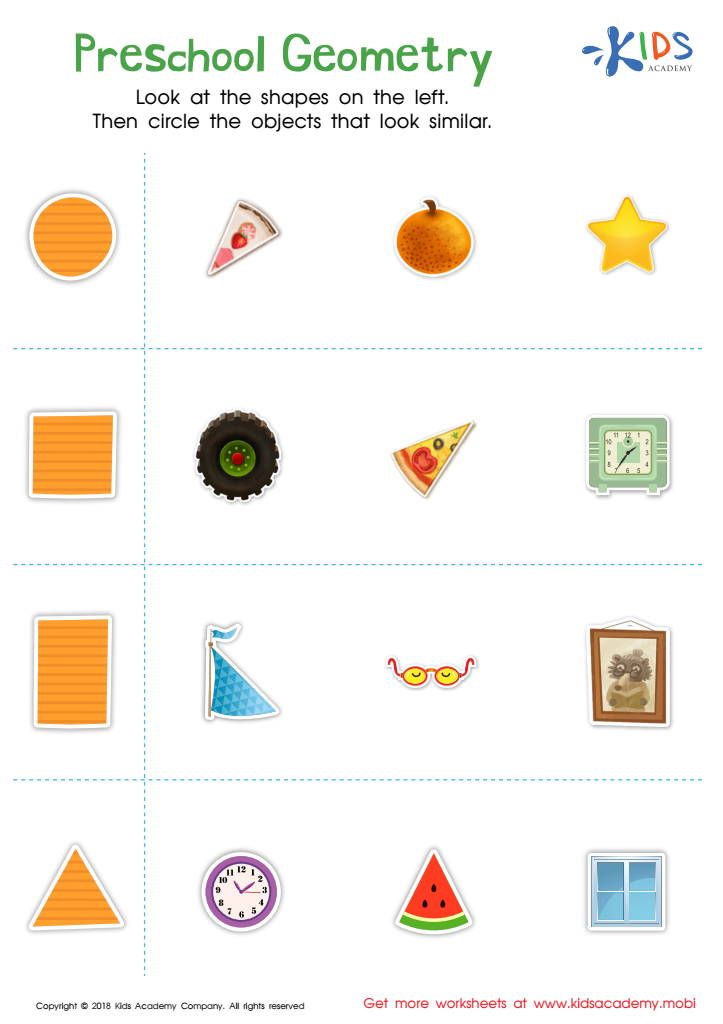
This worksheet gives 3rd graders the basics of geometry. Kids match everyday objects to shapes they know, e.g. an orange to a circle, a square to a slice of watermelon and a rectangle to a picture frame. It's a fun way to give them confidence to tackle more complex geometry in the future.
Preschool Geometry Worksheet
Worksheet
Geometric Shapes for Kids: Drawing Ovals And Triangles with Fun

Drawing Ovals And Triangles with Fun Printable
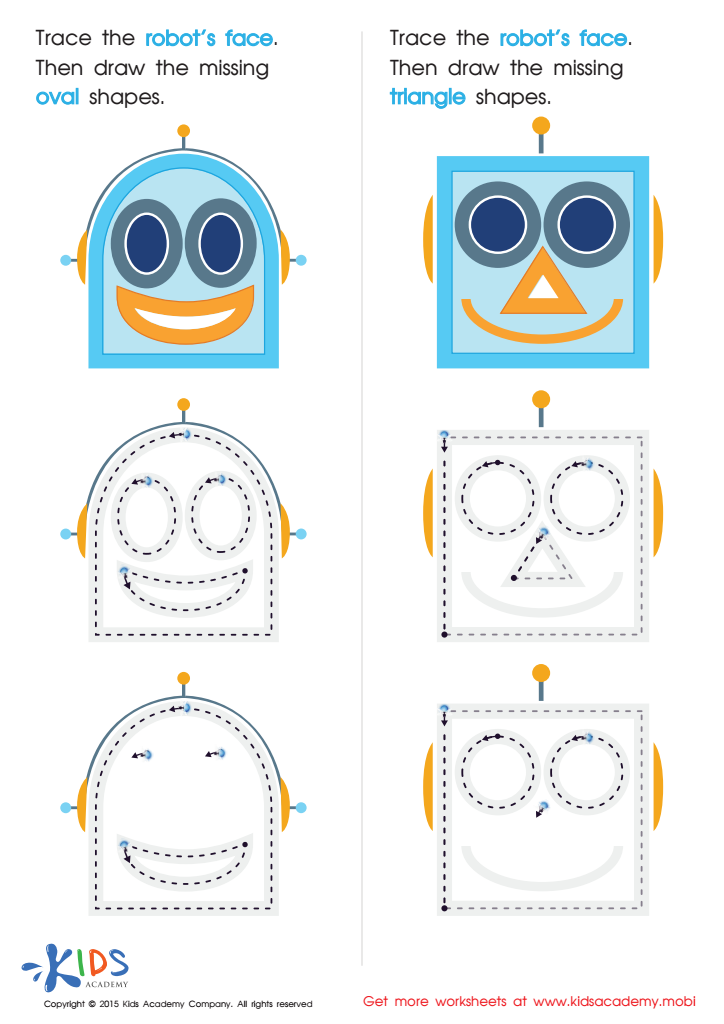
Trace the face and draw missing ovals and triangles. Test your memory and recall shapes' names. Check if you remember how to draw them!
Drawing Ovals And Triangles with Fun Printable
Worksheet
Size Comparison Worksheet

Classifying by Size Sorting Worksheet
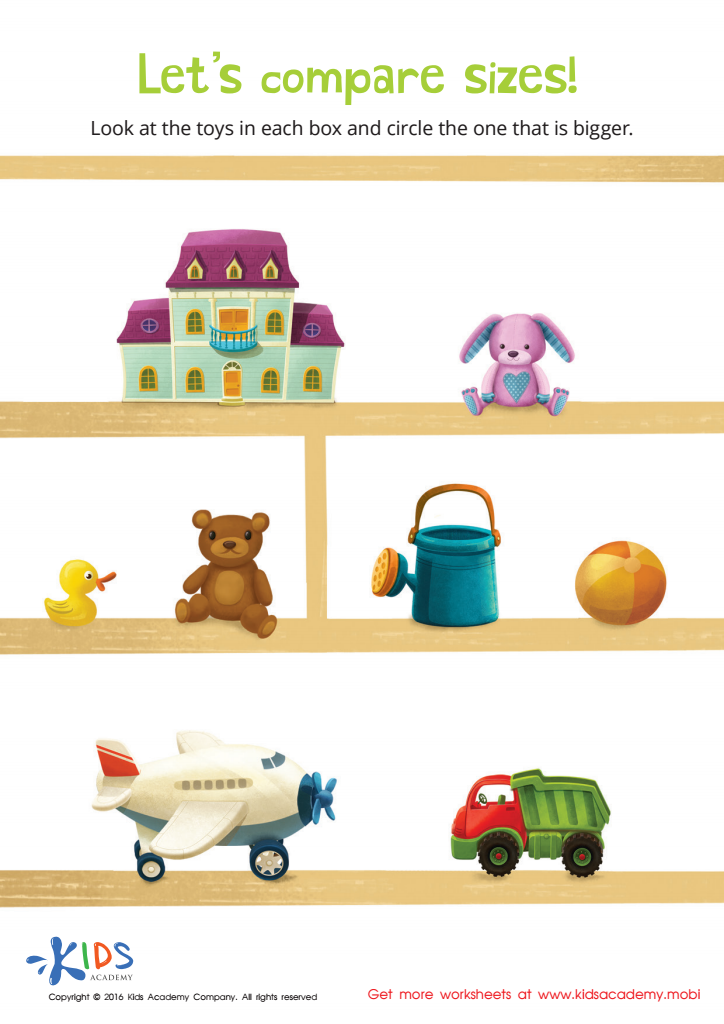
Help your preschooler recognize differences in size using this fun worksheet! Your child will engage in important spatial recognition and problem-solving skills while talking with you about objects that can be small or large. Enjoy the vibrant pictures together!
Classifying by Size Sorting Worksheet

Worksheet
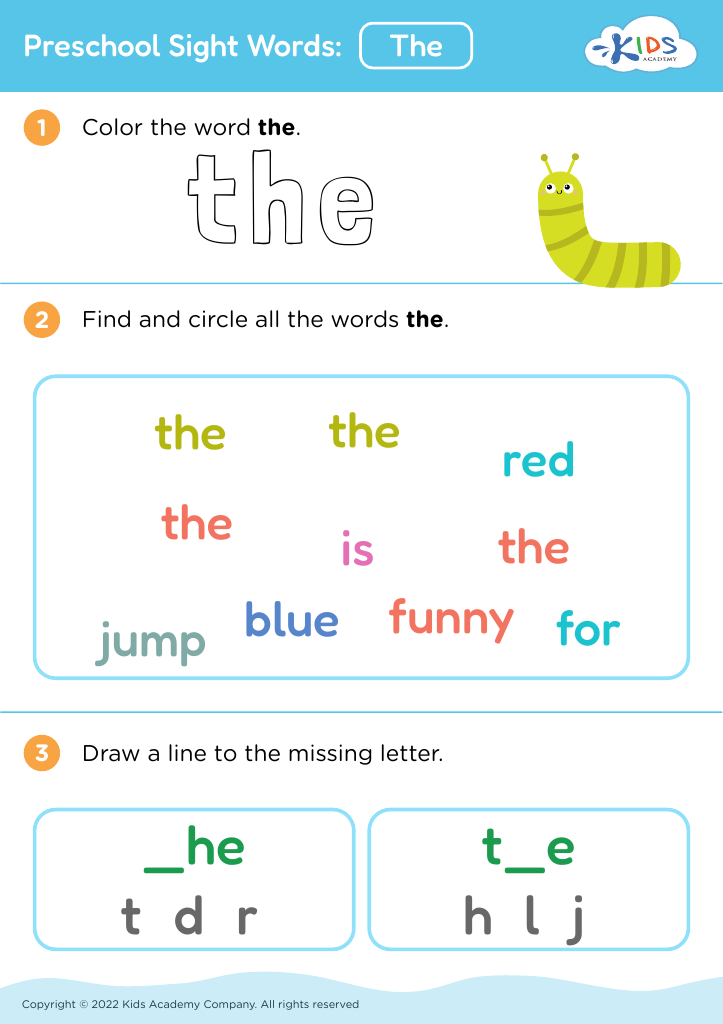
Preschool Sight Words: The

Preschool Sight Words: The

Preschool Sight Words: The
Worksheet


Understanding basic geometry is crucial for 3-4-year-olds as it lays the foundation for much of their future learning. Early exposure to shapes, sizes, and spatial awareness supports cognitive development and critical thinking. For instance, recognizing shapes helps children categorize and make sense of the world around them. Identifying a circle versus a square, for example, is more than just recognizing shapes; it's a step toward sorting, organizing, and problem solving skills they use in daily life.

Spatial awareness, developed from studying shapes and spatial relationships, enhances a child’s understanding of how objects fit and move in space. This is essential for tasks like correctly using utensils, navigating their environment, and even for more complex skills such as science, technology, engineering, and mathematics (STEM).

Moreover, geometry in early education is interlinked with other learning areas. Geometry can improve language skills as children describe and compare shapes. It nurtures creativity and art, resulting in unique drawings and constructions. All of this serves to encourage persistence and concentration.

Therefore, parents and teachers should focus on basic geometry to give children a solid start in not only math but breadth areas including critical thinking, language, and overall cognitive development, forming a versatile foundation for academic and life success.