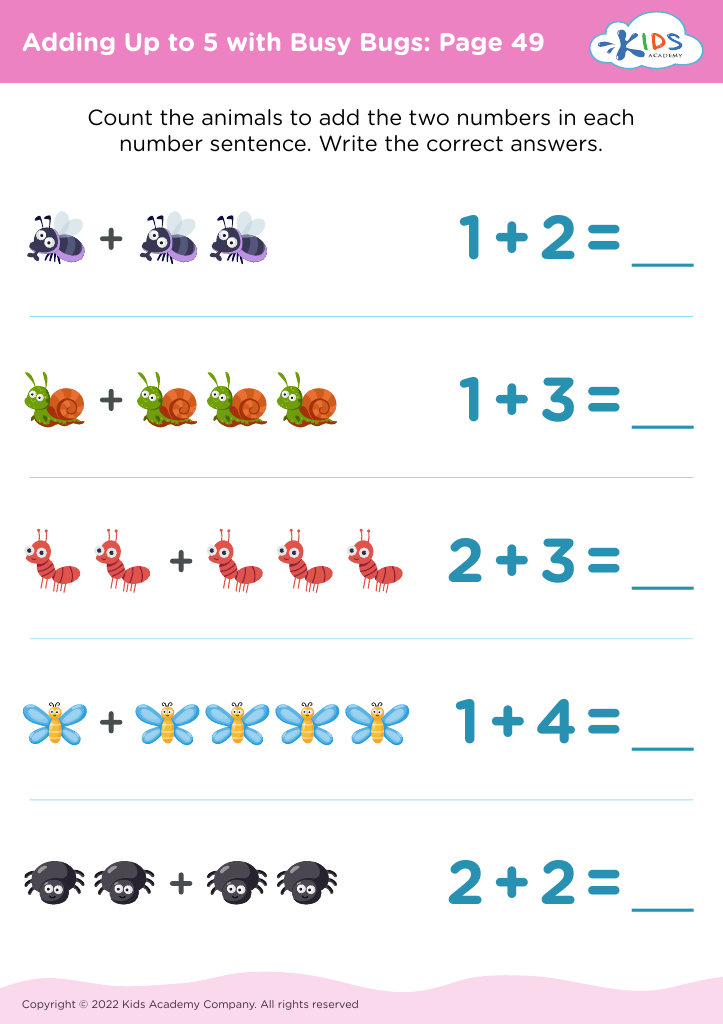
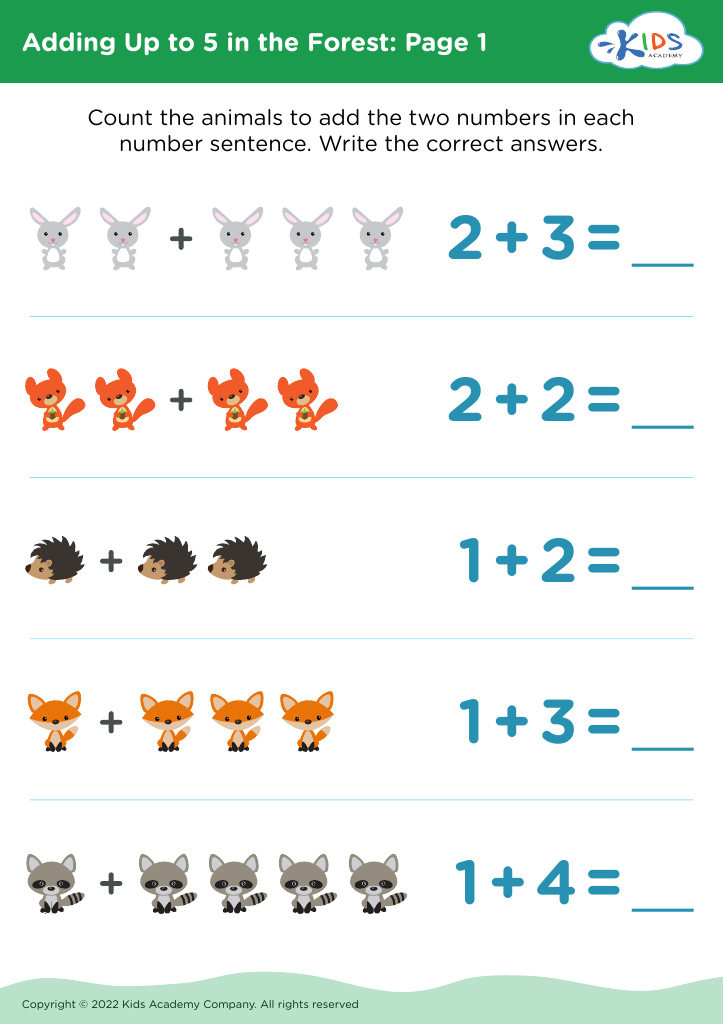
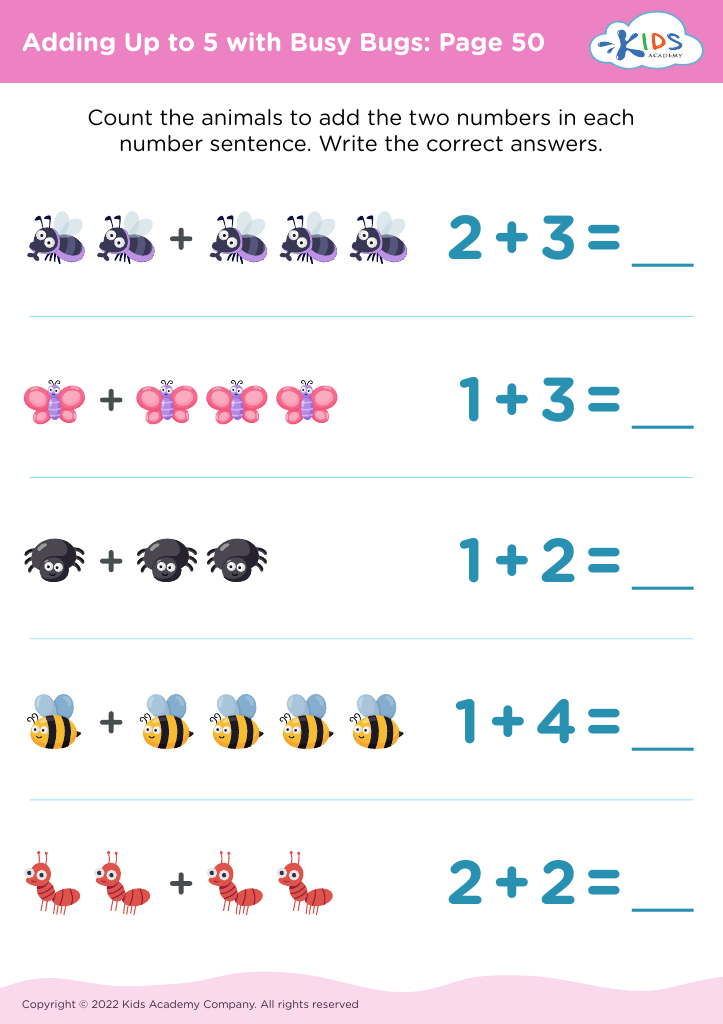
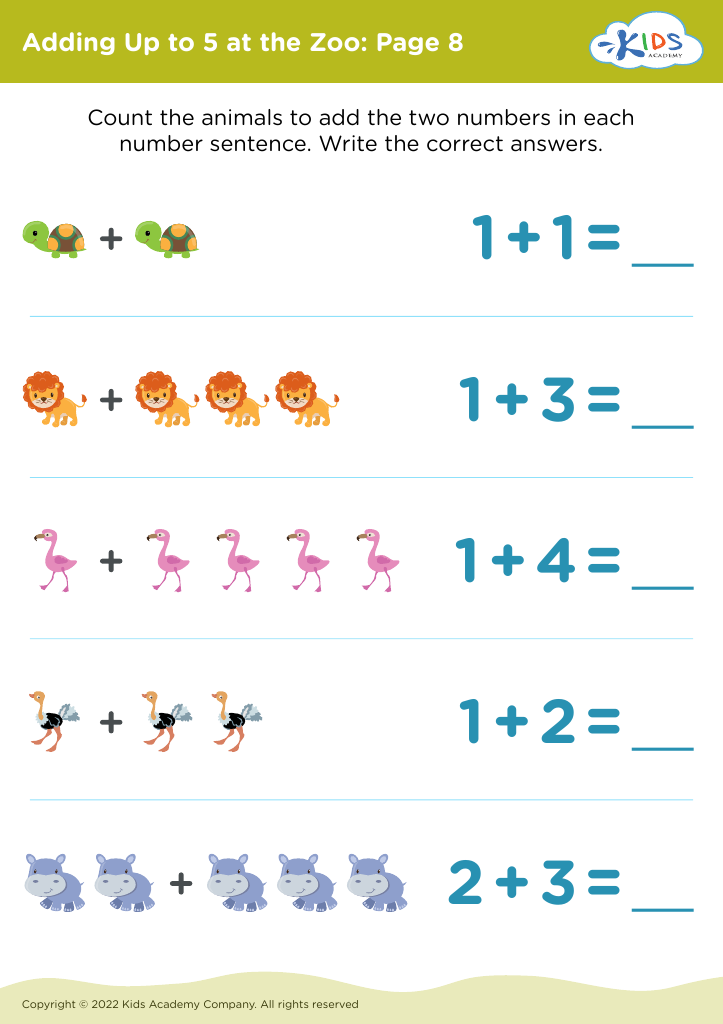
Discover our engaging Visual Learning Addition Worksheets designed specifically for ages 3-4! These worksheets provide young learners with a vibrant, interactive way to explore basic addition concepts through colorful images and fun activities. Tailored to capture their attention, each worksheet encourages kids to use visual aids to enhance their understanding of numbers and simple math operations. Perfect for home or preschool settings, our resources stimulate cognitive development and make learning math enjoyable. Equip your child with foundational skills early on, promoting confidence and a love for learning. Start their educational journey with our delightful addition worksheets today!
Check out this FREE Trial Lesson on Addition for age 3-4!

A

Favorites
With answer key
Interactive
  • 3-4
  • Visual Learning
  • Addition
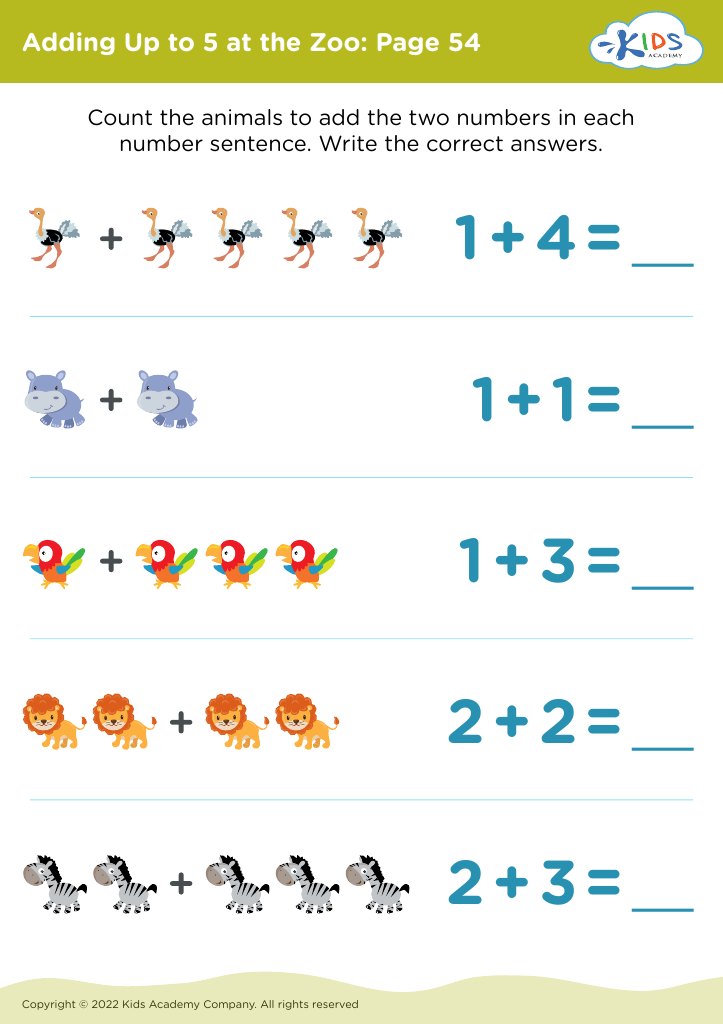
Adding Up to 5 at the Zoo: Page 54
Worksheet
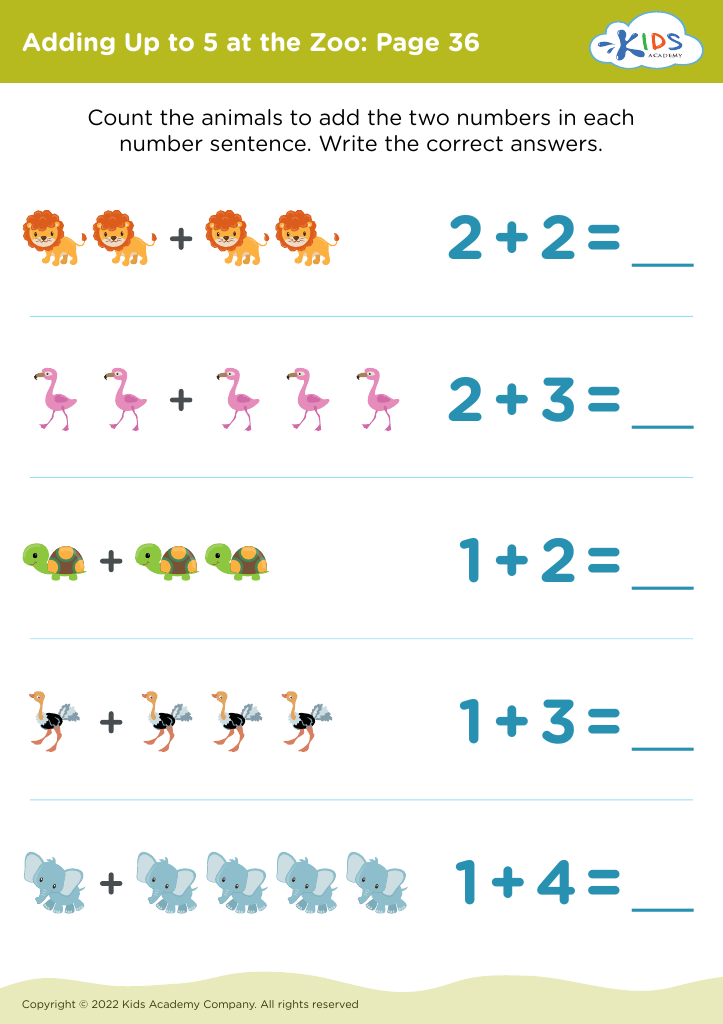
Adding Up to 5 at the Zoo: Page 36
Worksheet
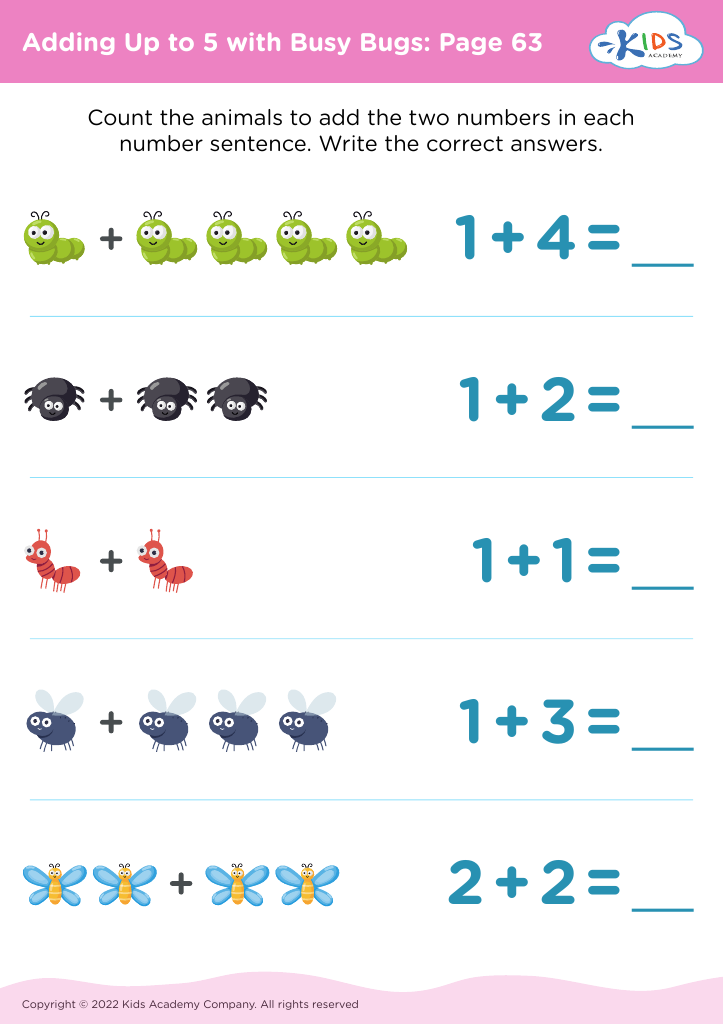
Adding Up to 5 with Busy Bugs: Page 63
Worksheet
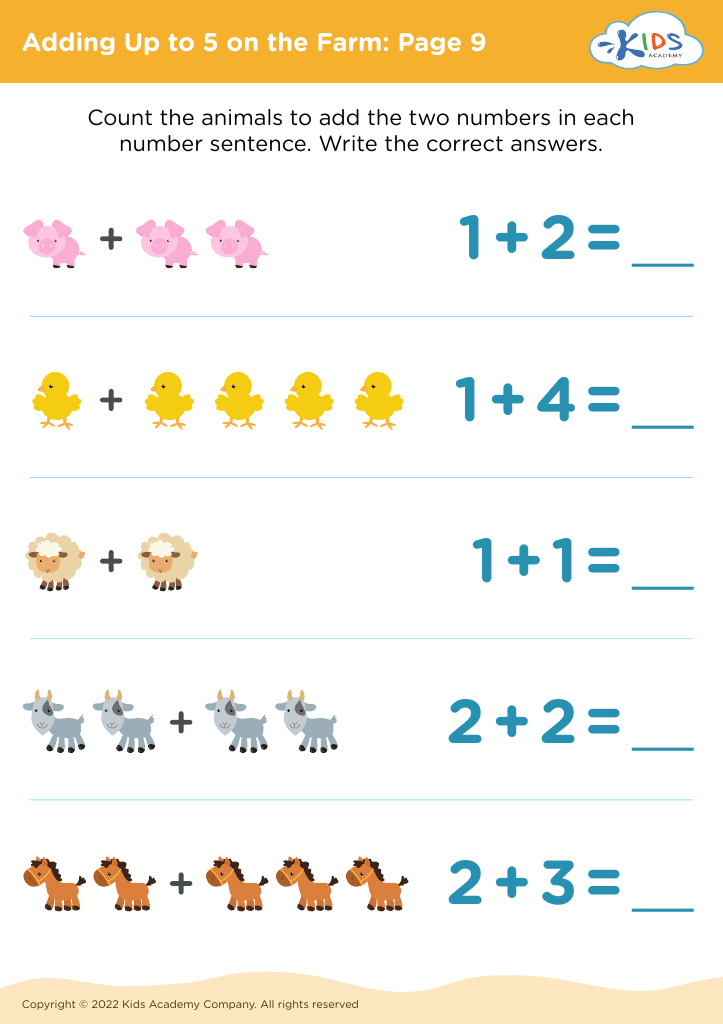
Adding Up to 5 on the Farm: Page 9
Worksheet
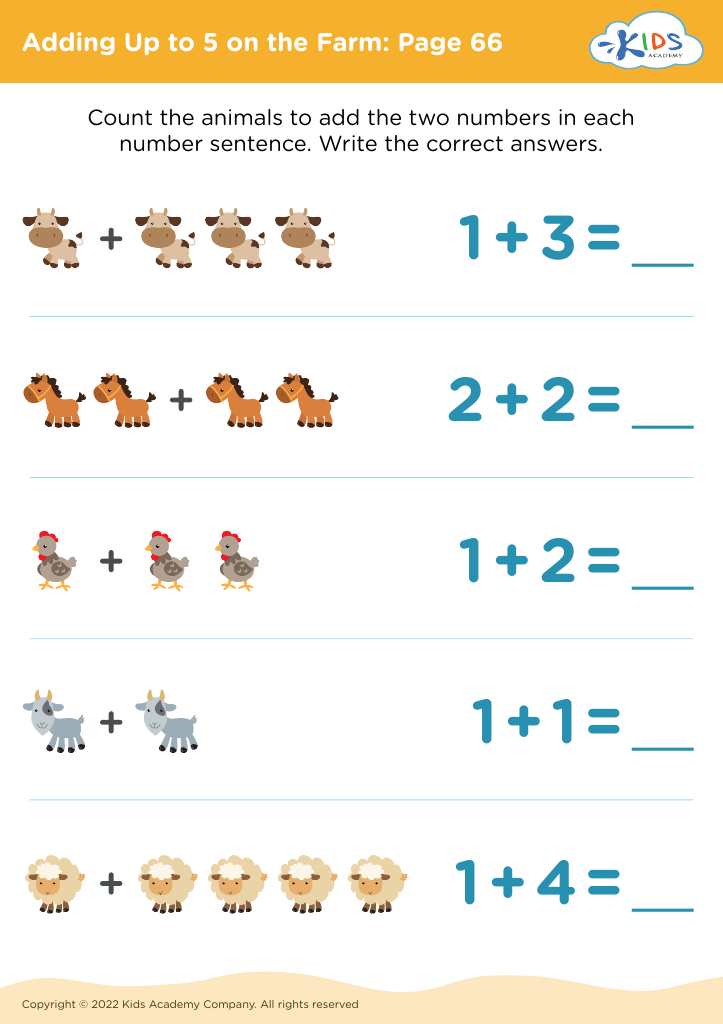
Adding Up to 5 on the Farm: Page 66
Worksheet
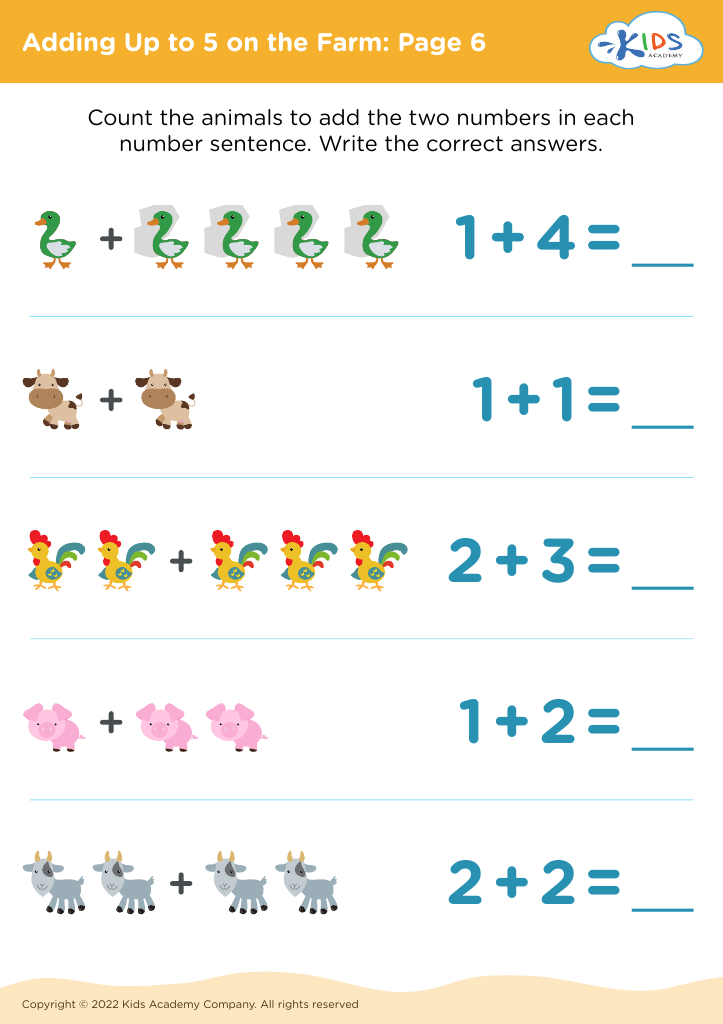
Adding Up to 5 on the Farm: Page 6
Worksheet
Butterfly Addition Worksheet

Butterfly Addition Worksheet

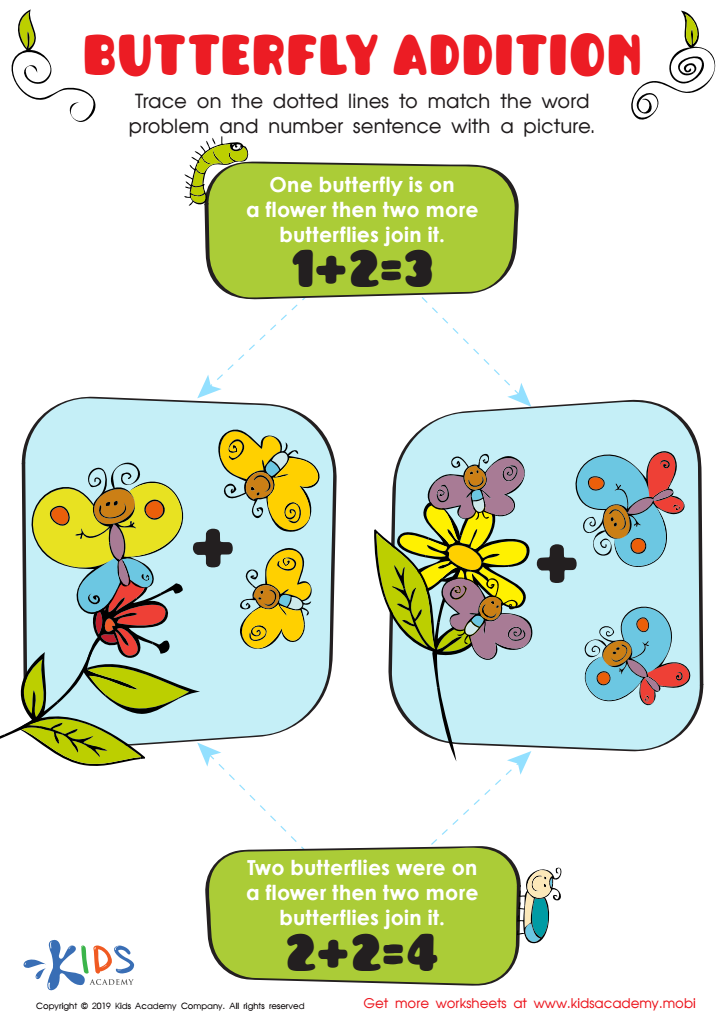
This tracing sheet is great for kids to work on math skills and have fun too. Read the word problems to them, then help them trace the dotted lines to match the problem and number sentence to a picture. Not only is it educational, it's beautiful too - your kids will love learning about butterflies!
Butterfly Addition Worksheet
Worksheet
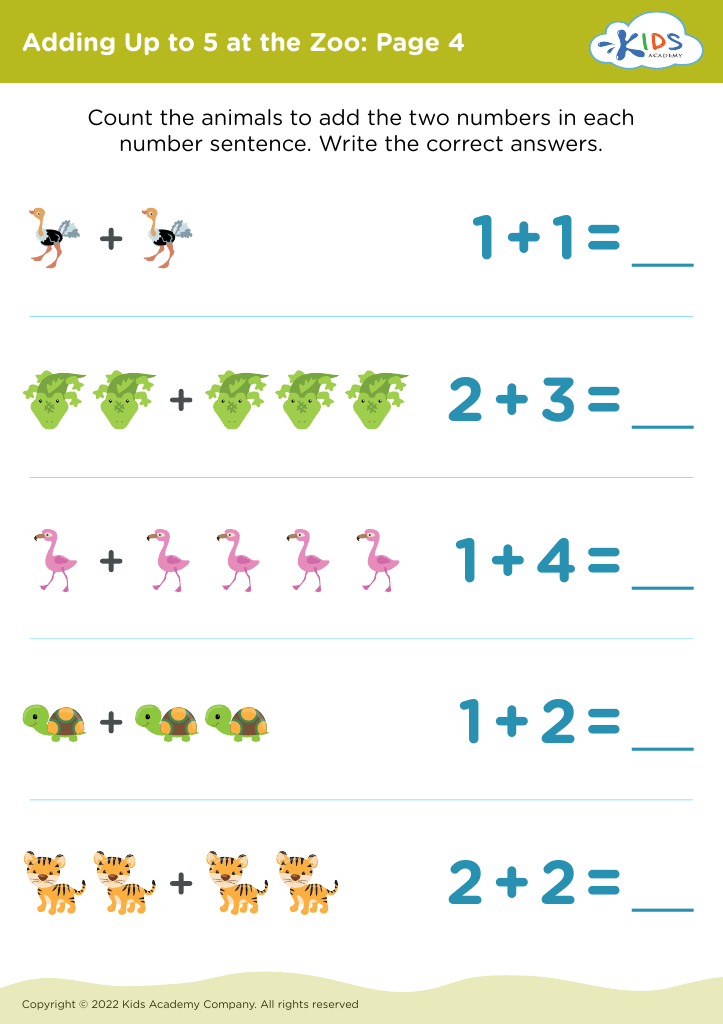
Adding Up to 5 at the Zoo: Page 4

Adding Up to 5 at the Zoo: Page 4

Adding Up to 5 at the Zoo: Page 4
Worksheet
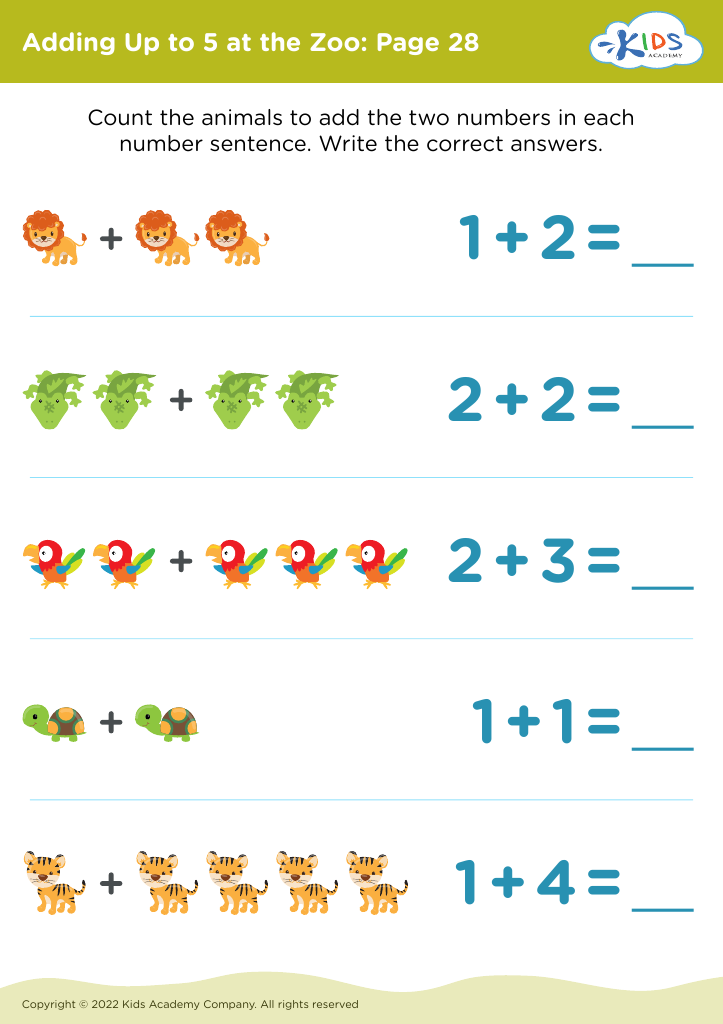
Adding Up to 5 at the Zoo: Page 28
Worksheet
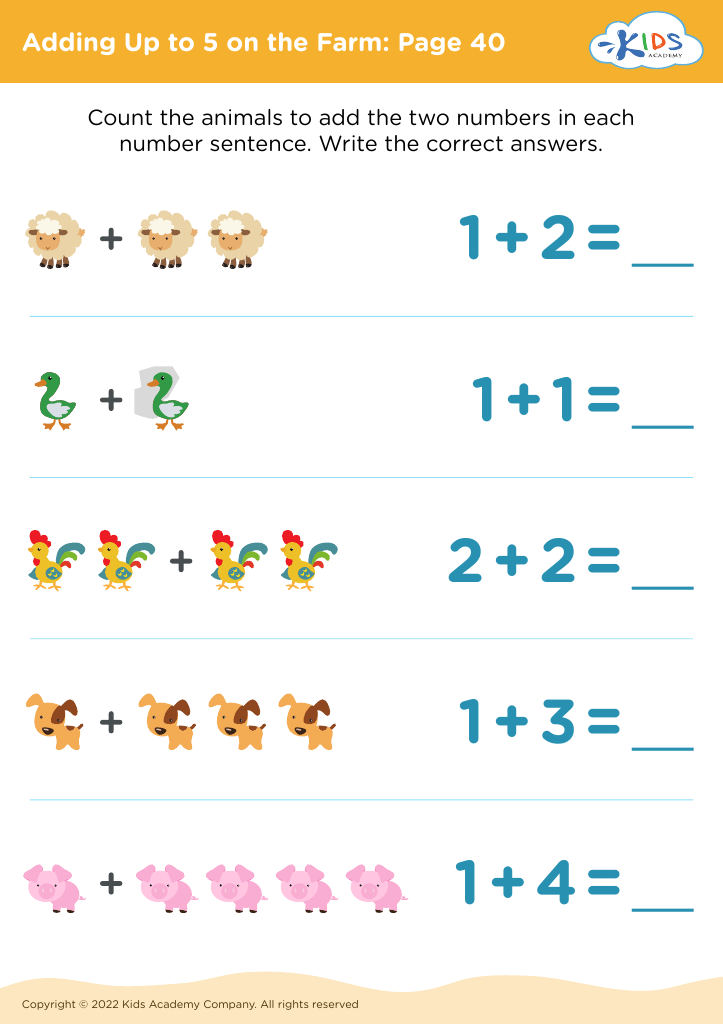
Adding Up to 5 on the Farm: Page 40
Worksheet
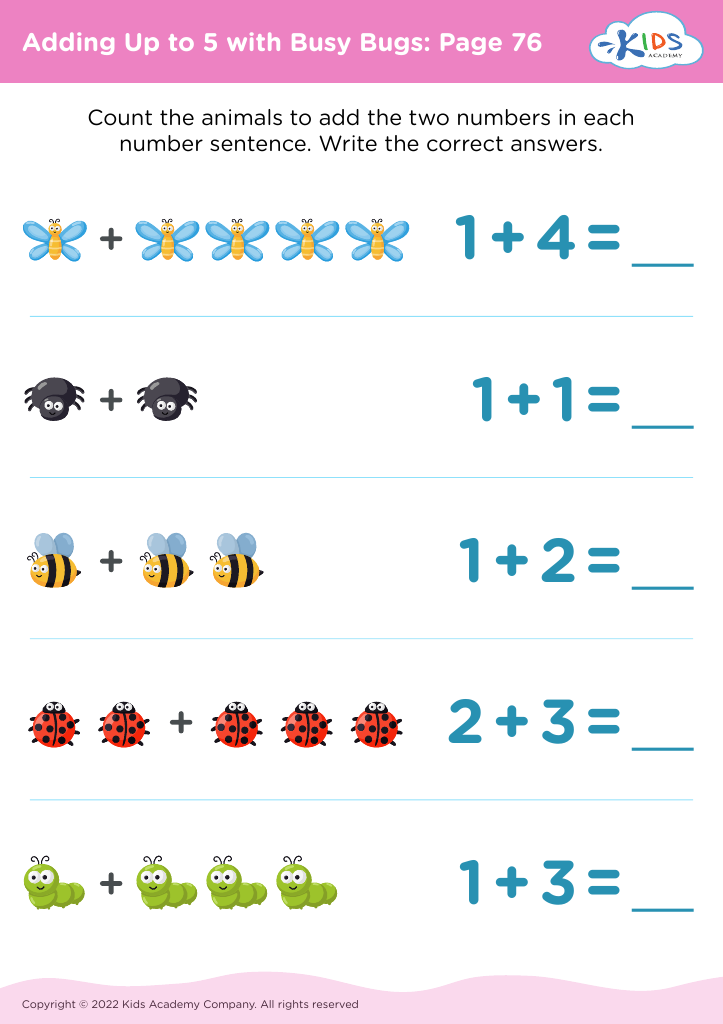
Adding Up to 5 with Busy Bugs: Page 76
Worksheet
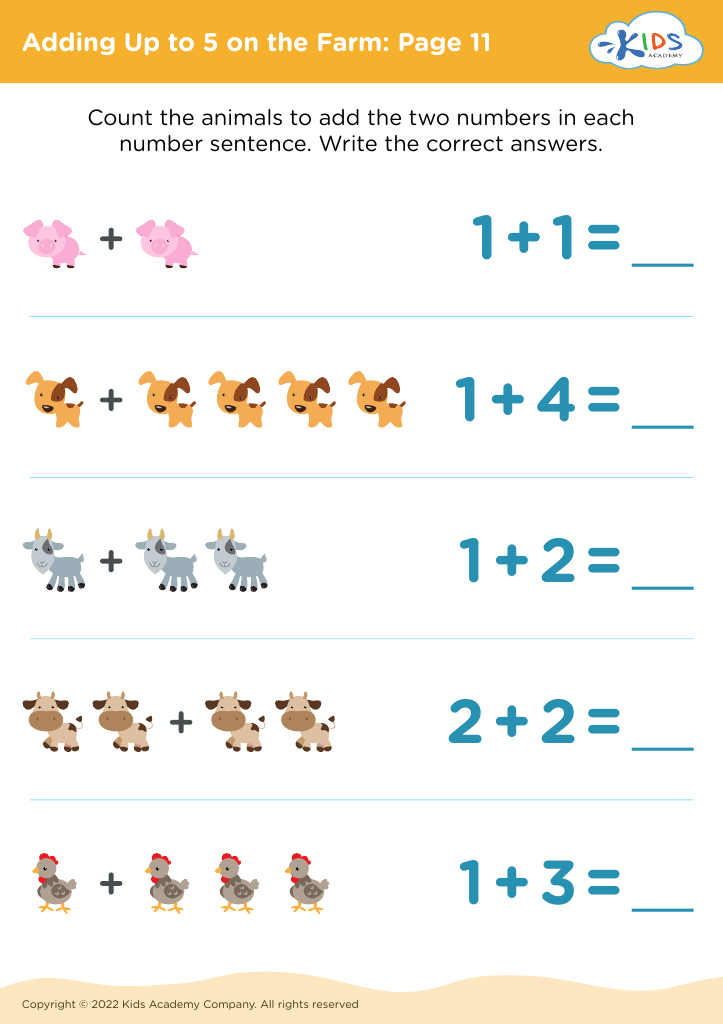
Adding Up to 5 on the Farm: Page 11
Worksheet
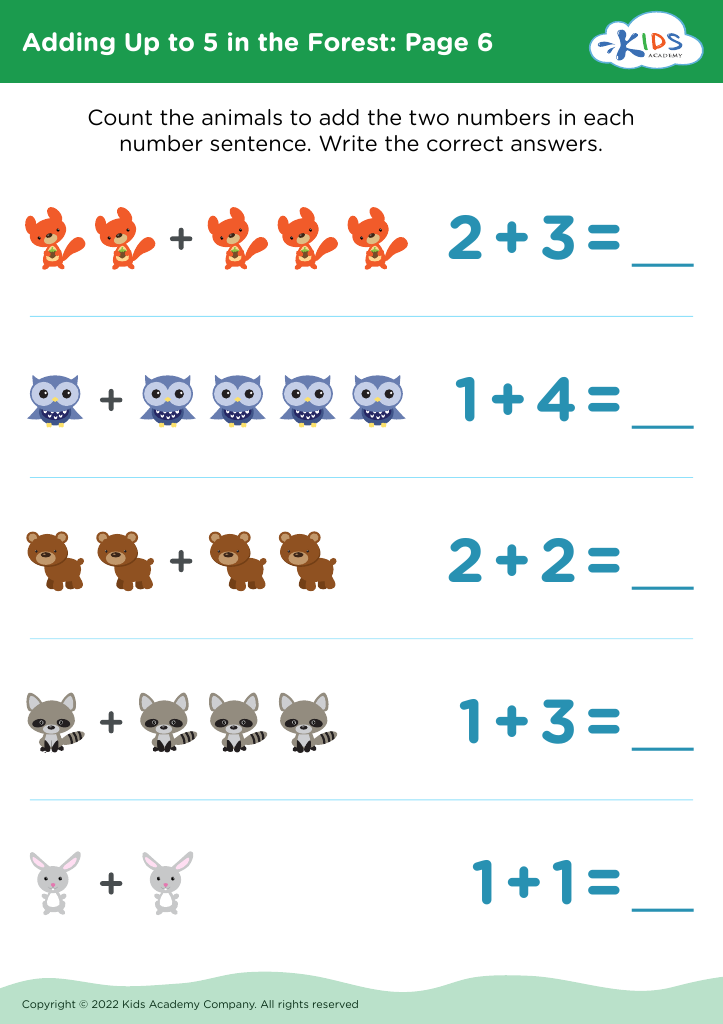
Adding Up to 5 in the Forest: Page 6
Worksheet
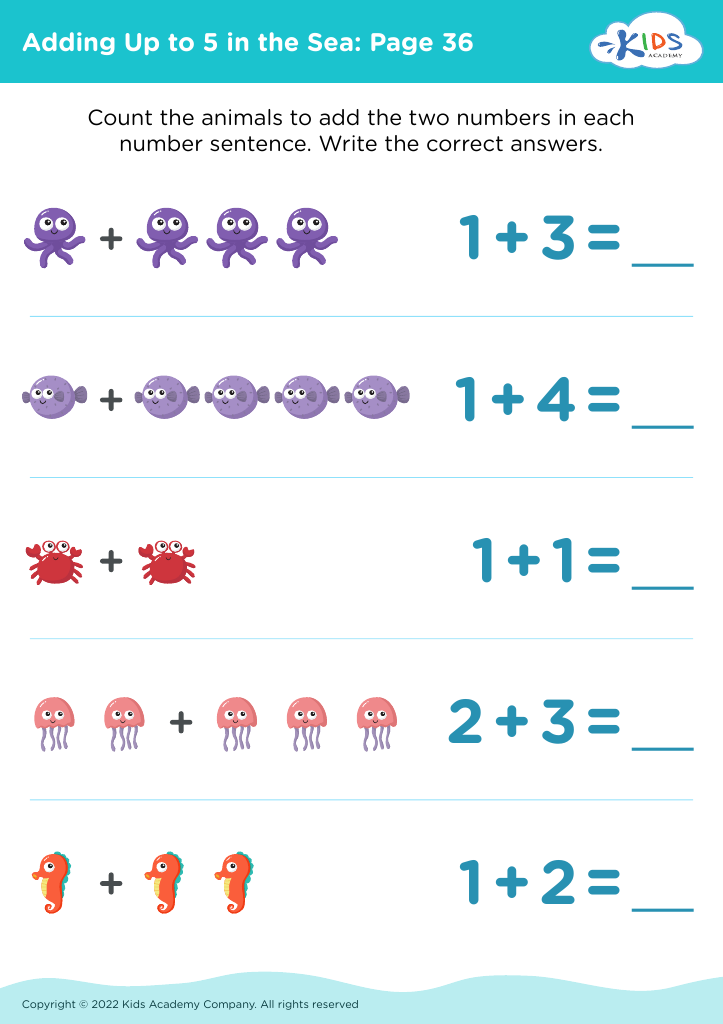
Adding Up to 5 in the Sea: Page 36
Worksheet
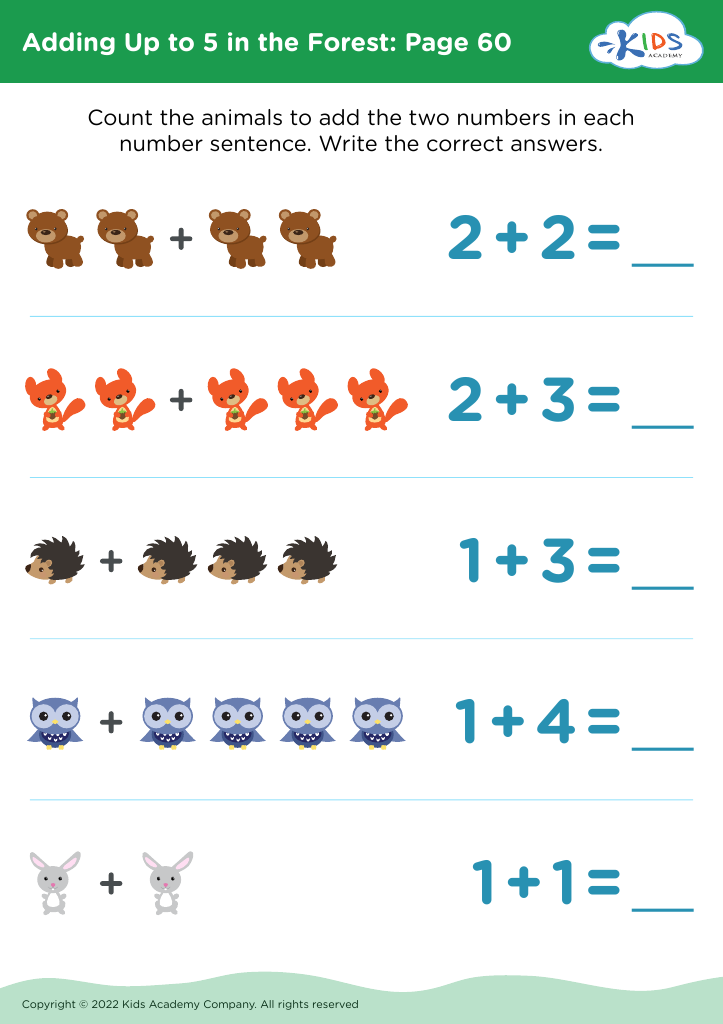
Adding Up to 5 in the Forest: Page 60
Worksheet
Adding Up to 5 with Busy Bugs: Page 49
Worksheet
Adding Up to 5 in the Forest: Page 1
Worksheet
Adding Up to 5 with Busy Bugs: Page 50
Worksheet
Adding Up to 5 at the Zoo: Page 8

Adding Up to 5 at the Zoo: Page 8

Adding Up to 5 at the Zoo: Page 8
Worksheet
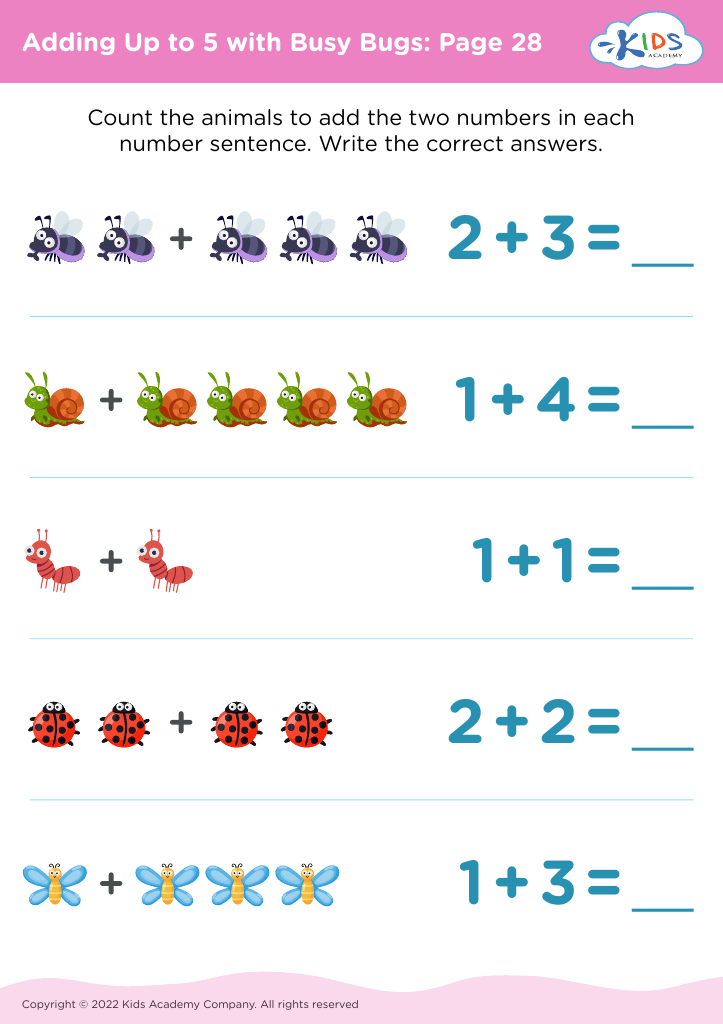
Adding Up to 5 with Busy Bugs: Page 28
Worksheet
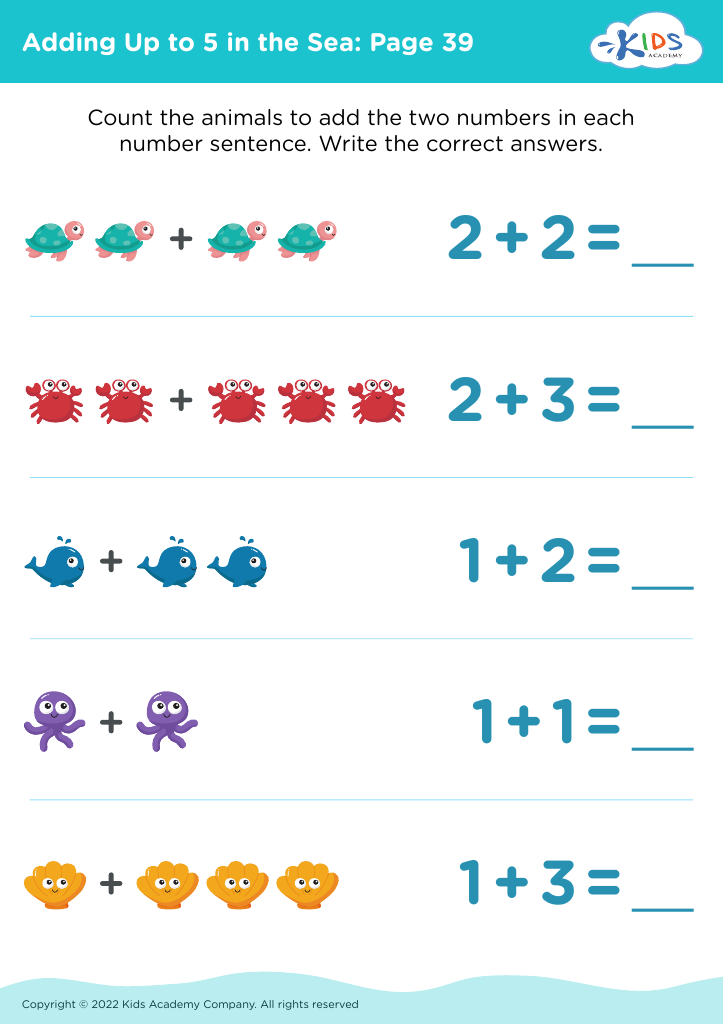
Adding Up to 5 in the Sea: Page 39
Worksheet
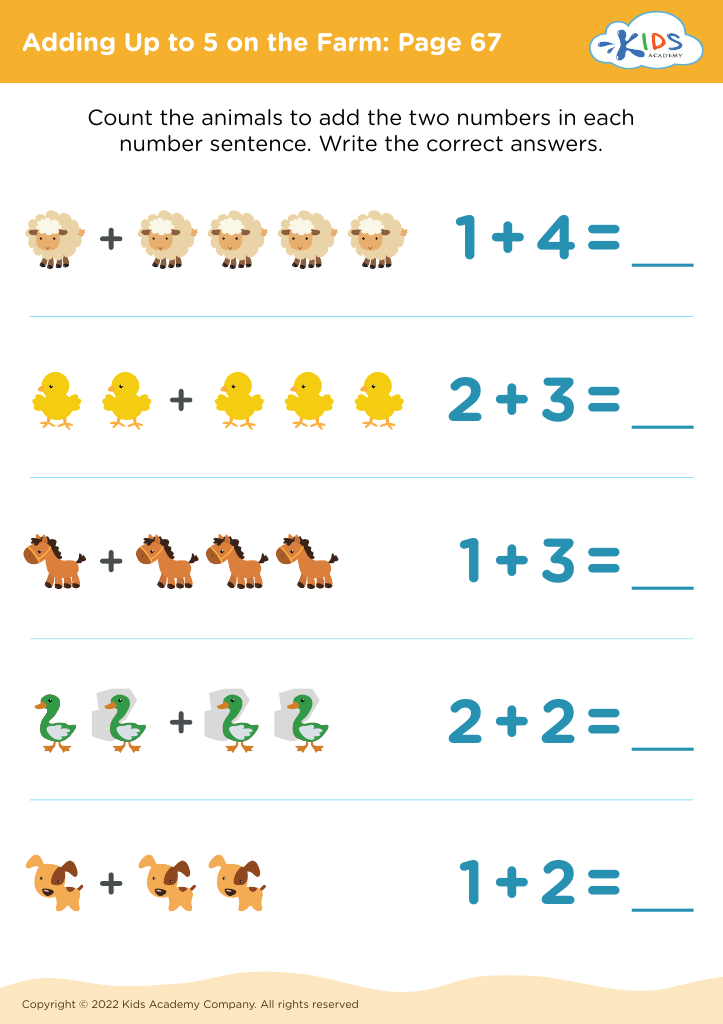
Adding Up to 5 on the Farm: Page 67
Worksheet
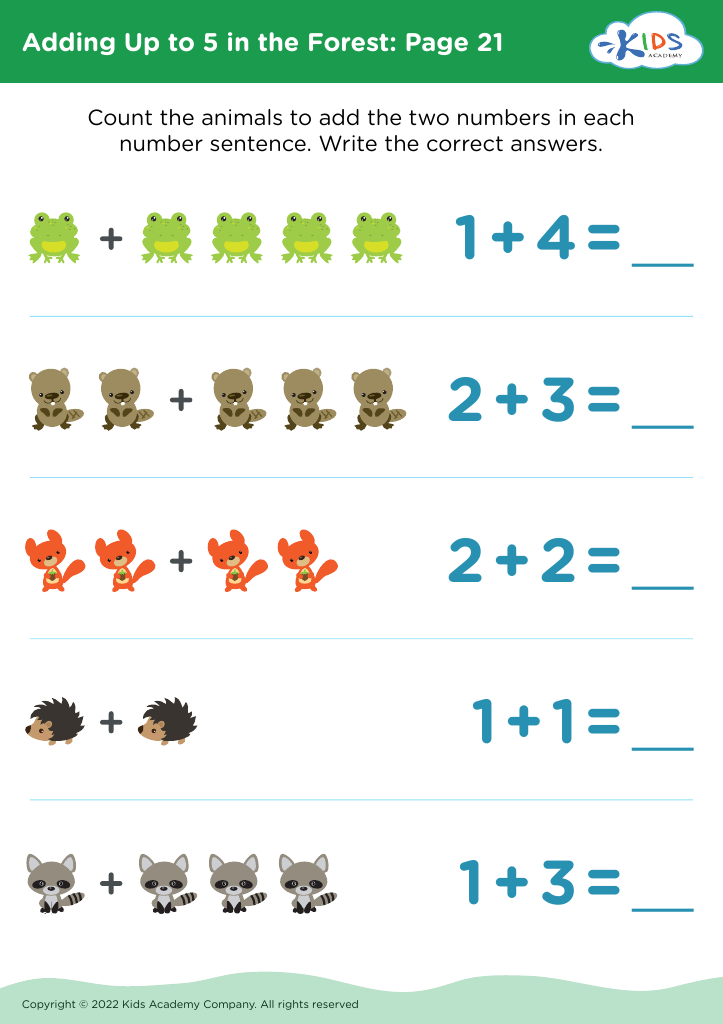
Adding Up to 5 in the Forest: Page 21
Worksheet
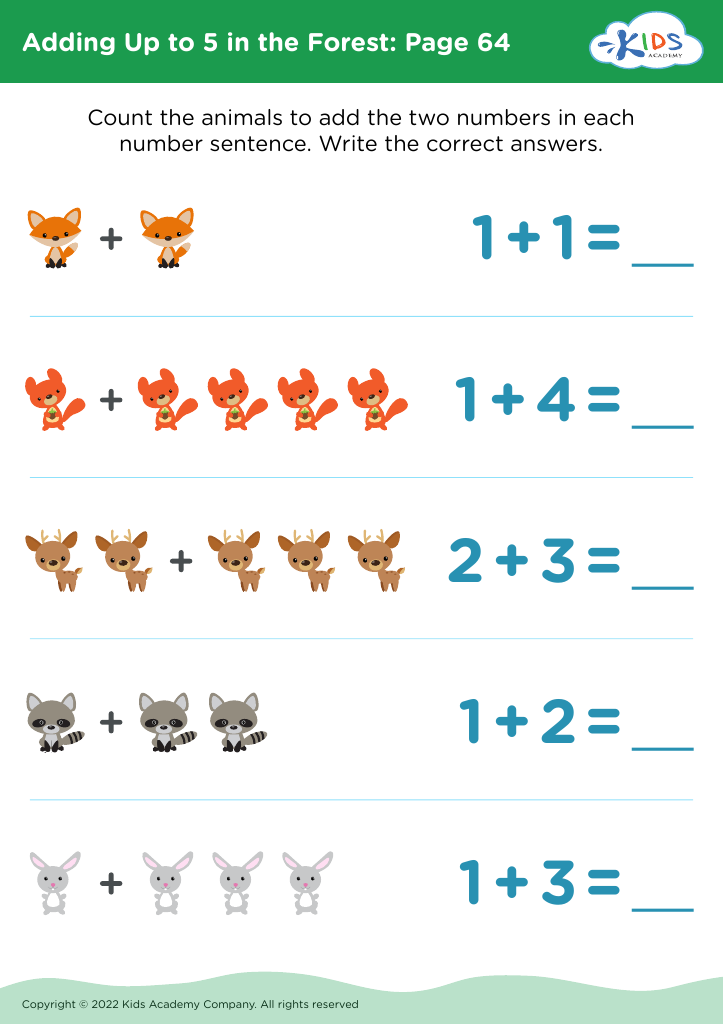
Adding Up to 5 in the Forest: Page 64
Worksheet


Visual learning, particularly in the context of teaching addition to children aged 3-4, is a powerful tool that can significantly enhance their understanding of mathematical concepts. At this early developmental stage, children are naturally curious and learn best through engaging, hands-on experiences. Utilizing visual aids—such as counting blocks, colored dots, or interactive games—can help them grasp basic addition by allowing them to see and manipulate numbers in a tangible way.

Parents and teachers should care about implementing visual learning strategies because these methods cater to young children's cognitive abilities and learning styles. Visual aids simplify complex ideas, making them accessible, and help build a solid foundation for future math skills. Additionally, this approach encourages active participation and can make learning more enjoyable, fostering a positive attitude toward mathematics.

By investing in visual learning for addition, parents and teachers not only support the development of essential numeracy skills but also promote critical thinking and problem-solving abilities. Establishing a love for learning at such an early age can instill lifelong mathematical confidence in children, preparing them for more advanced concepts in the years to come. Ultimately, visual learning is a key component of successful early education in mathematics.