Basic geometry understanding Geometry Worksheets for Ages 3-4
6 filtered results
-
From - To
Discover our engaging Basic Geometry Understanding Worksheets designed for children ages 3-4! These worksheets introduce young learners to fundamental geometric shapes, helping them recognize and distinguish between circles, squares, triangles, and more. With a variety of fun and interactive activities, children will develop essential skills such as shape identification, sorting, and matching. Our resources are perfect for parents and educators looking to inspire a love for math and foster early cognitive development. Encourage your child's curiosity and creativity as they explore the world of geometry in an enjoyable and supportive environment. Start their learning journey today!
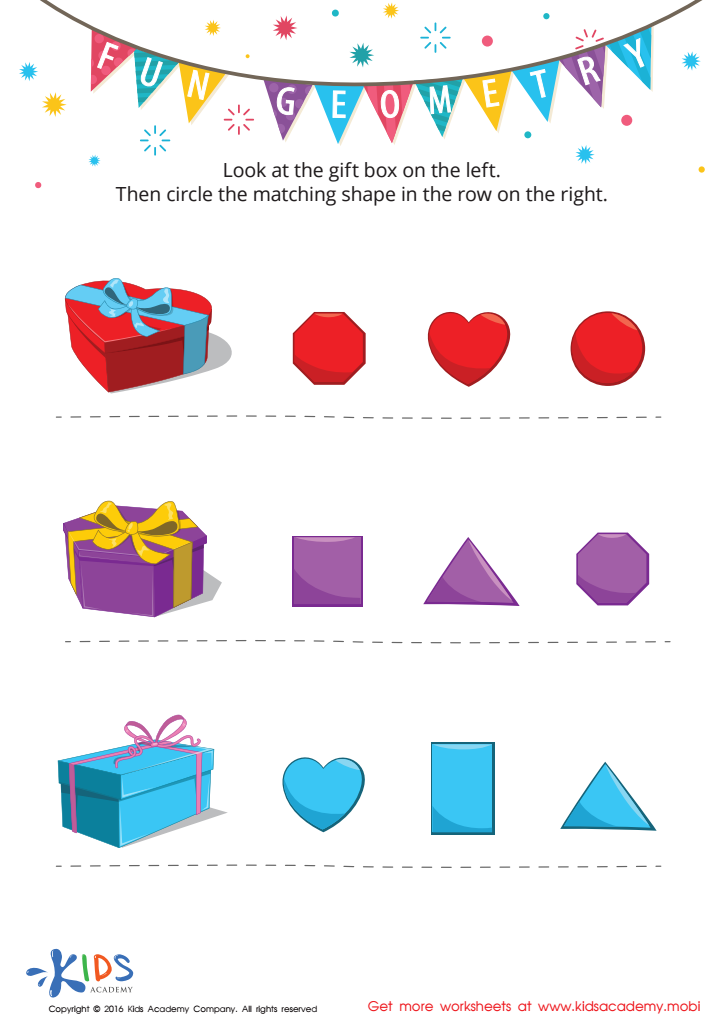
Fun Geometry Worksheet
 Assign to My Students











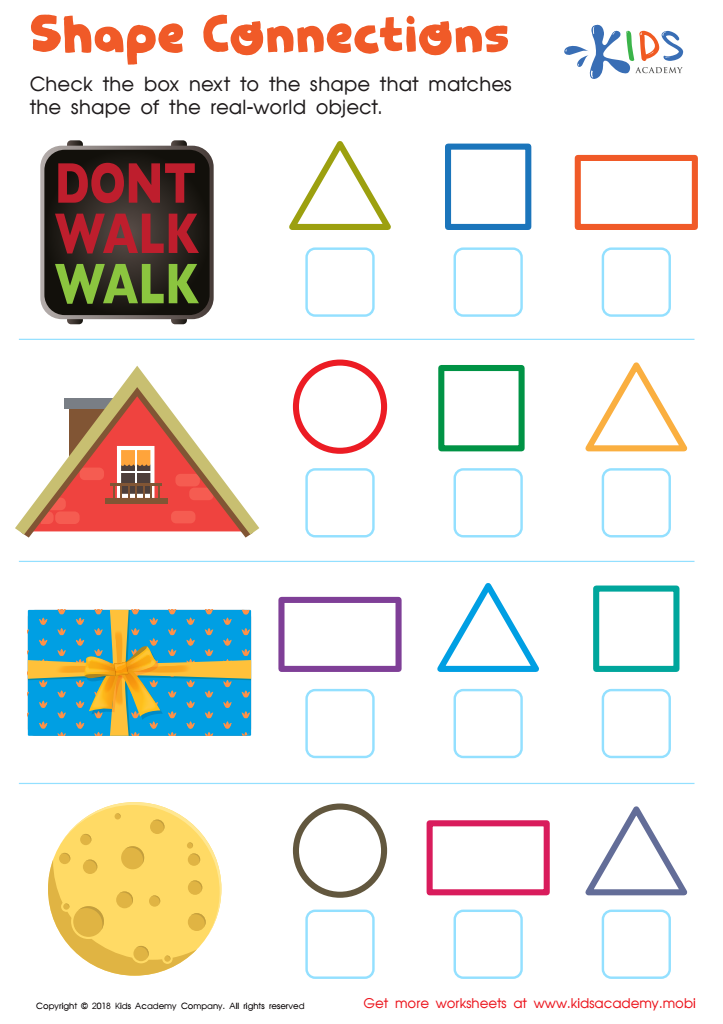
Shape Connections Worksheet
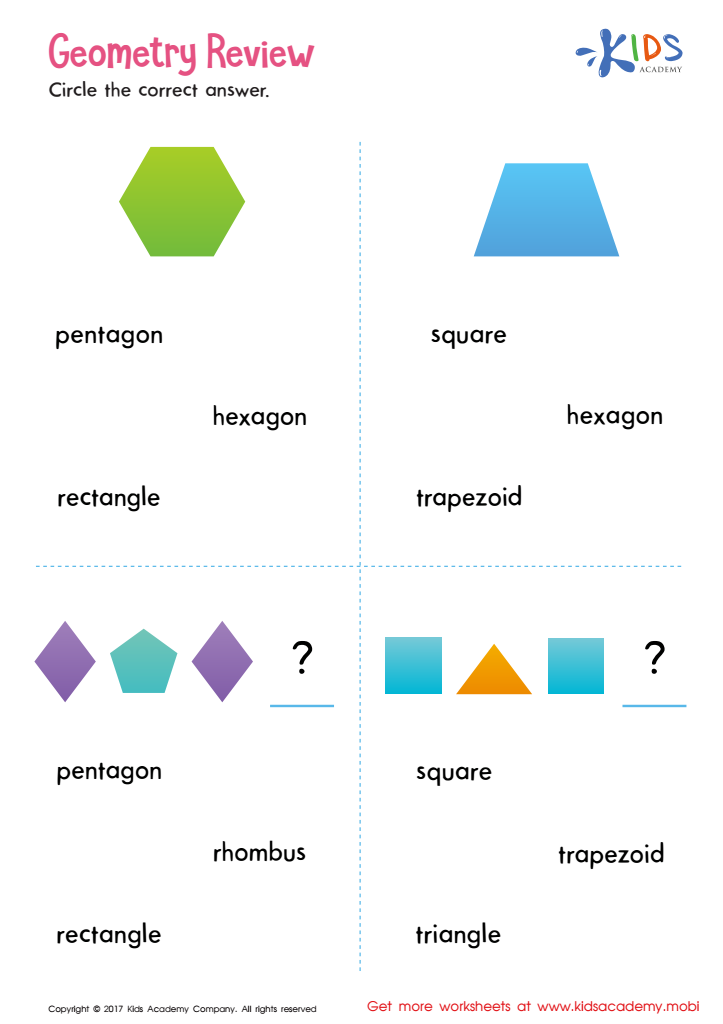
Geometry Review Printable
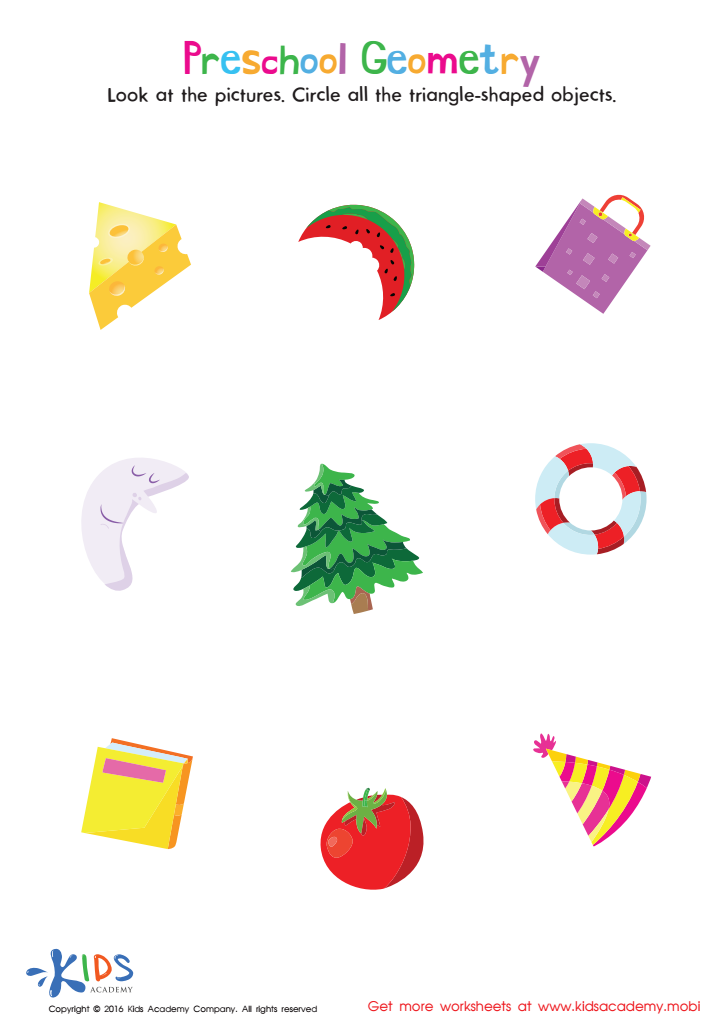
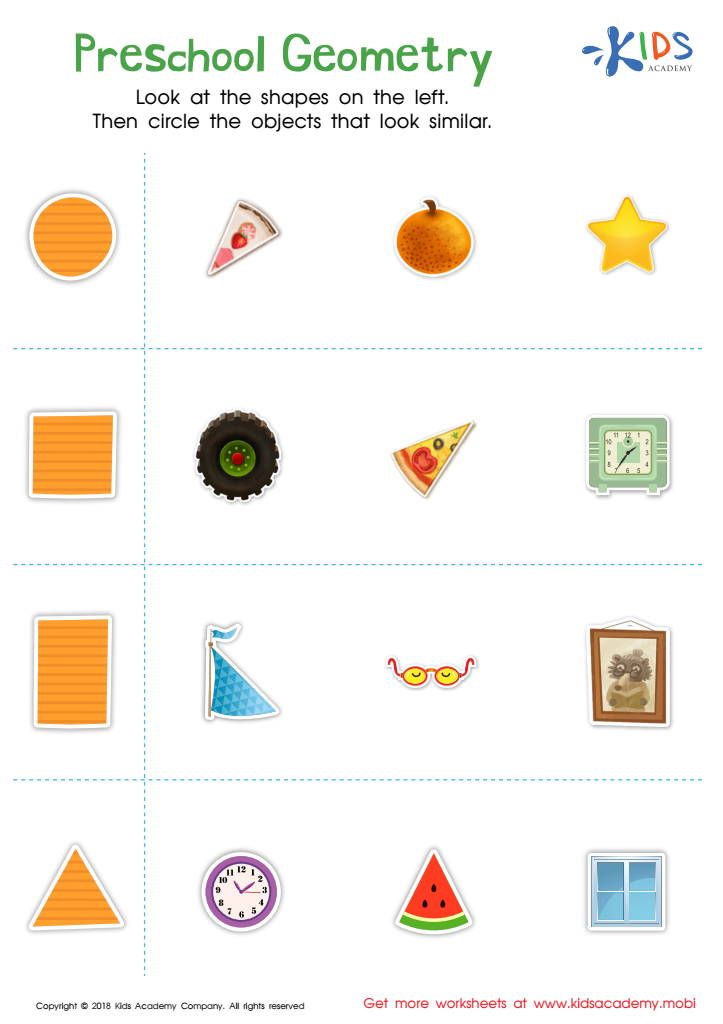
Preschool Geometry Worksheet
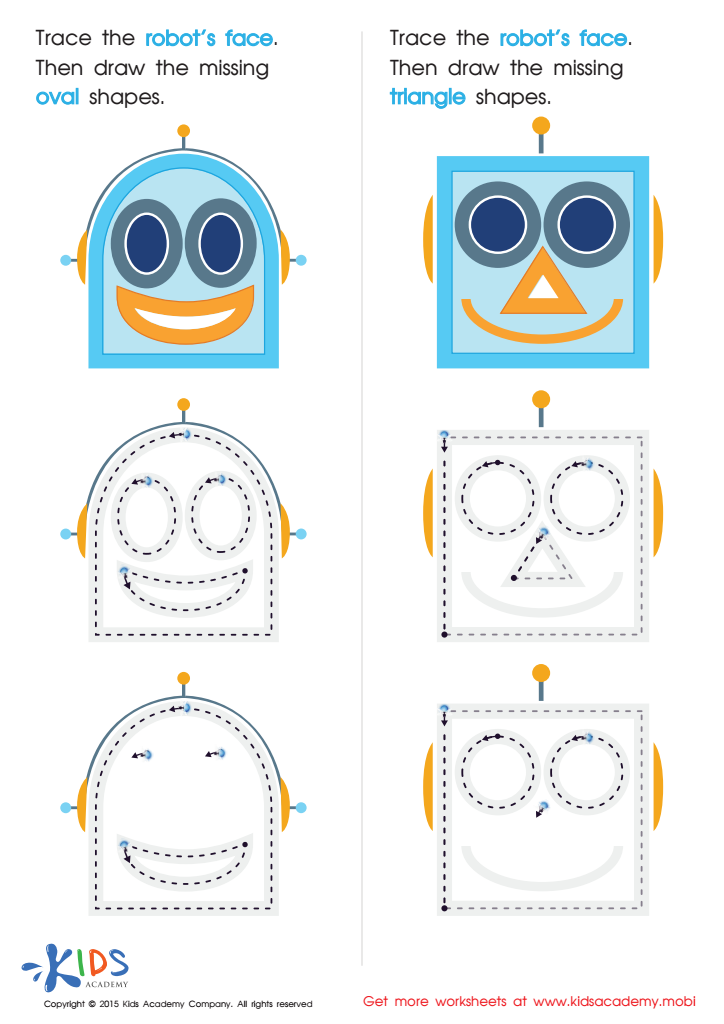
Drawing Ovals And Triangles with Fun Printable








Understanding basic geometry is essential for children aged 3 to 4 as it lays the foundation for their cognitive development and problem-solving skills. During this stage, children typically explore shapes, sizes, and spatial relationships through play and interaction, which is crucial for their overall growth.
Firstly, recognizing and naming basic shapes like circles, squares, and triangles enhances children's language skills and vocabulary. When parents or teachers engage in discussions about shapes encountered in daily life, it fosters communication and encourages an understanding of the world around them.
Additionally, geometry supports critical thinking. As children manipulate physical objects, they learn to categorize and compare, developing analytical skills that are vital for later math learning. Furthermore, activities like building with blocks or piecing together puzzles promote hand-eye coordination and fine motor skills while enriching spatial awareness.
Moreover, engaging with geometry boosts creativity. Construction play enables children to visualize and create structures, fostering innovative thinking.
Overall, a strong grasp of basic geometry encourages exploration, nurtures curiosity, and promotes a love for learning. By investing time and resources into this foundational aspect of education, parents and educators can significantly impact a child’s future academic journey and lifelong skills.








