Categorization skills Matching Worksheets for Ages 3-4
6 filtered results
-
From - To
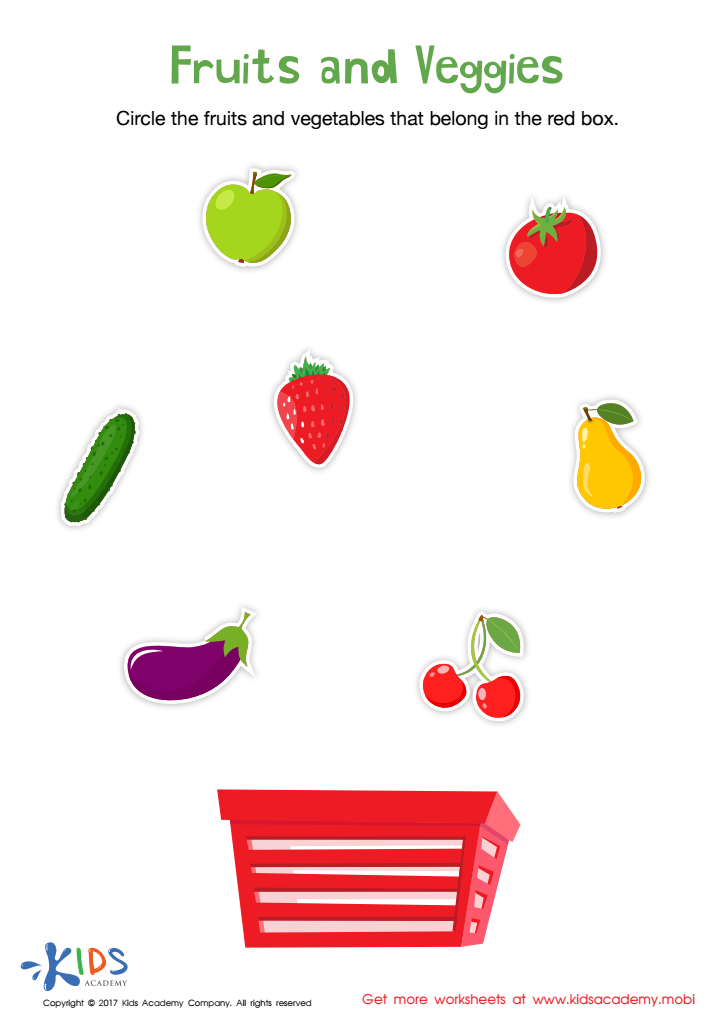
Enhance your child's cognitive development with our engaging Categorization Skills Matching Worksheets, designed specifically for ages 3-4. These thoughtfully crafted worksheets provide exciting activities that help young learners practice sorting and matching objects by various attributes such as size, shape, and color. Perfect for developing essential early math and critical thinking skills, our user-friendly, printable resources turn learning into playtime. Ideal for both parents and educators, these worksheets ensure a fun, interactive experience that lays the foundation for future academic success. Download today and witness your child's categorization skills blossom effortlessly!
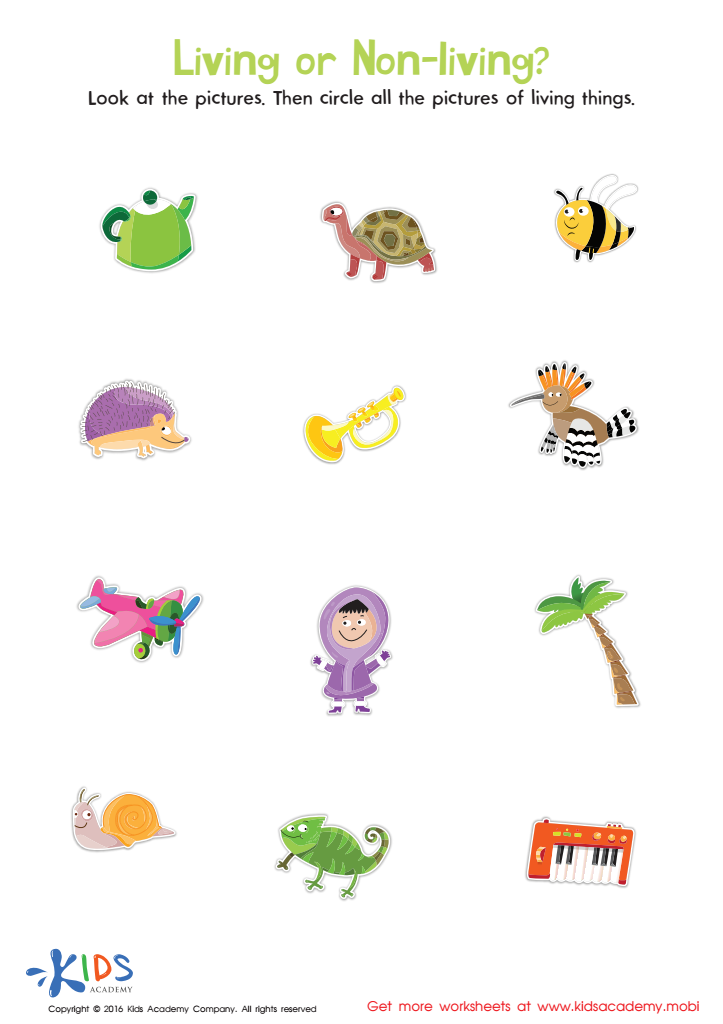
Identifying Living and Non–living Things Sorting Worksheet
 Assign to My Students
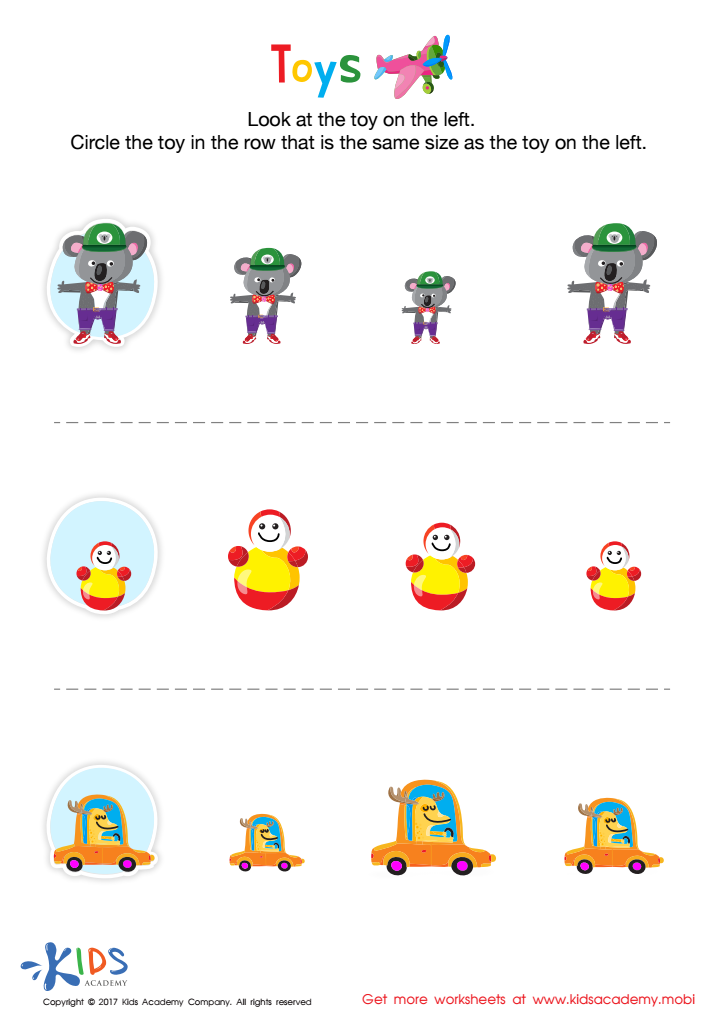
Matching: Classifying Toys by Size Worksheet
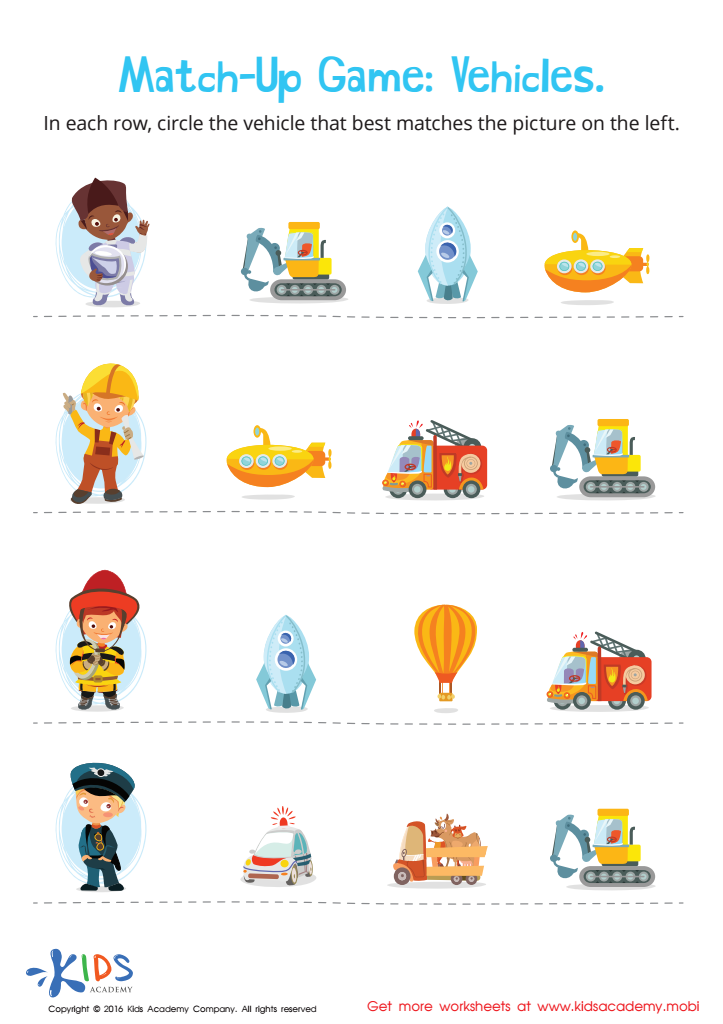
Vehicles Worksheet
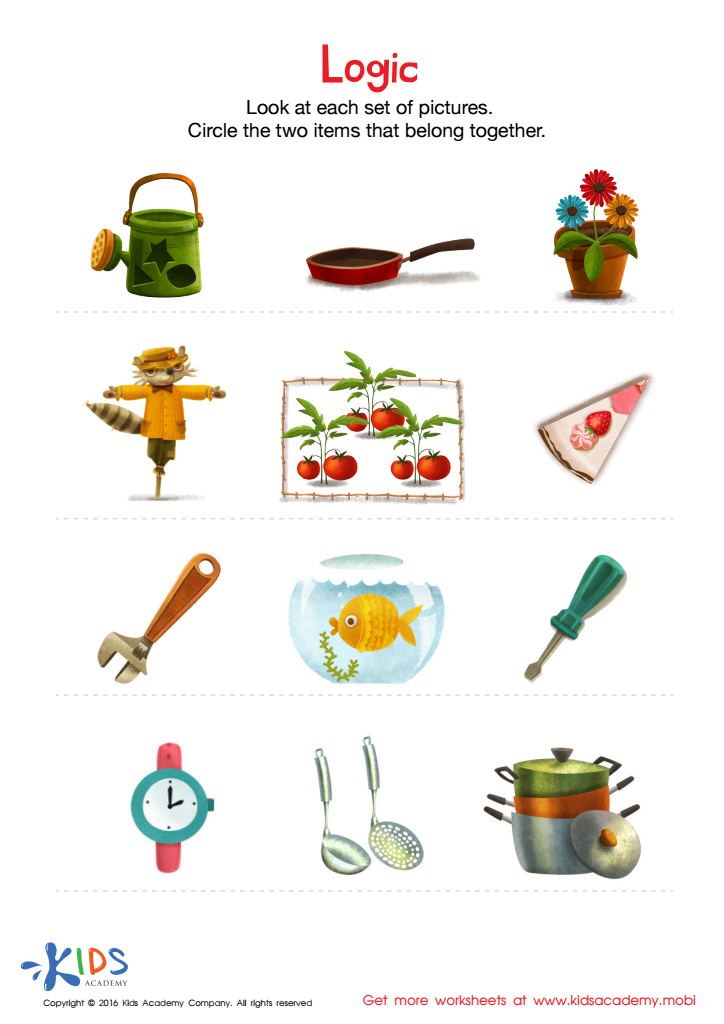
Logic Game Sorting Worksheet







Categorization skills and matching are foundational cognitive abilities crucial for young children of ages 3-4. When children practice categorization, they learn to identify relationships and similarities between objects which fosters logical thinking and supports problem-solving abilities. It sharpens their observation skills as they differentiate between shapes, colors, sizes, and other attributes.
Moreover, categorizing forms the basis of acquiring more complex academic notions later on, such as sorting numbers and understanding grammar. For example, recognizing that farm animals belong in a different category compared to zoo animals aids vocabulary expansion and language development.
Additionally, matching activities boost children's memory and attention to detail. As they find and connect related objects, they practice patience and hone their focusing abilities. This is essential for staying attentive in classroom settings.
Furthermore, these activities offer emotional benefits. Successfully categorizing and matching items nurtures confidence and a sense of accomplishment. Interactive games in categorization can also instill cooperative skills if performed in groups, relevant for developing social abilities.
Therefore, parents and teachers should closely support and engage children in categorization and matching activities to nourish cognitive growth, enhance learning capabilities, and build a strong foundation for future educational success. The ability to classify and recognize patterns serves as a backbone for various aspects of personal and academic development.








