Fine Motor Skills Tracing Numbers Worksheets for Ages 3-4
10 filtered results
-
From - To
Enhance early learning with our Fine Motor Skills Tracing Numbers Worksheets, designed specifically for ages 3-4. These expertly curated worksheets from Kids Academy develop essential fine motor skills, paving the way for strong handwriting and numeracy foundations. Through fun and engaging activities, young learners can trace numbers while refining their finger control and hand-eye coordination. Perfect for home or classroom settings, these resources provide a playful yet educational approach to early math learning. Equip your little ones with the skills they need for future success with our thoughtfully crafted tracing numbers worksheets.
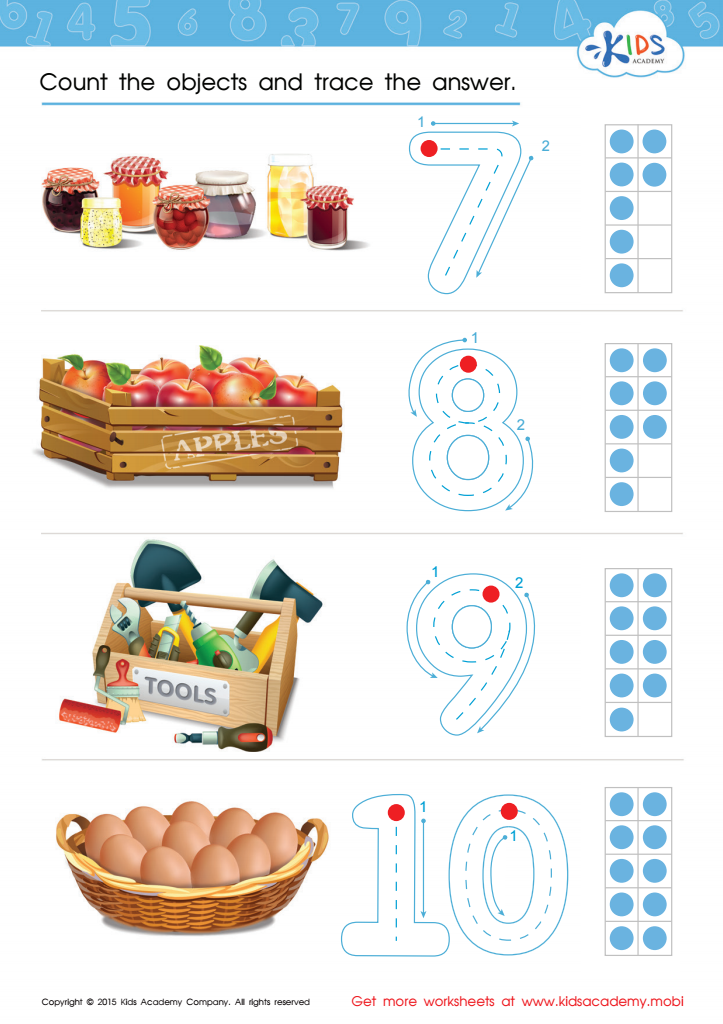
Count and Trace 7 – 10 Worksheet
 Assign to My Students
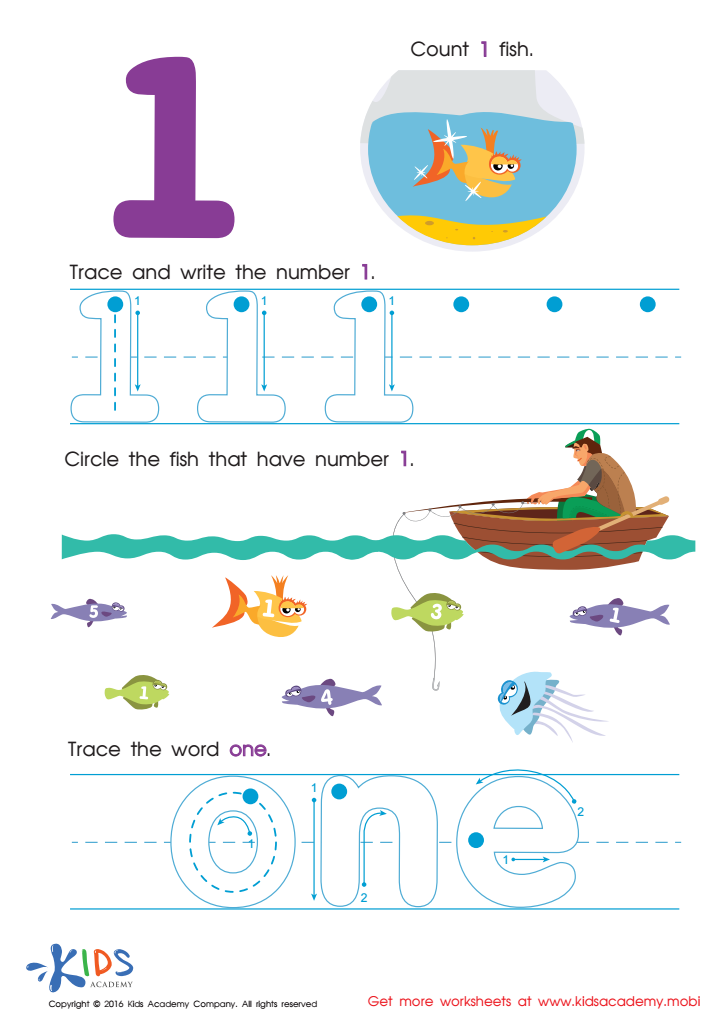
Learning to Write 1 Worksheet
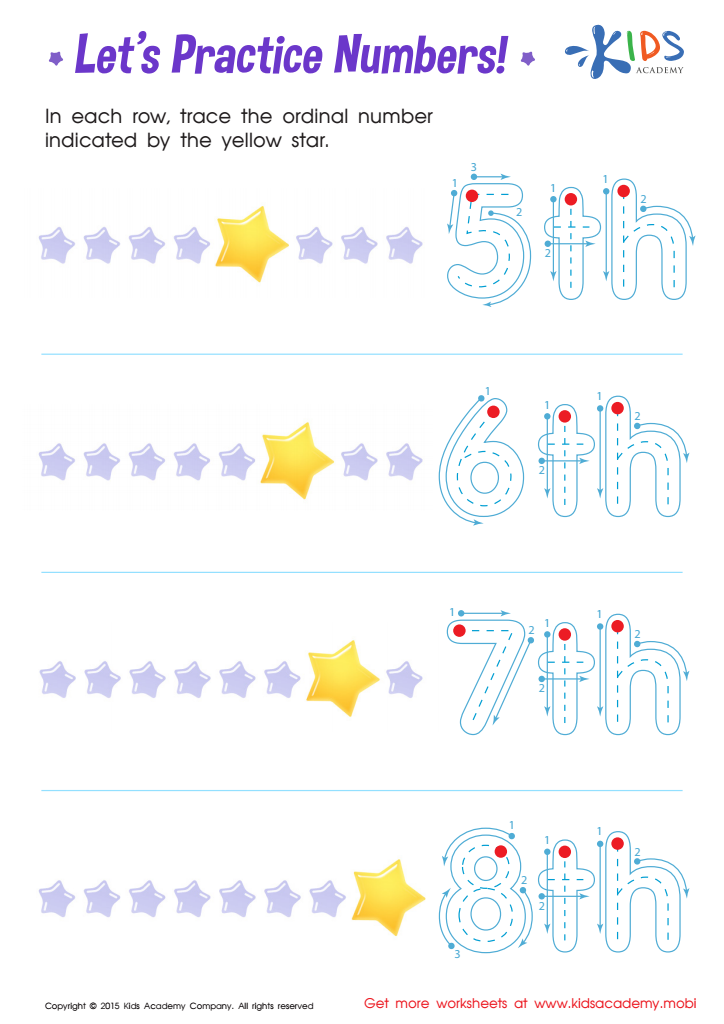
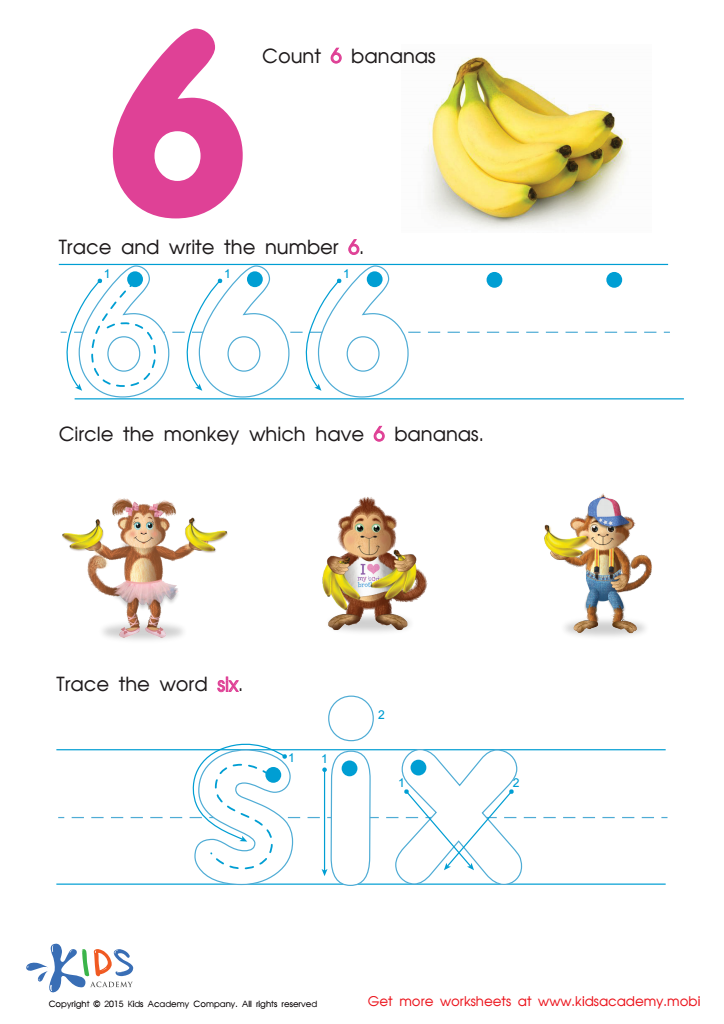
Tracing And Writing Number 6 Worksheet
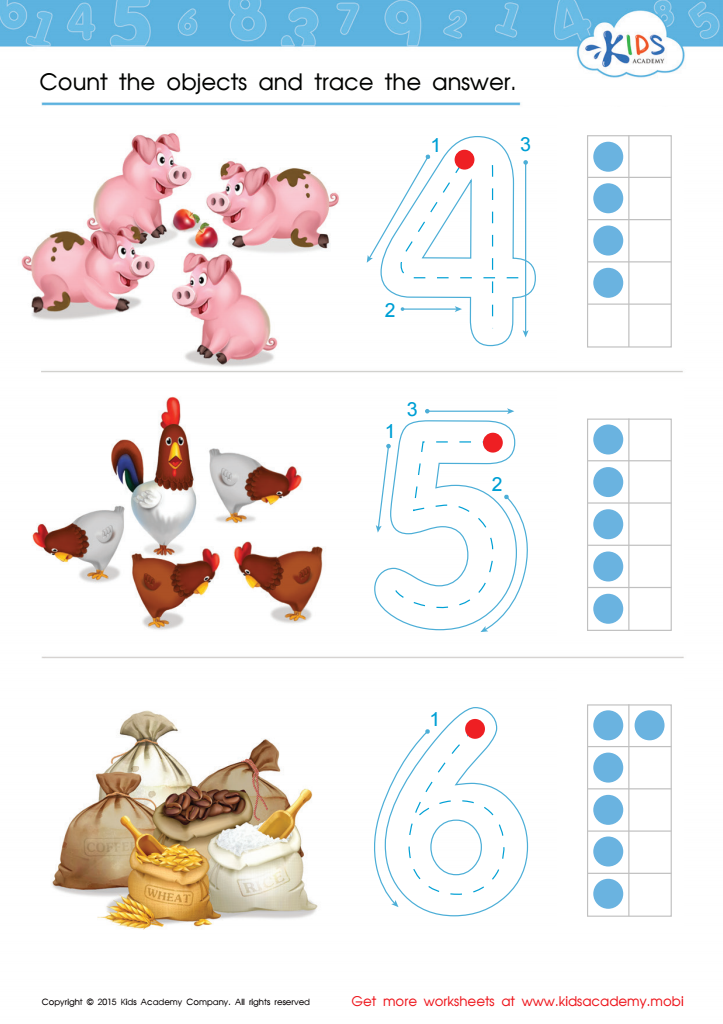
Count and Trace 4 – 6 Worksheet
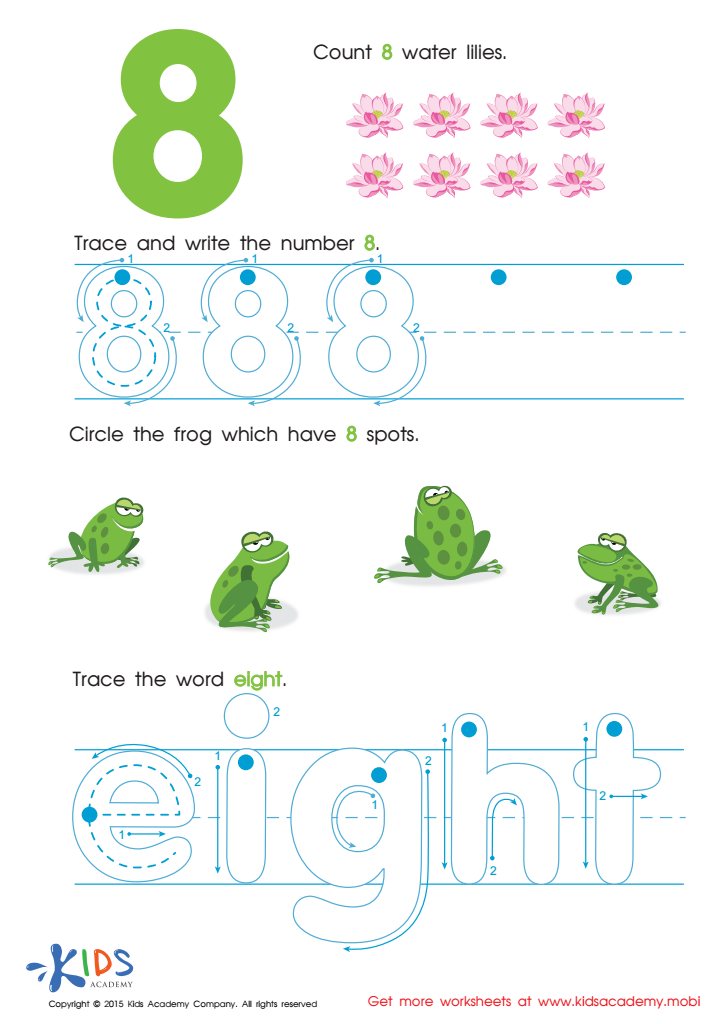
Learn Number 8 Easily Worksheet
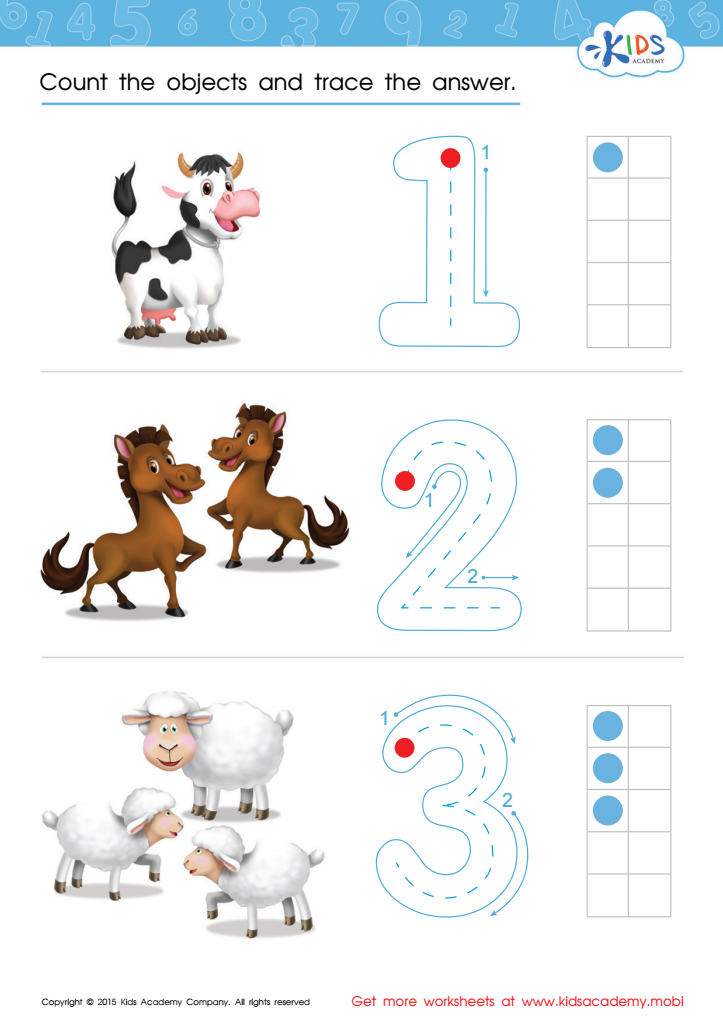
Count and Trace 1 – 3 Worksheet
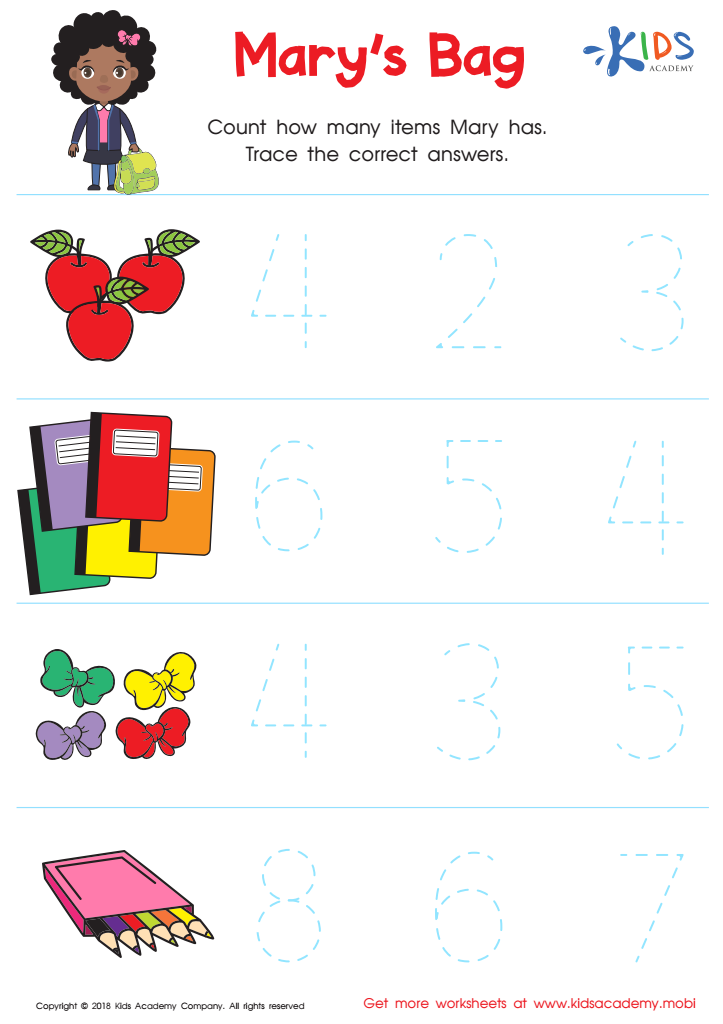
Kindergarten Number Tracing: Mary's Bag Worksheet
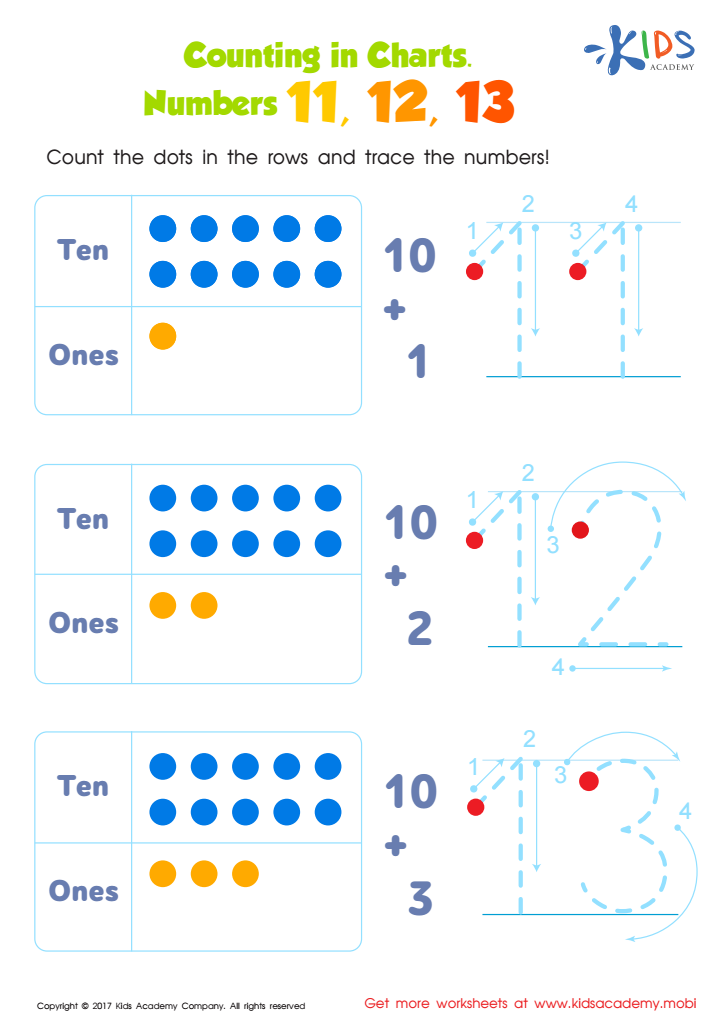
Number Tracing Worksheet For Kindergarten
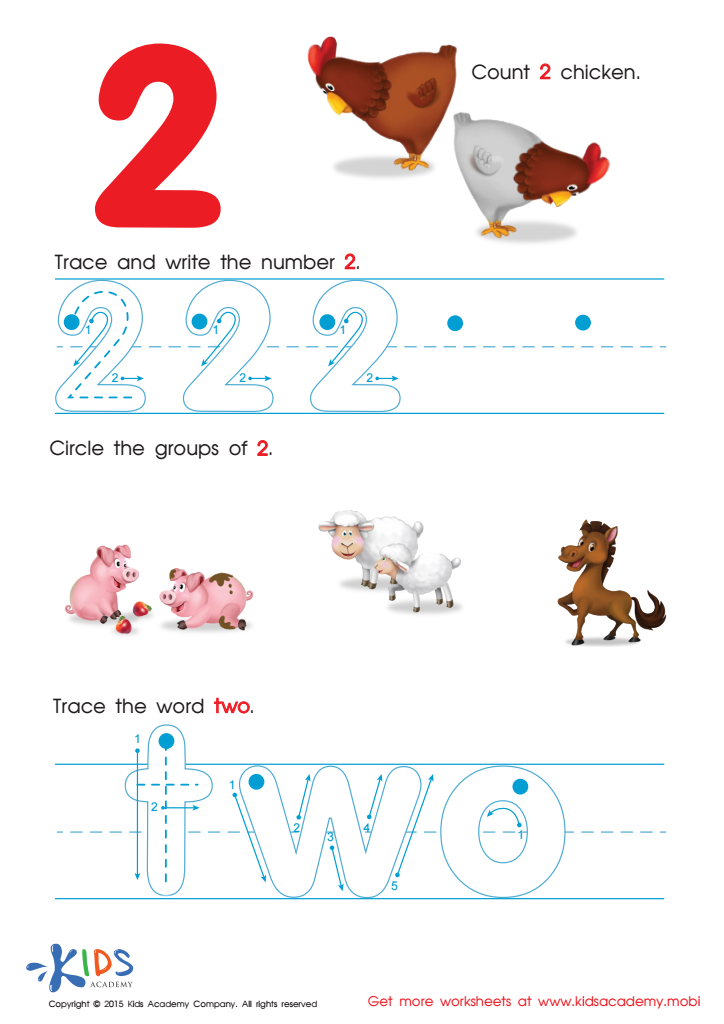
Learn to Write the Number 2 Worksheet








Fine motor skills tracing numbers for ages 3-4 is crucial for several developmental reasons. At this age, children are at a key stage of developing the small muscles in their hands and fingers, which are essential for performing everyday tasks such as writing, buttoning clothes, and tying shoelaces. Tracing numbers combines fine motor skill practice with early numeracy, offering dual benefits.
First, tracing helps improve hand-eye coordination by requiring children to align their hand movements with the visual guide of the numbers. This coordination is vital for other tasks that require precision. Second, the repetitive motion involved in tracing helps build muscle memory, making it easier for children to draw and write letters and numbers independently in the future.
Another important aspect is cognitive development. Tracing numbers gives children a head start in recognizing and understanding basic mathematical concepts. It provides a tactile and visual experience that reinforces numerical order and value before formal schooling begins.
Lastly, tracing numbers fills children with a sense of accomplishment and boosts their confidence. Successfully completing tracing activities instills a love for learning and academic tasks, laying a positive foundation for future educational endeavors. Thus, parents and teachers should prioritize fine motor skills tracing as it supports academic readiness and essential life skills.