Critical thinking skills Science Worksheets for Ages 3-4
5 filtered results
-
From - To
Discover our engaging Critical Thinking Skills Science Worksheets specifically designed for children aged 3-4. These worksheets encourage your little learners to analyze, evaluate, and explore scientific concepts through fun and interactive activities. Perfect for fostering curiosity, they promote problem-solving and logical reasoning, essential skills for early development. Your children will enjoy hands-on experiences that enhance their understanding of the world around them while refining their critical thinking abilities. Our thoughtfully crafted worksheets align with early childhood learning standards, making them an ideal resource for parents and educators looking to enrich science learning with enjoyable, age-appropriate challenges. Start nurturing young thinkers today!
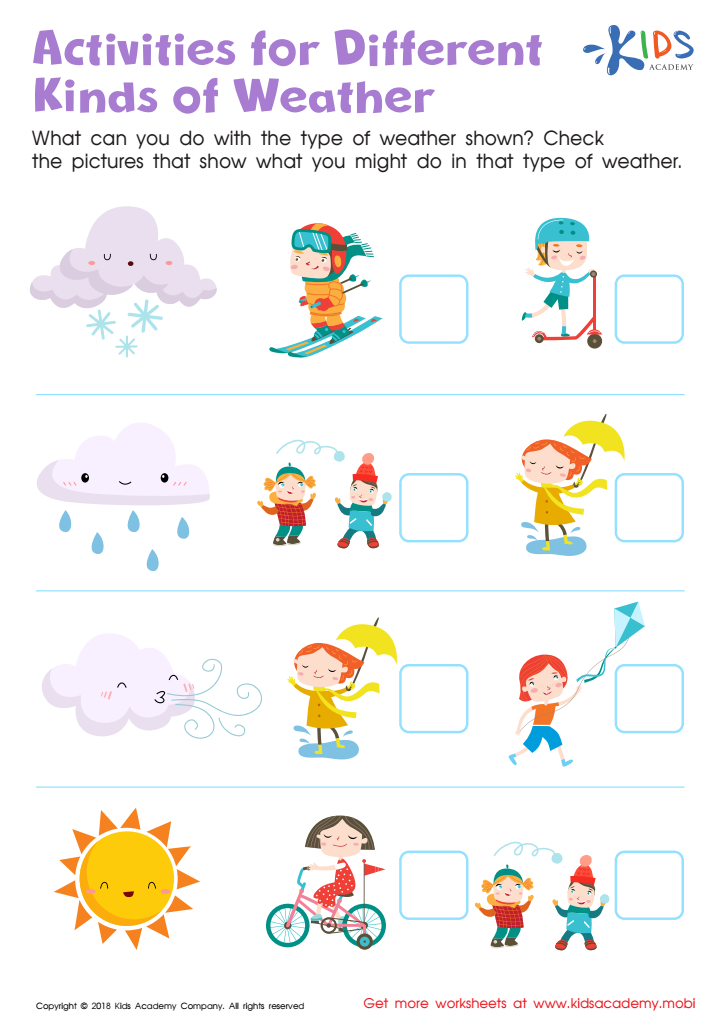
Activities for Different Kinds of Weather Worksheet
 Assign to My Students
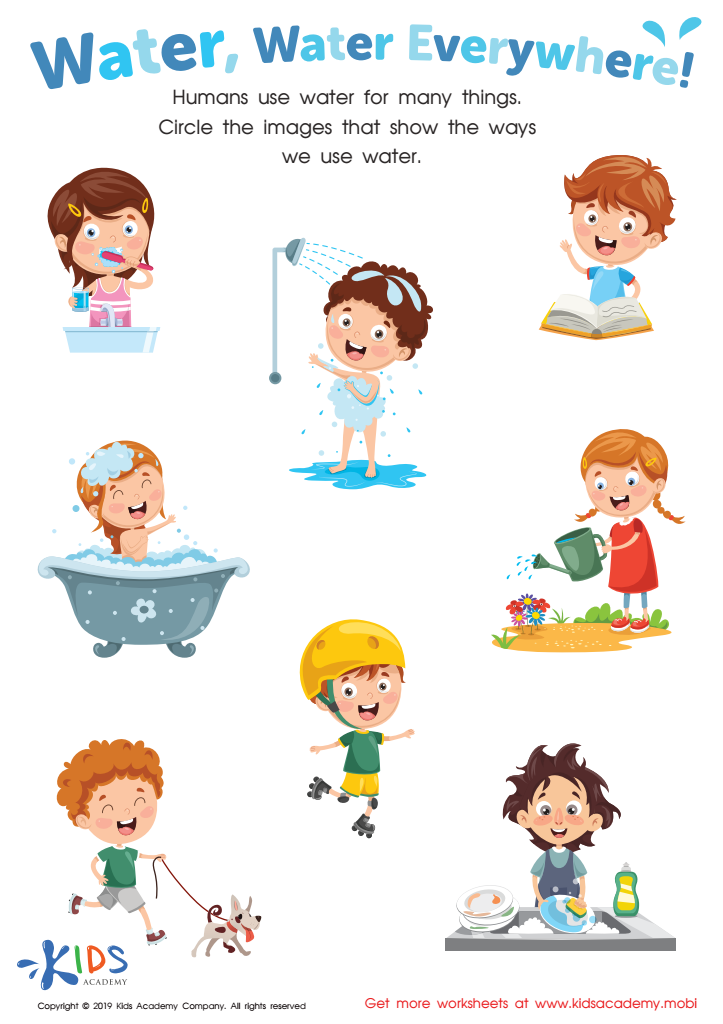
Water, Water Everywhere! Worksheet
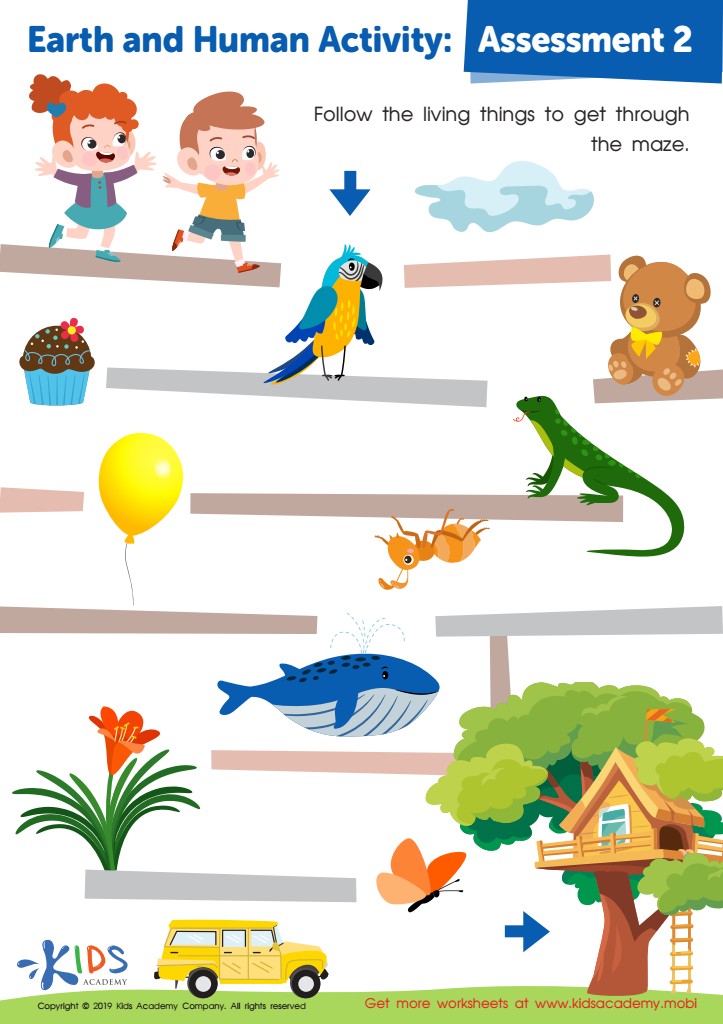
Earth and Human Activity: Assessment 2 Worksheet
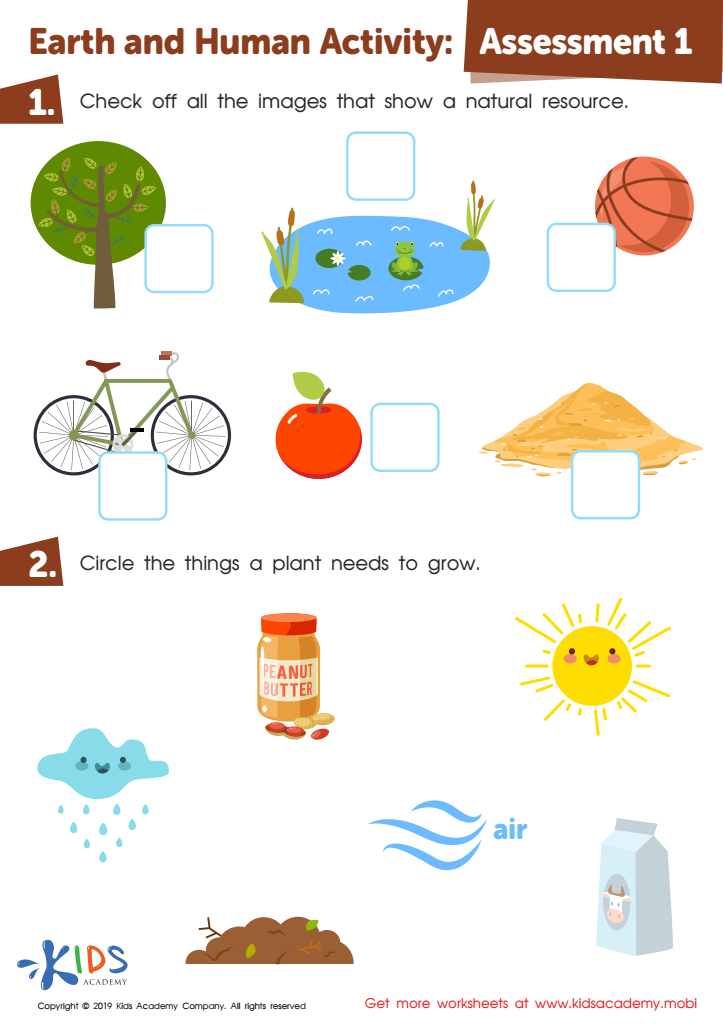
Earth and Human Activity: Assessment 1 Worksheet
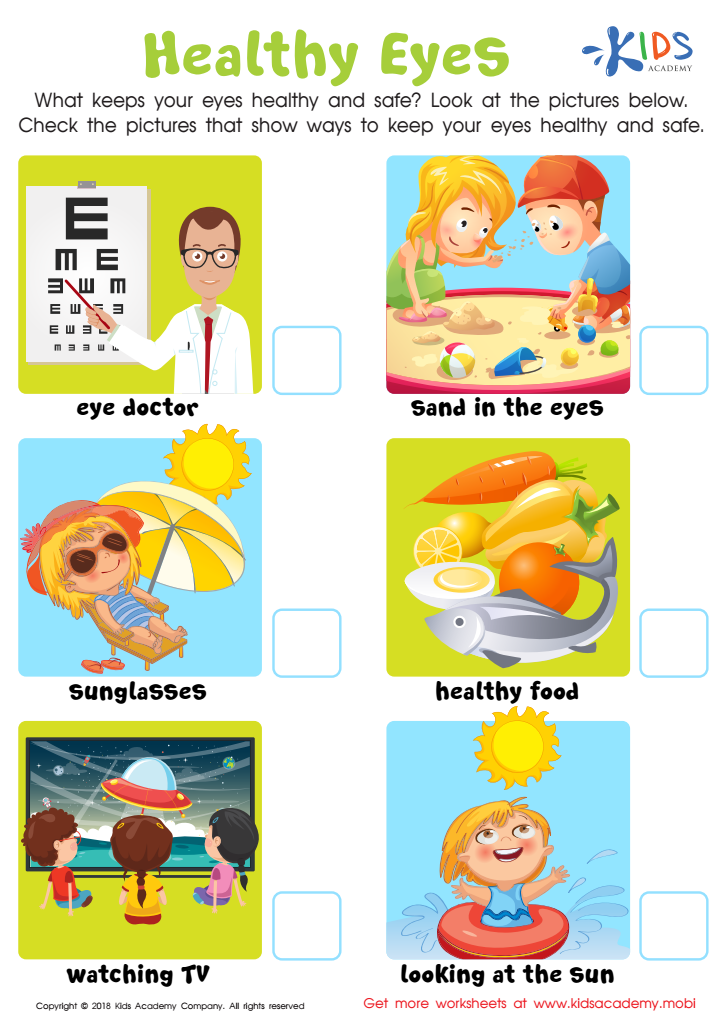
Healthy Eyes Worksheet







Critical thinking skills are essential for young learners, particularly in the realm of science, as they lay the foundation for a child's ability to analyze, reason, and draw conclusions. For parents and teachers of children aged 3-4, nurturing these skills enables children to explore their environment curiously and confidently. At this age, children are naturally inquisitive, and engaging them in science encourages them to ask questions, make observations, and experiment, which promotes cognitive development.
Science concepts introduced through fun, hands-on activities enhance language skills and vocabulary, as children learn to articulate their thoughts and findings. For instance, simple experiments with plants or water properties can teach cause-and-effect thinking while fostering a sense of wonder about the world.
Moreover, developing critical thinking skills helps young children become effective problem solvers. They learn to think independently, make decisions, and collaborate with peers, which are all vital skills for future academic success and social interactions. In a rapidly changing world, equipping children with the ability to think critically will prepare them not just for further education, but for navigating life’s complexities, making informed choices, and becoming engaged, responsible citizens. Thus, investing in critical thinking through science at an early age is invaluable for long-term growth and development.







