Shape Recognition Science Worksheets for Ages 3-4
3 filtered results
-
From - To
Introduce your little learners to the world of geometry with our Shape Recognition Science Worksheets for Ages 3-4. These engaging activities are designed to help young children identify and differentiate between various shapes in an enjoyable and interactive manner. With colorful illustrations and creative exercises, our worksheets make learning fun, promoting essential motor skills and cognitive development. Perfect for parents and educators, these printable resources are ideal for introducing foundational geometry concepts early on. Help your child master shape recognition while fostering a love for learning with our expertly crafted science worksheets. Download now to kickstart your child's educational journey!
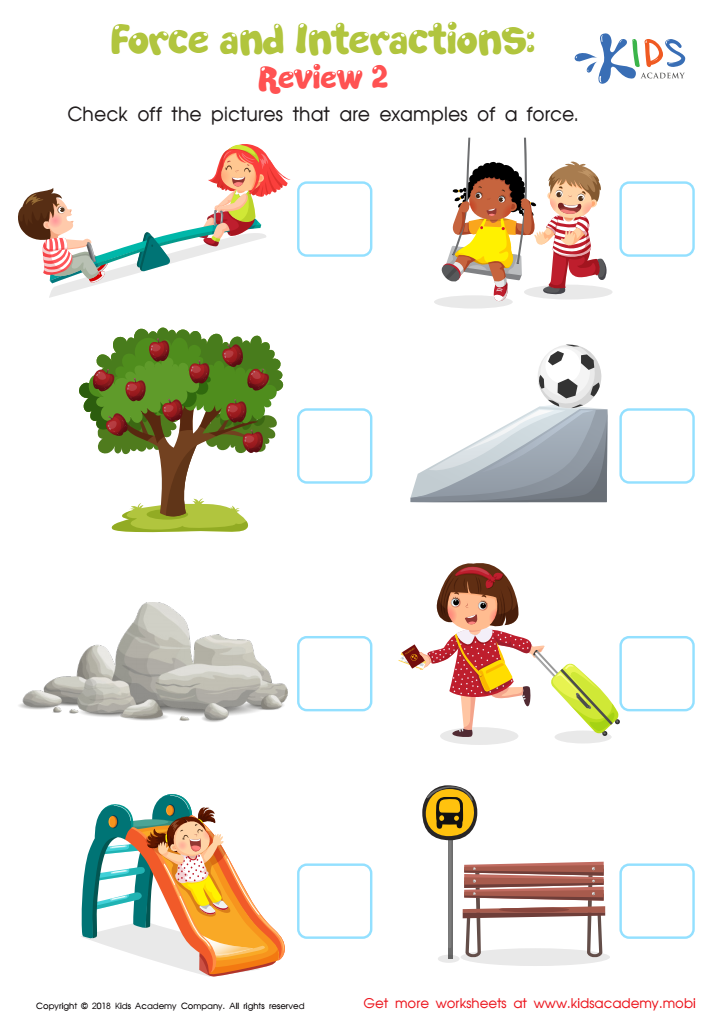
Force and Interactions: Review 2 Worksheet
 Assign to My Students
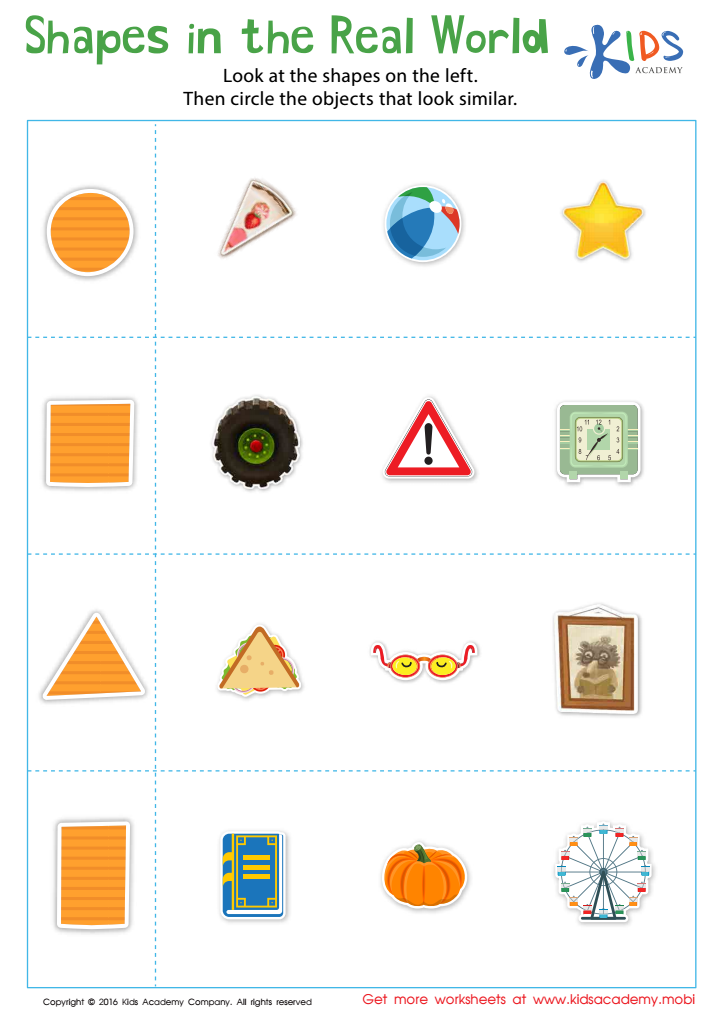
Shapes in the Real World Worksheet
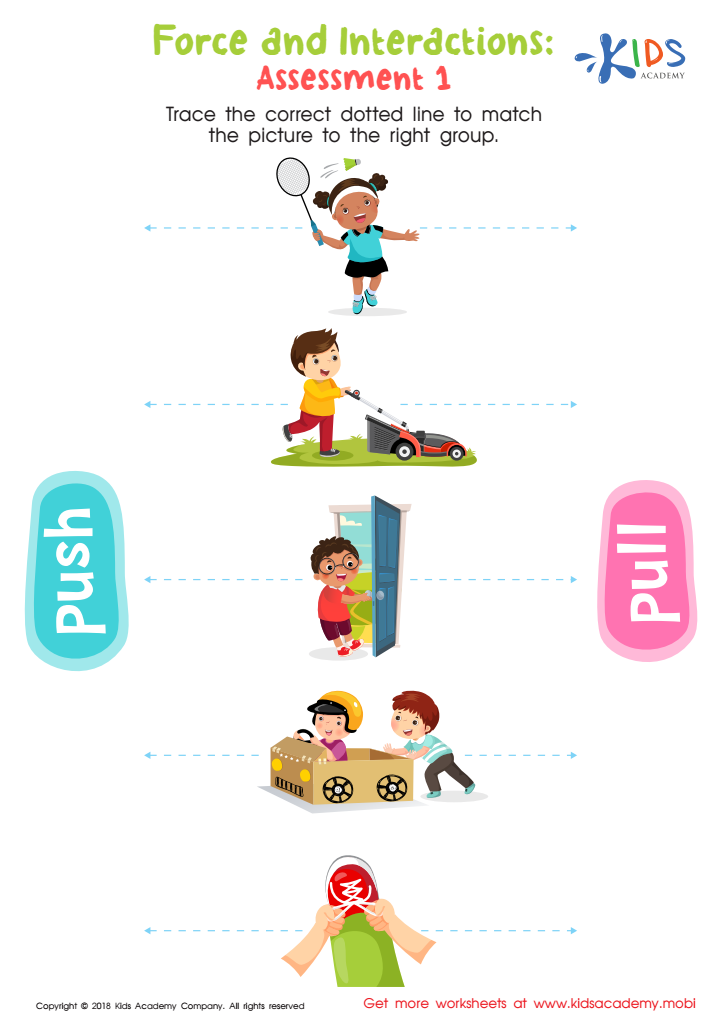
Force and Interactions: Assessment 2 Worksheet








Shape recognition is a foundational skill that significantly impacts a child's cognitive development, making it crucial for parents and teachers to prioritize it, especially for children ages 3-4. At this young age, children are naturally curious and ready to explore their environment, and understanding shapes is a key part of this exploration.
Firstly, shape recognition enhances spatial awareness. When children can identify and differentiate between various shapes, they develop an understanding of the world around them. This awareness aids in problem-solving and decision-making skills, which are vital for their overall growth.
Secondly, recognizing shapes is the groundwork for more advanced mathematical concepts. Skills such as sorting, patterning, and categorizing are all based on an understanding of shapes. As children grow, these early experiences make learning geometry and other math-related subjects more intuitive.
Additionally, shape recognition supports literacy development. By distinguishing shapes, children improve their ability to recognize letters and numbers, which are essentially a collection of shapes. Effective shape recognition enables children to learn how to read and write more efficiently.
Moreover, engaging with shapes through play enhances fine motor skills. Activities like drawing shapes or manipulating objects of different shapes improve hand-eye coordination and dexterity, essential for tasks such as writing.
In summary, focusing on shape recognition for young children establishes a strong foundation in cognitive, mathematical, motor, and literacy skills, making it an essential aspect of early childhood education.







