Phonological awareness Phonics Worksheets for Ages 3-5
8 filtered results
-
From - To
Welcome to our collection of engaging Phonological Awareness Phonics Worksheets designed specifically for children ages 3 to 5! These worksheets help young learners develop crucial listening and language skills through fun, interactive activities. By exploring sounds, rhythms, and patterns, children can enhance their phonemic awareness, a key foundation for reading success. Our resources feature vibrant illustrations and playful exercises that keep kids motivated while cultivating their early literacy skills. Perfect for parents and educators alike, these worksheets provide valuable support in preparing little ones for a lifelong love of reading. Start your phonics journey today and watch your child's confidence soar!
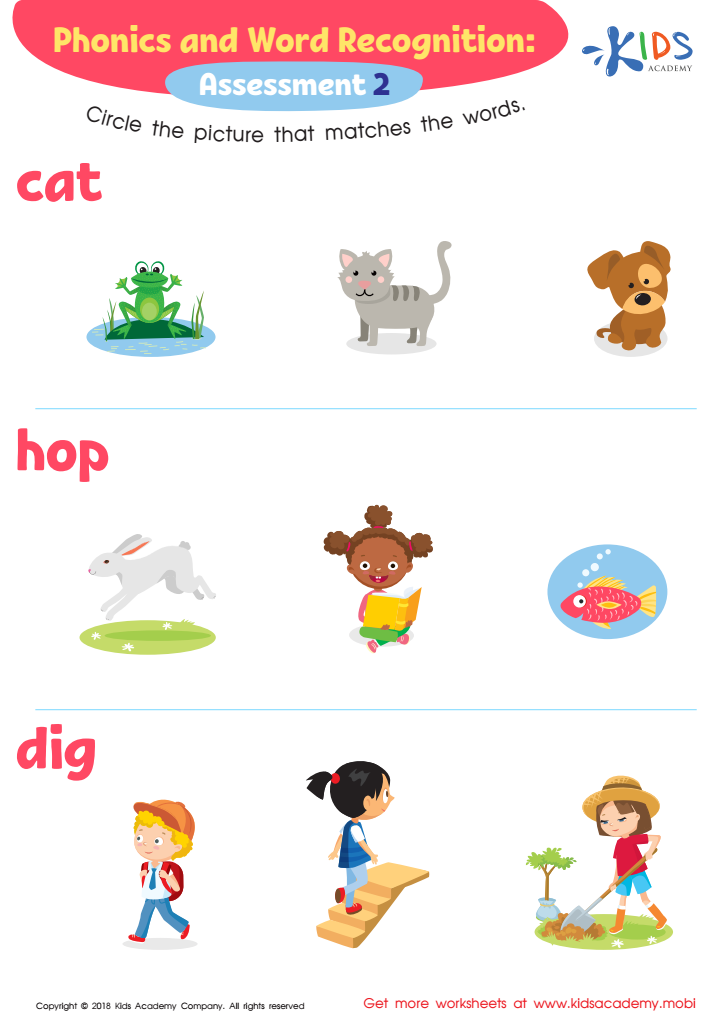
Phonological Awareness: Assessment 2 ELA Worksheet
 Assign to My Students
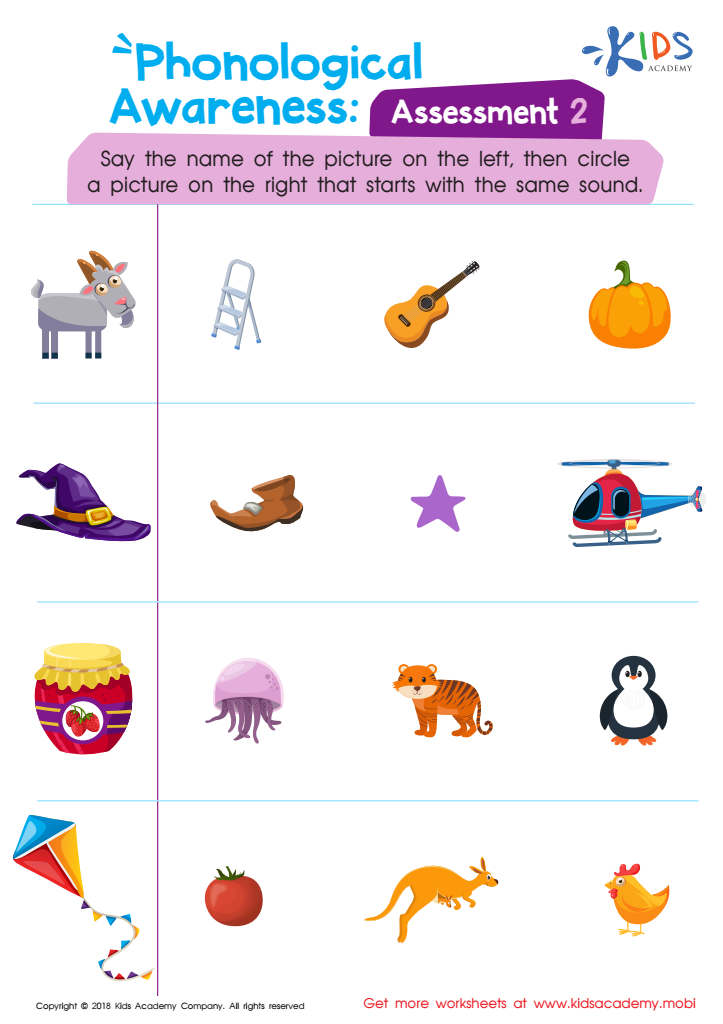
Phonological Awareness: Assessment 2 Worksheet
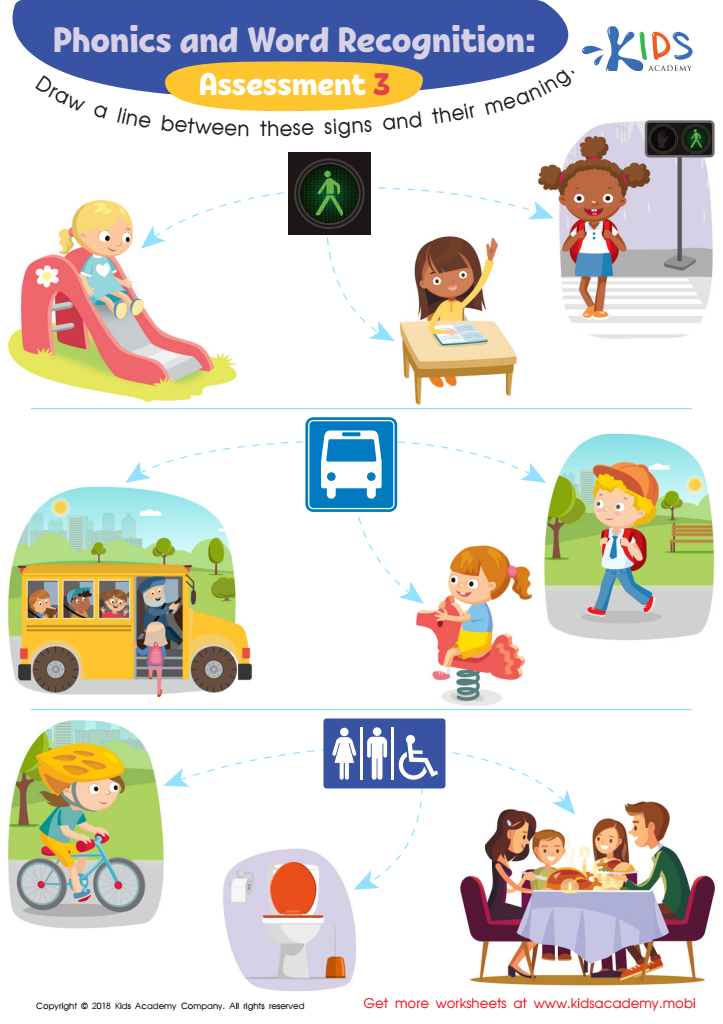
Phonological Awareness: Assessment 3 ELA Worksheet
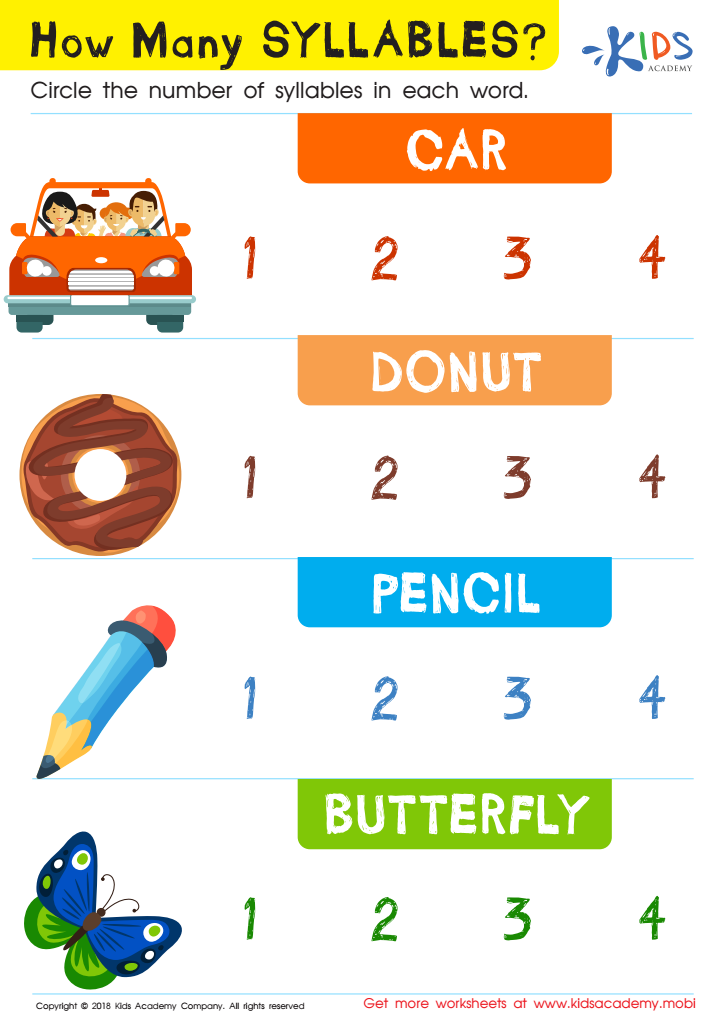
How Many Syllables? Worksheet
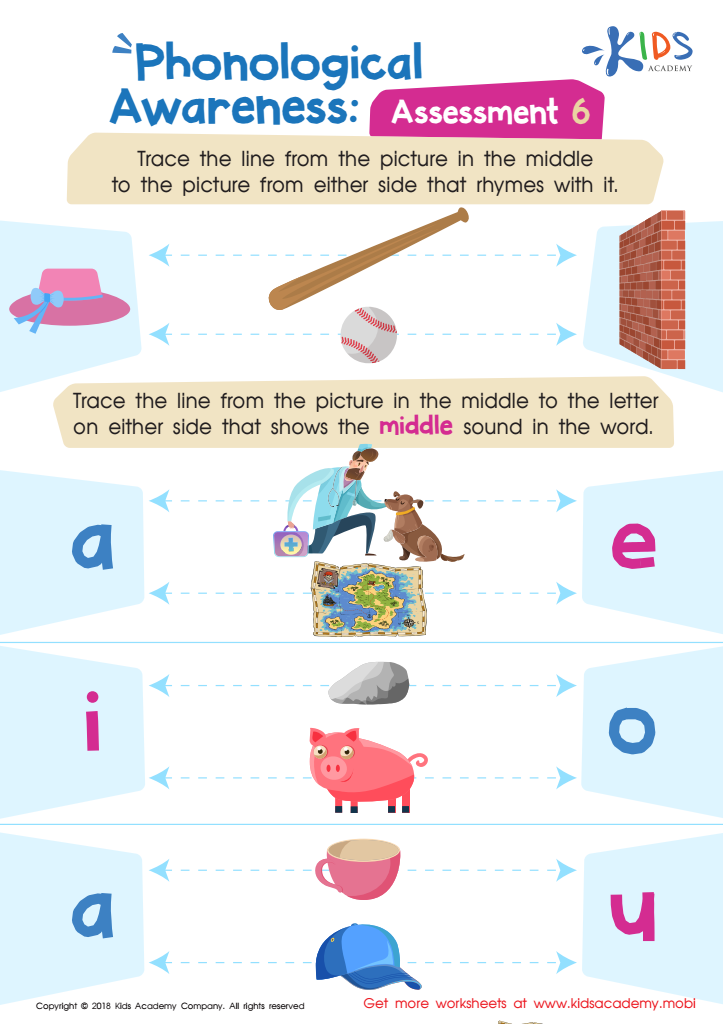
Phonological Awareness: Assessment 6 Worksheet
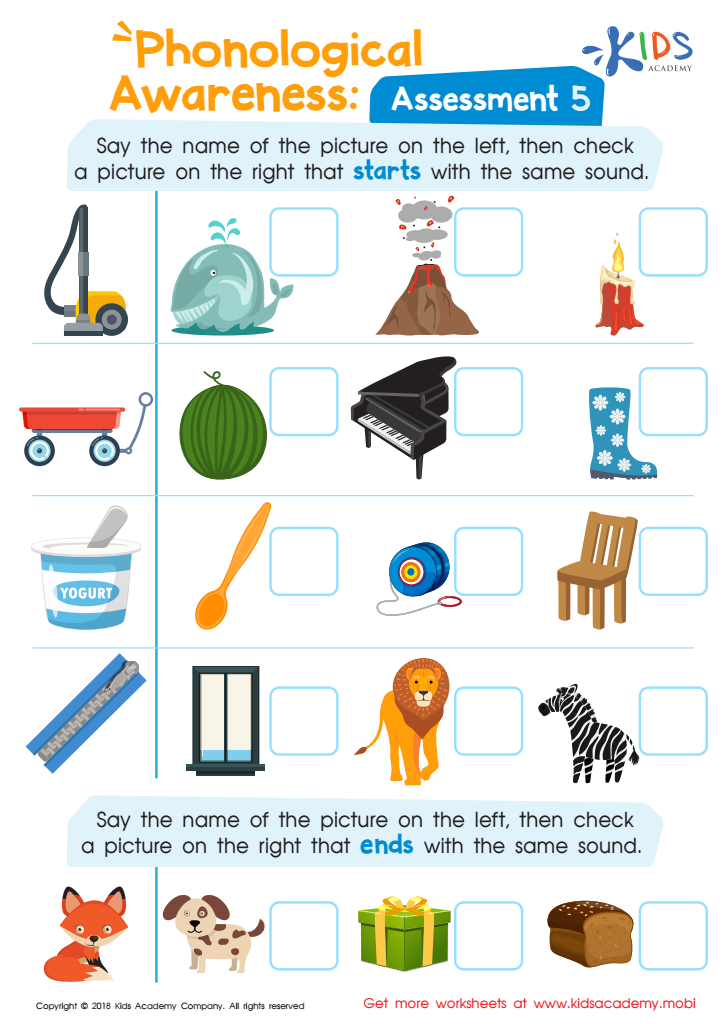
Phonological Awareness: Assessment 5 Worksheet
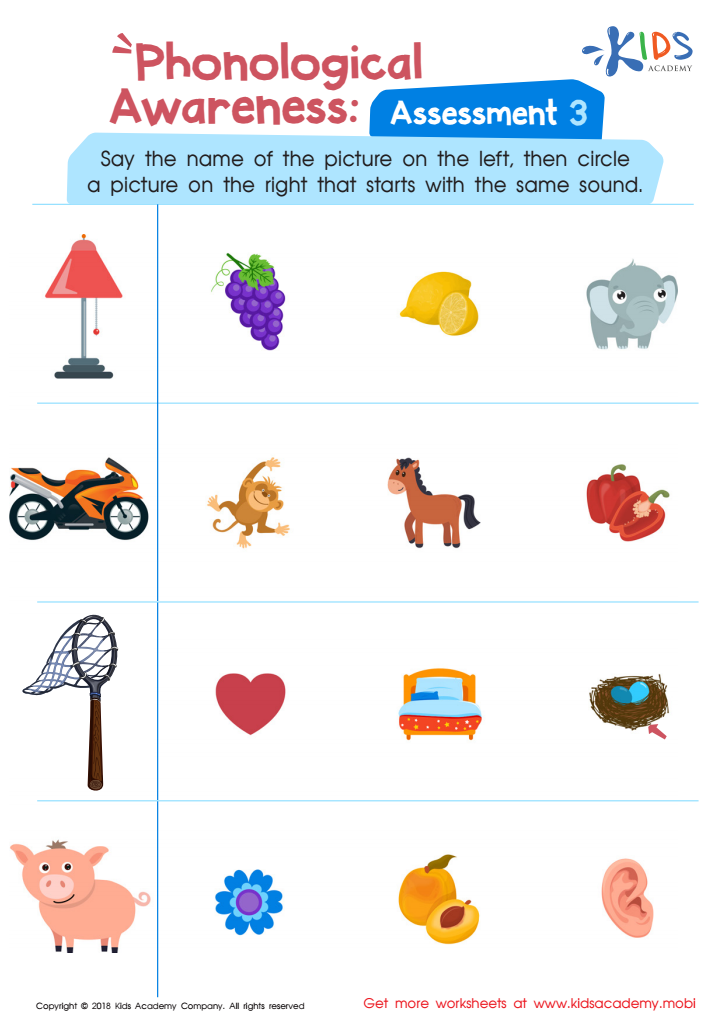
Phonological Awareness: Assessment 3 Worksheet
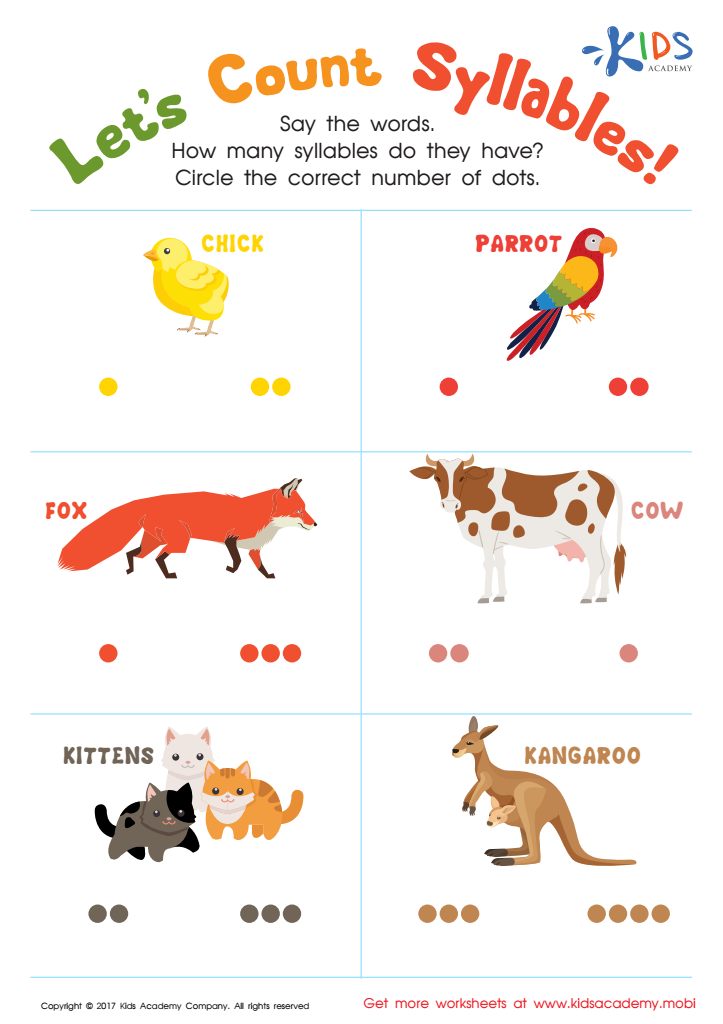
Lets Count Syllables Worksheet








Phonological awareness and phonics are critical components of early literacy development for children aged 3-5, which is why parents and teachers should prioritize them. Phonological awareness refers to the ability to recognize and manipulate sounds in spoken language, including identifying rhymes, segmenting words, and blending sounds. This foundation is essential for reading success as it helps children understand that words are made up of individual sounds (phonemes) and syllables.
Phonics, on the other hand, involves the relationship between letters and sounds, enabling children to decode written words. By introducing phonics alongside phonological awareness, children learn to connect spoken sounds to their written forms, which promotes reading fluency and comprehension.
Investing time in these skills at an early age fosters a love of reading and enhances verbal skills. Children who develop strong phonological awareness and phonics skills typically perform better in school, have greater confidence in their reading abilities, and experience less frustration with literacy tasks. Additionally, early intervention can identify and address potential reading difficulties before they escalate, ensuring that every child has the opportunity to succeed in their educational journey. Ultimately, supporting phonological awareness and phonics can set the stage for lifelong learning and literacy enjoyment.







