Improve your child's reading skills with our engaging Reading Readiness Worksheets for Ages 3-5! Designed to enhance literacy development, these worksheets will introduce young learners to essential foundational skills needed for reading success. Our age-appropriate activities focus on letter recognition, phonemic awareness, and vocabulary building through fun and interactive exercises. Perfect for preschool and kindergarten-age children, these worksheets foster a love for reading while promoting vital cognitive skills. Download and print our easy-to-use resources to make learning an enjoyable experience for your little ones. Start their reading journey today and watch them thrive as confident readers!

Check out this FREE "Reading readiness" Trial Lesson for age 3-5!

Review

Favorites
With answer key
Interactive
  • 3-5
  • Reading readiness
Letter Q Sounds Worksheet

Letter Q Sounds Worksheet

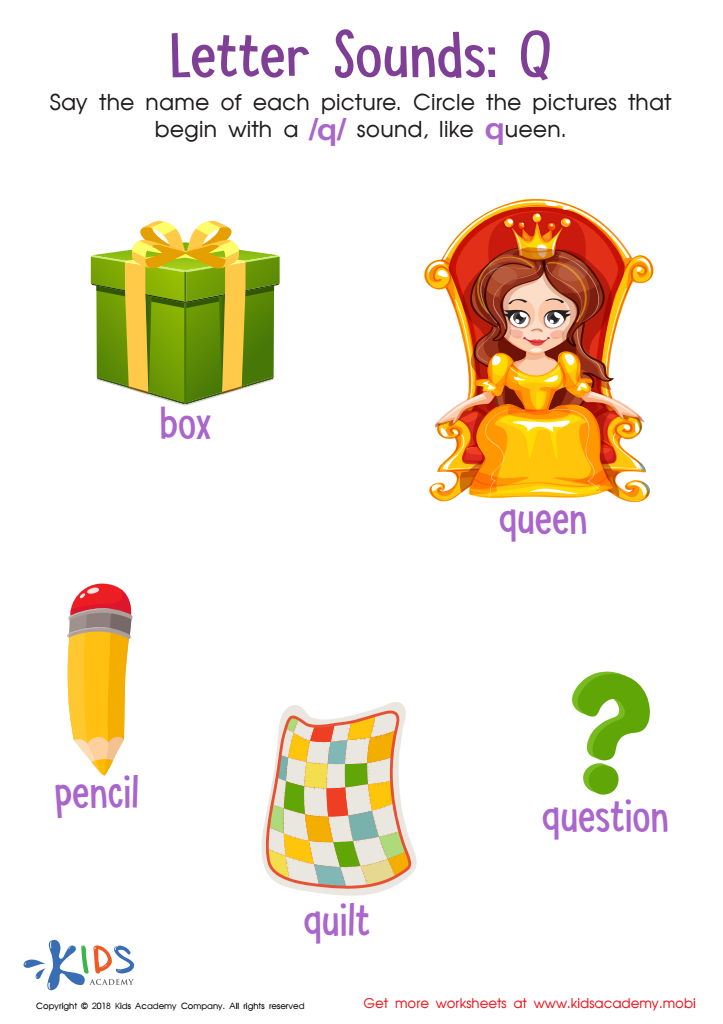
Kids can get confused between "K" and "Q" sounds. Help them learn with this phonics worksheet. They'll name each image and read the word underneath. Point out that words with "Q" also have a "U" which affects how it sounds. Have them circle the matching pictures and watch as they learn this unique letter sound.
Letter Q Sounds Worksheet
Worksheet
Can you Guess Which Letter? Worksheet

Can you Guess Which Letter? Worksheet

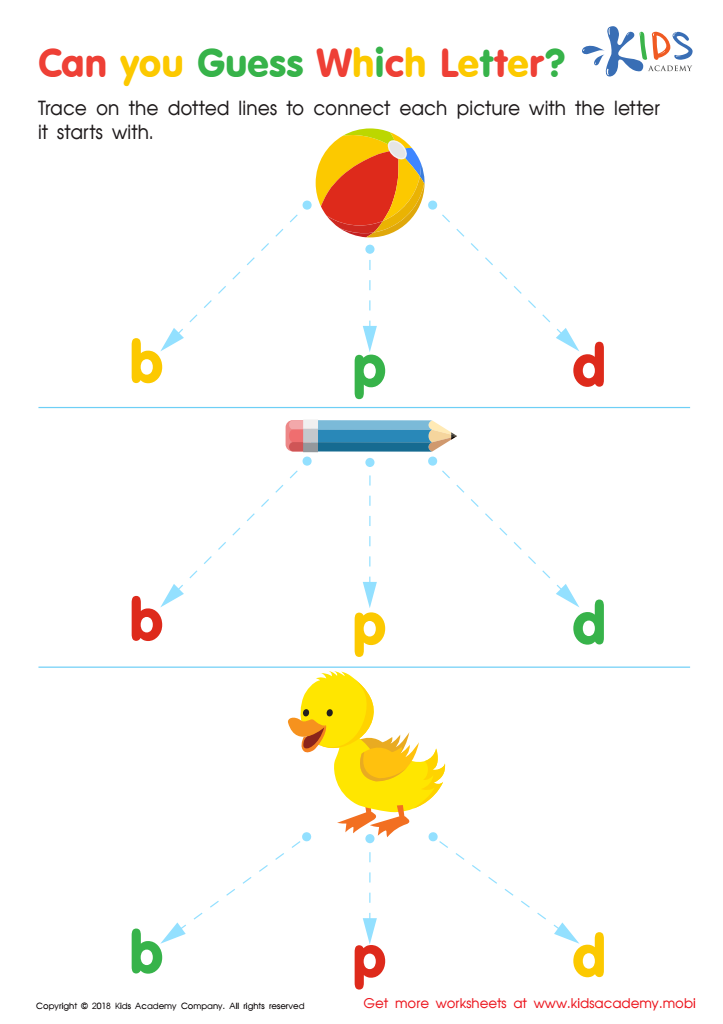
Connect the pictures with their corresponding letters with this fun worksheet! Ask your child what each picture is, then what letter it begins with. Download the PDF for colorful images and engaging texts to hold their attention, making learning an enjoyable activity.
Can you Guess Which Letter? Worksheet
Worksheet
Phonological Awareness: Assessment 6 Worksheet

Phonological Awareness: Assessment 6 Worksheet

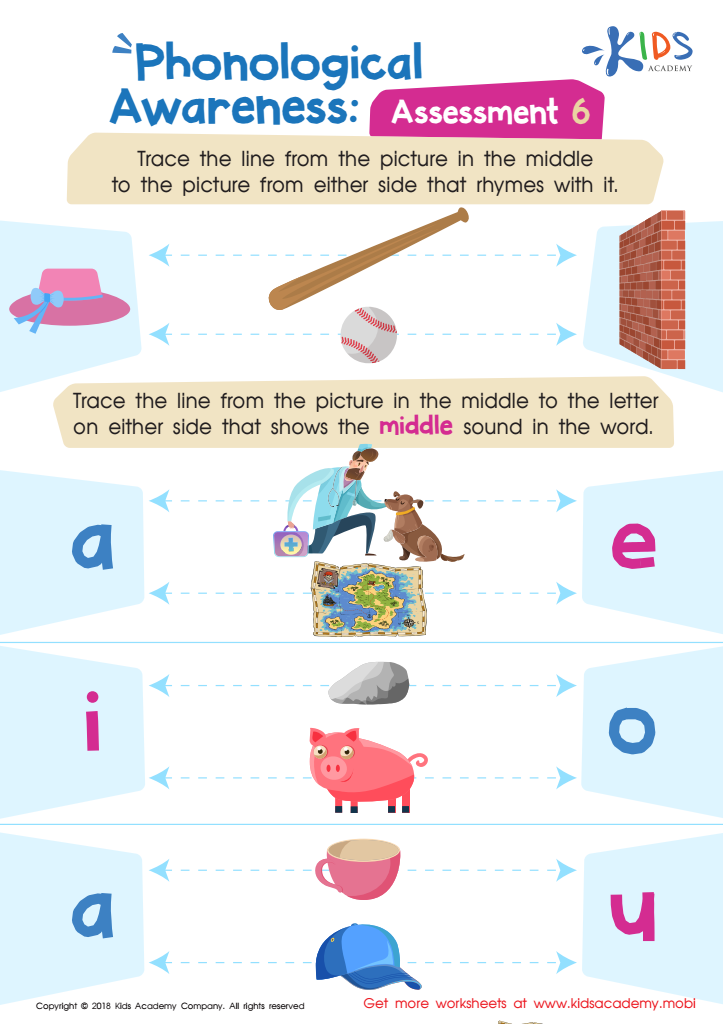
Check your child's ability to recognize middle word sounds using this free worksheet. Help them learn phonics by practicing with rhyming. Trace the line from the image to its rhyming match then encourage them to name each image aloud to identify which letter matches the sound. It's a great way to assess letter and sound recognition.
Phonological Awareness: Assessment 6 Worksheet
Worksheet
Lowercase Letters Search: Assessment Worksheet

Lowercase Letters Search: Assessment Worksheet

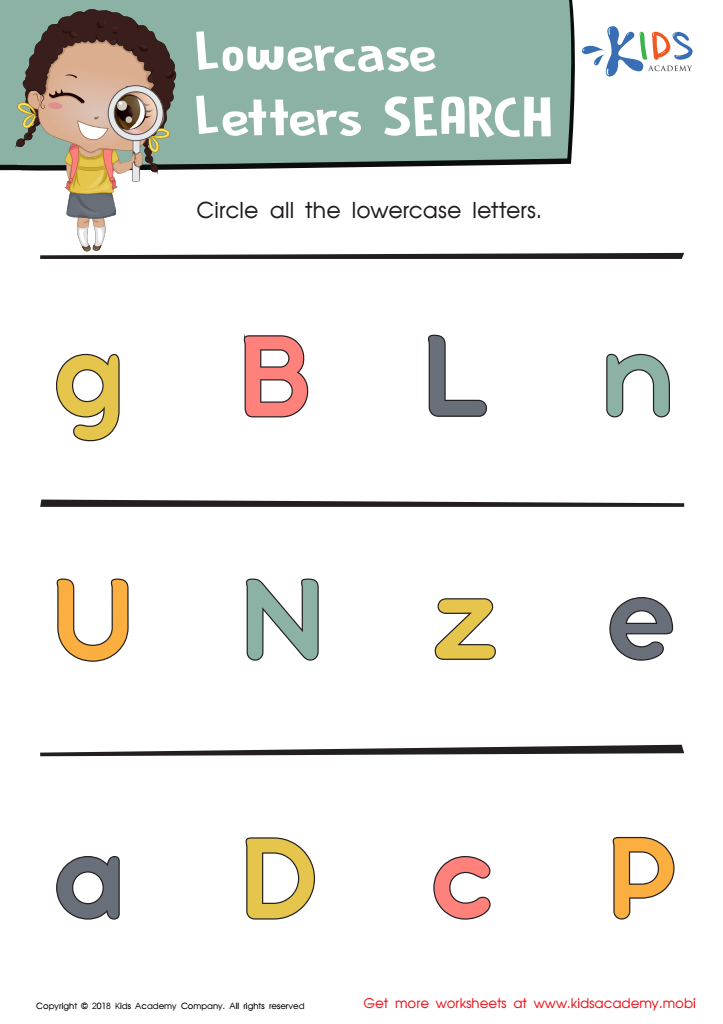
Circle all the lowercase letters in this worksheet. Identify them among a mix of uppercase and lowercase letters. Your child will have fun with this exercise thanks to its bright primary colors. Enjoyment and learning go hand-in-hand!
Lowercase Letters Search: Assessment Worksheet
Worksheet
Phonological Awareness: Assessment 1 Worksheet

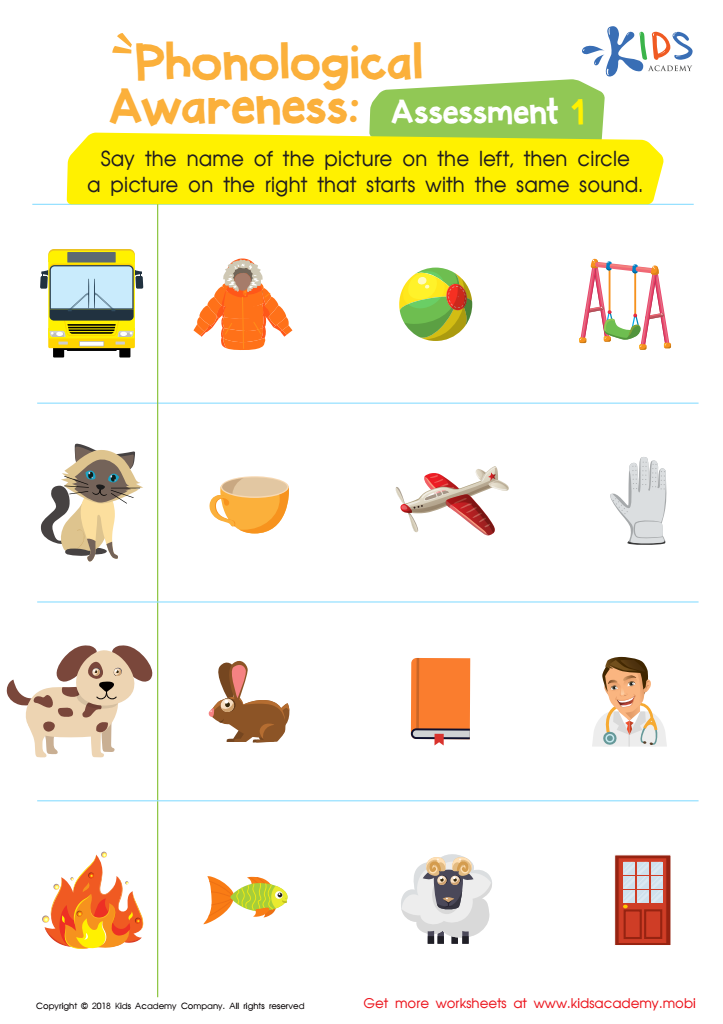
Phonological Awareness: Assessment 1 Worksheet

This worksheet helps kids build key phonics skills for pre-reading. They say each picture name aloud, focusing on the starting sound. Then, they match the sound with an image in the same row. Use as a checkpoint for kindergarten or grade 1 phonics readiness.
Phonological Awareness: Assessment 1 Worksheet
Worksheet
Beginning Sounds Match-up Printable

Match–Up Game: Beginning Sounds Worksheet
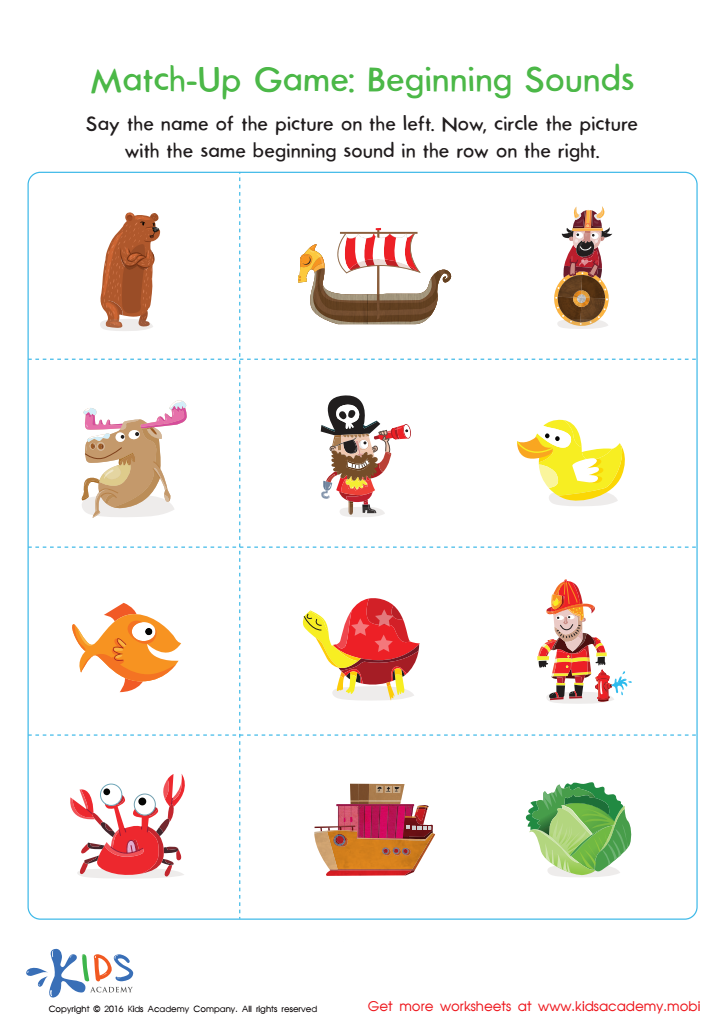
Start today with this beginning sounds match-up printable! Teach your child to solve problems mentally with this beginning sounds match-up printable. They'll learn to categorize pictures based on phonics rules, developing mental stamina and focus. It's an important step for recognizing sounds and letters in print, building a foundation for reading and spelling. Start today and take your child's skills to the next level!
Match–Up Game: Beginning Sounds Worksheet
Worksheet
Beginning sound d worksheet

Beginning Sound D Worksheet

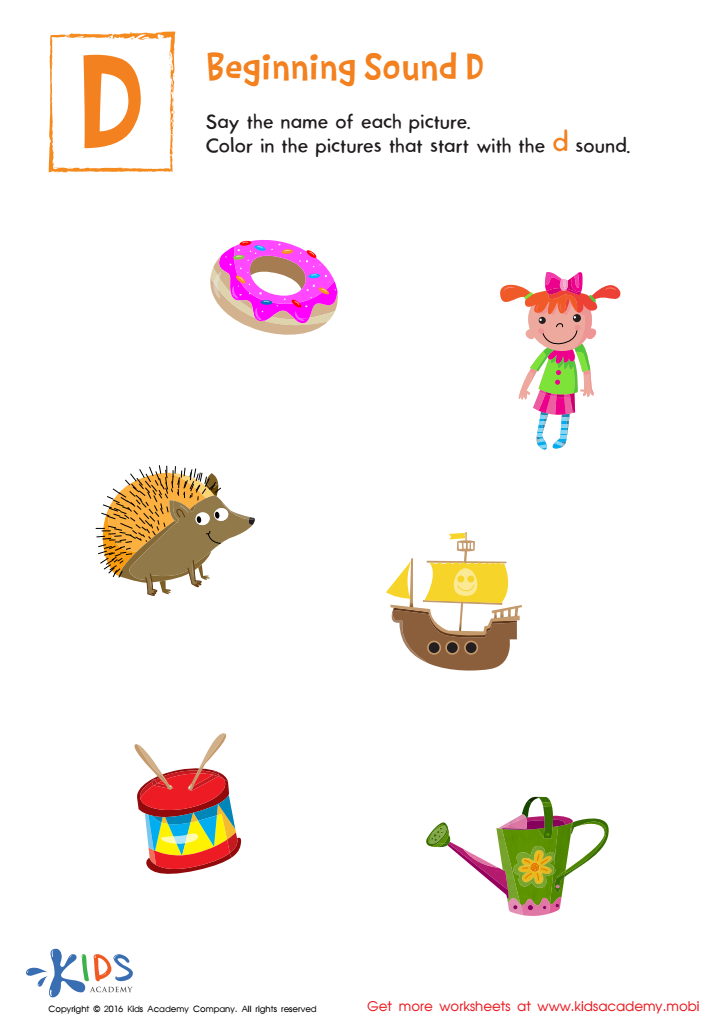
Reinforce phonics with this vibrant beginning sound d worksheet! Pictures help kids identify words beginning with 'd' and develop early reading skills. Sounding out each word increases literacy!
Beginning Sound D Worksheet
Worksheet


Reading readiness for children ages 3-5 is a crucial foundation for lifelong learning and literacy. At this stage, kids undergo rapid brain development, making them exceptionally receptive to language and literacy experiences. Early exposure to reading not only fosters language skills but also enhances cognitive development, critical thinking, and social-emotional skills.

Parents and teachers play a vital role in nurturing this crucial readiness. Engaging children in interactive read-alouds, singing songs, or playing rhyming games cultivates an appreciation for language and story-telling. Moreover, it introduces essential pre-reading skills, such as vocabulary development, phonemic awareness, and comprehension strategies.

When children develop a love for reading early on, they build confidence and curiosity, which motivates them to explore new ideas and concepts. This early enthusiasm can significantly impact academic success later, preventing potential reading difficulties as they progress to formal schooling.

Additionally, fostering reading readiness helps bridge the literacy gap, ensuring that all children—regardless of background—have equitable access to educational opportunities. In sum, prioritizing reading readiness in the early years equips children with the necessary tools to thrive as learners and engaged citizens.