Explore our engaging "Understanding Fractions Worksheets for Ages 3-5" designed to introduce young learners to the concept of fractions in a fun and accessible way. These worksheets incorporate colorful visuals and playful activities that make learning enjoyable for preschoolers. With a focus on simple fractions like halves and quarters, kids will develop foundational math skills while enhancing their cognitive abilities. Our materials aim to foster a strong understanding of division and the relationship between parts and wholes, perfectly suited for early development. Dive into this enriching resource to help your child build confidence in their mathematical journey today!

Check out this FREE "Understanding fractions" Trial Lesson for age 3-5!

Solve Tricky Number Situations by Drawing (3 numbers) - Part 1

Favorites
With answer key
Interactive
  • 3-5
  • Understanding fractions
Fruity Problem Solving Worksheet

Fruity Problem Solving Worksheet

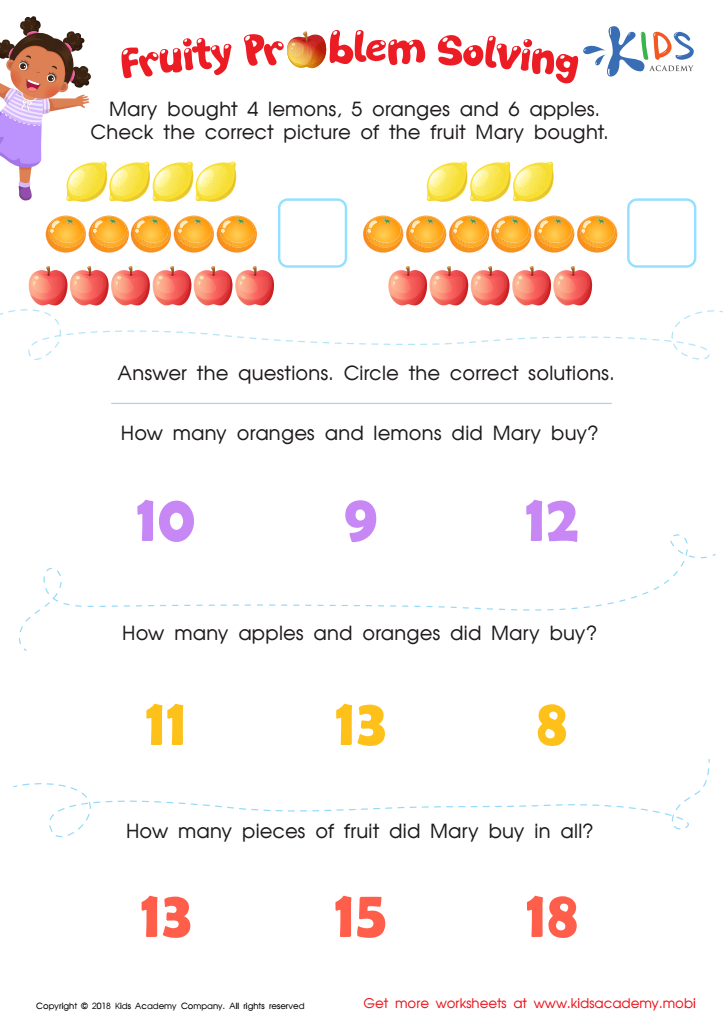
Practice addition word problems with young mathematicians using this PDF worksheet featuring fruit. As they read each problem carefully and circle the correct sums, they'll reinforce attention to detail and fine motor skills. Tangible representations are key to helping them with basic addition.
Fruity Problem Solving Worksheet
Worksheet
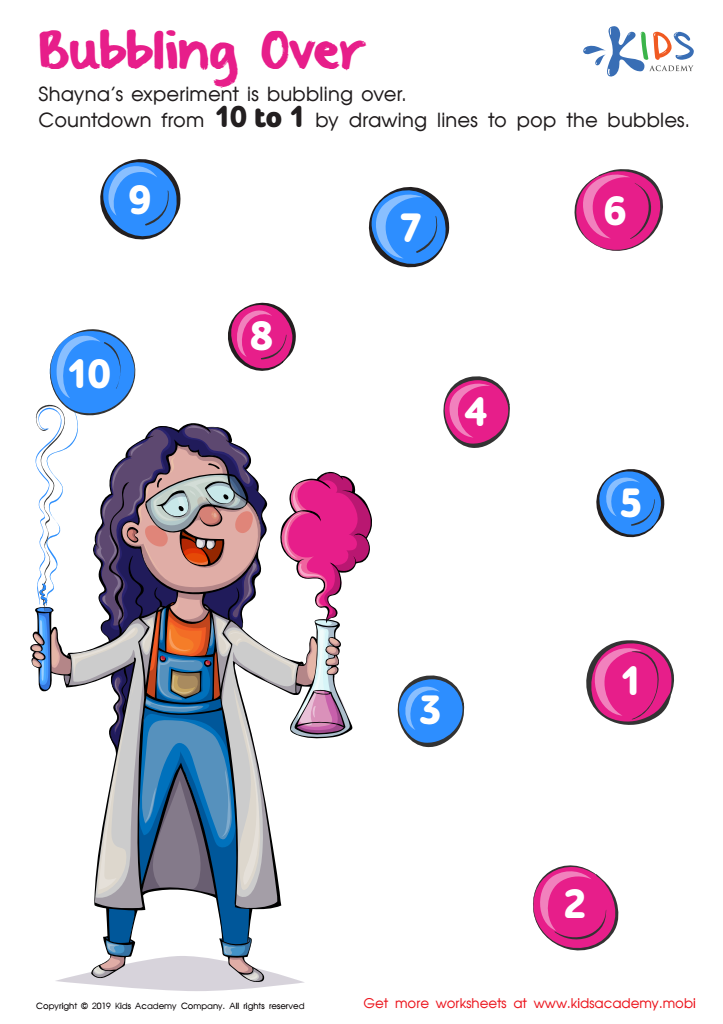
Bubbling Over Worksheet

Bubbling Over Worksheet

Students love science experiments at the lab! They get to practice their counting skills while creating a masterpiece or an unexpected catastrophe! Ask them to count down from 10 to 1 by drawing lines to 'pop' the bubbles coming out of Shayna's experiment in the worksheet.
Bubbling Over Worksheet
Worksheet
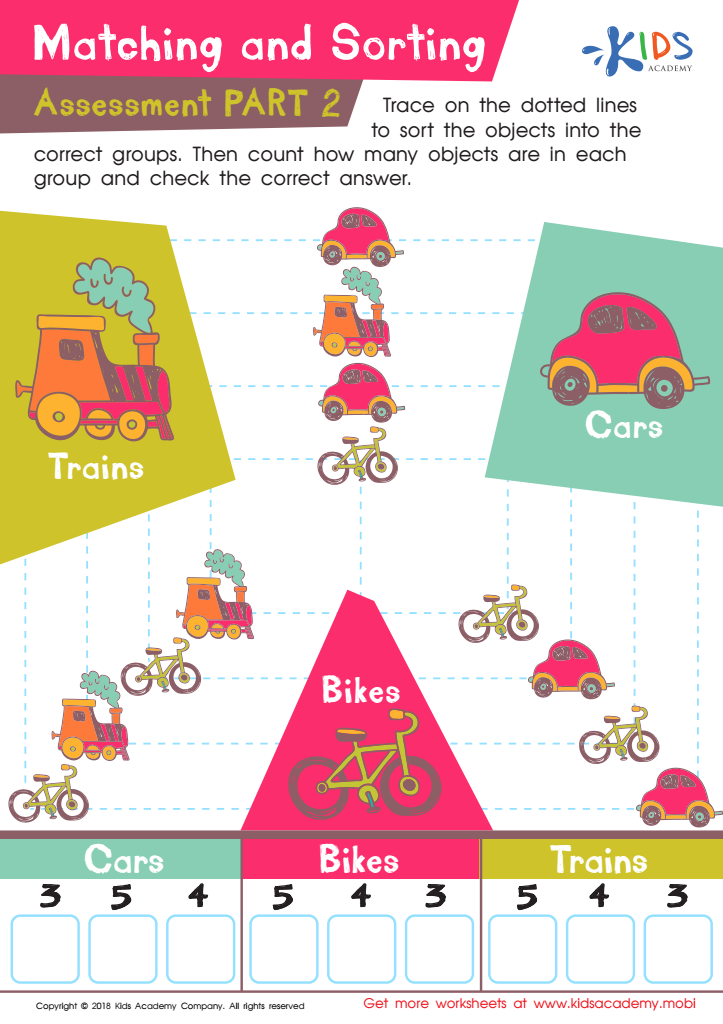
Matching and Sorting  for Kindergarten: Assessment 2 Worksheet

Matching and Sorting for Kindergarten: Assessment 2 Worksheet

This assessment tests matching, sorting and fine motor skills. It challenges kids to identify properties and attributes of pictures, trace guidelines and count the types of vehicles. It's a great way to practice basic number sense and hone in on important foundational skills.
Matching and Sorting for Kindergarten: Assessment 2 Worksheet
Worksheet
Piecing Together 16 Worksheet

Piecing Together 16 Worksheet

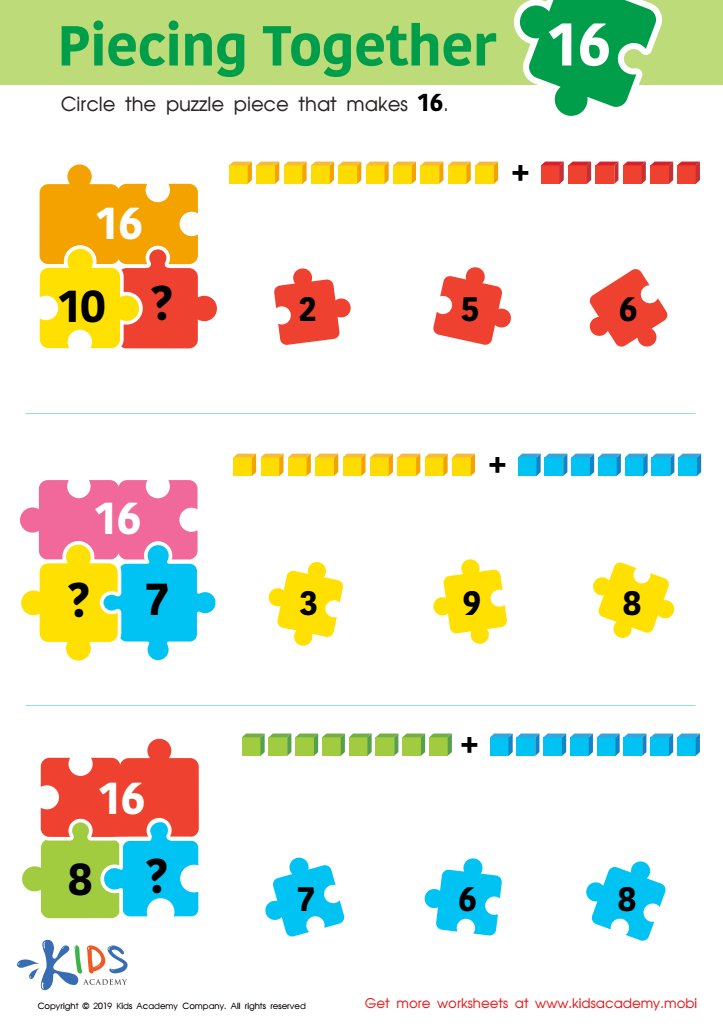
Combine learning with fun using this colorful worksheet! Ask your preschoolers what they see in the picture, then help them solve the mathematical equations on the puzzle pieces. One equation is missing on each; have them circle the piece that will make the bottom puzzle piece numbers equal 16. Use puzzles and bright colors to teach - it's one of the best ways your kids can learn!
Piecing Together 16 Worksheet
Worksheet
Shapes: Assessment 1 Worksheet

Shapes: Assessment 1 Worksheet

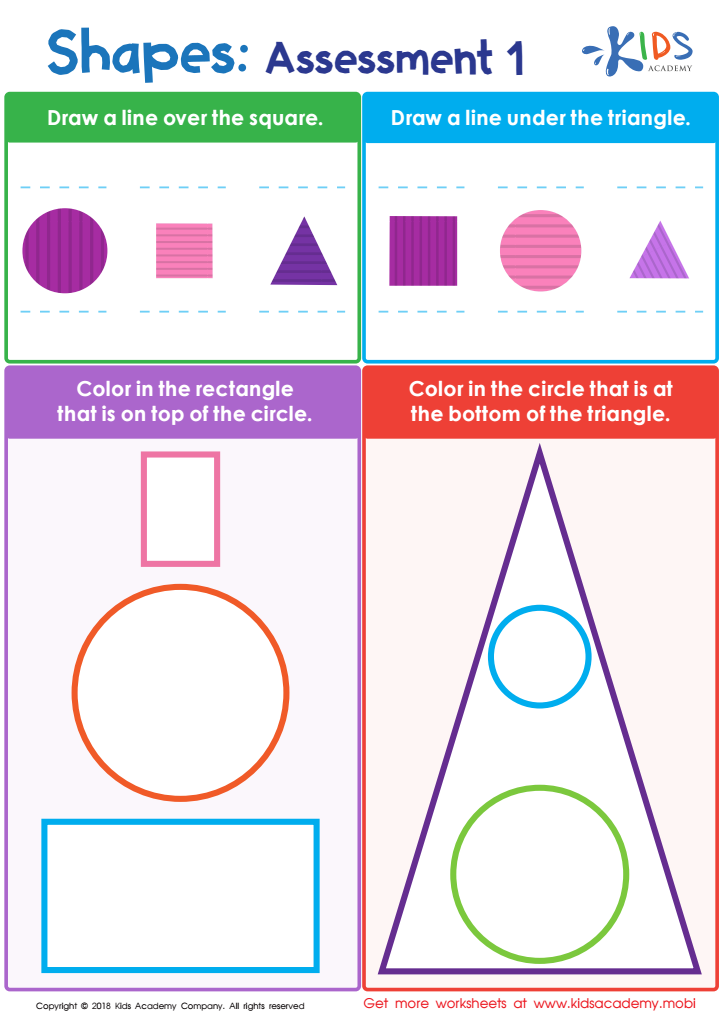
Test your students' understanding of the four basic shapes - circle, square, triangle and rectangle - with this assessment worksheet. Get them to draw a line over or under the shape indicated in the directions to show they can identify it correctly.
Shapes: Assessment 1 Worksheet
Worksheet
Piecing Together 11 Worksheet

Piecing Together 11 Worksheet

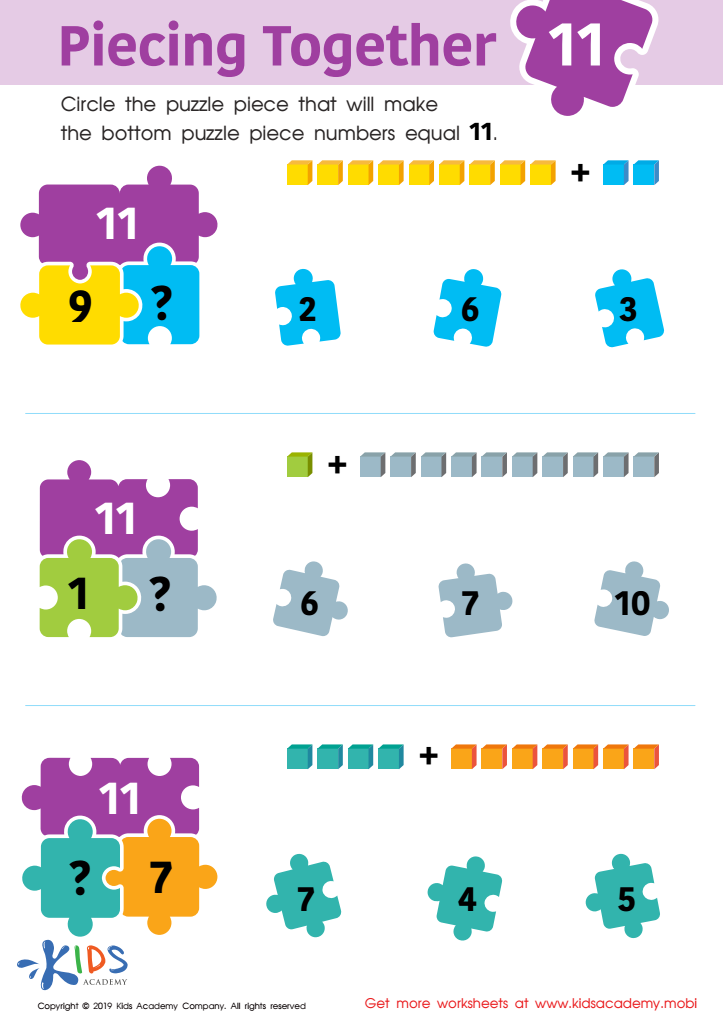
Engage your preschoolers with learning-filled fun! Show them this colorful worksheet, and ask them to identify the figures. Each puzzle piece features an equation, except one which is missing. Help the kids solve the problems and circle the piece that'll make the numbers equal 11. It's a surefire way to make learning enjoyable!
Piecing Together 11 Worksheet
Worksheet
Matching and Sorting  for Preschool: Assessment 2 Worksheet

Matching and Sorting for Preschool: Assessment 2 Worksheet

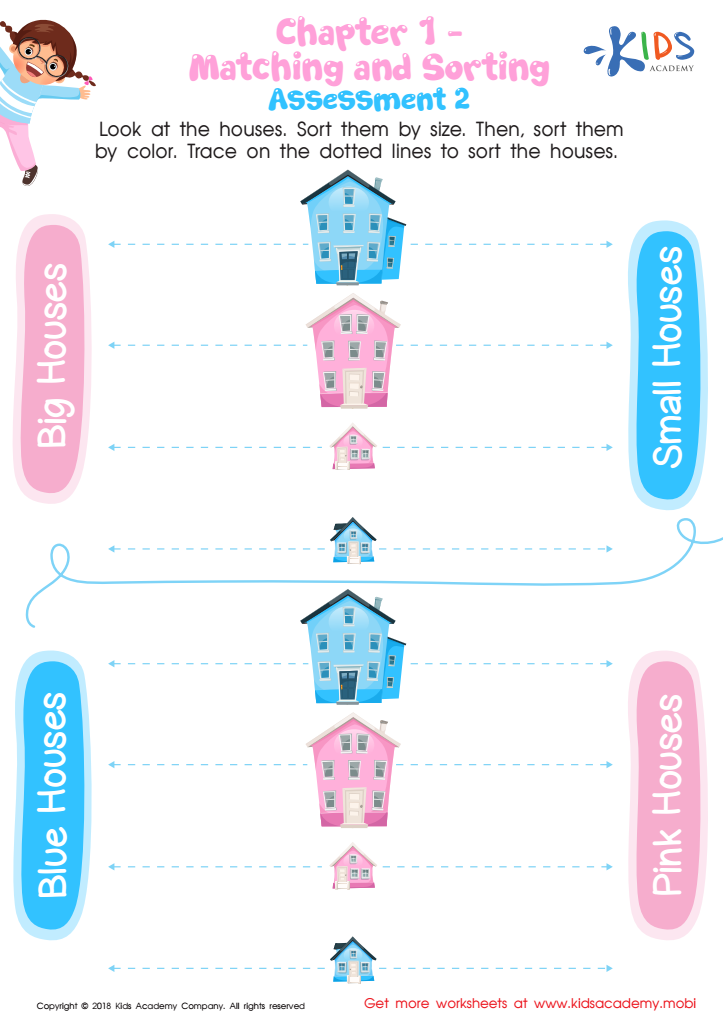
Encourage your kids to take a look at the colorful pictures. Ask them to name the objects. Next, point out any differences between the houses and let them sort them according to color and size. Finally, help them trace the houses on the dotted lines.
Matching and Sorting for Preschool: Assessment 2 Worksheet
Worksheet
Matching and Sorting for Preschool: Assessment 1 Worksheet
Matching and Sorting for Preschool: Assessment 1 Worksheet
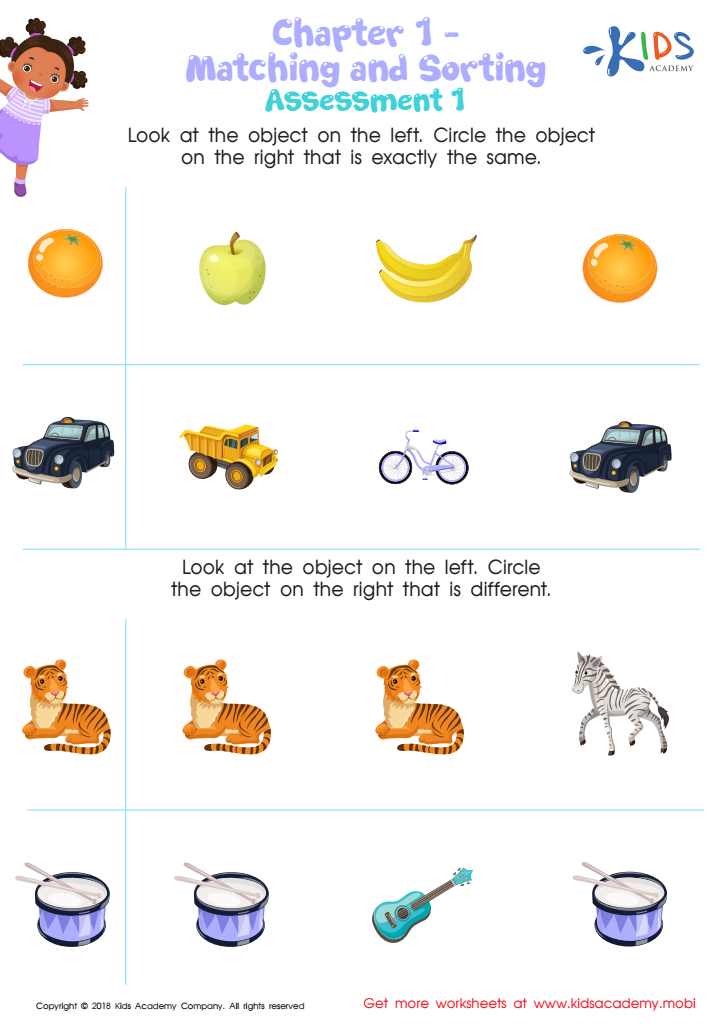
Test your child's matching skills with this worksheet! Ask them to name each of the objects pictured, then circle the ones that are the same. Repeat for the second task. It's a great way to assess their skills and have fun at the same time!
Matching and Sorting for Preschool: Assessment 1 Worksheet
Worksheet
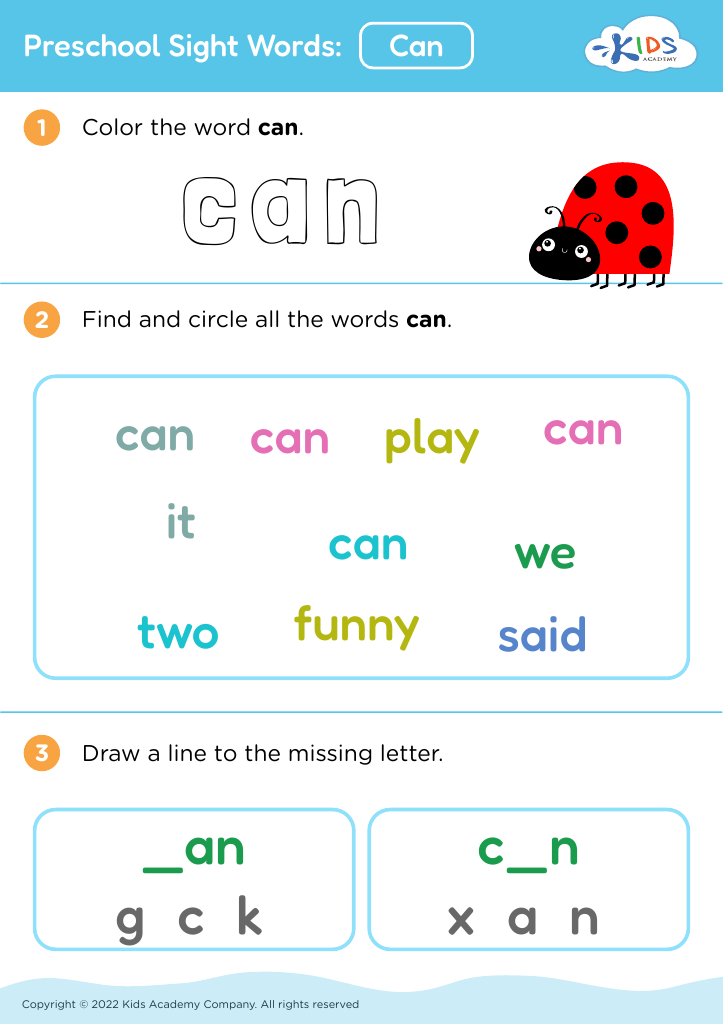
Preschool Sight Words: Can

Preschool Sight Words: Can

Preschool Sight Words: Can
Worksheet
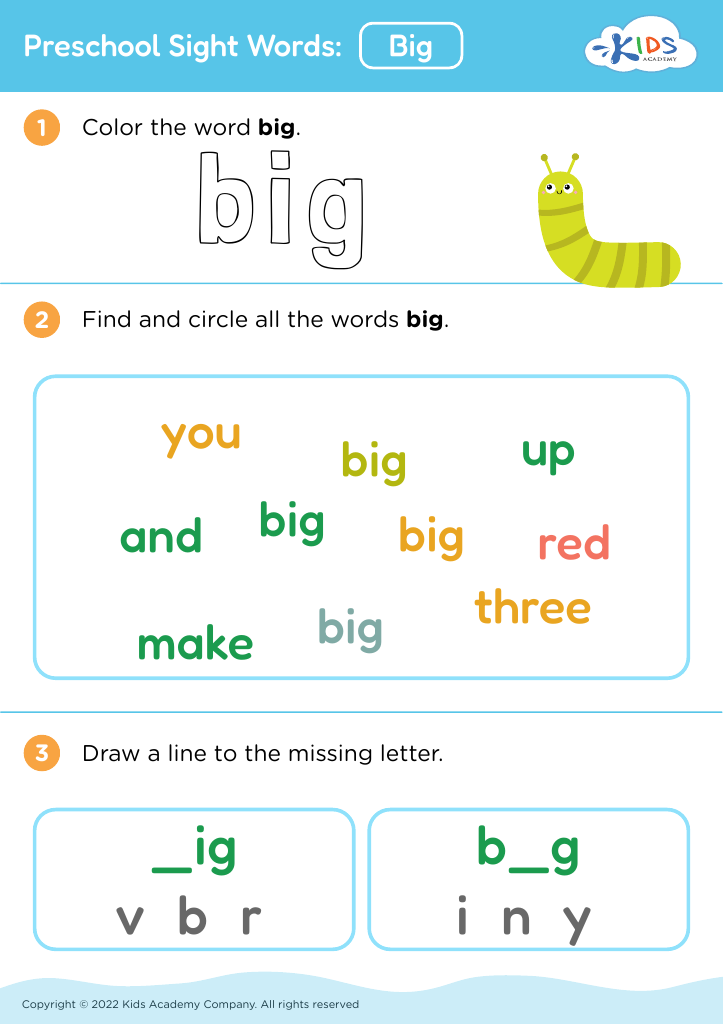
Preschool Sight Words: Big

Preschool Sight Words: Big

Preschool Sight Words: Big
Worksheet
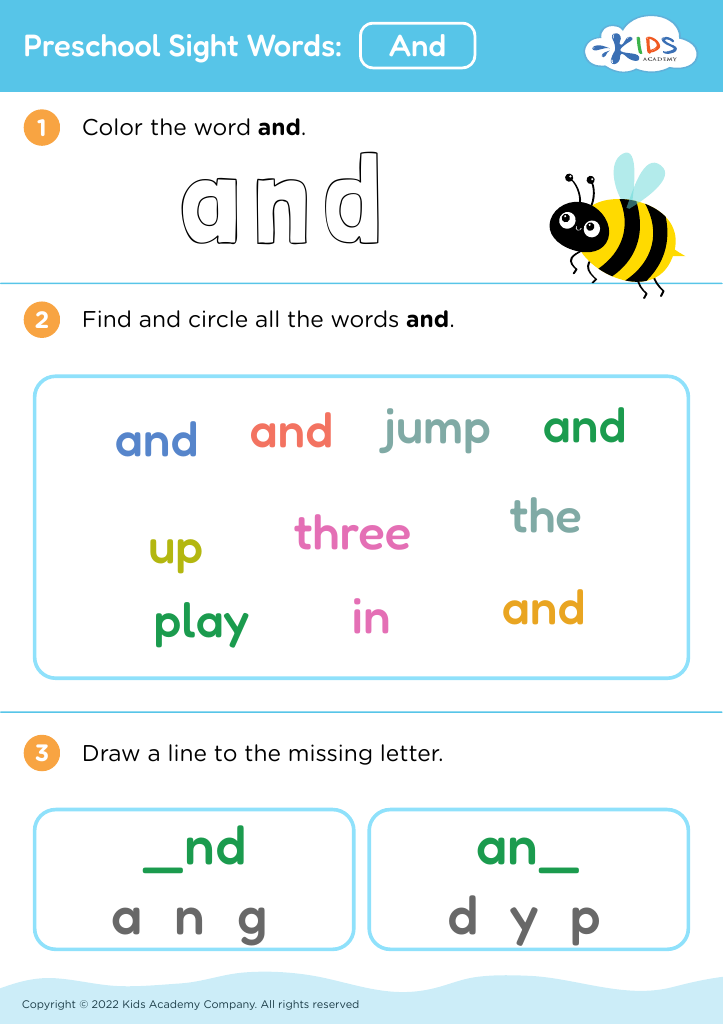
Preschool Sight Words: And

Preschool Sight Words: And

Preschool Sight Words: And
Worksheet
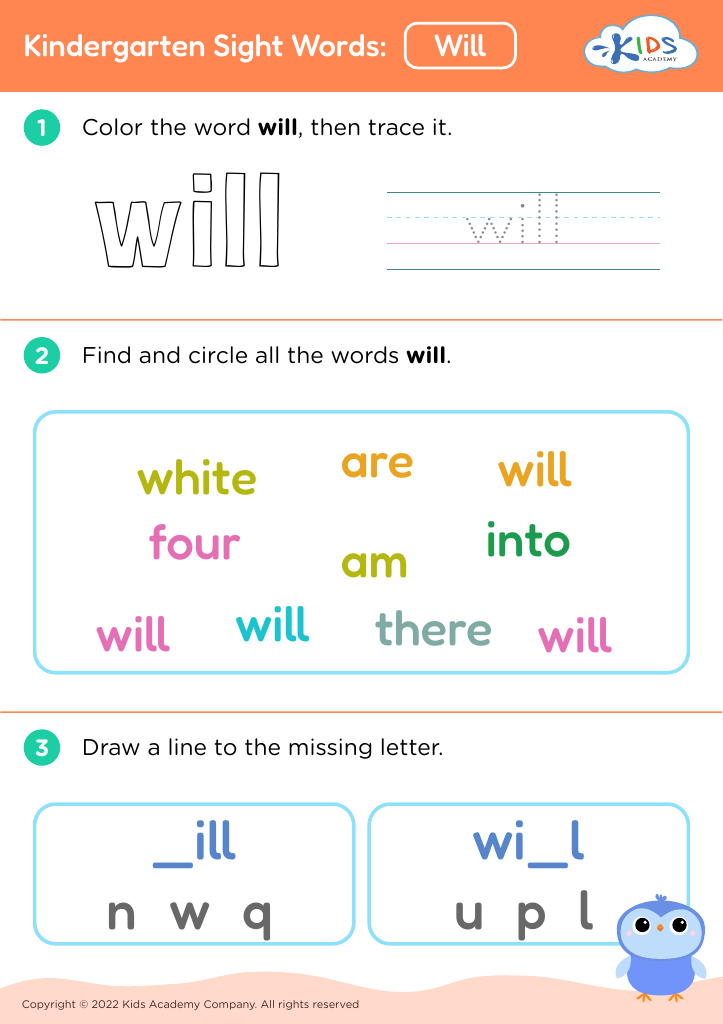
Kindergarten Sight Words: Will

Kindergarten Sight Words: Will

Kindergarten Sight Words: Will
Worksheet
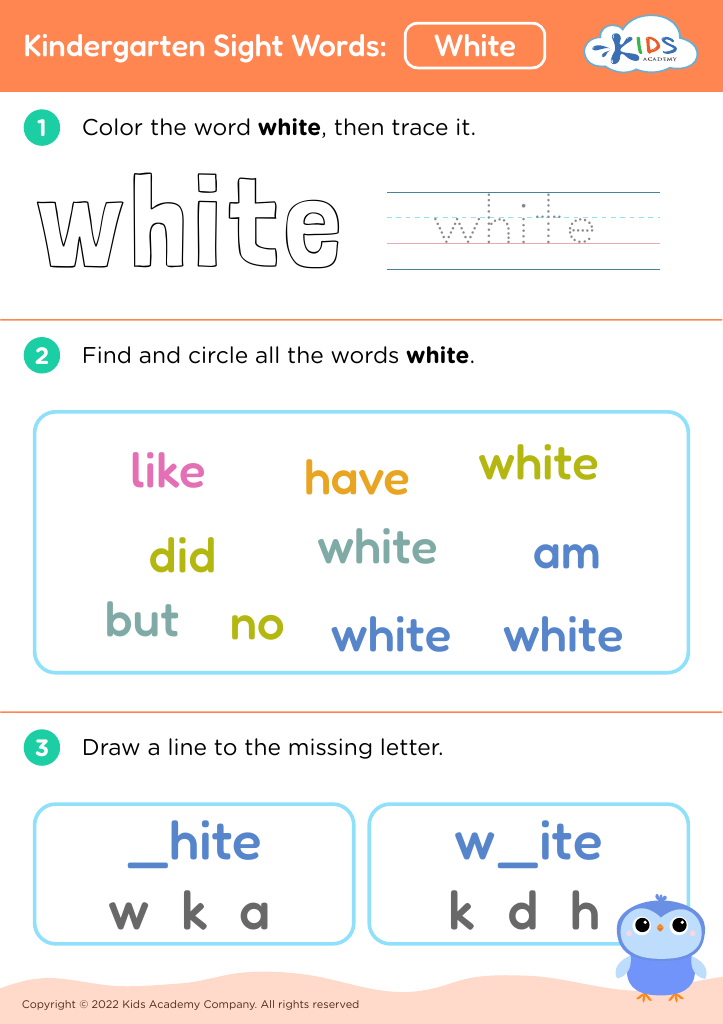
Kindergarten Sight Words: White

Kindergarten Sight Words: White

Kindergarten Sight Words: White
Worksheet
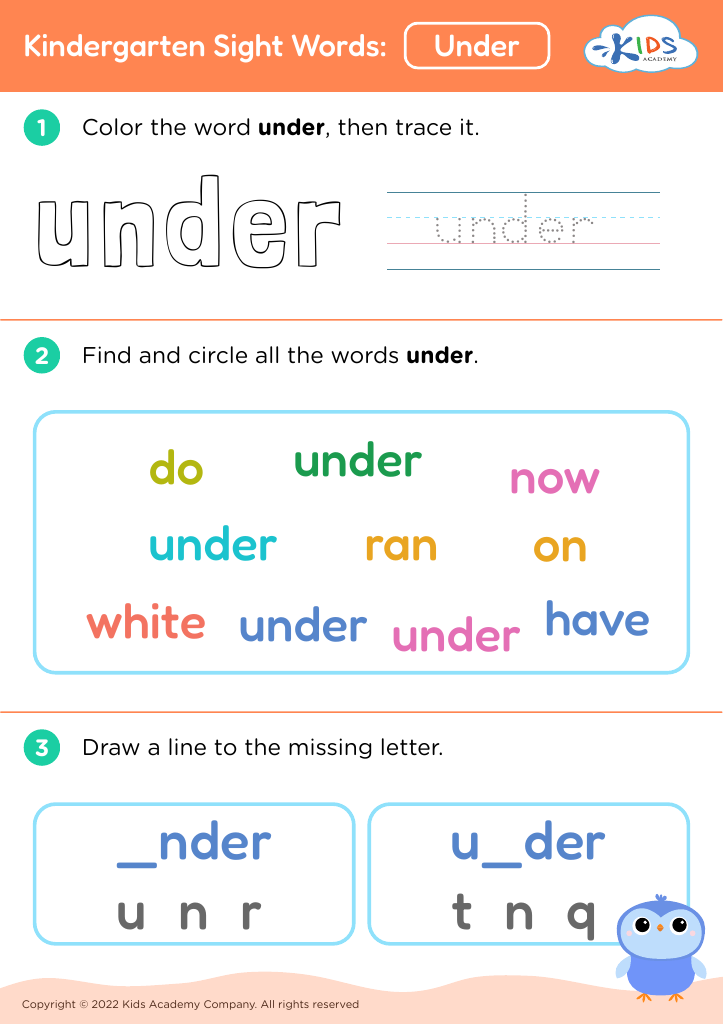
Kindergarten Sight Words: Under

Kindergarten Sight Words: Under

Kindergarten Sight Words: Under
Worksheet
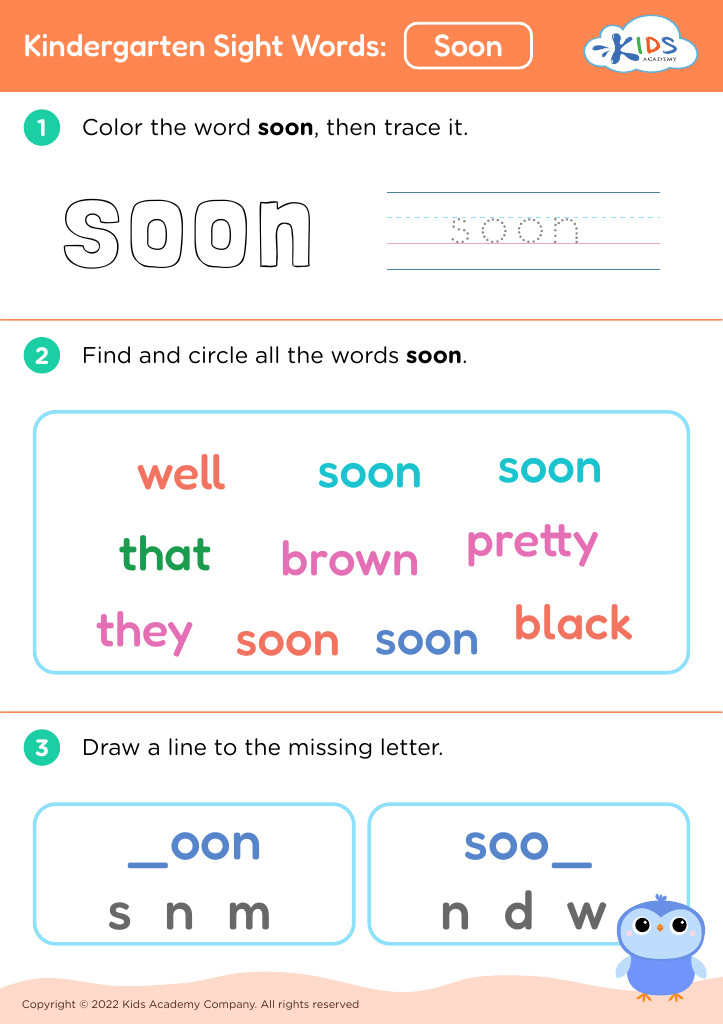
Kindergarten Sight Words: Soon

Kindergarten Sight Words: Soon

Kindergarten Sight Words: Soon
Worksheet
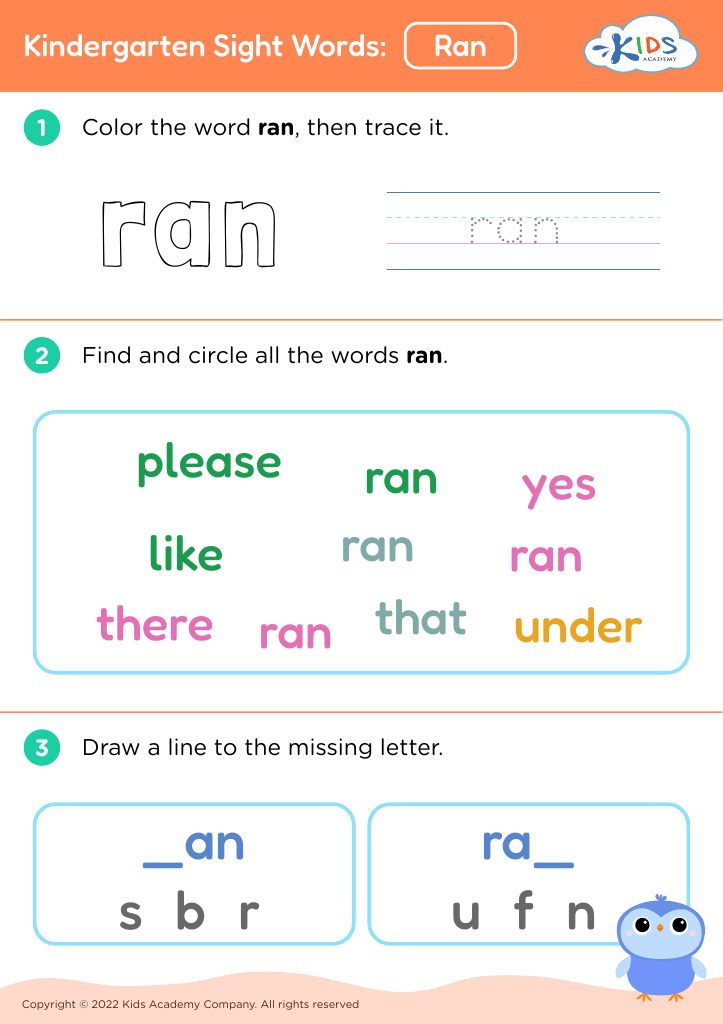
Kindergarten Sight Words: Ran

Kindergarten Sight Words: Ran

Kindergarten Sight Words: Ran
Worksheet
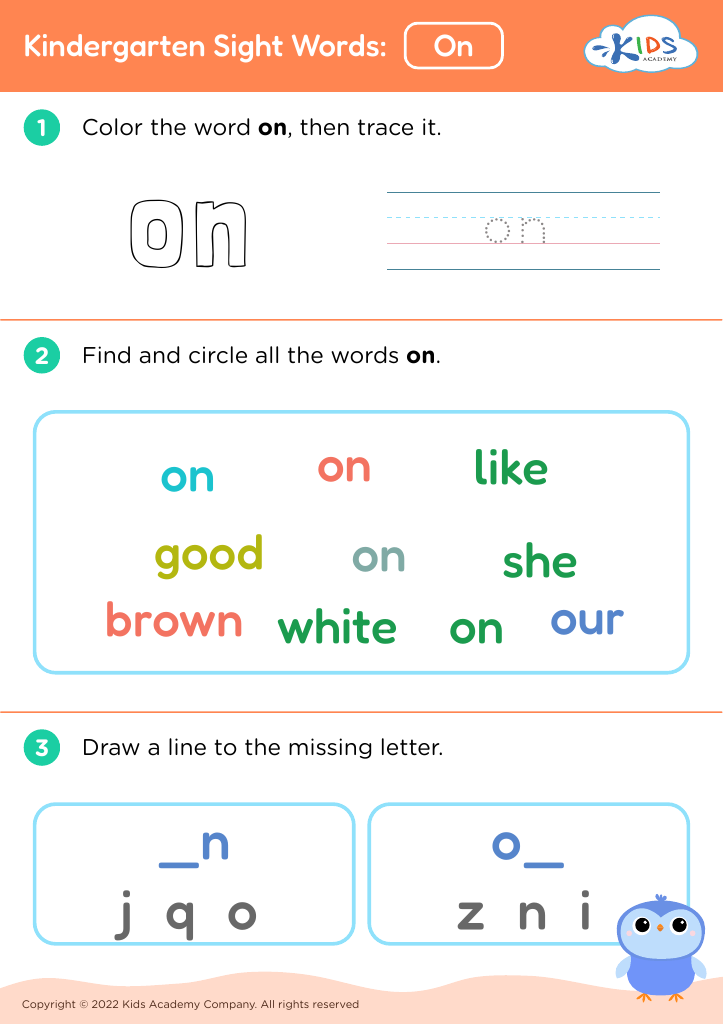
Kindergarten Sight Words: On

Kindergarten Sight Words: On

Kindergarten Sight Words: On
Worksheet
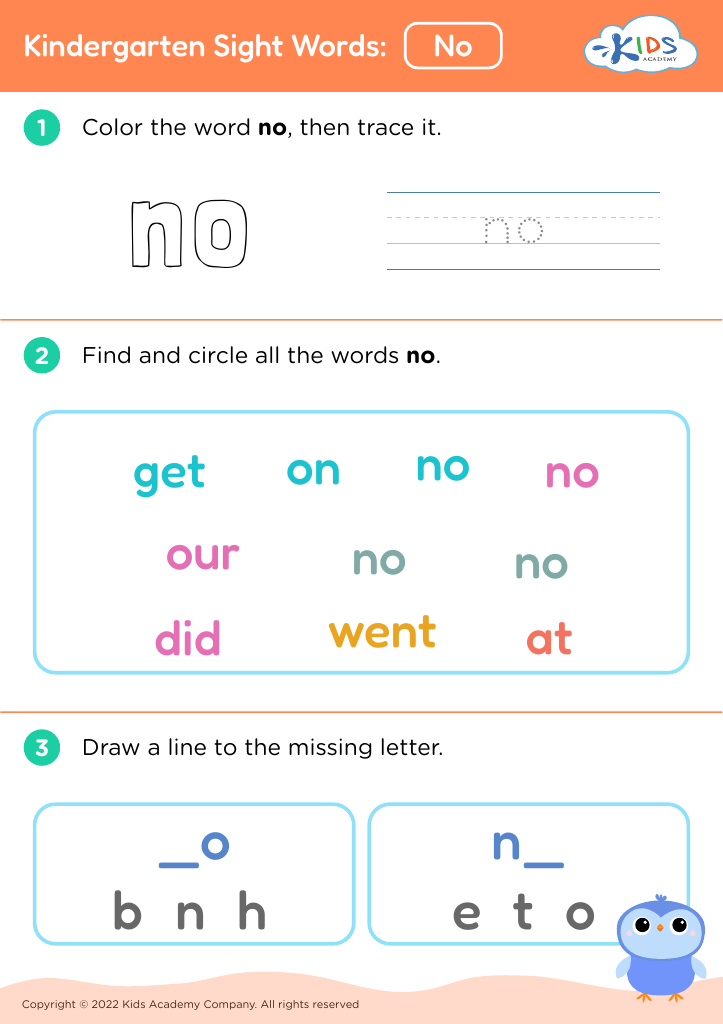
Kindergarten Sight Words: No

Kindergarten Sight Words: No

Kindergarten Sight Words: No
Worksheet
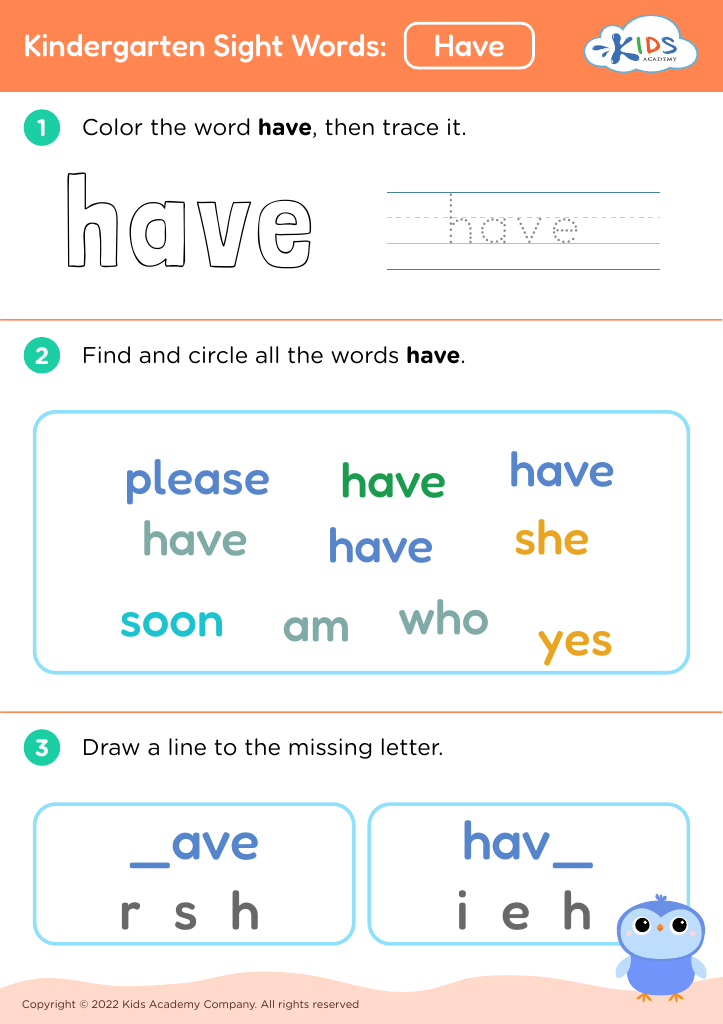
Kindergarten Sight Words: Have

Kindergarten Sight Words: Have

Kindergarten Sight Words: Have
Worksheet
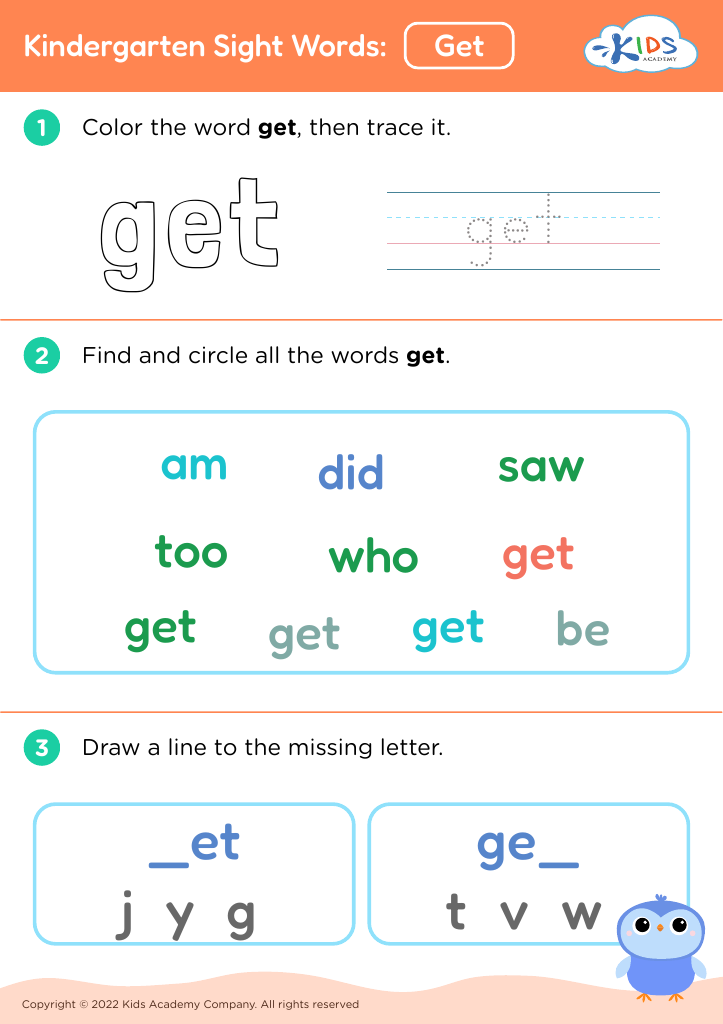
Kindergarten Sight Words: Get

Kindergarten Sight Words: Get

Kindergarten Sight Words: Get
Worksheet
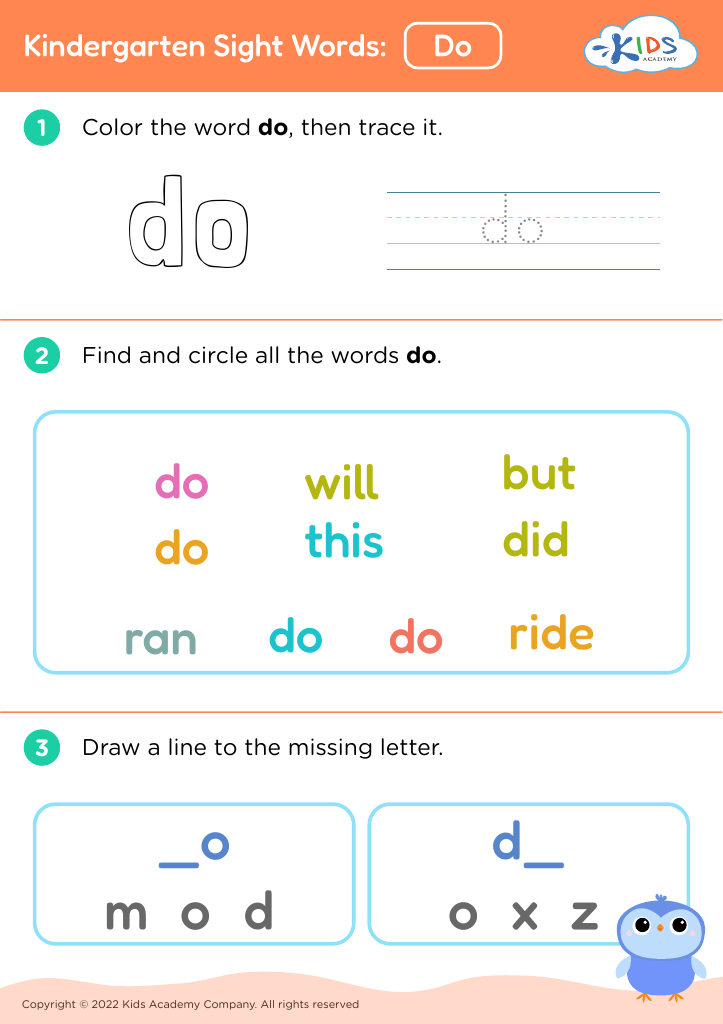
Kindergarten Sight Words: Do

Kindergarten Sight Words: Do

Kindergarten Sight Words: Do
Worksheet
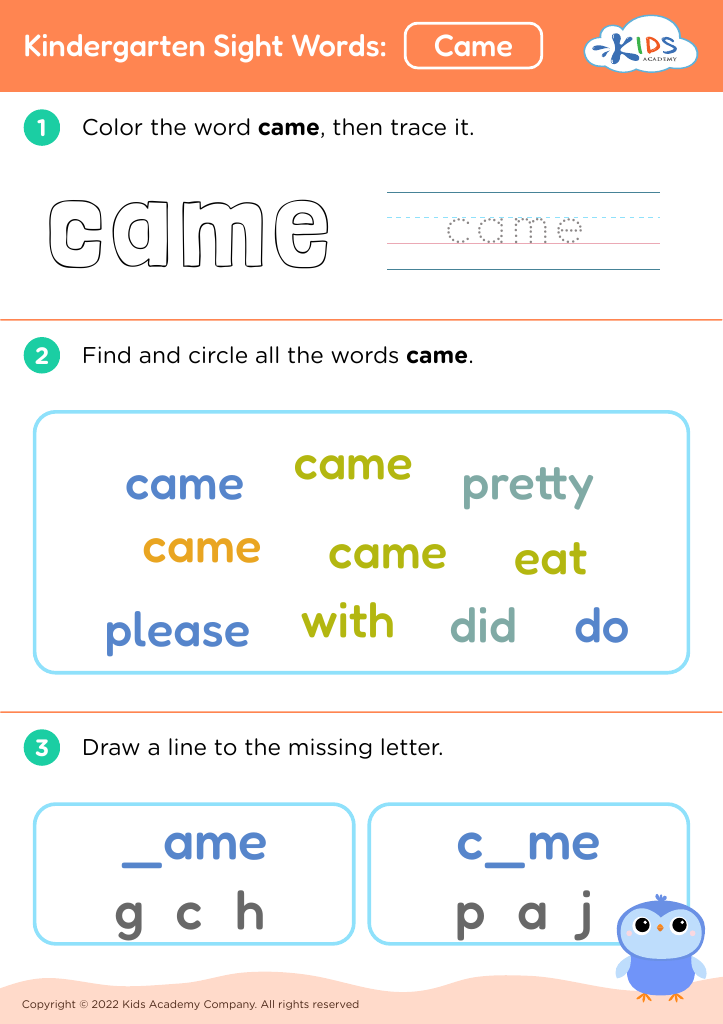
Kindergarten Sight Words: Came

Kindergarten Sight Words: Came

Kindergarten Sight Words: Came
Worksheet
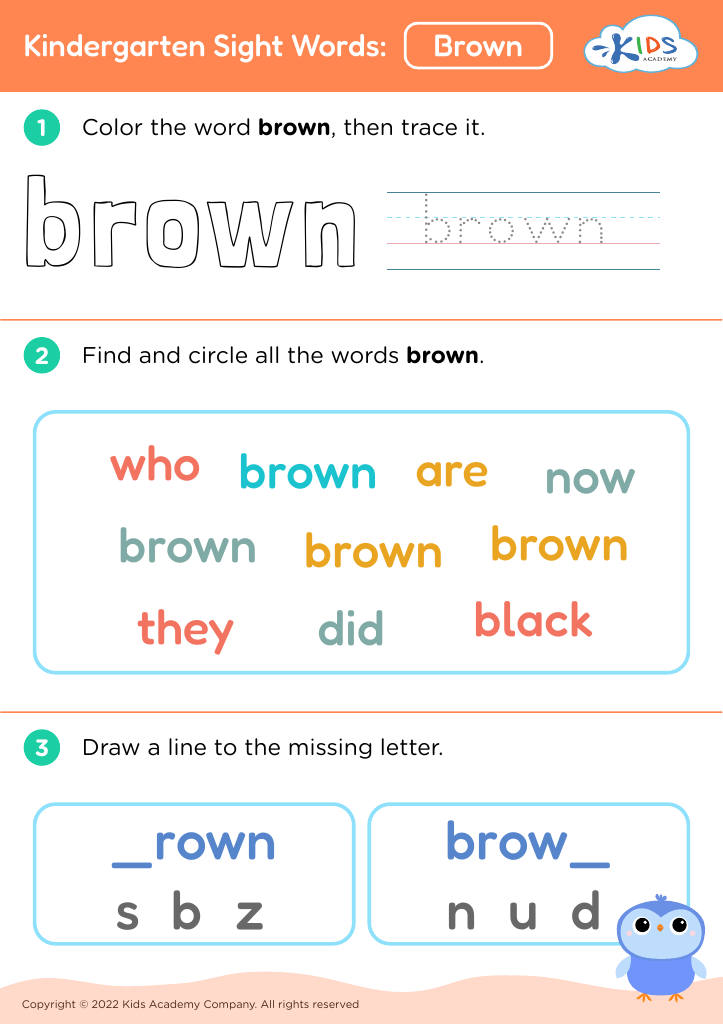
Kindergarten Sight Words: Brown

Kindergarten Sight Words: Brown

Kindergarten Sight Words: Brown
Worksheet
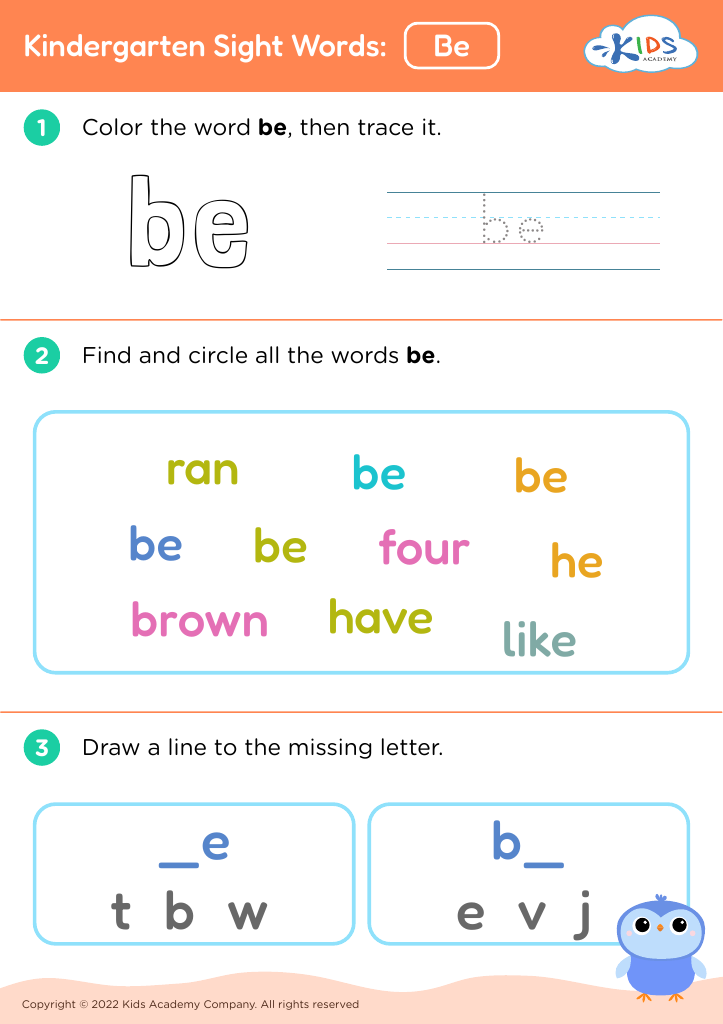
Kindergarten Sight Words: Be

Kindergarten Sight Words: Be

Kindergarten Sight Words: Be
Worksheet


Understanding fractions at an early age is essential for young learners, particularly for children ages 3-5. During these formative years, children develop crucial cognitive skills and mathematical foundations that will serve them throughout their education. Introducing fractions helps nurture their understanding of part-whole relationships, promoting critical thinking and problem-solving skills.

Learning fractions can be made interactive and fun through everyday activities such as sharing objects, cooking, or sorting toys. For example, dividing a pizza into slices provides a physical representation of fractions, making abstract concepts more tangible. This hands-on approach not only keeps children engaged but also strengthens their visual and tactile learning.

Additionally, understanding basic fractions can enhance children's language skills as they learn to describe quantities and relationships. Teachers and parents can foster discussions around division and grouping, laying the groundwork for more advanced mathematical concepts later on.

Finally, a solid grasp of fractions enriches other areas of math, forming a building block for measurement, data interpretation, and geometry. By investing time in teaching fractions, parents and teachers create a strong mathematical foundation, empowering children to tackle future challenges successfully.