Check out this FREE "Visual Learning" Trial Lesson for age 3-5!

Writing Number Sentences for Addition Story Problems

Favorites
With answer key
Interactive
  • 3-5
  • Visual Learning
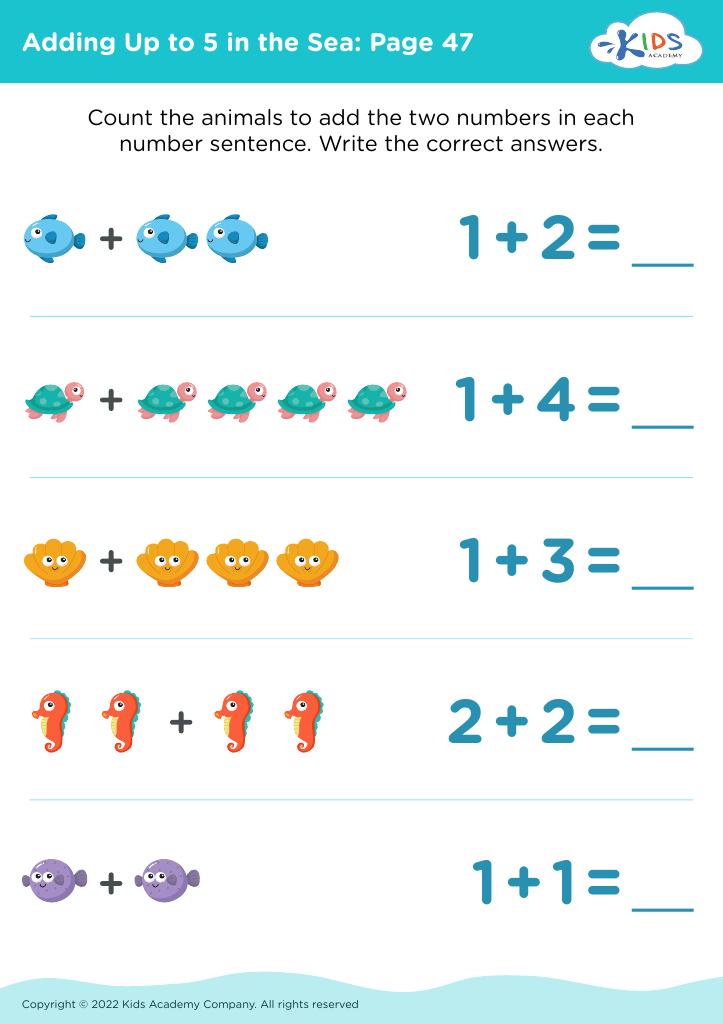
Adding Up to 5 in the Sea: Page 47
Worksheet
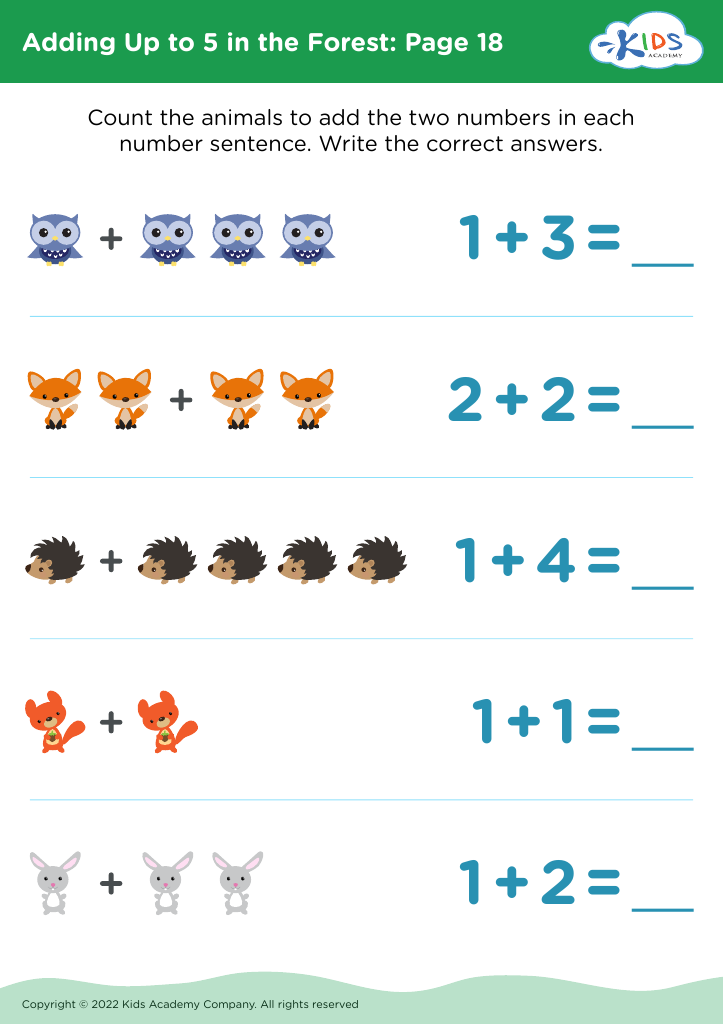
Adding Up to 5 in the Forest: Page 18
Worksheet
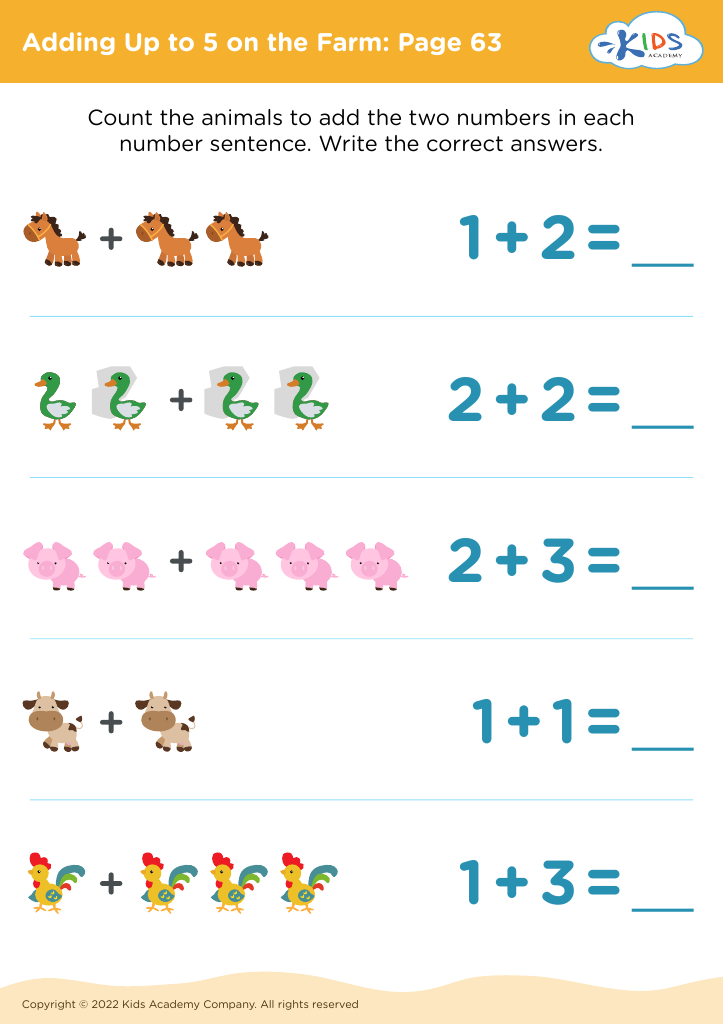
Adding Up to 5 on the Farm: Page 63
Worksheet
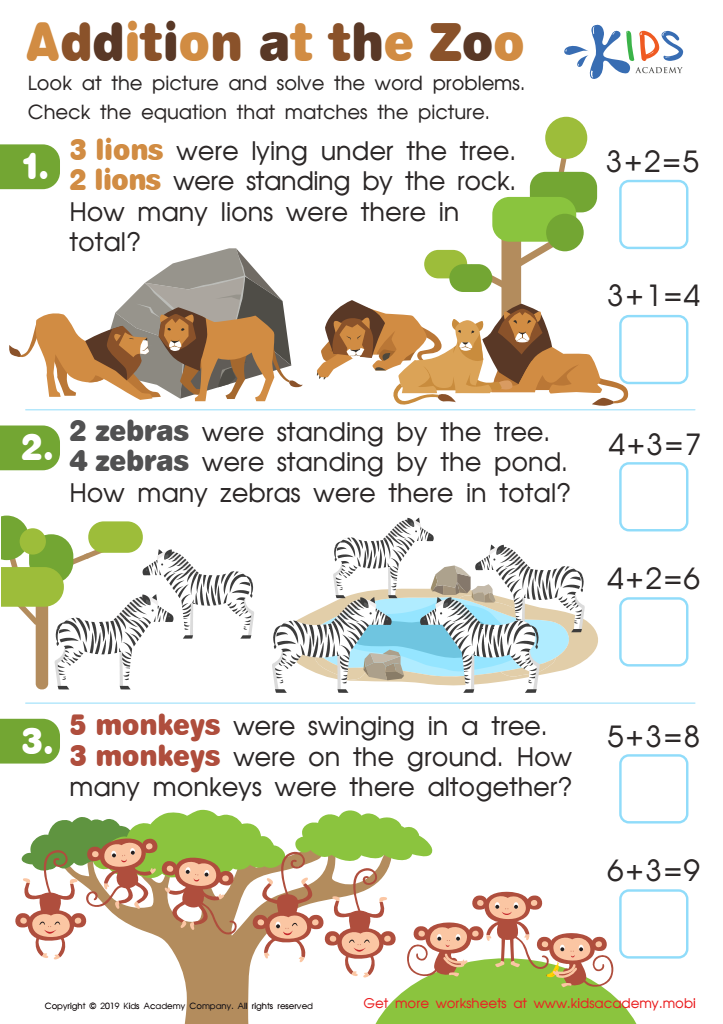
Addition at the Zoo Worksheet

Addition at the Zoo Worksheet

Visit the zoo with your kids and point out all the different animals. Ask them to name their favorites and identify animals on a worksheet. Challenge them to solve word problems related to the pictures. Ask them for the equation that fits the picture and check the answer.
Addition at the Zoo Worksheet
Worksheet
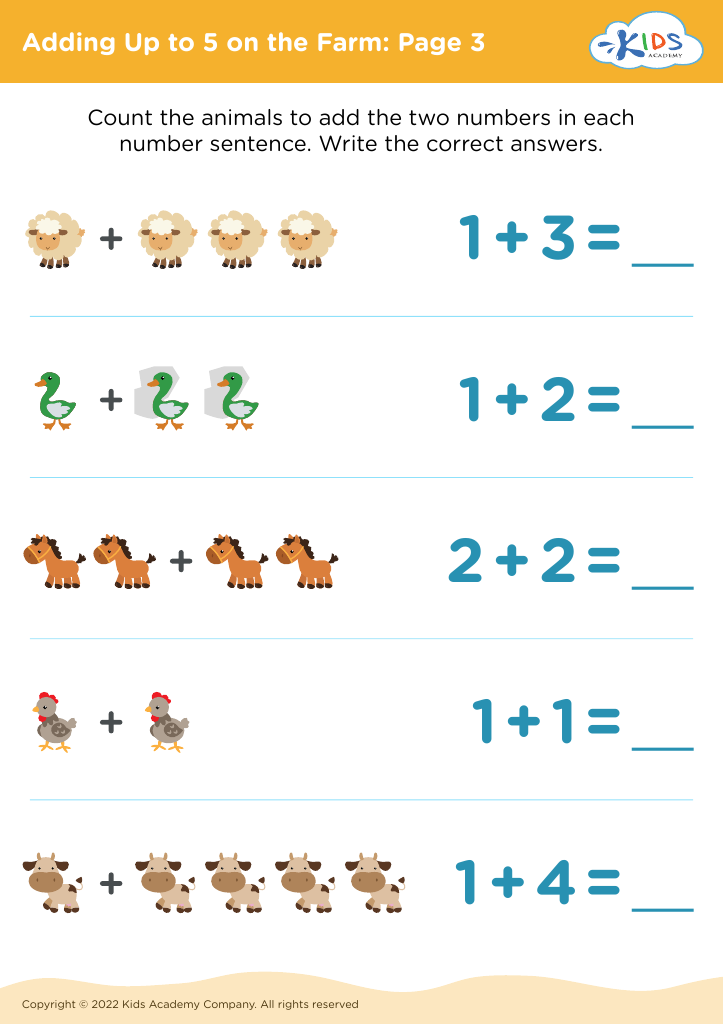
Adding Up to 5 on the Farm: Page 3
Worksheet
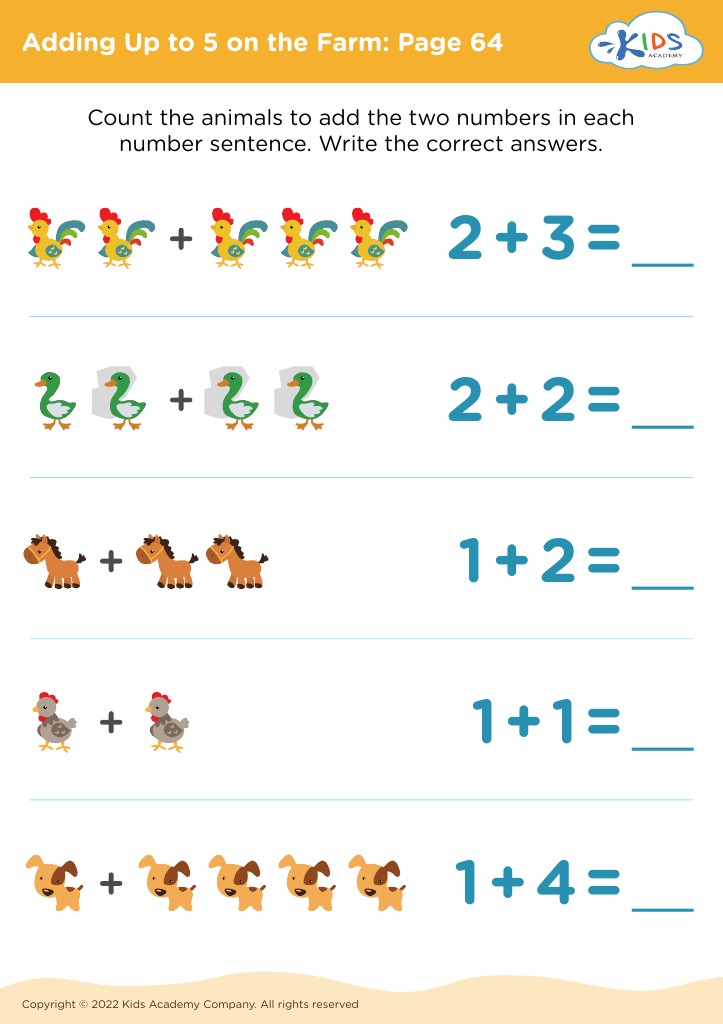
Adding Up to 5 on the Farm: Page 64
Worksheet
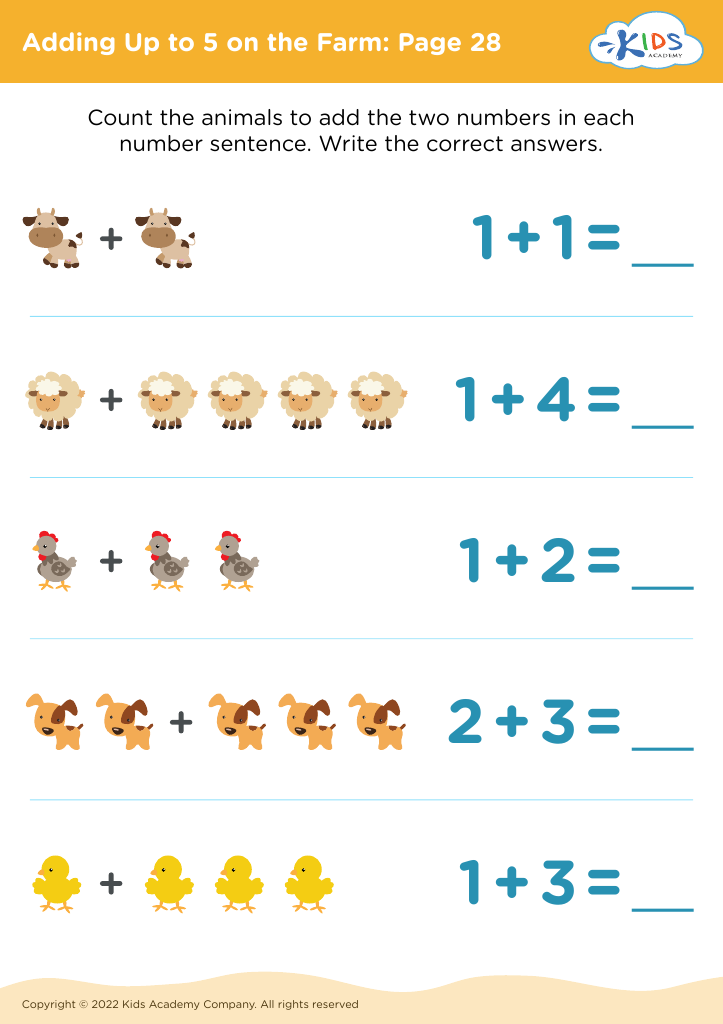
Adding Up to 5 on the Farm: Page 28
Worksheet
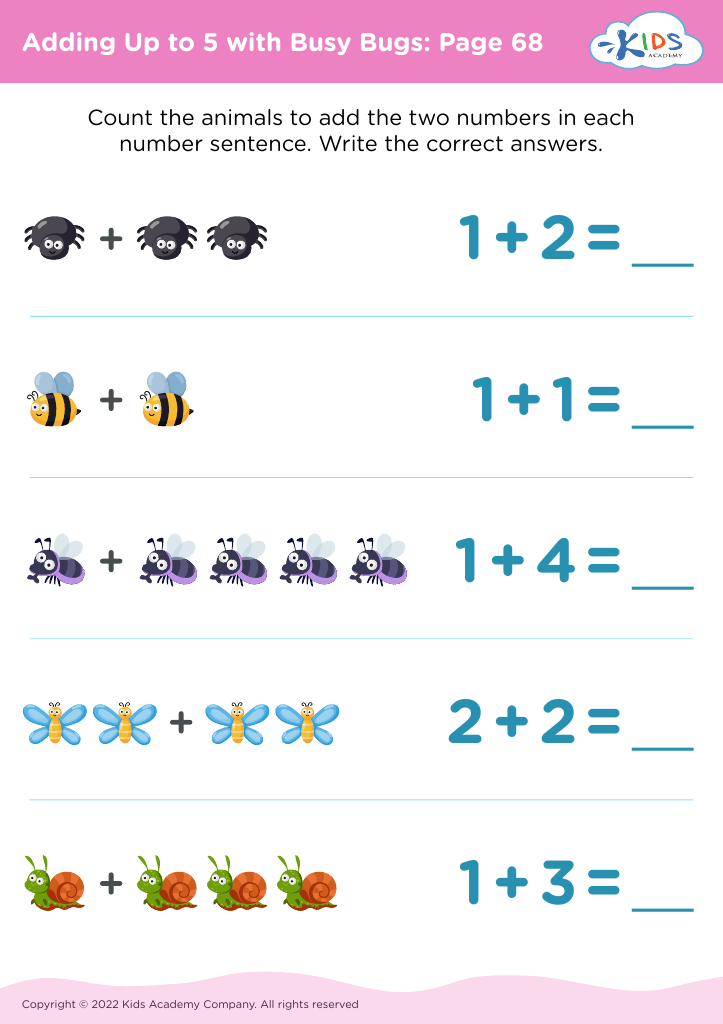
Adding Up to 5 with Busy Bugs: Page 68
Worksheet
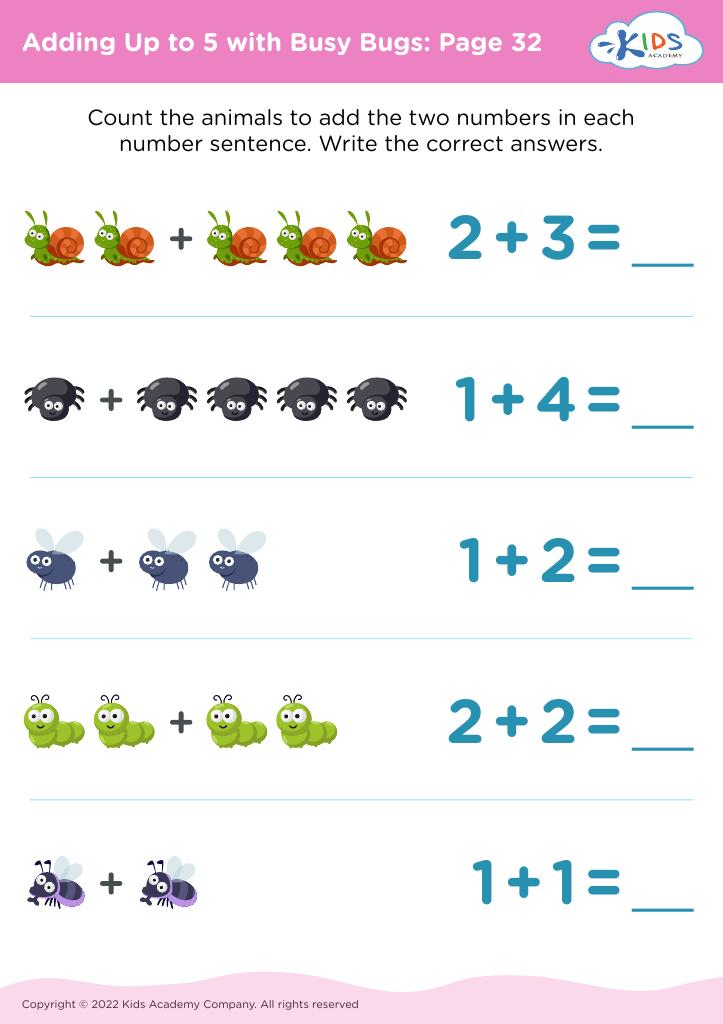
Adding Up to 5 with Busy Bugs: Page 32
Worksheet
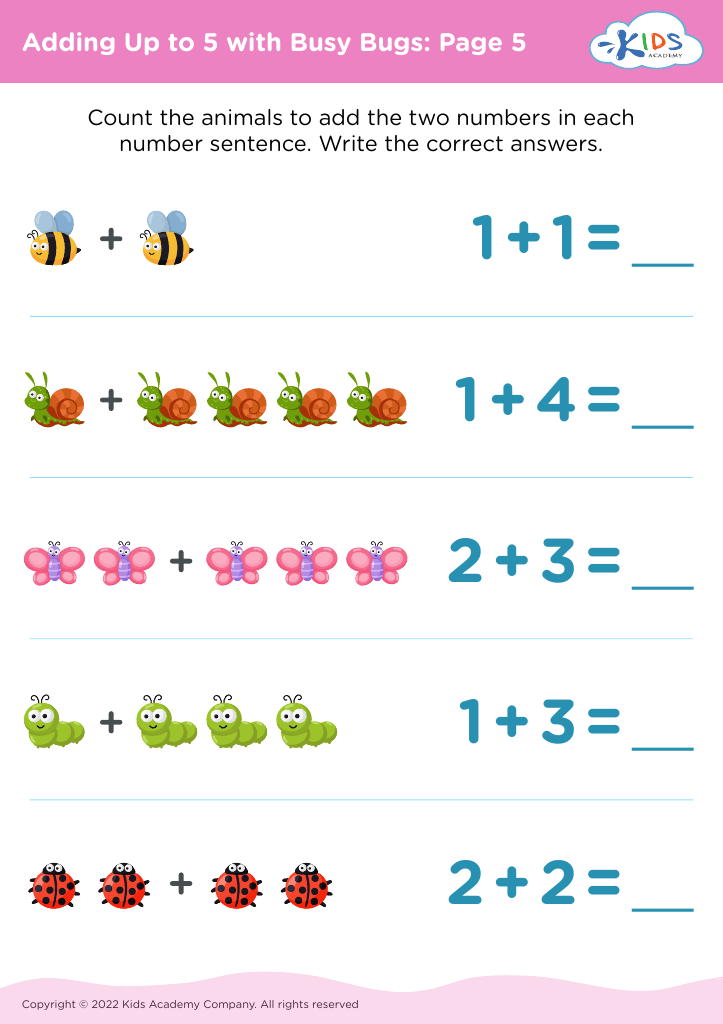
Adding Up to 5 with Busy Bugs: Page 5
Worksheet
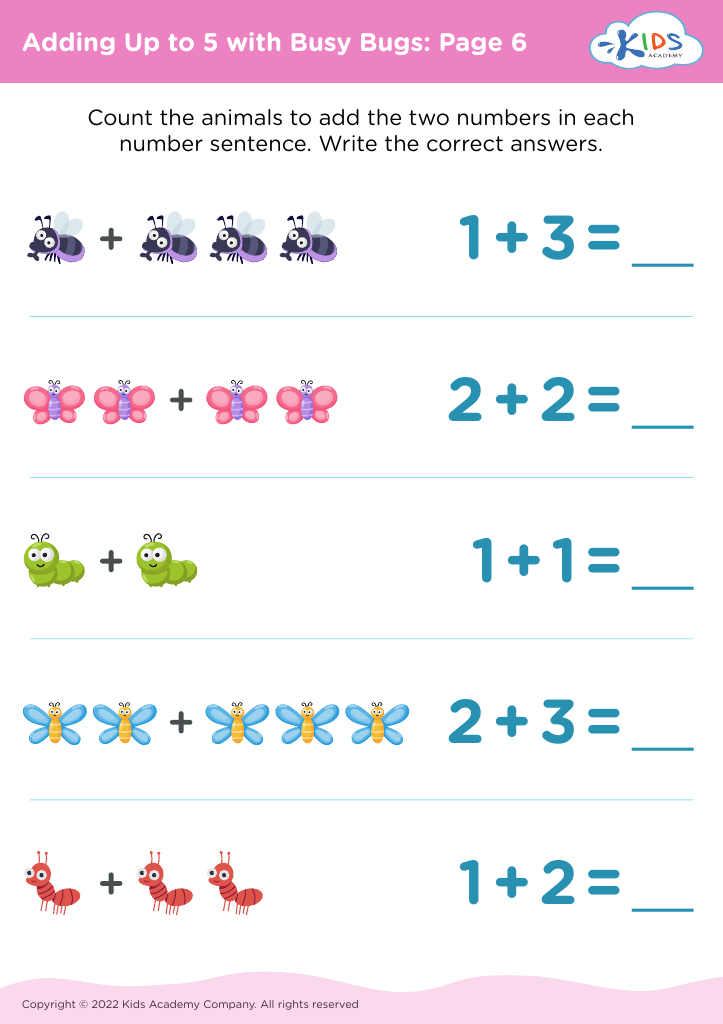
Adding Up to 5 with Busy Bugs: Page 6
Worksheet
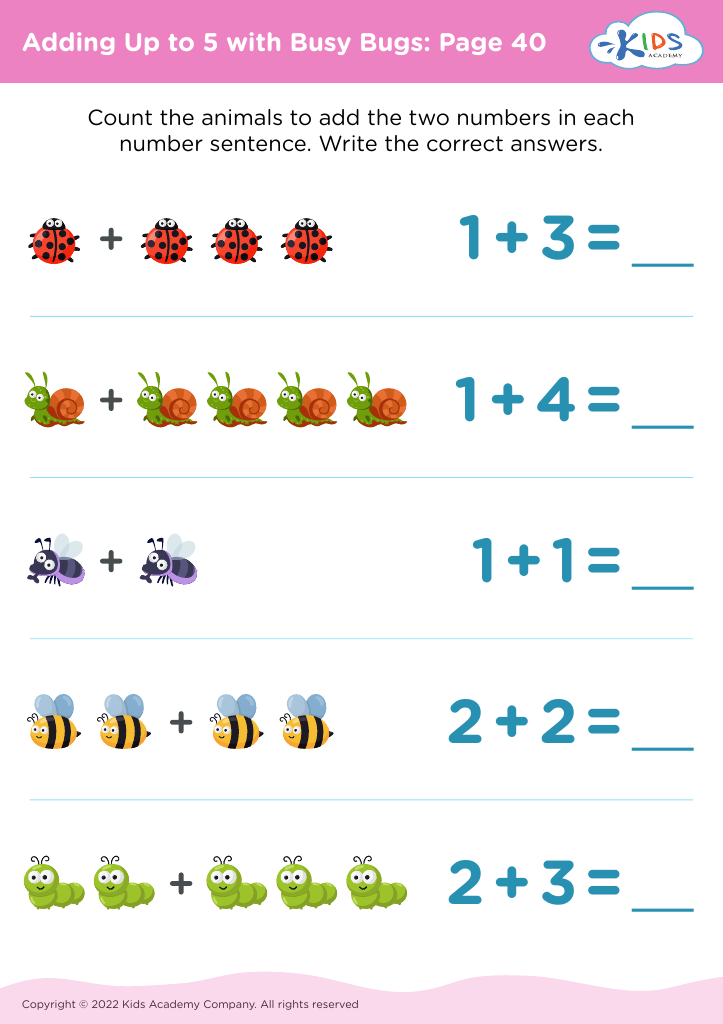
Adding Up to 5 with Busy Bugs: Page 40
Worksheet
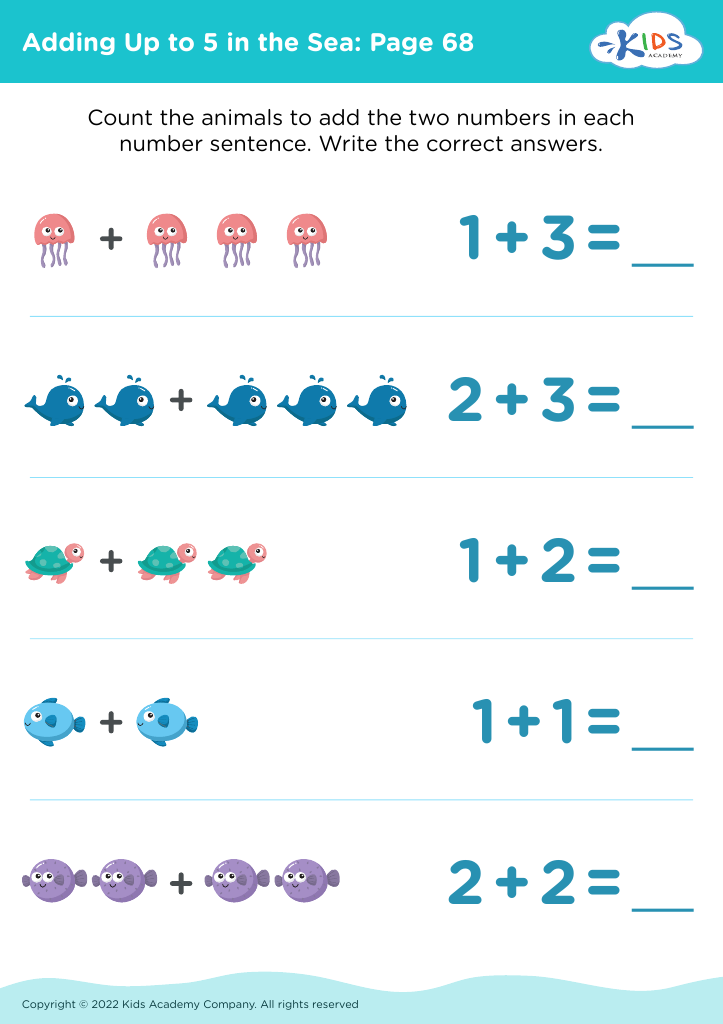
Adding Up to 5 in the Sea: Page 68
Worksheet
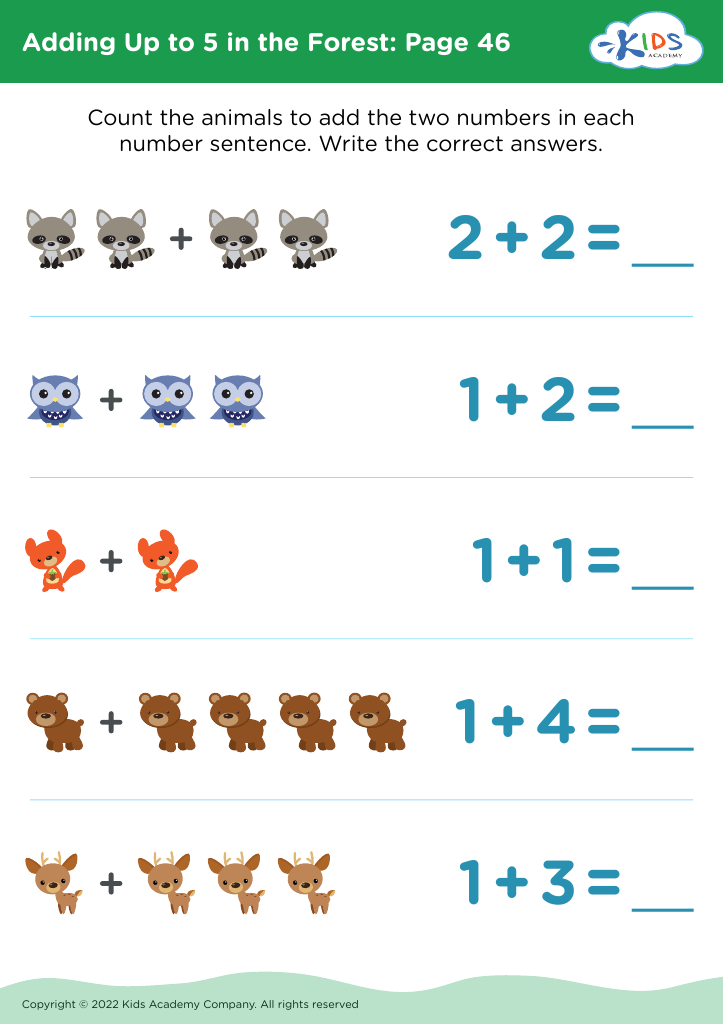
Adding Up to 5 in the Forest: Page 46
Worksheet
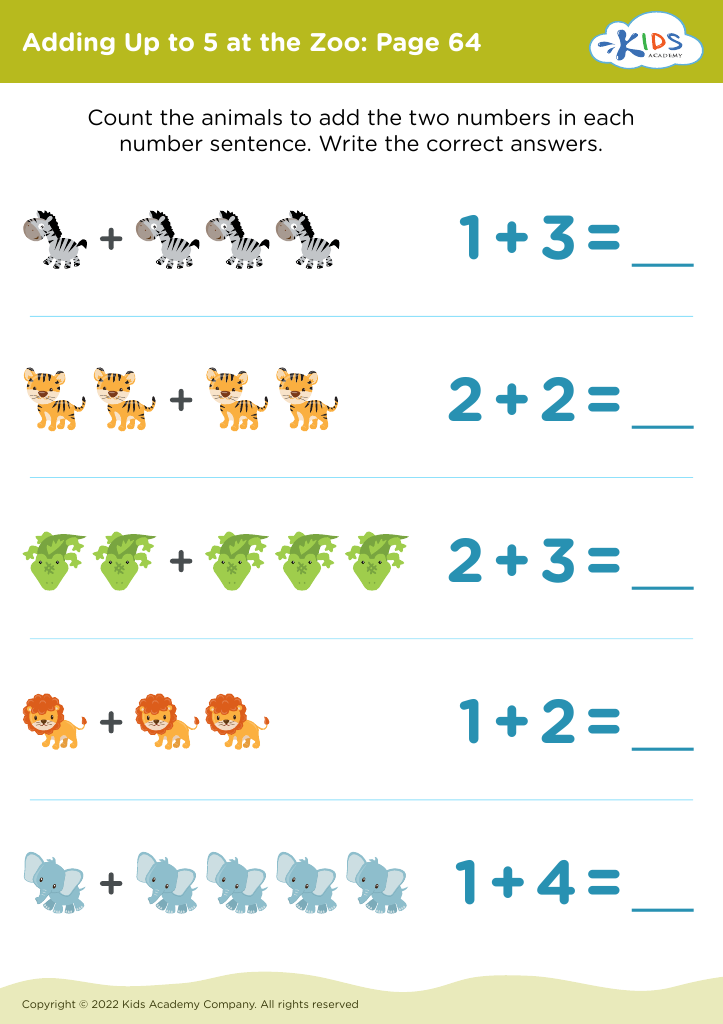
Adding Up to 5 at the Zoo: Page 64
Worksheet
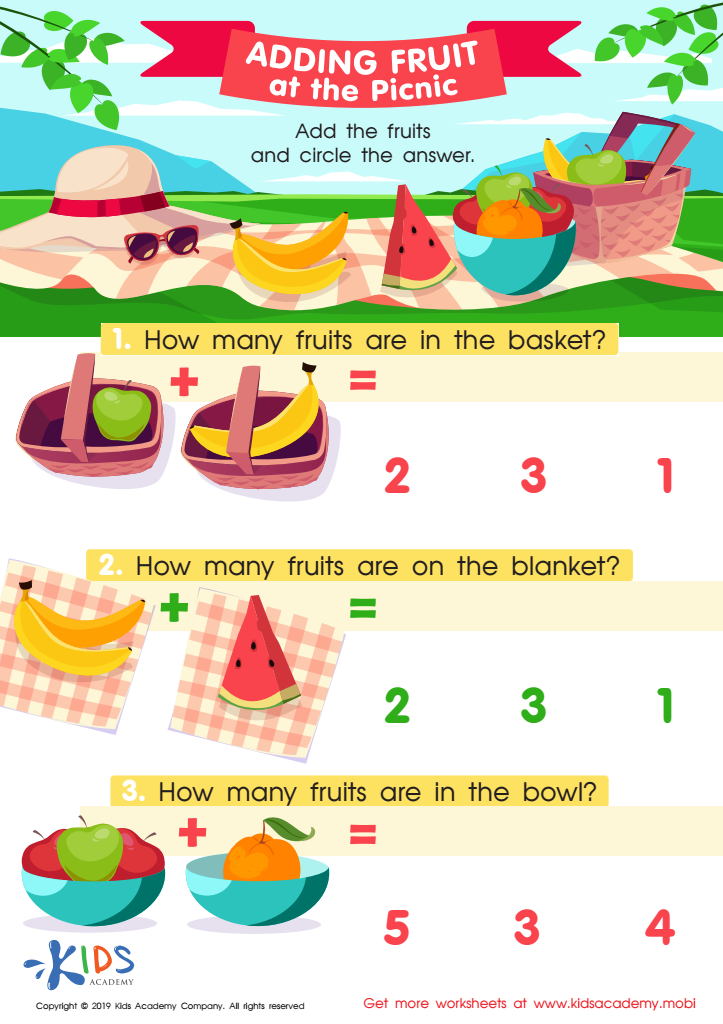
Adding Fruit at the Picnic Worksheet
Adding Fruit at the Picnic Worksheet
Picnics are a great way for the family to enjoy a fun day in the sun! Get your kids involved by having them help load the picnic basket and do this worksheet to practice their math skills while they get ready. Identify the fruits in the picture, add them up, and circle the correct answer.
Adding Fruit at the Picnic Worksheet
Worksheet
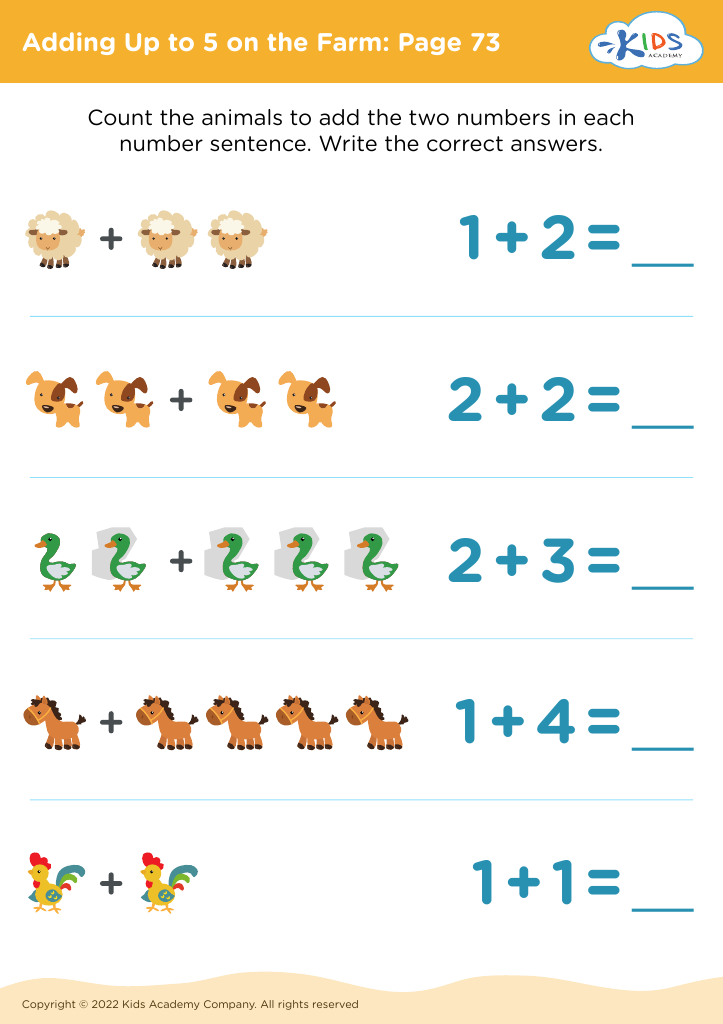
Adding Up to 5 on the Farm: Page 73
Worksheet
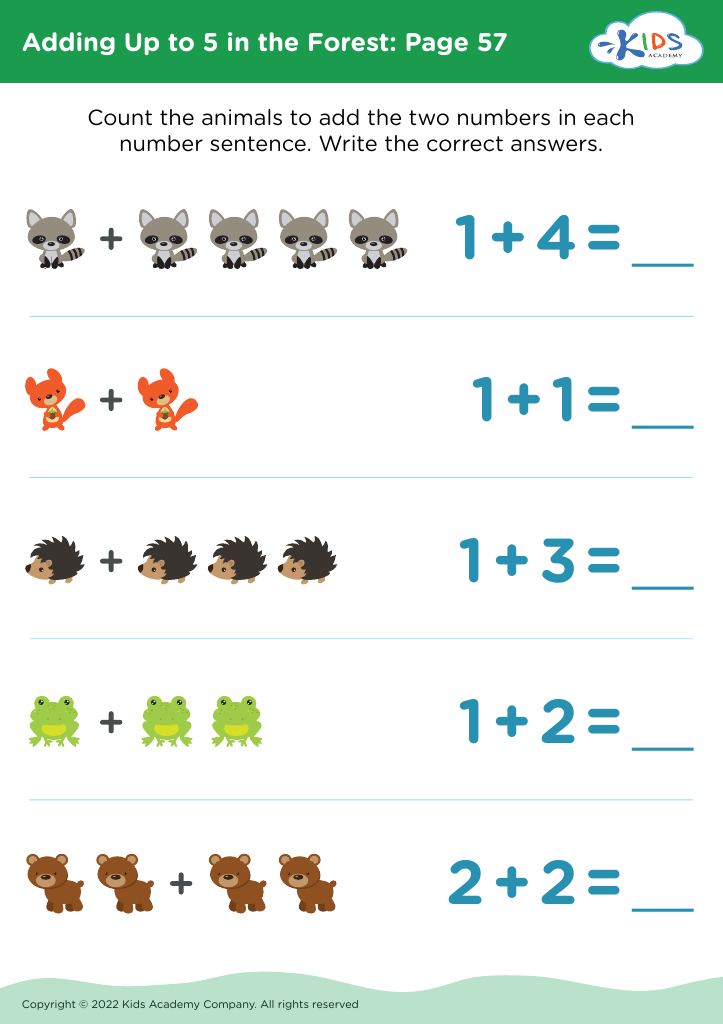
Adding Up to 5 in the Forest: Page 57
Worksheet
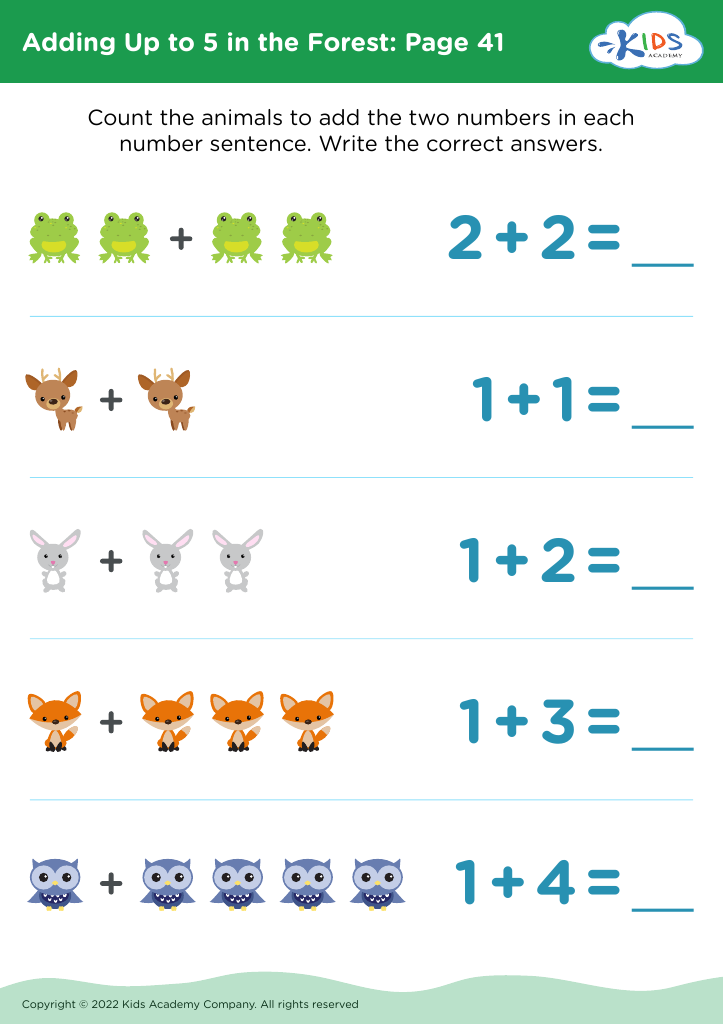
Adding Up to 5 in the Forest: Page 41
Worksheet
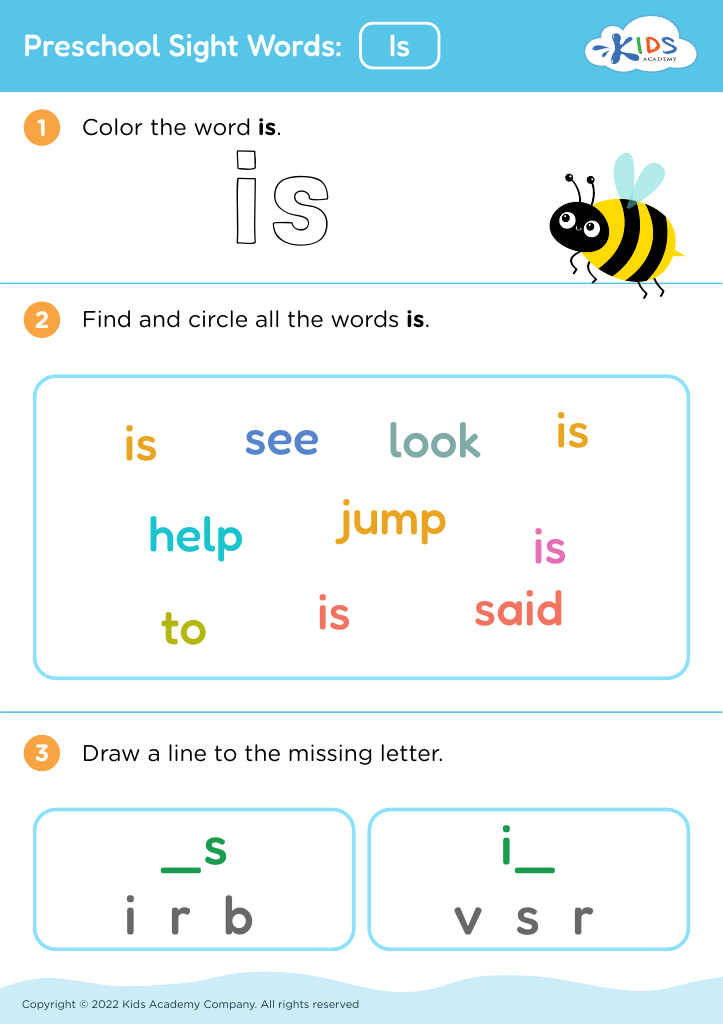
Preschool Sight Words: Is

Preschool Sight Words: Is

Preschool Sight Words: Is
Worksheet


... 3 4

Visual learning is crucial for children aged 3-5, as it plays a significant role in their cognitive, emotional, and social development. At this early stage, children engage primarily through their senses, and visual stimuli are vital in capturing their attention and enhancing understanding. Incorporating visual learning helps children make connections between concepts, facilitates memory retention, and supports language development by associating words with images.

Moreover, young learners are naturally curious, and visual materials such as pictures, charts, and videos stimulate this curiosity, encouraging exploration and discovery. Engaging visuals cater to various learning styles, ensuring that children with different preferences can grasp concepts more effectively. This inclusivity fosters a supportive learning environment where all children can thrive.

Additionally, understanding visual learning prepares children for future educational challenges. By developing critical thinking skills and the ability to interpret visual information, they build a strong foundation for problem-solving, creativity, and communication. Therefore, parents and teachers should prioritize visual learning to create an enriching, engaging, and effective educational experience that nurtures young learners’ potential and lays the groundwork for lifelong learning.