Numeracy development Addition & Subtraction Worksheets for Ages 3-5
3 filtered results
-
From - To
Enhance your child's numeracy skills with our engaging Addition and Subtraction Worksheets designed for ages 3-5! Tailored to foster early math understanding, these worksheets feature colorful visuals and interactive exercises to make learning fun. They encourage children to recognize numbers, understand basic operations, and build foundational skills that will support their future education. Our age-appropriate activities not only boost counting abilities but also develop problem-solving techniques through practice and play. Perfect for parents and educators alike, these printable resources are a simple and effective way to introduce basic math concepts and make learning exciting for young minds. Explore our collection today!
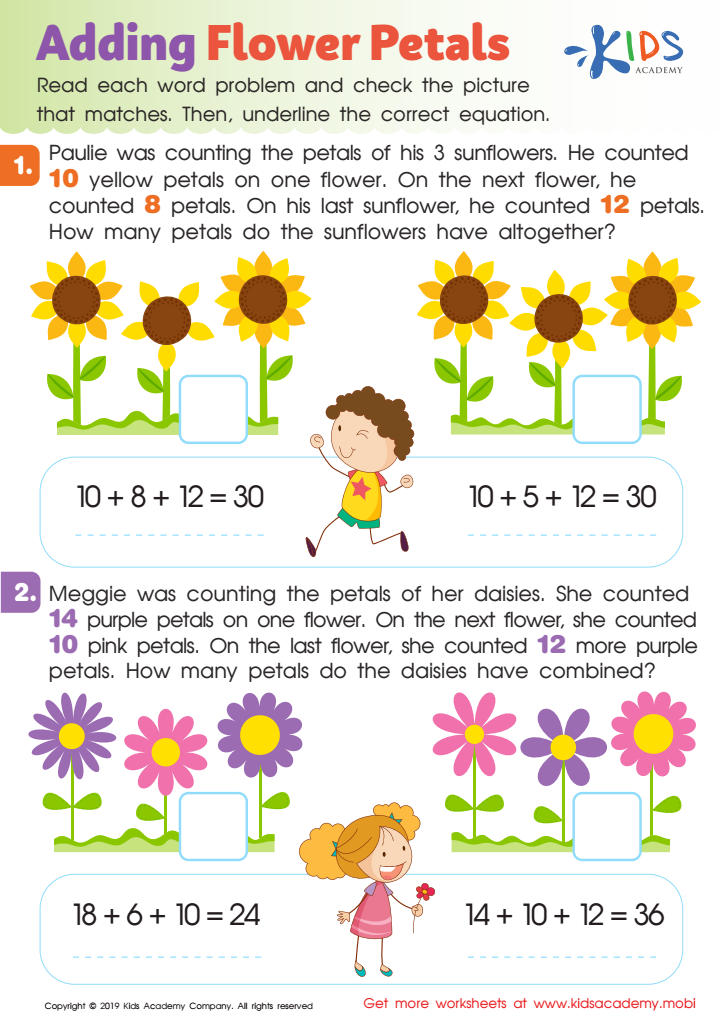
Adding Flower Petals Worksheet
 Assign to My Students
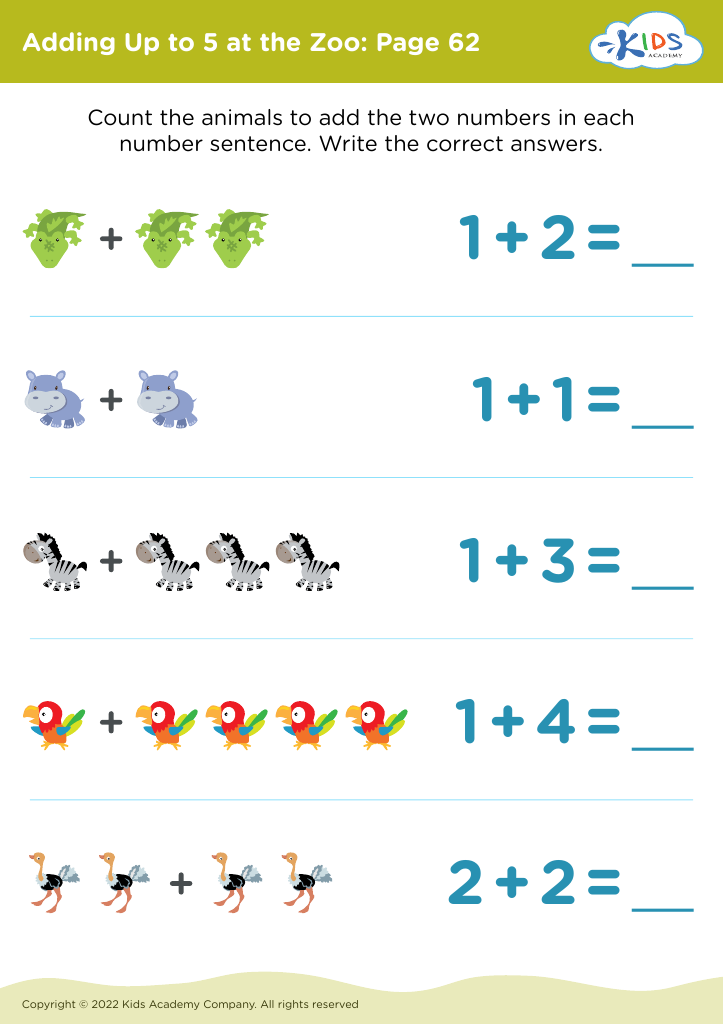
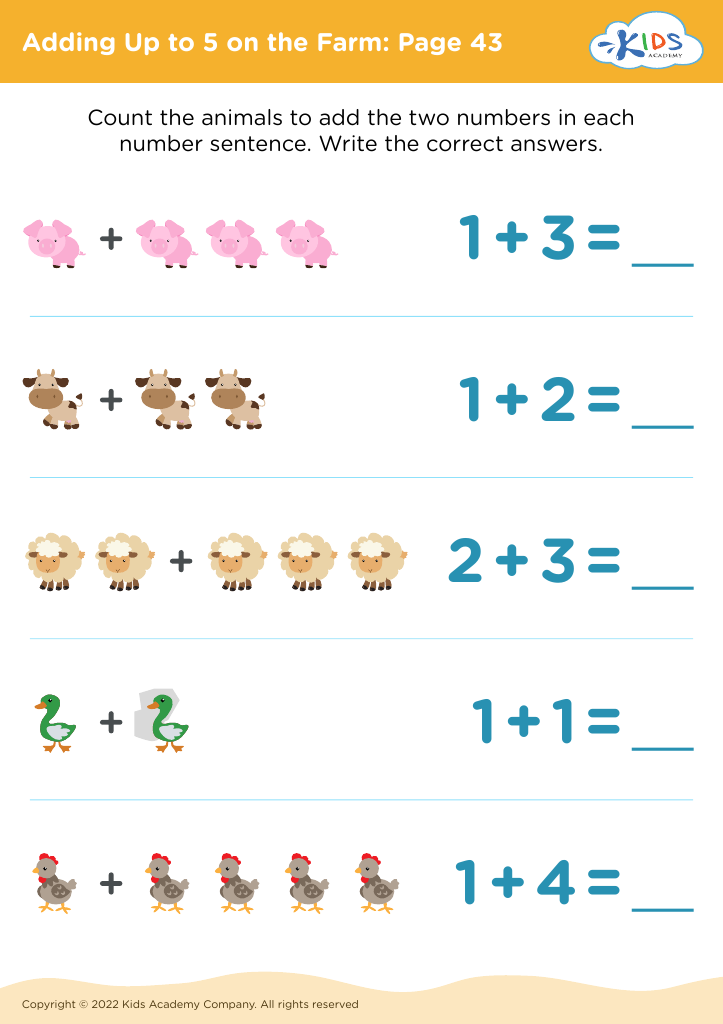








Numeracy development, particularly in addition and subtraction, is crucial for children ages 3-5 as it lays the foundation for future mathematical understanding and problem-solving skills. At this age, children are naturally curious and eager to explore numbers, making it an ideal time for introducing these concepts. Engaging young learners with addition and subtraction helps them develop critical thinking skills and the ability to comprehend relationships between numbers.
Supportive learning environments established by parents and teachers can foster a child’s confidence in their mathematical abilities. Early exposure to these concepts not only enhances cognitive development but also encourages communication skills as children articulate their thought processes. Additionally, reinforcing addition and subtraction in everyday situations—like counting toys or snacks—makes learning relevant and meaningful, and can cultivate a positive attitude towards math.
Developing numeracy skills is not just about calculating; it nurtures qualities like perseverance and resilience. When children encounter challenges with these operations, support from parents and teachers can help them learn to approach problems with a solution-oriented mindset. Therefore, prioritizing numeracy development in the early years is essential for setting children up for long-term academic success and instilling a lifelong love for learning.








