Basic Math Skills Comparison Worksheets for Ages 3-5
3 filtered results
-
From - To
Discover our engaging "Basic Math Skills Comparison Worksheets" tailored for children aged 3-5! These worksheets are designed to help young learners build foundational math skills through fun and interactive comparison activities. By comparing quantities, sizes, and values, kids will develop critical thinking and enhance their understanding of numbers in a playful manner. Our visually appealing worksheets engage children with colorful illustrations and age-appropriate exercises, making learning math enjoyable and effective. Perfect for parents and educators, these resources will support early math development and prepare little ones for future success. Start their math journey today with our delightful comparison worksheets!
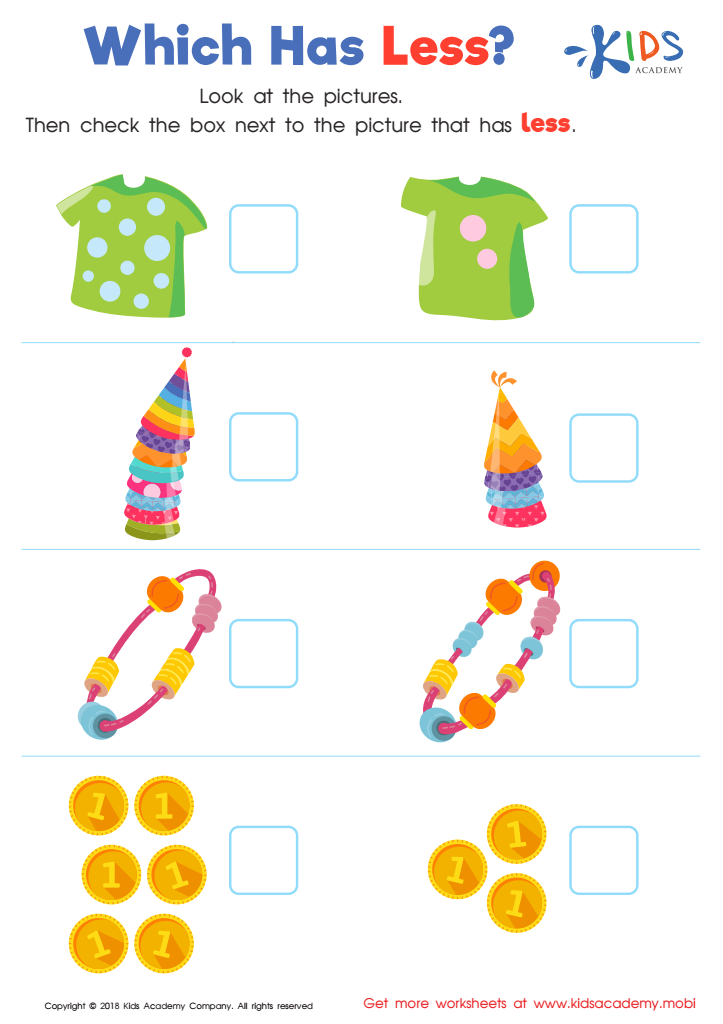
Which Has Less? Worksheet
 Assign to My Students
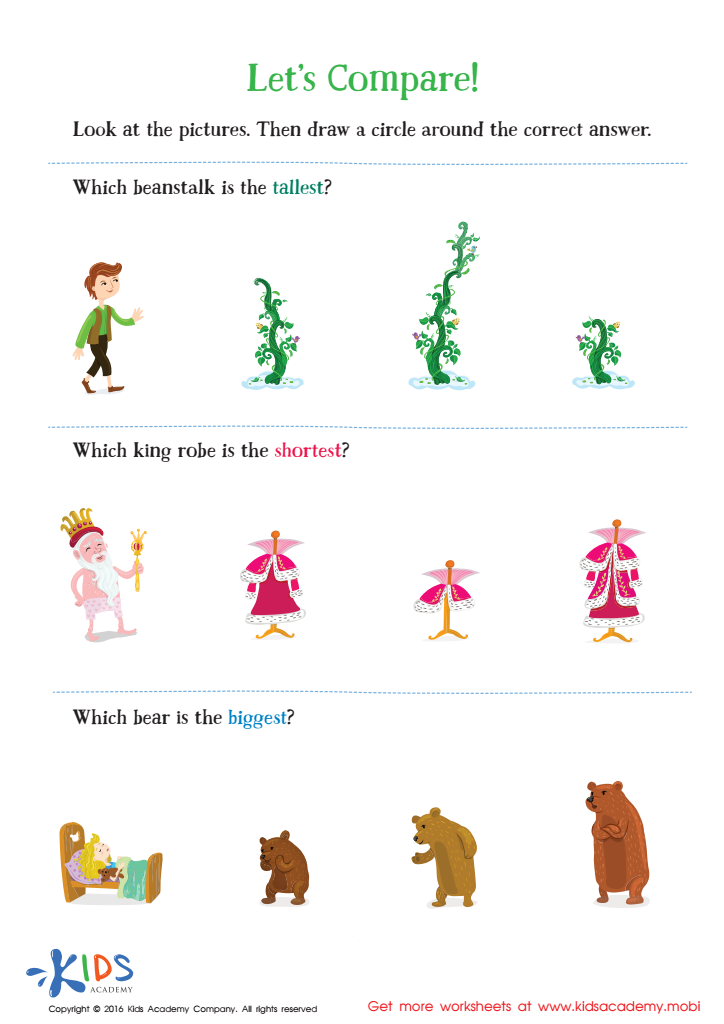
Fairy Tale Worksheet: Let's Compare
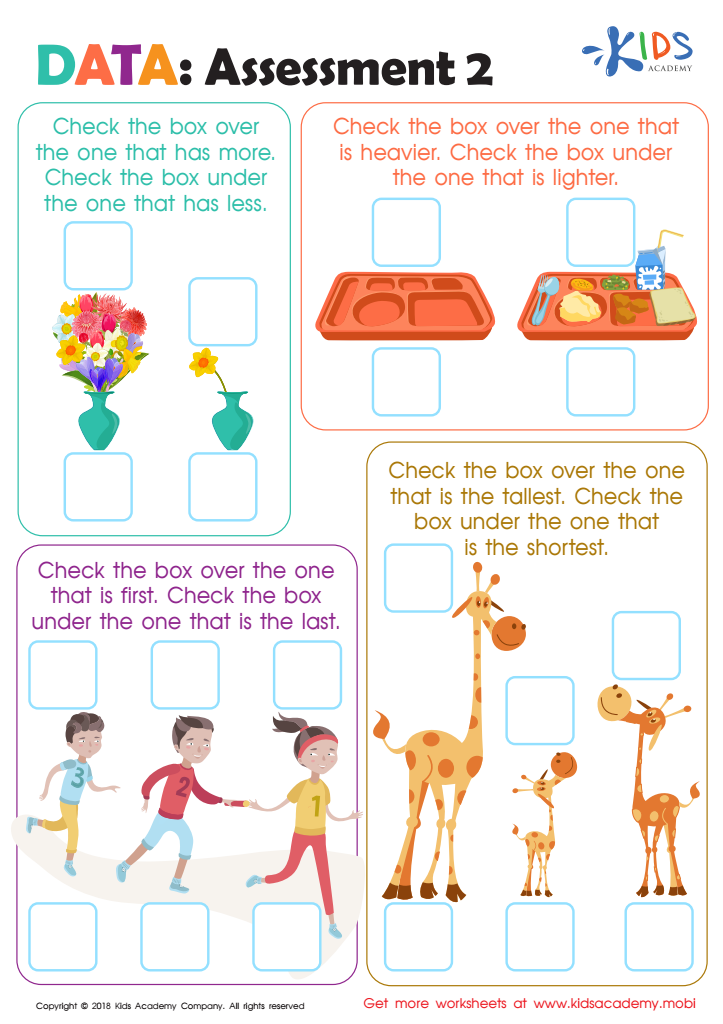
Data: Assessment 2 Worksheet







Understanding Basic Math Skills Comparison for Ages 3-5 is crucial for both parents and teachers because early mathematical experiences significantly shape children's cognitive development and future academic success. During this developmental stage, young children are naturally curious and eager to explore their surroundings. Early math skills, such as counting, number recognition, and understanding shapes and spatial relationships, build a strong foundation for later, more complex mathematical concepts.
Parents and teachers play vital roles in fostering these skills. By recognizing benchmark comparisons, they can identify a child's mathematical understanding relative to peers, which helps in tailoring educational approaches that meet a child's specific needs. Early intervention and targeted support can address any gaps or delays, ensuring that all children have the opportunity to develop these foundational skills at their own pace.
Moreover, early math skills are linked not only to better performance in school but also to critical thinking and problem-solving abilities that are essential for everyday life. Engaging children in math-rich activities enhances their confidence and enjoyment of math, creating a positive attitude towards learning. Therefore, tracking and comparing basic math skills is essential for nurturing a child's potential and cultivating a lifelong passion for learning.








