
Matching skills Geometry Worksheets for Ages 3-5
6 filtered results
Difficulty Level
Grade
Age
-
From - To
Subject
Activity
Standards
Introduce your little one to the joyful world of geometry with our Matching Skills Geometry Worksheets designed for ages 3-5. These engaging activities help young learners recognize and match various shapes, enhancing their cognitive and fine motor skills. Perfectly tailored for preschoolers, our worksheets ensure kids develop a strong foundation in geometry through playful, hands-on exercises. They'll have fun identifying and pairing shapes in fun, interactive scenarios. With these expertly crafted educational resources, your child will not only learn geometry but also build crucial skills for future learning. Let the geometric adventures begin!
Favorites
With answer key
Interactive
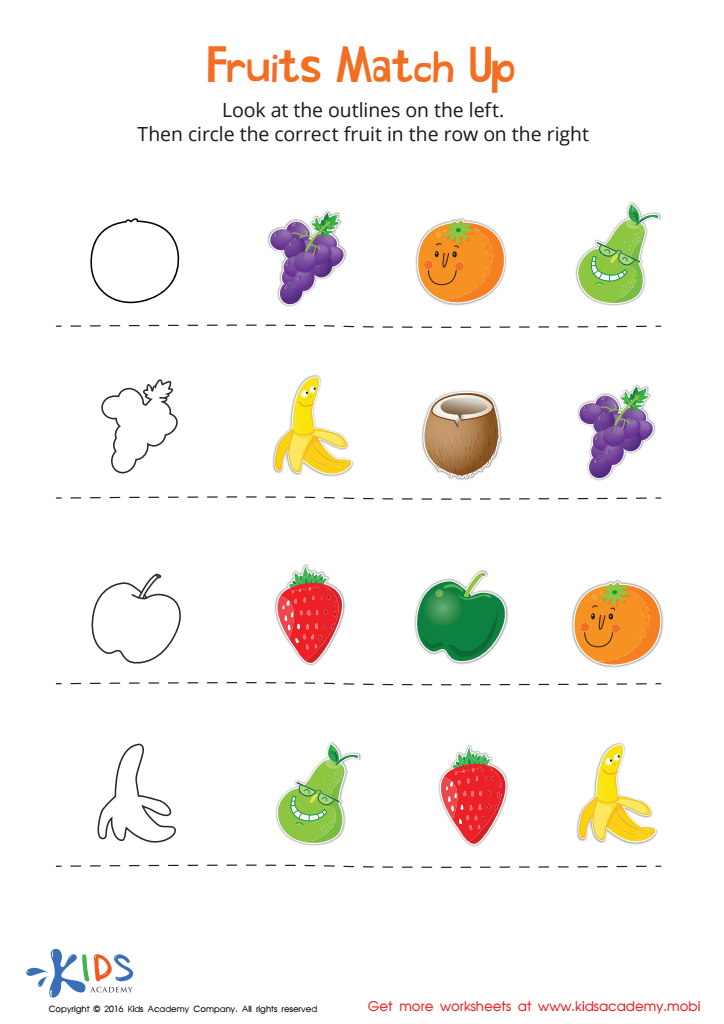
Fruits Match Up Worksheet
Motivate your child to count and sharpen their spatial reasoning skills with this vivid fruit worksheet.
 Assign to My Students
Fruits Match Up Worksheet
Worksheet











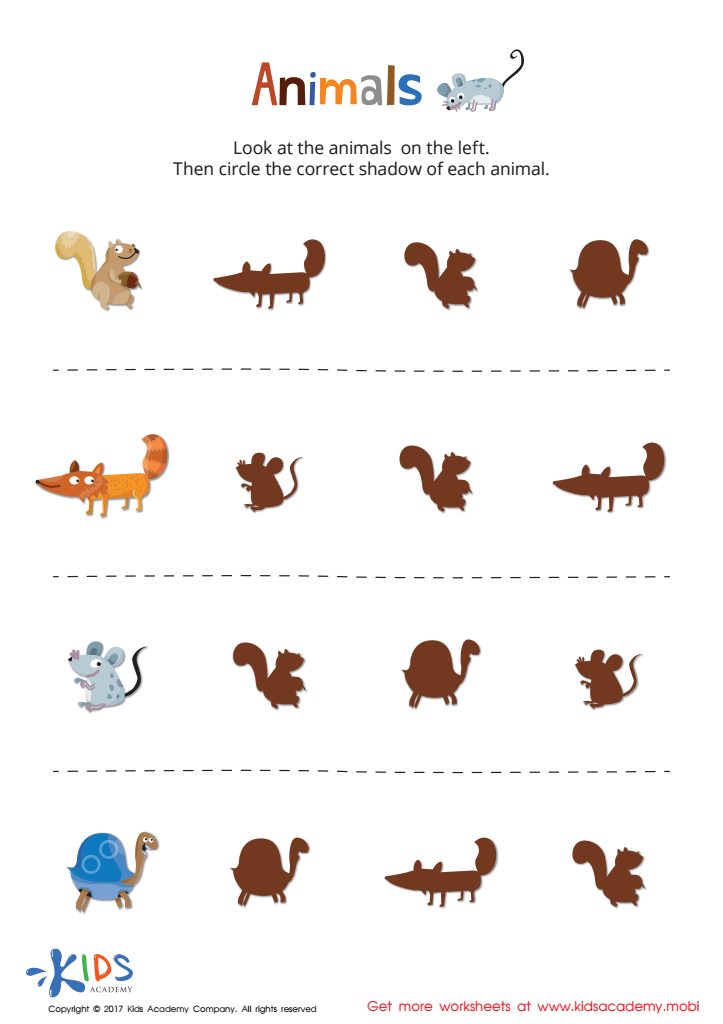
Animal Shadows Sorting Worksheet
This fun worksheet helps your child sharpen many skills. It features animals to match shapes and practice relative directions. Your child will sort animal features, practice spatial recognition, and recognize right/left. Plus, you can use it to start conversations about the animals. And try it also with fruits and veggies to boost sorting skills.
Animal Shadows Sorting Worksheet
Worksheet
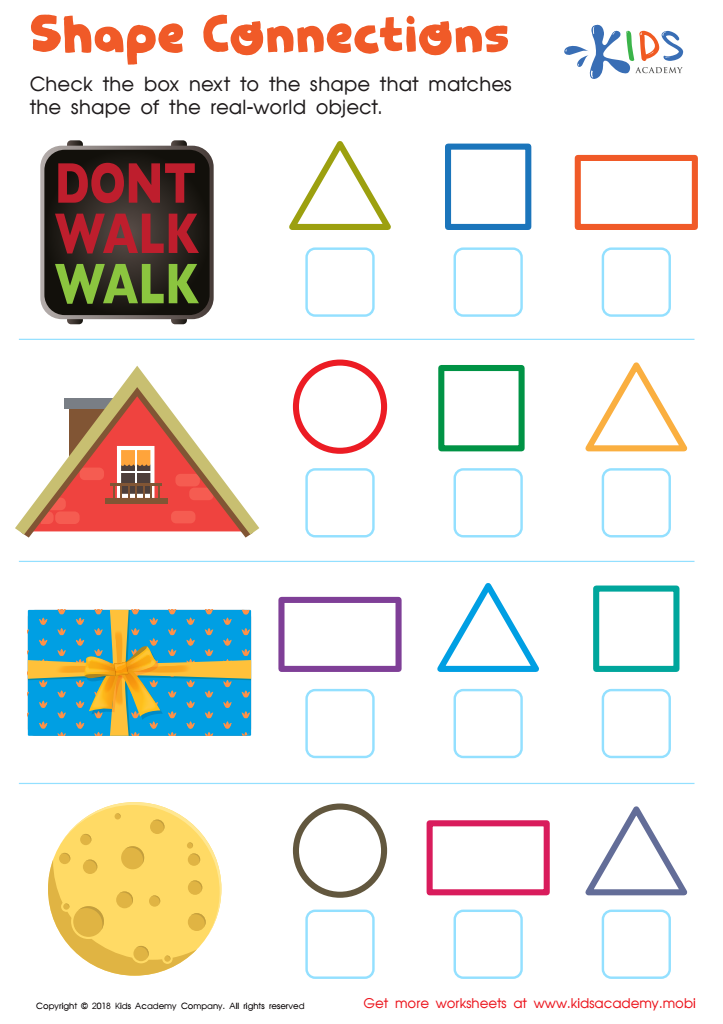
Shape Connections Worksheet
Geometric shapes are all around us and this fun worksheet brings it to life. Kids will match real-world pictures with the corresponding basic shapes, connecting how math is used in various aspects of daily life. A great way to reinforce these concepts!
Shape Connections Worksheet
Worksheet
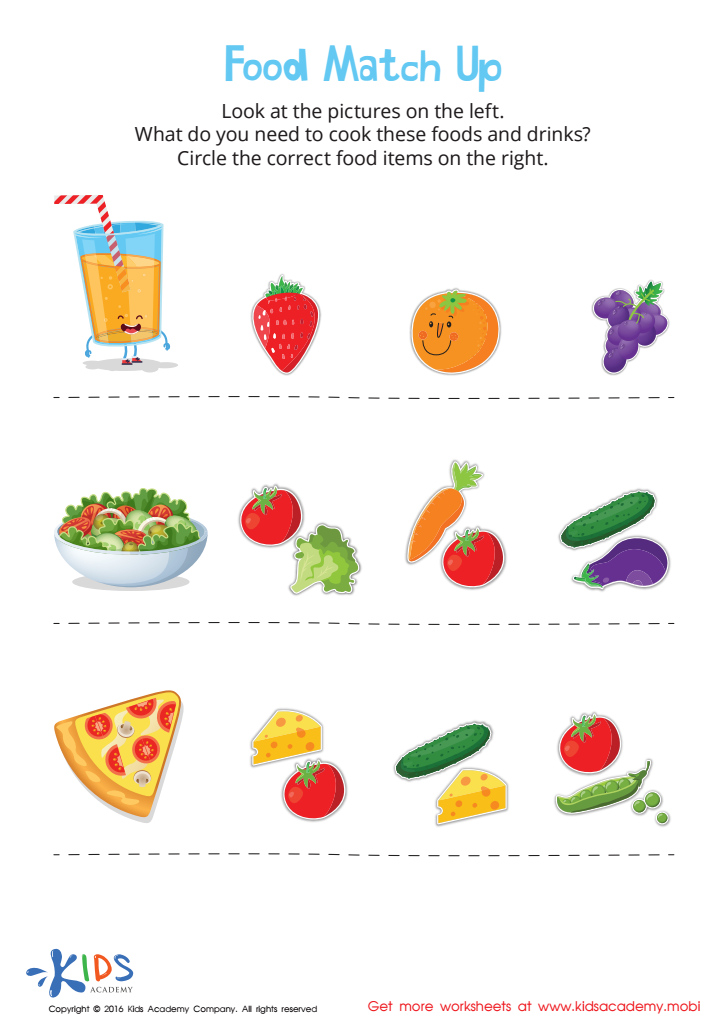
Food Match Up Worksheet
This worksheet will help your preschooler develop early math and cognitive skills. It challenges them to pay attention to details, understand how smaller parts make a whole, and increase important matching skills. Use it to give them a hands-on learning experience in the kitchen, and watch them understand how ingredients come together to make something delicious!
Food Match Up Worksheet
Worksheet
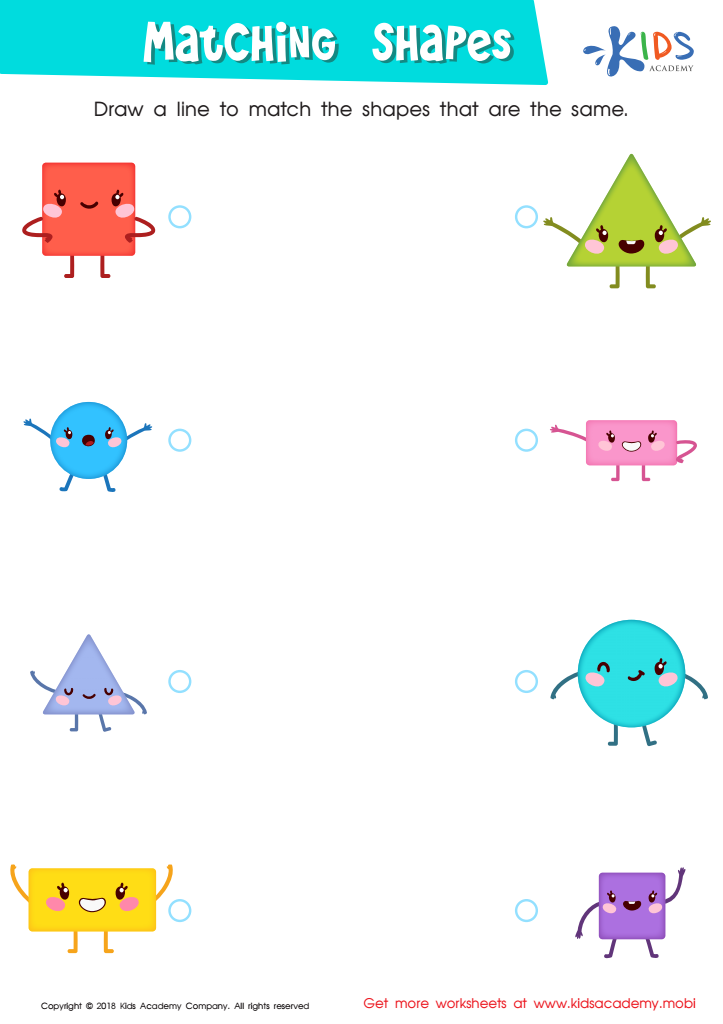
Matching Shapes Worksheet
Introduce your students to the 4 most common shapes: squares, triangles, rectangles and circles. When they progress, show them other shapes like rhombuses and parallelograms. Use this matching shapes worksheet to help them match two identical shapes. Print out the worksheet and instruct them to draw lines connecting them.
Matching Shapes Worksheet
Worksheet
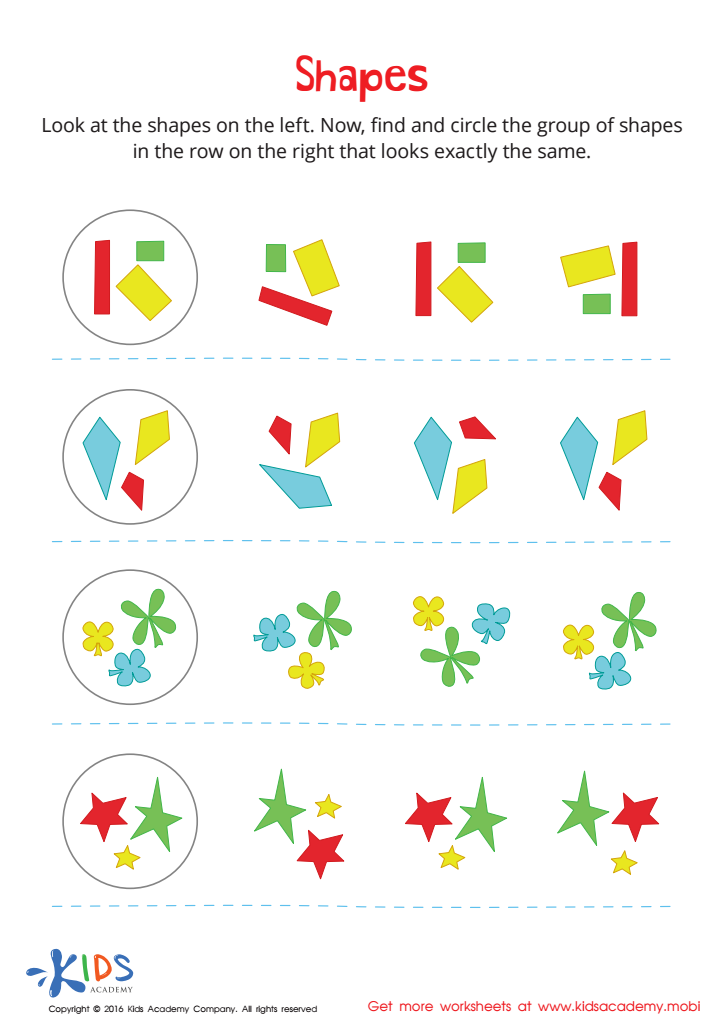
Shapes Worksheet
This fun worksheet will challenge your child to recognize tricky patterns, sort through similar ones, and create strategies to get the right answer. It'll also help them to strengthen problem-solving skills and build confidence. With more challenging tasks, your child will be ready to tackle higher level math and sequencing skills.
Shapes Worksheet
Worksheet
Join Kids Academy for Free
Who is primarily going to use this learning content?








Parents and teachers should care about matching skills in geometry for children ages 3-5 because these early skills lay the foundation for critical cognitive and academic development. Matching shapes, sizes, and patterns is more than just a fun activity; it helps young minds build crucial spatial awareness and relational thinking. When children engage in these activities, they develop the ability to recognize and distinguish between different geometric figures, which is essential for later mathematical learning and problem-solving abilities.
Additionally, matching activities can significantly enhance a child's observational skills and attention to detail. These skills are not only vital in math but also play a crucial role in reading and writing. For example, recognizing the difference in shapes can help with letter recognition, which is essential for literacy.
From a cognitive perspective, engaging in matching activities encourages logical thinking and reasoning. It requires children to identify similarities and differences, categorize objects, and make connections—key skills that are useful throughout their academic journey and everyday problem-solving scenarios.
Socially and emotionally, these activities can boost a child’s confidence and persistence. Successfully completing a matching task provides a sense of achievement, encouraging a positive attitude toward learning. Thus, fostering matching skills in geometry during the early years is a crucial step in nurturing well-rounded, capable, and confident learners.








