
Handwriting Skills Numbers Worksheets for Ages 3-5
5 filtered results
Difficulty Level
Grade
Age
-
From - To
Subject
Activity
Standards
Our "Handwriting Skills Numbers Worksheets for Ages 3-5" provide an engaging way for young children to develop their number writing skills. Tailored for early learners, these worksheets feature fun and educational activities designed to help kids master number formation and recognition. Each worksheet includes tracing, counting, and writing exercises that promote fine motor skills and hand-eye coordination. Perfect for parents and teachers, our worksheets make learning enjoyable and effective, laying a strong foundation for further math success. Empower your child’s early education and boost their confidence with Kids Academy’s thoughtfully crafted handwriting skills resources.
Favorites
With answer key
Interactive
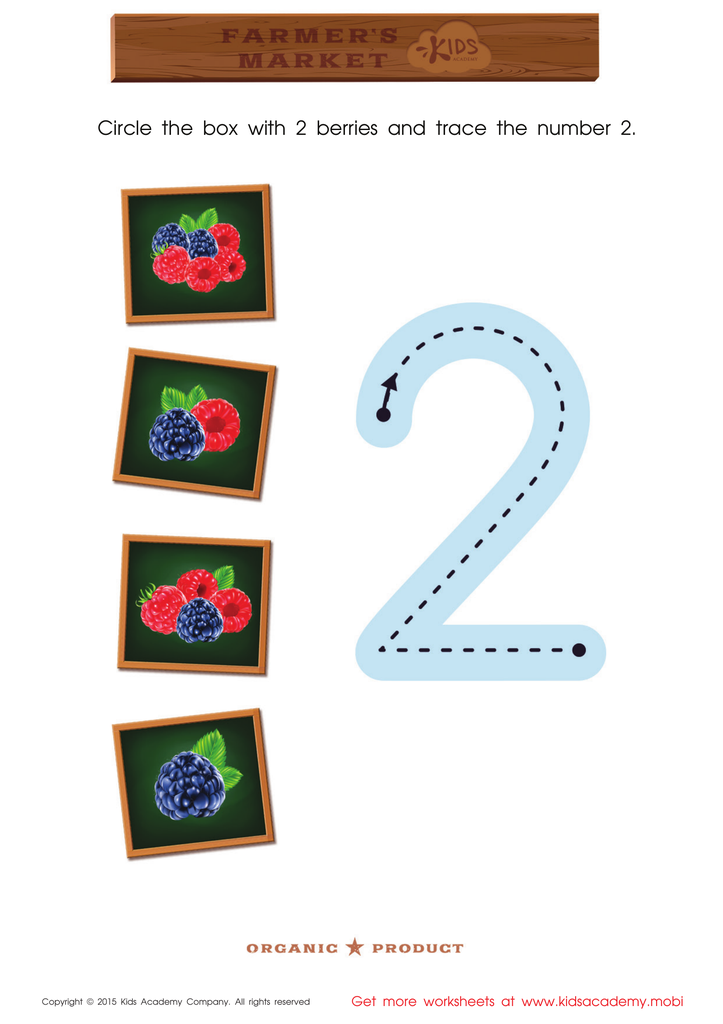
Count the Berries and Trace the Number 2 Printable
This math worksheet by Kids Academy helps kindergartners count and write number 2. Print it out and urge your kid to count the berries in the boxes, then circle the box with 2 of them. As they trace the number 2, they practice hand motions for good handwriting. More skill-building worksheets available.
Count the Berries and Trace the Number 2 Printable
Worksheet
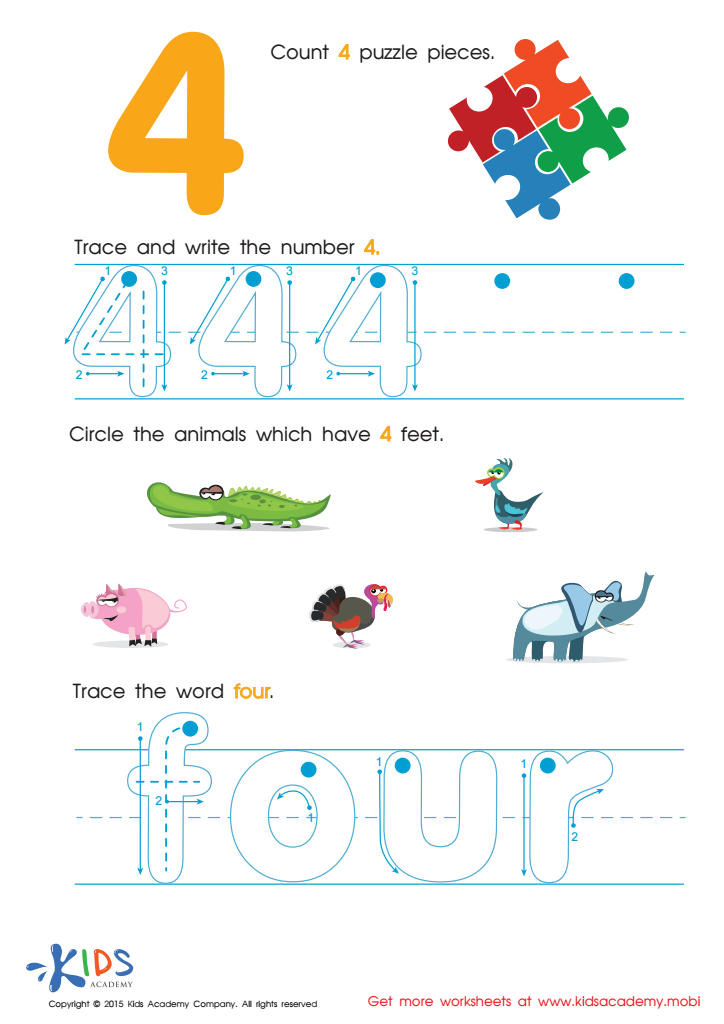
Teaching Children to Write Number 4 Worksheet
Count the pieces of the puzzle - there are four. Trace the number and write it. Circle the animals with four feet. Trace the word "four" too. Kids Academy offers tracing numbers worksheets for preschoolers, making studies easy and effective.
Teaching Children to Write Number 4 Worksheet
Worksheet
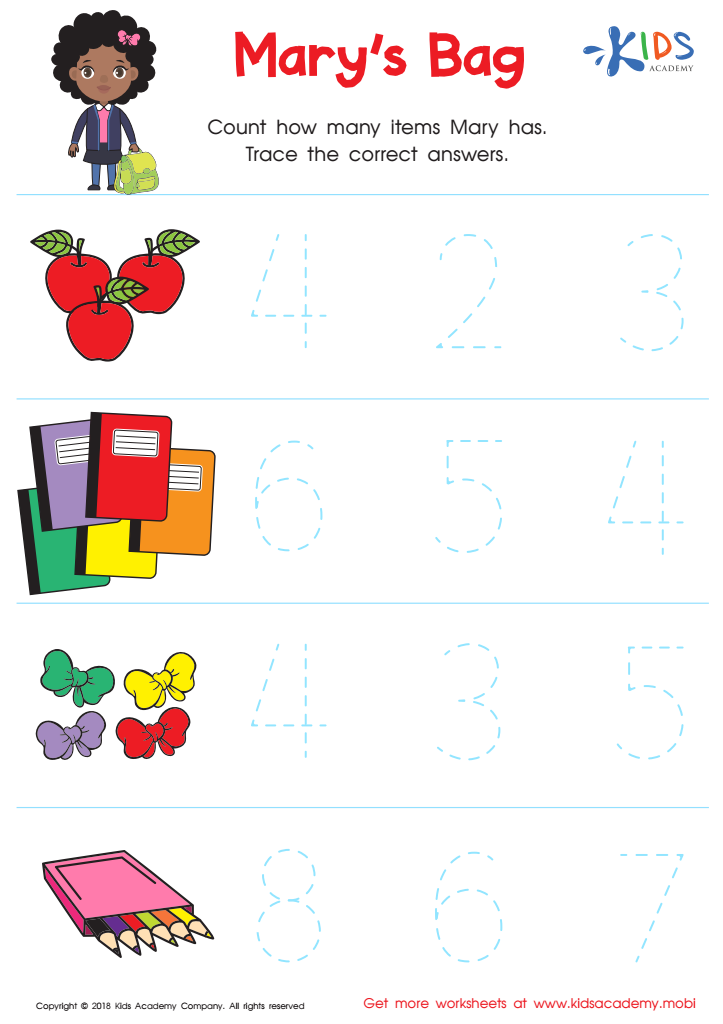
Kindergarten Number Tracing: Mary's Bag Worksheet
Counting and writing skills are honed with this kindergarten tracing worksheet. Guide Mary in counting the items in her bag then trace the correct number for each. Your child will get a great head start on essential kindergarten skills!
Kindergarten Number Tracing: Mary's Bag Worksheet
Worksheet
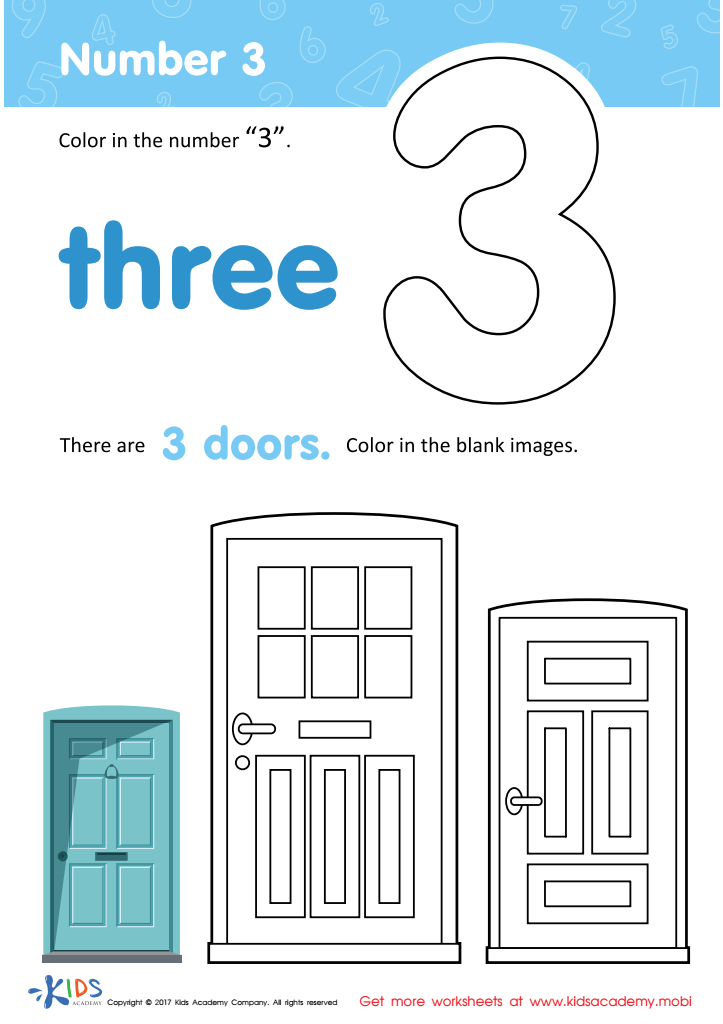
Number 3 Worksheet
Open the door to learning numbers! This counting coloring page helps kids recognize and count to 3, while using imagination and creativity to design lovely doors. It's a fun way to learn numbers!
Download (PDF)
 Assign to My Students
Assign to My Students
Number 3 Worksheet
Worksheet
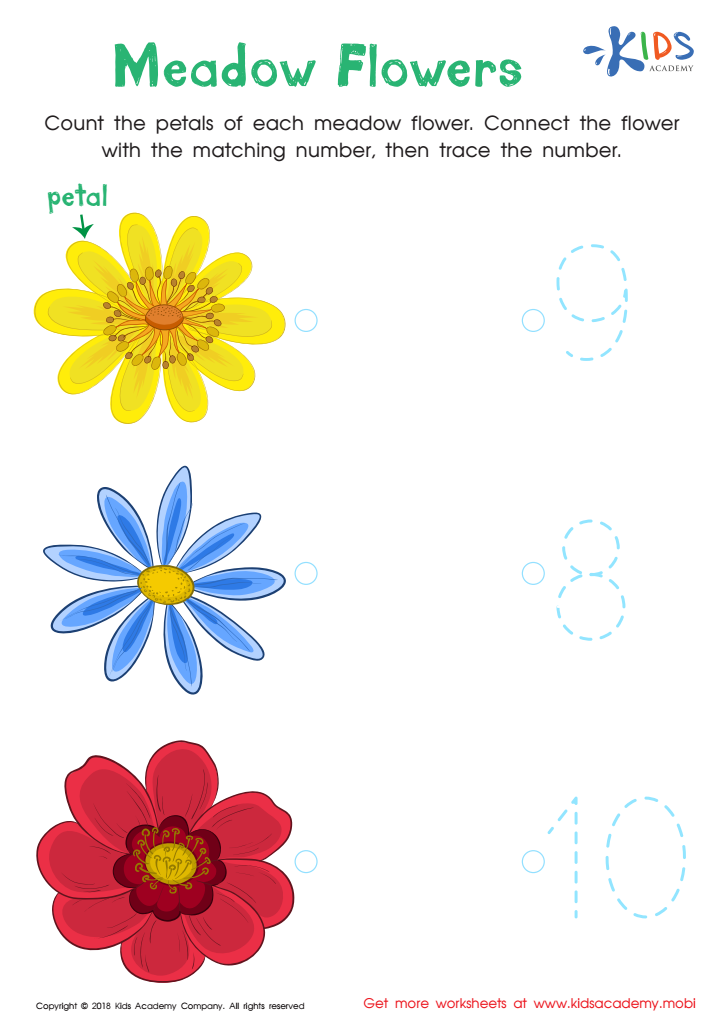
Kindergarten Number Tracing: Medow Flowers Worksheet
Take your child to the garden to count flower petals and trace numbers with this fun kindergarten PDF worksheet. They'll learn to count and write, all while enjoying the sweet scent of the flowers.
Kindergarten Number Tracing: Medow Flowers Worksheet
Worksheet
Join Kids Academy for Free
Who is primarily going to use this learning content?








Handwriting skills, particularly the ability to write numbers, hold significant importance for children aged 3 to 5. For several reasons, parents and teachers should prioritize nurturing these skills.
Firstly, handwriting practice lays the groundwork for fine motor skill development, which is essential for a child's overall dexterity and hand-eye coordination. These motor skills are not only critical for writing but also for other everyday tasks, such as dressing or using utensils.
Secondly, learning to write numbers at this early stage helps in building a strong foundation in mathematics. When children become comfortable with writing numbers, they find it easier to understand and perform basic arithmetic operations, boosting their confidence and interest in math subjects later on. This early familiarity can make transitioning to more advanced concepts smoother.
Moreover, practicing handwriting has cognitive benefits. It encourages memory and letter recognition because the act of writing helps embed symbols in children's minds. Engaging tactile, visual, and mental processes simultaneously makes learning more effective.
Emotional benefits also exist as mastering handwriting instills a sense of achievement and boosts self-esteem. When children see themselves getting better at writing numbers, they feel proud and are likely to embrace learning with enthusiasm, fostering a lifelong positive attitude towards education.
In sum, handwriting skills are key for physical development, cognitive growth, and emotional well-being, warranting significant attention from early educators and parents.








