Cognitive Development Matching Worksheets for Ages 3-5
7 filtered results
-
From - To
Enhance your child's cognitive development with our engaging Matching Worksheets tailored for ages 3-5. Designed to stimulate young minds, these worksheets help improve pattern recognition, memory, and critical thinking skills through fun and interactive matching activities. Each printable worksheet is crafted to align with early learning standards, offering a variety of themes that captivate children's interest. By consistently practicing with these resources, your preschooler will build a solid foundation for future academic success. Boost cognitive abilities while having fun—explore our collection at Kids Academy today and watch your little learner thrive!
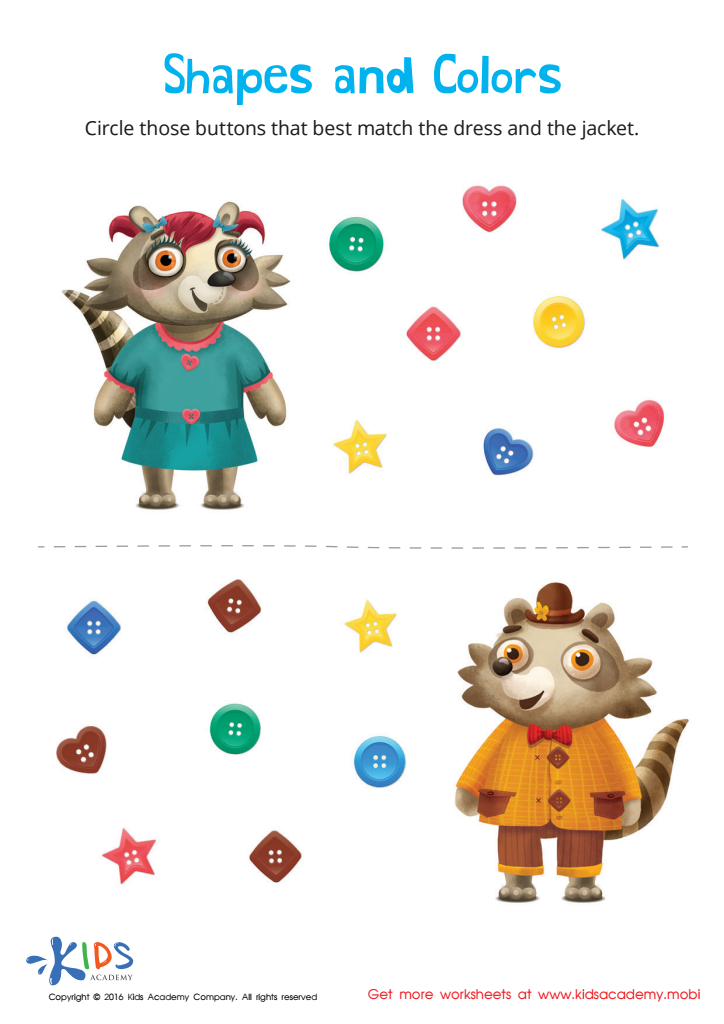
Matching: Shapes and Colors Worksheet
 Assign to My Students
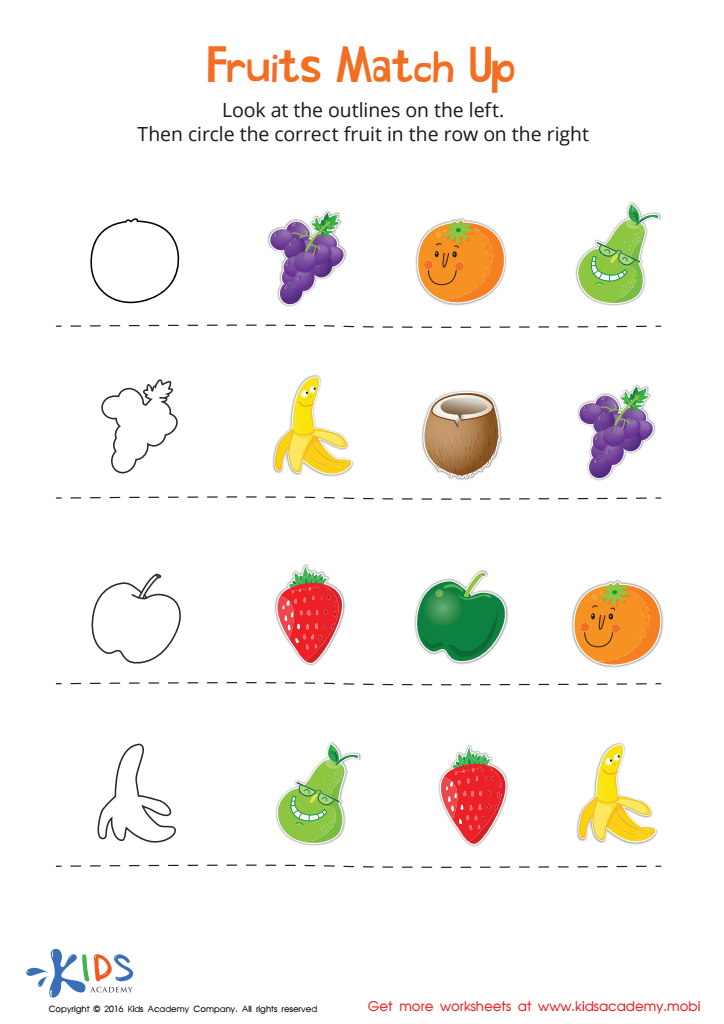
Fruits Match Up Worksheet
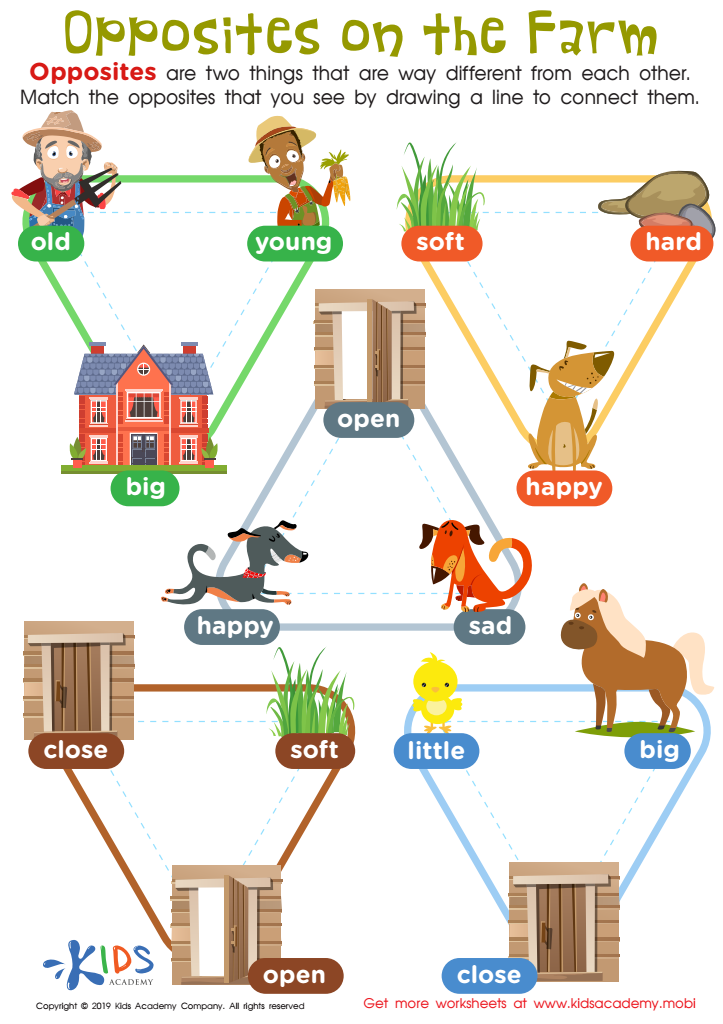
Opposites on the Farm Worksheet
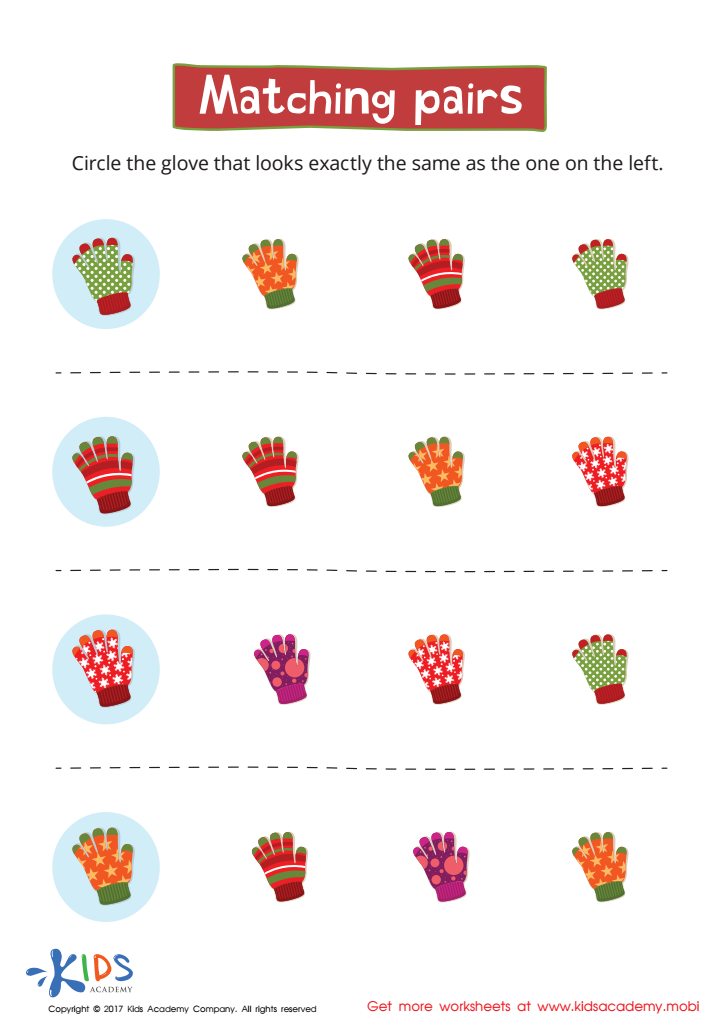
Matching: Matching Pairs Worksheet
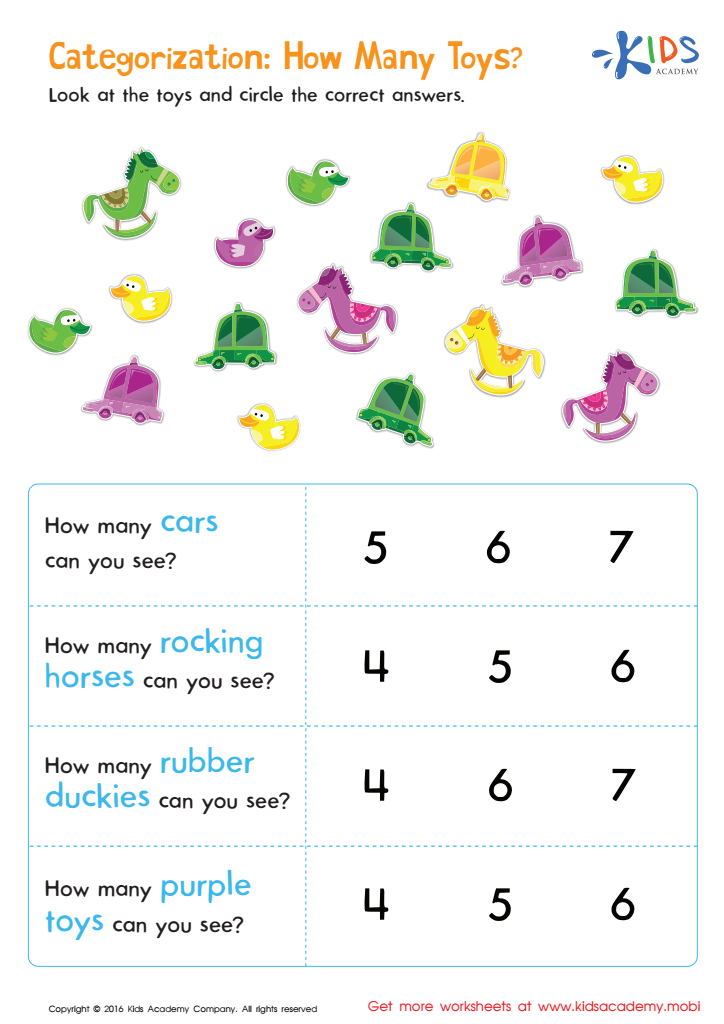
Classifying Toys by Type and Color Sorting Worksheet
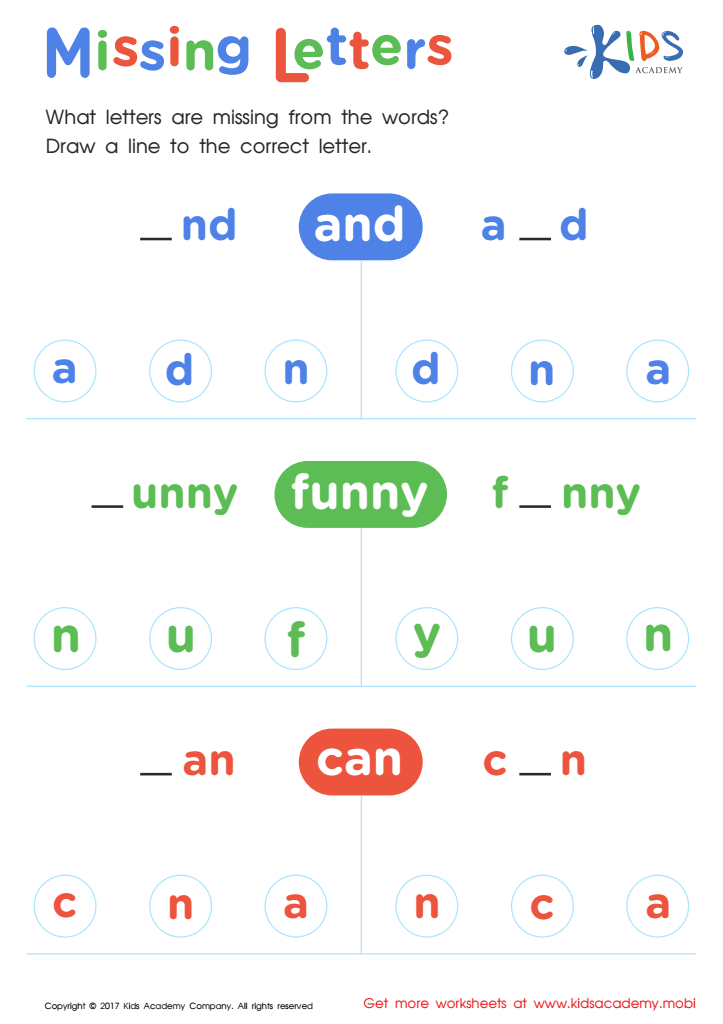
Missing Letters Worksheet
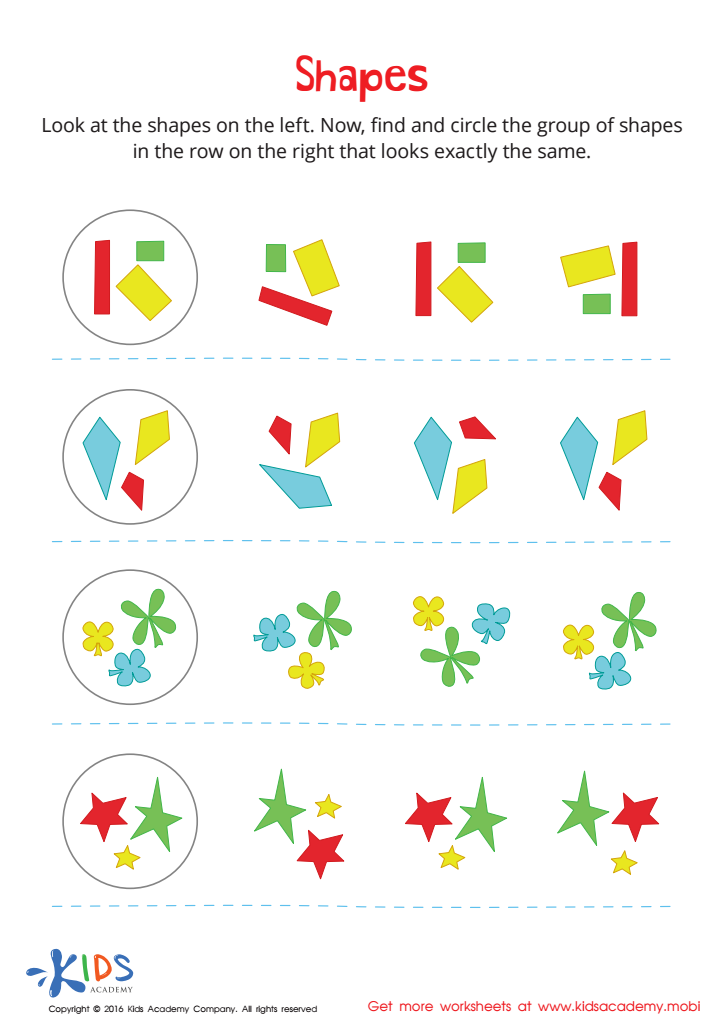
Shapes Worksheet








Cognitive development during the ages of 3-5 is a critical period for children as their brains are rapidly growing and forming important connections. Parents and teachers should focus on cognitive development matching, which means providing appropriate activities and learning experiences tailored to the child’s developmental stage. This approach is crucial for several reasons.
Firstly, matching cognitive development activities ensures that children are neither overwhelmed nor under-stimulated. Properly matched activities can help maintain their interest and motivation while preventing frustration and boredom. For example, introducing interactive storybooks and simple puzzles can stimulate a child's thinking and problem-solving skills at a suitable level.
Secondly, engaging children with the right cognitive challenges enhances neural connections, which are the building blocks for future learning. At this age, children begin to develop foundational skills like language, memory, attention, and reasoning. Precise cognitive matching helps reinforce these skills in everyday activities, sharpen their abilities, and prepare them better for formal education.
Moreover, cognitive development matching fosters confidence and a positive self-concept. When children successfully complete tasks suited to their developmental stage, it boosts their self-esteem and encourages a positive attitude towards learning.
In essence, by thoughtfully aligning cognitive activities with a child’s developmental stage, parents and teachers can optimize learning, nurture talents, and lay a solid foundation for lifelong cognitive abilities.








